bookmark_borderClimax and Succession

[Intro]

Climax and succession
Spiraling depression

[Verse 1]
In a rift
Species shift
Disturbance regime
Do you know what I mean

[Chorus]
Biodiversity
Becomes a rarity
Obviously
We can not see

[Bridge]
Blind to our demise
No surprise?

[Verse 2]
Disturbances:
Declining chances
Pestilence proliferation
Unwilling participation

[Chorus]
Biodiversity
Becomes a rarity
Obviously
We can not see

[Bridge]
Blind to our demise
No surprise?

[Instrumental, Saxophone Solo, Bass]

[Bridge]
Blind to our demise
No surprise?

[Chorus]
Biodiversity
Becomes a rarity
Obviously
We can not see

[Outro]
Blind to our demise
No surprise?

A SCIENCE NOTE
Climate change has profound effects on both climax and succession forests, altering their composition, structure, and ecological dynamics. Here’s how these impacts unfold:

Climax Forests

Climax forests are stable, mature ecosystems that have reached a late stage of ecological succession. They are characterized by a stable species composition and structure that persists until disrupted by a disturbance. Climate change impacts these forests in several ways:

  1. Temperature Increases: Warmer temperatures can stress species that are adapted to cooler climates, leading to shifts in species composition. For example, in boreal climax forests, species like spruce and fir may decline, while more temperate species like maple and oak may increase .
  2. Altered Precipitation Patterns: Changes in precipitation can affect soil moisture levels, influencing tree growth and survival. In areas experiencing increased drought, such as some temperate and Mediterranean forests, species that are less drought-tolerant may decline, altering the forest structure and function .
  3. Increased Frequency of Disturbances: Climate change can lead to more frequent and intense disturbances, such as wildfires, storms, and pest outbreaks. These disturbances can reset succession processes, pushing climax forests back to earlier successional stages and altering their long-term stability .
  4. Pest and Disease Proliferation: Warmer temperatures can facilitate the spread of pests and diseases. For instance, the mountain pine beetle has devastated large areas of climax forests in North America, leading to widespread tree mortality and changes in forest composition .

Succession Forests

Succession forests are in various stages of recovery following a disturbance. Climate change affects these forests by altering the rates and trajectories of succession:

  1. Altered Growth Rates: Changes in temperature and CO2 levels can influence the growth rates of different species. Some pioneer species may grow faster under higher CO2 concentrations, potentially accelerating early successional stages but also potentially leading to different competitive dynamics later on .
  2. Species Shifts: Climate change can influence which species dominate during different successional stages. For example, increased temperatures and altered moisture regimes can favor different sets of pioneer and mid-successional species, leading to novel successional pathways .
  3. Disturbance Regimes: More frequent disturbances can prevent succession forests from reaching climax stages, maintaining them in earlier stages of succession for longer periods. This can alter the landscape mosaic and the biodiversity it supports .
  4. Seed Dispersal and Establishment: Climate change can affect seed dispersal mechanisms and the establishment success of seedlings. Changes in wind patterns, animal behaviors, and soil conditions can influence which species successfully establish in succession forests .

Ecological and Management Implications

  • Biodiversity: Changes in species composition and structure can affect biodiversity at multiple levels. Some species may thrive while others decline, potentially leading to losses in overall biodiversity.
  • Ecosystem Services: The ability of forests to provide ecosystem services, such as carbon sequestration, water regulation, and habitat provision, can be altered. For example, changes in species composition can influence the carbon storage capacity of forests.
  • Conservation and Management: Adaptive management strategies are needed to address the impacts of climate change on both climax and succession forests. This includes monitoring changes, facilitating species migration, and managing disturbances to maintain forest health and resilience.

Sources

These impacts underscore the complex and dynamic nature of forest ecosystems in the face of climate change, highlighting the need for adaptive management and conservation strategies.
From the album “Wood You Save the Trees?” by The Beatless Sense Mongers

MegaEpix Enormous

A song about The Human Induced Climate Change Experiment

bookmark_borderHead North (You Nut)

[Intro]
“Head North, you nut”
But, but, but

[Verse 1]
Rooted in tradition
Of the Southern ways
Starting my migration
During the final days

[Bridge]
Temperature increases
As species decreases

[Chorus]
On the move
Invasive species
As they prove
Our climate thesis

[Verse 2]
Can’t embark with bark
The situation is stark
Plant the seeds
Of invasive deeds

[Bridge]
Temperature increases
As species decreases

[Chorus]
On the move
Invasive species
As they prove
Our climate thesis

[Bridge]
Temperature increases
As species decreases

[Chorus]
On the move
Invasive species
As they prove
Our climate thesis

[Outro]
On the move
Invasive species
As they prove
Our climate thesis

A SCIENCE NOTE
Trees “move” through a process of gradual migration, which occurs over generations through the dispersal of seeds. This migration is driven by environmental changes, such as climate change, and can be observed in the expansion of greenery into new areas, such as the tundra, and the invasion of southern species into regions like the Mid-Atlantic USA. Here’s how these processes work:

Expansion into the Tundra

In Arctic and sub-Arctic regions, warming temperatures have led to the expansion of tree lines into previously barren tundra areas. This process involves several steps:

  1. Seed Dispersal: Trees like spruce and birch produce seeds that are dispersed by wind, animals, or water. As temperatures rise, seeds can survive and germinate in areas further north where they previously could not.
  2. Seedling Establishment: Once seeds land in a suitable area, they must germinate and grow. Warmer temperatures and a longer growing season improve the chances for seedlings to establish.
  3. Growth and Maturation: As seedlings grow, they gradually form new tree stands, expanding the forested area northward. This process is slow but cumulative, leading to noticeable changes over decades.
  4. Ecosystem Changes: The establishment of trees in the tundra brings changes to the local ecosystem. Trees provide shade, alter soil composition, and affect the local microclimate, making it more suitable for additional plant and animal species.

Studies and observations have documented this greening effect in regions like Alaska and Siberia, where satellite imagery shows an increase in vegetation cover in the tundra over recent decades​ (ExelonCorp)​​ (Exelon Corporation)​.

Invasion of Southern Species in the Mid-Atlantic USA

In the Mid-Atlantic USA, climate change has facilitated the northward movement of species traditionally found in more southern regions. This invasion is marked by several factors:

  1. Temperature Increase: Warmer temperatures allow species that thrive in warmer climates to survive and reproduce in more northern areas.
  2. Seed Dispersal Mechanisms: Southern species, such as the loblolly pine or the southern pine beetle, spread through natural dispersal mechanisms. Birds, wind, and animals carry seeds northward.
  3. Competitive Advantage: These southern species often have competitive advantages in warmer conditions, allowing them to outcompete native species. For example, the southern pine beetle has expanded its range northward, affecting forests in New Jersey and Pennsylvania.
  4. Changes in Phenology: Warmer temperatures can change the timing of life cycle events. For example, earlier springs can favor the growth of southern species over native species, giving them a head start in the growing season.

Research has shown that the ranges of many tree species are shifting northward in response to climate change. For instance, the U.S. Forest Service has observed that species like the sweetgum and the live oak are becoming more common in areas where they were previously rare or absent​ (ExelonCorp)​​ (Exelon Corporation)​.

Sources

These examples illustrate how trees migrate by gradually expanding their range into new areas as environmental conditions change, driven by factors such as temperature increases, changes in precipitation patterns, and altered ecosystems.

Invasive Tree Species in North America

Several southern tree species have migrated northward in North America due to the impacts of climate change. Here are some notable examples:

1. Loblolly Pine (Pinus taeda)

  • Description: Native to the southeastern United States, the loblolly pine has been observed moving into more northern regions.
  • Migration Evidence: Studies have documented its establishment in areas like the Mid-Atlantic and even parts of the northeastern U.S., driven by warmer temperatures and changing precipitation patterns.
  • Sources: USDA Forest Service

2. Southern Magnolia (Magnolia grandiflora)

  • Description: Traditionally found in the southeastern U.S., this tree is known for its large, fragrant flowers and evergreen leaves.
  • Migration Evidence: Its range is expanding northward, and it is increasingly found in areas like the Mid-Atlantic due to milder winters and warmer growing seasons.
  • Sources: National Park Service

3. Sweetgum (Liquidambar styraciflua)

  • Description: Native to the southeastern U.S., sweetgum trees are known for their star-shaped leaves and spiky fruit.
  • Migration Evidence: They are moving into the northern parts of their range, such as the Mid-Atlantic and even parts of New England, as temperatures rise.
  • Sources: Forest Ecology and Management Journal

4. American Holly (Ilex opaca)

  • Description: This evergreen tree, native to the southeastern U.S., is known for its distinctive red berries and glossy leaves.
  • Migration Evidence: Its range is expanding northward, with more frequent sightings in the Mid-Atlantic and northeastern regions.
  • Sources: USDA Forest Service

5. Live Oak (Quercus virginiana)

  • Description: Native to the southeastern coastal plains, live oaks are known for their sprawling branches and long lifespan.
  • Migration Evidence: There are reports of live oaks being planted and surviving in areas further north than their traditional range, reflecting milder winters.
  • Sources: U.S. Global Change Research Program

Migration Mechanisms

  • Warmer Temperatures: As global temperatures rise, the climates of northern regions become more suitable for these southern species.
  • Changing Precipitation Patterns: Altered rainfall patterns can create conditions more favorable to southern species in northern areas.
  • Extended Growing Seasons: Longer growing seasons in northern regions due to climate change allow southern species more time to establish and grow.

Ecological Implications

  • Competition with Native Species: The migration of southern species can lead to increased competition with native northern species, potentially altering local ecosystems.
  • Biodiversity Changes: The influx of new species can change the composition of forests, affecting biodiversity and ecosystem services.

These examples illustrate the dynamic nature of forest ecosystems in response to climate change, with southern tree species moving into new territories as they seek suitable habitats.

From the album “Wood You Save the Trees?” by The Beatless Sense Mongers

MegaEpix Enormous

A song about The Human Induced Climate Change Experiment

bookmark_borderWhat Do You Want to Sing About?

[Intro]
What do you want to sing about?
Something that makes you scream…
And shout?

[Verse 1]
What do you want to sing about
Something that makes you scream and shout
What makes you feel to deal with reality
And, turn wrong about?

[Bridge]
We want to sing (sing)
Of how to bring (bring)
Love (love)
A light from above… shine on
Love (love)

[Chorus]
Shine down from above
Showing a showering
Of love (love above)
Love above
[Bridge]
When all else fails
Love prevails
Let you love shine
All the time

[Verse 2]
What do we want to sing about?
We want to sing, scream, and shout
That Man’s damned demand bout
Is the crime of all time, NO DOUBT!

[Bridge]
We want to sing (sing)
Of how to bring (bring)
Love (love)
A light from above… shine on
Love (love)

[Chorus]
Shine down from above
Showing a showering
Of love (love above)
Love above
[Bridge]
When all else fails
Love prevails
Let you love shine
All the time

[Breakdown]
What do you want to sing about?
(Sing!)
What do you want to sing about?
(Sing out!)
Something that makes us scream (scream!)
And shout? (Scream out!)
Scream out!

[Outro]
What do you want to sing about?
(Sing!)
What do you want to sing about?
(Sing out!)
Something that makes us scream (scream!)
And shout? (Scream out!)
Scream out!
[Outro]

A SCIENCE NOTE

The migration of tree species in temperate zones is significantly impacted by climate change through several mechanisms:

  1. Shifts in Suitable Habitats: As temperatures rise, the suitable habitats for many tree species are moving poleward and to higher elevations. Trees that thrive in cooler climates are finding their current habitats increasingly inhospitable, pushing them to migrate towards cooler areas. However, the speed of climate change often outpaces the natural migration capabilities of many tree species, leading to potential mismatches between trees and their optimal environments.
  2. Changes in Phenology: Climate change alters the timing of biological events such as leaf-out, flowering, and seed dispersal. These changes can affect the success of tree species in establishing themselves in new areas. For instance, if spring arrives earlier, trees that cannot adjust their growth cycles might struggle to compete with species that can, impacting their ability to migrate successfully.
  3. Barrier to Movement: Physical barriers such as mountains, rivers, and human-made structures like roads and urban areas can impede the migration of tree species. Even without these barriers, the fragmented nature of modern landscapes often means that contiguous suitable habitats are rare, complicating the migration process.
  4. Soil and Ecosystem Interactions: Tree species are part of complex ecosystems and their successful migration depends on the migration of associated species like soil microbes, fungi (mycorrhizae), and pollinators. If these organisms do not migrate at the same rate or to the same new areas, tree species may struggle to establish in new habitats.
  5. Competition and Predation: As tree species migrate, they encounter new competitors and predators. These interactions can affect their ability to establish and thrive in new areas. For example, a migrating tree species might be less competitive in its new habitat or might face predation from herbivores that it did not encounter in its original range.
  6. Genetic Diversity: The genetic diversity of tree populations affects their ability to adapt to new conditions. Populations with high genetic diversity are more likely to have individuals that can survive and reproduce in changing conditions. However, many tree species have low rates of natural genetic mutation and long lifespans, which can slow their adaptive responses to rapid climate changes.

Examples and Studies

  • North American Forests: In North America, studies have shown that tree species such as sugar maple and American beech are migrating northward as temperatures increase. However, this migration is often slower than needed to keep pace with climate change predictions​ (ExelonCorp)​.
  • European Forests: European beech and Norway spruce are also showing signs of northward migration and moving to higher elevations in response to warming climates​ (Exelon Corporation)​.
  • Modeling and Predictions: Various climate models predict significant shifts in tree species distributions. For instance, a study using the Species Distribution Model (SDM) predicts that suitable habitats for many European tree species will shift northwards and upwards by several hundred kilometers over the next century​ (Exelon Corporation)​.

Sources

These impacts demonstrate the complex interplay between climate change and the migration of tree species, highlighting the challenges and uncertainties faced by forests in temperate zones.

From the album “Wood You Save the Trees?” by The Beatless Sense Mongers

MegaEpix Enormous

A song about The Human Induced Climate Change Experiment

bookmark_borderKnock on Wood Would

[Intro]
You better knock on wood
Wood would
[Break]
Knock (knock)

[Verse 1]
You better knock
(Knock, knock)
On wood
Our lucks about to run out

[Verse 2]
You better knock
(Knock, knock)
On wood
While you could, there’s no doubt
[Bridge]
While you could
You know wood would
Knock on wood!

[Chorus]
Collapse
Of nature’s synapse
Her lungs
Have come undone

[Bridge]
Perhaps
Time to realize
It happening…
Right before our eyes

[Verse 3]
You better knock
(Knock, knock)
On wood
While you can… here comes Man!
[Bridge]
While you stand
You know wood would
Knock on wood
Our luck is running out
And, there’s no doubt

[Outro]
You better knock on wood
Wood would
Knock (knock)

A SCIENCE NOTE
In North America, less than 5% of the original old-growth forests remain in the West, and less than 1% in the East. This significant decline is primarily due to logging and other disturbances since European settlement. These old-growth forests play a crucial ecological role by providing unique habitats and maintaining biodiversity. Efforts are being made to inventory and protect these remaining forests to ensure their ecological and cultural benefits are preserved for future generations​ (Home | Bureau of Land Management)​​ (Old-Growth Forest Network)​.

From the album “Wood You Save the Trees?” by The Beatless Sense Mongers

MegaEpix Enormous

A song about The Human Induced Climate Change Experiment

bookmark_borderComing Down

[Intro]
Wildfire! Fire!
No doubt drought
Pests and disease
Oh, please
Save the trees

[Verse 1]
The primate’s climate
Has changed our zone
Climate by primate
Left us on our own

[Chorus]
I went to climb a tree
To see that I can see
And all that I could see
Was troublin’ to me

[Bridge]
The canopy
Coming down
(Down, down)
Coming down
All around
(Look around)

[Verse 2]
Are you aware
Can’t climb a tree
That isn’t there
I’m left down below
To sow wallow

[Bridge]
The canopy
Coming down
(Down, down)
Coming down
All around
(Look around)

[Chorus]
I went to climb a tree
To see that I can see
And all that I could see
Was troublin’ to me

[Bridge]
A drastic decline
In climb
Spastic defined,
I’m

[Chorus]
I went to climb a tree
To see that I can see
And all that I could see
Was troublin’ to me

[Outro]
A drastic decline
In climb

A SCIENCE NOTE
Climate change is causing the collapse of the arboreal canopy through a combination of several interrelated factors:

  1. Increased Temperature: Rising temperatures can stress trees, making them more susceptible to disease and pests. Higher temperatures also lead to increased evaporation, which can dry out soils and reduce the availability of water for trees. Additionally, temperate zones are shifting due to climate change, but the trees cannot move with them.
  2. Drought: Prolonged periods of drought, which are becoming more frequent and severe due to climate change, weaken trees by reducing the water available for photosynthesis and growth. This makes trees more vulnerable to pests and diseases, and can lead to widespread die-offs .
  3. Pests and Diseases: Warmer temperatures can expand the range and activity periods of pests and pathogens. For instance, bark beetles have devastated large areas of forests in North America, in part due to milder winters that allow more beetles to survive and reproduce .
  4. Extreme Weather Events: Climate change is increasing the frequency and intensity of extreme weather events such as hurricanes, tornadoes, and storms. These events can cause immediate and severe damage to forests, including uprooting trees and breaking branches, which can lead to the long-term decline of the canopy .
  5. Wildfires: Higher temperatures and drier conditions also contribute to an increased risk and severity of wildfires. Wildfires can rapidly destroy large swathes of forest, decimating the arboreal canopy and altering the landscape for decades .
  6. Shifts in Species Composition: Climate change can alter the distribution of tree species, favoring some while disadvantaging others. This can lead to changes in the structure and function of forests, affecting the overall health and stability of the canopy .

These factors combine to create a challenging environment for forests, contributing to the decline and collapse of the arboreal canopy in many regions around the world.

From the album “Wood You Save the Trees?” by The Beatless Sense Mongers

MegaEpix Enormous

A song about The Human Induced Climate Change Experiment

bookmark_borderFossil Fuel’s Fools

[Intro]
Keep your eyes on the hands
They never leave the wrists
Misunderstands
With added twists

[Verse 1]
Wood you save the trees
Please (Oh, please)
As my soul grieves
Please (Oh, please)

[Bridge]
Keep your eyes on the hands
They never leave the wrists
Misunderstands
With added twists

[Chorus]
Fossil fuel’s fools
Corporate tools
Can’t see the trees
(Through the forest’s unrest)
As though there brains seize
[Bridge]
Irate climate primate
Can’t see clearly
At any rate,
Merely
Fossil fuel’s fools

[Verse 2]
Wood you save the trees
Please (Oh, please)
Who possibly disbelieves?
Please (Oh, please)

[Bridge]
Keep your eyes on the hands
They never leave the wrists
Misunderstands
With added twists

[Chorus]
Fossil fuel’s fools
Corporate tools
Can’t see the trees
(Through the forest’s unrest)
As though there brains seize
[Bridge]
Irate climate primate
Can’t see clearly
At any rate,
Merely
Fossil fuel’s fools

[Outro]
Wood you save the trees
Please (Oh, please)
As my soul grieves
Please (Oh, please)

A SCIENCE NOTE
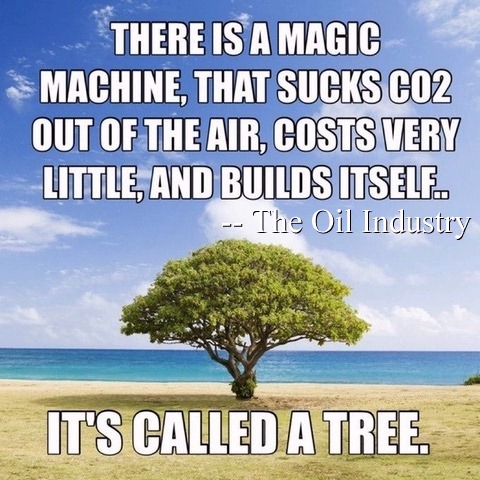
Giving carbon offsets for planting trees and allowing for the continued use of fossil fuels is greenwashing and accelerates the pace of climate change. This meme is an example. Unfortunately, the meme was created by the oil industry to spread misinformation. Trees are not machines; they are inefficient ‘carbon capture facilities’ and cannot substitute for reducing fossil fuel consumption.


Oil Industry Meme

Trees do not permanently sequester carbon. Much of the carbon stored in a tree is in the leaves, which usually last under a year. In one case study, the average life of a tree planted for carbon credit sequestration was 7 years. Additionally, ‘Tree Extinction Due to Human-Induced Environmental Stress‘ is already lowering the life expectancy of all trees. It is extremely rare for a tree to sequester carbon for the approximate 100-year lifespan of carbon in the atmosphere. You cannot burn carbon that has been sequestered for millions of years and expect trees to help in the long run. The important role of trees in climate change is their role as guardians of the soil. In general, climate scientists are against the use of tree sequestration for carbon credits. Giving carbon offsets for planting trees while allowing for the continued use of fossil fuels is greenwashing and accelerates the pace of climate change

THE OIL INDUSTRY STRATEGY
The fossil fuel industry uses carbon offsets as a strategy to maintain and even expand the use of fossil fuels while attempting to address concerns about climate change. Here’s how this works:

  1. Promoting Carbon Offsets: The fossil fuel industry invests in or purchases carbon offsets, which are credits representing reductions in greenhouse gas emissions achieved by others. These offsets can come from various projects such as reforestation, renewable energy, or methane capture.
  2. Continuing Emissions: By purchasing carbon offsets, fossil fuel companies claim to neutralize their own emissions. This allows them to argue that they can continue extracting, refining, and burning fossil fuels without increasing their net carbon footprint.
  3. Public Relations: The industry uses carbon offsets as part of their public relations strategy to portray themselves as environmentally responsible. This helps to counter criticism and regulatory pressure related to their contributions to climate change.
  4. Regulatory Compliance: In some regions, carbon offsets are part of cap-and-trade systems or carbon pricing mechanisms. By using offsets, fossil fuel companies can meet regulatory requirements without reducing their actual fossil fuel production and consumption.
  5. Delaying Transition: By relying on carbon offsets, the fossil fuel industry can delay transitioning to renewable energy sources. Offsets can be cheaper and less disruptive to their current business models compared to investing heavily in clean energy technologies.
  6. Economic Benefits: Investing in carbon offset projects can also bring economic benefits to fossil fuel companies. For instance, they might invest in projects that align with their other business interests or use offsets to enter new markets.

The fossil fuel industry uses carbon offsets to give the appearance of reducing their environmental impact while continuing to produce and use fossil fuels. This approach helps them meet regulatory requirements, maintain public support, and delay the transition to a low-carbon economy.

THE REAL PROBLEM
The exact amount of O2 contributed and CO2 absorbed is a complicated equation on a daily or yearly basis. Trees both absorb and emit CO2. However, this calculation is relatively meaningless because CO2 has an average lifespan in the atmosphere of 100 years. In contrast, 99% of a tree’s carbon has an average cycle of 7 years. Essentially, 0% of the CO2 causing climate change is stored in a tree. The importance of trees and forests lies in their role within the soil ecosystem. Trees act as caretakers for the CO2 stored in the soil.

CANADIAN WILDFIRE CASE STUDY
For a frightening example, look at the forest fires in Canada. These fires are more intense and frequent due to human CO2 emissions. Last year, Canada’s largest contributor to CO2 emissions was wildfires. While this may not be a significant factor in the long term, as that CO2 would have returned to the atmosphere within 50 years anyway, it creates a feedback loop that accelerates climate change.

But it gets worse. The real feedback loop problem is the permafrost. Forest fires and a warming climate have ignited the permafrost, causing ‘zombie fires’ that burned all winter under the snow and continue to burn this year. Millions of years of CO2 are stored in the permafrost. While we do not know exactly how much carbon is stored in nature, it is reasonable to assume that temperatures could be pushed from 3 degrees to 6 degrees above pre-industrial levels. Humans cannot thrive above a rise of 1.5 degrees. Much of the Earth will be uninhabitable if the temperature rises an additional 6 degrees Celsius. If humans also add 3 degrees Celsius, the temperature and humidity will approach a wet-bulb temperature that will not sustain human life.

From the album “Wood You Save the Trees?” by The Beatless Sense Mongers

MegaEpix Enormous

A song about The Human Induced Climate Change Experiment

bookmark_borderCould Use a Drink

[Intro]
Can’t even think
Can’t even blink
Could use a drink
[Break]
[Instrumental]
It’s so hot
(hot)

[Instrumental, Guitar Solo, Drum Fills]

[Verse 1]
What do you think
Too hot to blink
My eye’s so dry
Can’t even cry

[Chorus]
At this rate
Cast our fate
Can’t ask why (why?)
Tryin’ to die (sigh)

[Bridge]
[Instrumental, Saxophone Solo, Bass]
Hang my head
Oh, to cry
Half-way dead
Collective sigh
(Sigh)

[Instrumental, Guitar Solo, Drum Fills]

[Break]
[Instrumental]
It’s so hot
(hot, so hot)
Too, too hot
(hot, so hot)

[Instrumental, Guitar Solo, Drum Fills]

[Verse 2]
Could use a drink (too hot)
Too hot to think (too hot)
My mouth’s so dry (oh, so dry)
Can’t ask ’em why (too, too dry)

[Chorus]
At this rate
Cast our fate
Don’t ask why (why?)
Tryin’ to die (sigh)

[Bridge]
[Instrumental, Saxophone Solo, Bass]
Hang my head
Oh, to cry
Half-way dead
Collective sigh
(Sigh)

[Instrumental, Guitar Solo, Drum Fills]

[Chorus]
At this rate
Cast our fate
Don’t ask why (why?)
Tryin’ to die (sigh)

[Outro]
Can’t even think
Can’t even blink
Could use a drink

A MUSICAL NOTE
Ibanez electric/acoustic used for guitar effects, harmonics, and percussion.

Also of note, I’m fascinated by how the AI model utilizes my sound library, seamlessly integrating my previously recorded sounds into ‘intelligent’ spots. In this song, for example, not only is it ‘real’ guitar from this session, but I’m also playing trumpet and keys, and who knows what else from previous sessions. What a blast!

A SCIENCE NOTE
The greatest health risk from climate change to those alive today is the increased moisture content in the air (relative humidity) combined with the increased temperatures. Climate change and rising temperatures significantly increase the humidity in the atmosphere due to the relationship between temperature and the air’s capacity to hold moisture. The Clausius-Clapeyron equation describes this relationship, indicating that for every 1C (1.8F) increase in temperature, the air can hold about 7% more water vapor.

Right now, where I live, the air contains about 28% more moisture than ever before. We also have record high temperatures and an air quality alert due to pollution.

From the album “Hold the Onions” by The Beatless Sense Mongers

MegaEpix Enormous

A song about The Human Induced Climate Change Experiment

bookmark_borderYou Can’t Backup Here

[Intro]
Beep, beep, beep
(Beep, beep, beep)
Can’t you hear
You can’t backup here

[Verse 1]
We can’t turn back the clock
The damage is done to our rock
Third from the sun
Coming undone

[Bridge]
[Instrumental]
Beep, beep, beep
(Beep, beep, beep)
Can’t you hear
You can’t backup here

[Chorus]
Can’t backup
Better wake-up
(Better wake-up)
Gotta catch up
Better wake-up
(Better wake-up)

[Instrumental, Guitar Solo, Drum Fills]

[Verse 2]
We can’t un-ring the bell
Well, can’t you really tell
Third rock from the sun
Coming undone

[Bridge]
[Instrumental]
Beep, beep, beep
(Beep, beep, beep)
Can’t you hear
You can’t backup here

[Chorus]
Can’t backup
Better wake-up
(Better wake-up)
Gotta catch up
Better wake-up
(Better wake-up)

[Instrumental, Guitar Solo, Drum Fills]

From the album “Brave Knew World” by The Electric Slugs

MegaEpix Enormous

A song about The Human Induced Climate Change Experiment

bookmark_borderMelting Ice Cube

[Intro]
Rube,
Watch the ice cube
“I’m melting”

[Verse 1]
Look what you’ve dumb!
I’m melting (melting)
Ohhhhh, what a world
(Oh, what a world)

[Bridge]
[Instrumental, Guitar]
Can’t destroy my beautiful wickedness
With hearts that could careless
Clean up your mess

[Chorus]
Melting ice cube
From solid, to liquid, to gas
(Going fast)
Mind’s a vacuum tube
Ear to ear you can pass
(Never last)

[Instrumental, Guitar Solo, Drum Fills]

[Verse 2]
Who me? Dud you call?
I’m not a witch at all
Cursed brat!
Imagine that

[Bridge]
[Instrumental, Guitar]
Ohhhhh, what a world
(Oh, what a world)
Can’t destroy my beautiful wickedness
With hearts that could careless
Clean up your mess

[Chorus]
Melting ice cube
From solid, to liquid, to gas
(Going fast)
Mind’s a vacuum tube
Ear to ear you can pass
(Never last)

[Instrumental, Guitar Solo, Drum Fills]

[Bridge]
[Instrumental, Guitar]
Ohhhhh, what a world
(Oh, what a world)
Can’t destroy my beautiful wickedness
With hearts that could careless
Clean up your mess

[Chorus]
Melting ice cube
From solid, to liquid, to gas
(Going fast)
Mind’s a vacuum tube
Ear to ear you can pass
(Never last)

[Instrumental, Guitar]

[Outro]
Ohhhhh, what a world
(Oh, what a world)

A SCIENCE NOTE
A song about glaciers turning into relative humidity. The greatest health risk from climate change to those alive today is the increased moisture content in the air (relative humidity) combined with the increased temperatures.

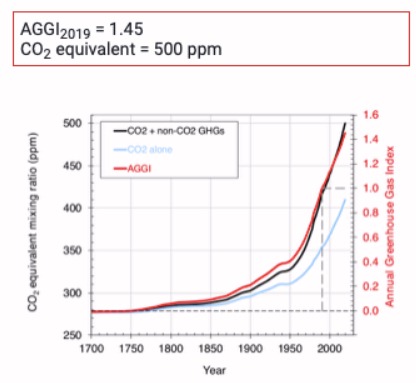
The largest health risk to people in the future could be sea level rise. If we can keep CO2 equivalents to 500 ppm or so, we may be able to hold East Antarctica; however, if that goes, expect another couple hundred feet of sea level rise.


CO2 equivalent

From the album “Brave Knew World” by The Electric Slugs

MegaEpix Enormous

A song about The Human Induced Climate Change Experiment

bookmark_borderSOS (Send Less Mess)

[Intro]
S.O.S.
Under stress
S.O.S.
Under duress
Please…
Send less mess

[Verse]
Unfortunately,
Can you rescue me
(You rescue)
(Me unfortunately)

[Bridge]
[Instrumental, Guitar Solo, Drum Fills]
Can’t believe
Hard to breathe
(Can’t believe)
(Hard to breathe)
S.O.S.
(Under stress)
S.O.S.
(Under duress)
Please…
Send less mess
Less mess!

[Chorus]
Thieves!
Took my breath away
Thieves!
Ruined our way

[Break]
[Instrumental, Saxophone Solo, Bass]
Save the day!
Took my breath away
Save the day!

Going down now, (going down)
Going d-d-d-d-down
Woo, woo

[Instrumental, Harmonica Solo, Guitar]

S.O.S.
(Under stress)
S.O.S.
(Under duress)
Please…
Send less mess
Less mess!

A SCIENCE NOTE

Earth’s Current Climate Status

“We’ve entered the Age of Loss and Damage, but we’re just at the start. What we are seeing already just makes you want to cry,” expressed Dr. Christopher Trisos from the University of Cape Town in a recent BBC interview (MP3 Format). He highlighted the inevitability of loss and damage but emphasized that there are significant measures we can take to mitigate it.

In the 20th century, the Earth’s surface temperature averaged 13.9℃. However, in the first weeks of July 2023, the global average temperature surged to 17℃, marking a concerning shift. The question arises: Can humans endure temperatures greater than 3℃? The answer is a grim “probably not long,” as such extremes have never been experienced by humanity before.

September 6, 2023, marked a dire warning from United Nations Secretary-General Antonio Guterres, following the World Meteorological Organization’s report on the hottest Northern Hemisphere summer in human history. Guterres stated, “The dog days of summer are not just barking, they are biting,” emphasizing the severity of the situation.

Climate breakdown, the most alarming development, occurs when feedback loops are triggered, and tipping points are crossed. This leads to the extinction of plants, the disappearance of carbon sinks, and an exponential acceleration of Earth’s temperature. The consequences are dire, with the potential disappearance of vital resources like food, fresh water, and breathable air, likely followed by catastrophic impacts on human survival.

In October 2023, the European Space Agency’s Copernicus Climate Change Service reported that the average temperature for September hit 16.38 degrees Celsius, surpassing the previous record set in September 2020 by 0.5 degrees Celsius. Copernicus Director Carlo Buontempo described it as “mind-blowing” and emphasized the devastating impacts on people and ecosystems, citing destruction of assets, infrastructure, and harvests. “What we are observing, are not only new extremes but the persistence of these record-breaking conditions, and the impacts these have on both people and planet, are a clear consequence of the warming of the climate system,” Director Buontempo said.

By January 2024, the Earth had experienced an alarming annual average temperature increase of over 1.5 degrees Celsius. This temperature rise continued in February 2024, with a monthly average reaching 1.77 degrees above pre-industrial levels, occurring centuries earlier than previously predicted. The urgency to address and combat climate change has never been more critical.

In a significant update from May 2024, scientists determined through tree ring analysis that the average temperature increase in 2023 reached 2.07 degrees Celsius, further underscoring the escalating pace of climate change and its profound impact on global ecosystems.

June 6, 2024 — Carbon dioxide is accumulating in the atmosphere faster than ever — accelerating on a steep rise to levels far above any experienced during human existence, scientists from NOAA and the Scripps Institution of Oceanography at the University of California San Diego announced today. “Over the past year, we’ve experienced the hottest year on record, the hottest ocean temperatures on record and a seemingly endless string of heat waves, droughts, floods, wildfires and storms,” said NOAA Administrator Rick Spinrad, Ph.D. “Now we are finding that atmospheric CO2 levels are increasing faster than ever. We must recognize that these are clear signals of the damage carbon dioxide pollution is doing to the climate system, and take rapid action to cut fossil fuel use as quickly as we can.”

From the album “Free Democracy” by The Beatless Sense Mongers

MegaEpix Enormous

A song about The Human Induced Climate Change Experiment

bookmark_borderIt Ain’t the Heat

[Intro]
Have you heard the news?
Hey, Philadelphia,
Have you heard the knews?

[Verse]
Have you heard the news
The summer time blues
Started way too soon
(Too, too, too soon)
In the month of June

[Instrumental, Guitar Solo]

[Bridge]
The temperature (the temperature)
And the moisture (the moisture)
Put me under pressure
(Under pressure)
That’s for sure
(Under pressure)
(Too, too, too soon)

[Chorus]
It ain’t the heat (heartbeat)
It’s the humidity (clearly)
Wet-bulb sob
The humidity
Killing me

[Instrumental, Guitar, Harmonica]

[Bridge]
I regret
It’s not even summer yet!
Boo, hoo
Summertime blues, and…
It’s not even summer yet!

[Breakdown]
[Bridge]
The temperature (the temperature)
And the moisture (the moisture)
Put me under pressure
(Under pressure)
That’s for sure
(Under pressure)
(Too, too, too soon)

A SCIENCE NOTE
The greatest short term climate change risk to human health is deadly humid heat (wet-bulb temperature).

A Wet-bulb measures the temperature read by a thermometer covered in a wet cloth. As water evaporates from the cloth, evaporation cools the thermometer. This mirrors how the human body cools itself with sweat. The higher the heat and humidity (heat index), the harder it is for sweat to evaporate. The study Adaptability Limit to Climate Change Due to Heat Stress found that a wet-bulb temperature of 35C (95F) at 100% humidity, or 115F at 50% humidity, would be the upper limit of safety, beyond which the human body can no longer cool itself by evaporating sweat from the surface of the body to maintain a stable body core temperature.

When the “wet bulb” temperature reaches a temperature too hot for humans to sweat, it is referred to as the “wet-bulb temperature threshold” or simply the “wet-bulb limit.” This limit represents the maximum temperature at which evaporation from a wet surface, such as the skin, can effectively cool the human body through sweating. Beyond this threshold, the body’s ability to regulate its internal temperature becomes severely compromised, posing a significant risk to human health and well-being.

When the temperature exceeds the wet-bulb temperature threshold, the human body faces significant risks of heat-related illnesses and potentially fatal heatstroke. Under such conditions, the body’s ability to cool itself through perspiration is severely compromised, leading to a rapid rise in core body temperature. As a result, individuals may experience symptoms such as dizziness, fatigue, rapid heartbeat, nausea, and confusion. Without intervention, heat exhaustion can progress to heatstroke, a life-threatening condition characterized by a core body temperature above 40°C (104℉), accompanied by neurological symptoms such as seizures, delirium, and loss of consciousness. Heatstroke requires immediate medical attention and can be fatal if left untreated.

Exposure to temperatures exceeding the wet-bulb threshold poses a grave risk to human health and highlights the urgent need for effective measures to mitigate and adapt to the impacts of climate change, which can exacerbate extreme heat events and increase the frequency of conditions exceeding this critical threshold.

From the album “Free Democracy” by The Beatless Sense Mongers

MegaEpix Enormous

A song about The Human Induced Climate Change Experiment

bookmark_borderTo the Touch

[Intro]
No more more
No more
Say no more
We’ve turned it up
Way too much
Now, it’s hot to the touch!

[Verse 1]
Drill, drill, drill
Bring on the ill
How long to endure
Till there is no more?

[Break]
No more more
No more
Say no more
We’ve turned it up
Way too much
Now, it’s hot to the touch!

[Bridge]
[Instrumental, Guitar Solo, Drum Fills]

[Verse 2]
Spill, spill, spill
Bring on the ill
How long to endure
Till there is no more?

[Bridge]
No more more
No more
Say no more
We’ve turned it up
Way too much
Now, it’s hot to the touch!

[Instrumental, Saxophone Solo, Bass]

[Outro]
We’ve turned it up
Way too much
Now, it’s hot to the touch!


A SCIENCE NOTE
Our climate model / experiment employs chaos theory to comprehensively consider human impacts and projects a potential global average temperature increase of 9℃ above pre-industrial levels. Global warming is a consequence of elevated thermal energy in the climate system, which comprises various subsystems. Chaos theory underscores the intricate and nonlinear nature of dynamic systems. Previous climate models have inadequately incorporated “social-ecological systems” as human involvement was not a significant factor in past climate changes. Regrettably, the United States ranks among the least prepared countries globally, with the highest percentage of climate deniers. Politicians hinder the fight against climate change exacerbating the problem. The Republican party dismisses it as a manufactured crisis and plans to increase fossil fuel production. Political extremists asserting that the climate crisis is manufactured employ an ironic term, considering that human manufacturing activities are the primary driver of climate change. Under President Biden, the United States has continued to be the world’s largest producer of oil, including crude oil, natural gas liquids, and other petroleum products. Both political parties have concurred to allocate unlimited emergency funding for climate disasters instead of proactively preventing them. Last year, the US witnessed a record number of over a billion-dollar climate disasters, totaling 28 separate weather and climate-related events. It is due to this arrogance and ignorance that “worst-case scenarios” are now “best-case scenarios” for the acceleration of climate change. These factors have altered our climate model, shifting the projected maximum temperature rise from 4 degrees Celsius over the next millennium to a probable increase of 9 degrees Celsius this century. A 9-degree Celsius increase would bring the Earth close to a wet-bulb temperature incapable of sustaining human life.

From the album “Free Democracy” by The Beatless Sense Mongers

MegaEpix Enormous

A song about The Human Induced Climate Change Experiment

bookmark_borderExtreme Extreme

[Intro]
Mean extreme
I mean
Extreme extreme

[Verse 1]
Heavier rainfall
Brings on the floods
Well, after all
Governed by duds

[Bridge]
Mean extreme
I mean
Extreme extreme

[Chorus]
Watch the primate
Gyrate
Can’t win
Putting a spin
On the climate

[Instrumental, Guitar Solo, Drum Fills]

[Verse 2]
Drier droughts
No doubt
Can’t you see
The rising sea
A bout
Of severity

[Bridge]
Mean extreme
I mean
Extreme extreme

[Chorus]
Watch the primate
Gyrate
Can’t win
Putting a spin
On the climate

[Instrumental, Saxophone Solo, Bass]

[Bridge]
Higher highs
Lower lows
Whichever way the wind blows
Drier drys
No one knows
Whichever way the wind blows

[Instrumental, Guitar Solo, Drum Fills]

[Outro]
Higher highs
Lower lows
Whichever way the wind blows
Drier drys
No one knows
Whichever way the wind blows

A SCIENCE NOTE

How Climate Change Intensifies Weather Extremes

1. Increased Atmospheric Water Vapor

Mechanism: Warmer air holds more moisture. For every degree Celsius of warming, the atmosphere can hold about 7% more water vapor . This additional moisture can lead to more intense precipitation events when conditions are right.

Impact: This results in heavier rainfall, leading to increased flood risks during storms.

Example: Record-breaking rainfall and flooding events, such as those seen in Europe in 2021 and the U.S. in 2022, are becoming more frequent and severe .

2. Enhanced Heatwaves

Mechanism: Higher global temperatures increase the frequency, duration, and intensity of heatwaves. Climate change shifts the distribution of temperature extremes, making hot days hotter and more common.

Impact: Increased risk of heat-related illnesses, wildfires, and strain on energy resources due to higher demand for air conditioning.

Example: The heatwave in the Pacific Northwest in 2021 set all-time high temperature records and led to hundreds of deaths .

3. Intensified Storms and Hurricanes

Mechanism: Warmer sea surface temperatures provide more energy to storms and hurricanes, increasing their intensity. Additionally, higher temperatures can lead to more rapid intensification of these systems.

Impact: Stronger winds, heavier rainfall, and higher storm surges cause more damage to coastal areas.

Example: Hurricanes like Harvey (2017), which dropped unprecedented rainfall in Texas, and Dorian (2019), which devastated the Bahamas, exemplify this trend .

4. Prolonged Droughts

Mechanism: Changes in precipitation patterns and increased evaporation rates due to higher temperatures contribute to longer and more severe droughts.

Impact: Reduced water supply, agricultural losses, and increased wildfire risk.

Example: The prolonged droughts in California over the past decade have led to significant water shortages and increased wildfire activity .

5. More Severe Winter Storms

Mechanism: Disruptions in the jet stream, partially driven by Arctic warming, can lead to unusual patterns that result in severe winter storms in certain regions.

Impact: Increased snowfall, ice storms, and prolonged cold spells can disrupt infrastructure, travel, and power supplies.

Example: The February 2021 winter storm in Texas caused widespread power outages and significant damage due to unprecedented cold temperatures .

6. Rising Sea Levels

Mechanism: Melting polar ice and thermal expansion of seawater due to warming contribute to rising sea levels.

Impact: Increased coastal flooding, erosion, and higher storm surges during extreme weather events.

Example: Coastal areas around the world, such as Miami and the Maldives, are experiencing more frequent and severe flooding events .

Summary

Climate change is a key driver in the increasing frequency and intensity of various weather extremes. The complex interactions between higher temperatures, altered precipitation patterns, and changing oceanic conditions create a more volatile and unpredictable climate system. This underscores the urgency for robust climate mitigation and adaptation strategies globally.

Our climate model / experiment employs chaos theory to comprehensively consider human impacts and projects a potential global average temperature increase of 9℃ above pre-industrial levels. Global warming is a consequence of elevated thermal energy in the climate system, which comprises various subsystems. Chaos theory underscores the intricate and nonlinear nature of dynamic systems. Previous climate models have inadequately incorporated “social-ecological systems” as human involvement was not a significant factor in past climate changes. Regrettably, the United States ranks among the least prepared countries globally, with the highest percentage of climate deniers. Politicians hinder the fight against climate change exacerbating the problem. The Republican party dismisses it as a manufactured crisis and plans to increase fossil fuel production. Political extremists asserting that the climate crisis is manufactured employ an ironic term, considering that human manufacturing activities are the primary driver of climate change. Both political parties have concurred to allocate unlimited emergency funding for climate disasters instead of proactively preventing them. Last year, the US witnessed a record number of over a billion-dollar climate disasters, totaling 28 separate weather and climate-related events. It is due to this arrogance and ignorance that “worst-case scenarios” are now “best-case scenarios” for the acceleration of climate change. These factors have altered our climate model, shifting the projected maximum temperature rise from 4 degrees Celsius over the next millennium to a probable increase of 9 degrees Celsius this century. A 9-degree Celsius increase would bring the Earth close to a wet-bulb temperature incapable of sustaining human life.

From the album “Free Democracy” by The Beatless Sense Mongers

MegaEpix Enormous

A song about The Human Induced Climate Change Experiment

bookmark_borderCrossing the Rubicon

[Intro]
What?
Really? Come on,
Crossing the Rubicon
Passed the point of know return
Will we ever learn?

[Verse 1]
Going to blast past
Foot on the gas
Going to blow by
Don’t know why

[Bridge]
Crossing the line
At this very time

[Chorus]
Really? Come on,
Crossing the Rubicon
Passed the point of know return
Will we ever learn?

[Instrumental, Guitar Solo, Drum Fills]

[Verse 2]
Turning up the heat
Till we’re cooked complete
Refuse to retreat
Even though we’re beat

[Bridge]
Crossing the line
At this very time

[Chorus]
Really? Come on,
Crossing the Rubicon
Passed the point of know return
Will we ever learn?

[Instrumental, Saxophone Solo, Bass]

[Bridge]
Crossing the line
At this very time
Off the ledge
Over the edge
No stall free-fall

[Instrumental, Piano]

[Outro]
Crossing the line
At this very time
Off the ledge
Over the edge
No stall free-fall

Origin of the Phrase
“Crossing the Rubicon” is an idiom that means passing a point of no return. It originates from a historical event involving Julius Caesar in 49 BCE.

The phrase comes from an incident during the Roman Republic. Julius Caesar, a Roman general and statesman, led his army across the Rubicon River, which marked the boundary between the Roman province of Cisalpine Gaul and Italy proper, controlled directly by Rome. By crossing this river with his army, Caesar defied the Roman Senate’s explicit orders and initiated a civil war.

A SCIENCE NOTE
Tipping points are Critical Milestones that directly impact the rate of acceleration in climate change by multiplying the number and intensity of feedback loops. Identifying and understanding these tipping points is crucial for climate science and policymaking. Crossing multiple tipping points could lead to a domino effect, resulting in a much more rapid and severe climate change than currently projected.

Push a glass toward the edge of a table and eventually it will fall off on its own. No matter how slowly or meticulously you push… no matter how you weight or fill the glass, it will reach a tipping point and fall off before being pushed completely off the table. No matter whether you believe the glass is half-empty or half-full, when the tipping point is reached it will plummet out-of-control to its end. This is science not fate, faith, nor belief. Human induced climate change has resulted in environmental tipping points being breached.

Tipping points, when crossed, trigger self-sustaining feedback loops that are no longer dependent on human activity. Similar to when a domino topples over hitting two more dominoes that in turn fall hitting more dominoes. Thus, the name The Domino Effect. It can also be visualized as The Snowball Effect. A tipping point is like a snowball rolling down a hill growing in mass and velocity (momentum). When a tipping point is crossed, it results in cumulative and reinforced global warming.

A look at seven of the nine tipping points crossed that show the proverbial snowball is already rolling. The first dominoes have fallen and will continue to knock down more tiles with each escalating step.

From the album “Free Democracy” by The Beatless Sense Mongers

MegaEpix Enormous

A song about The Human Induced Climate Change Experiment

bookmark_borderSpend (Bring on the End)

[Intro]
All in favor, say “Aye.”
No, not I

[Verse 1]
The right is wrong
The left has left
All in favor, say “Aye.”
No, not I

[Chorus]
All in favor, say “Aye.”
No, not I
No time to cry
We’re all gonna die

[Bridge]
Why not try
To get by?

[Instrumental, Guitar Solo, Drum Fills]

[Verse 2]
The right ain’t bright
What’s left lost sight
All in favor, say “Aye.”
No, not I

[Chorus]
All in favor, say “Aye.”
No, not I
No time to cry
We’re all gonna die

[Bridge]
Why not try
To get by?

[Instrumental, Saxophone Solo, Bass]

[Bridge]
Spend, spend, spend
Bring on The End
Borrow, if they’ll lend
Spend
Bring on The End

[Instrumental, Guitar Solo, Drum Fills]

[Outro]
Spend, spend, spend
Bring on The End
Borrow, if they’ll lend
Spend
Bring on The End

A SCIENCE NOTE
Both political parties have concurred to allocate unlimited emergency funding for climate disasters instead of proactively preventing them. This approach highlights a reactive stance towards climate change rather than a proactive one. The decision to focus on emergency funding underscores a tendency to address the immediate aftermath of climate-related disasters, such as hurricanes, wildfires, and floods, which often result in substantial loss of life, property damage, and economic disruption.

Emergency funding is crucial for disaster relief and recovery efforts, ensuring that affected communities receive the necessary support to rebuild and recover. However, this strategy can be seen as shortsighted because it does not address the root causes of climate change or invest in measures to mitigate its impacts. Proactive measures, such as investing in renewable energy, enhancing infrastructure resilience, implementing stricter environmental regulations, and promoting sustainable practices, can significantly reduce the frequency and severity of climate disasters.

The reliance on emergency funding also strains public resources and can lead to higher long-term costs. By not investing in preventative measures, the government may face escalating expenses as climate change continues to intensify and increase the occurrence of extreme weather events.

In summary, while both political parties recognize the need for immediate relief in the face of climate disasters, there is a critical need for a more balanced approach that includes significant investments in preventative measures. This dual strategy would help mitigate the impacts of climate change and reduce the need for emergency funding over time, leading to a more sustainable and resilient future.

From the album “Free Democracy” by The Beatless Sense Mongers

MegaEpix Enormous

A song about The Human Induced Climate Change Experiment