Climate Change Is Disrupting the Biology of Life
Climate change is not just changing the planet—it is changing us. Extreme heat, shifting seasons, storms, and pollution are disrupting our circadian rhythms, damaging sleep, altering the gut microbiome, and destabilizing the gut-brain axis.
Protecting the climate means protecting the systems that keep us alive.
One of the most significant and underappreciated health consequences of climate change is the disruption of human circadian rhythms through heat stress, seasonal disruption, and extreme weather events, triggering cascading feedback interactions among sleep, the gut microbiome, the gut-brain axis, immune function, and neurological health.
Climate change is not merely an increase in average temperature. It represents a system-wide environmental destabilization that alters the timing, intensity, and predictability of the natural signals that regulate human biology. The human circadian system evolved under relatively stable patterns of light, temperature, seasons, and environmental cycles. Rapid climate change is now disrupting these biological cues faster than human physiology can adapt.
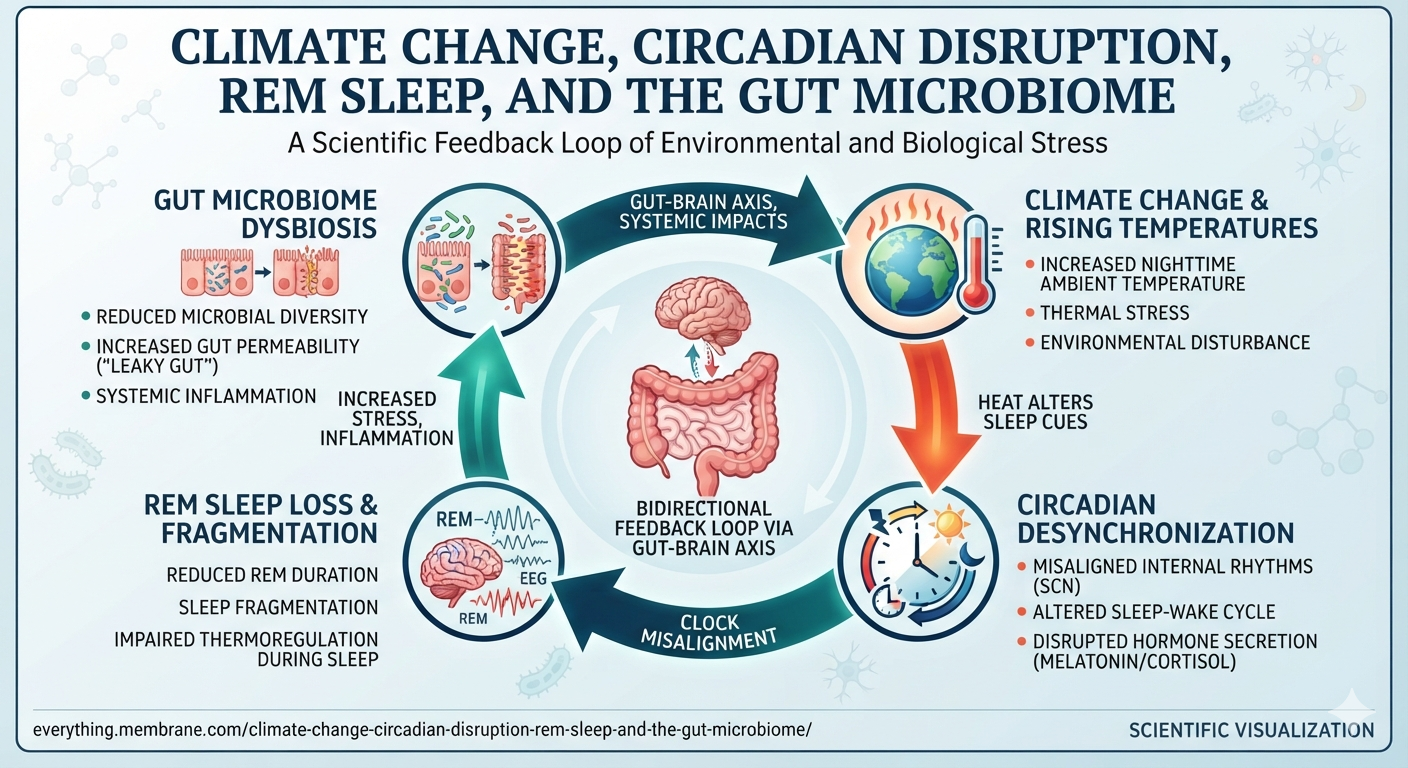
The Nonlinear Climate Acceleration Hypothesis proposes that climate impacts increasingly emerge through interacting feedback loops rather than simple linear progression. Within the human body, climate-driven stressors can create similar accelerating feedback systems. Rising temperatures, shifting seasons, extreme weather events, and increasing environmental instability disrupt sleep and circadian regulation. Sleep disruption then damages metabolic, immune, and neurological systems, creating additional physiological stress that further reduces resilience.
The result is a climate-driven biological feedback loop:
Climate Stress → Circadian Disruption → Sleep Loss → Gut Dysbiosis → Inflammation → Reduced Adaptation Capacity → Greater Vulnerability to Climate Stress
Human biology is synchronized by environmental timing signals known as zeitgebers. The strongest of these are sunlight exposure, temperature cycles, seasonal changes, and predictable daily patterns. Climate change is altering each of these signals.
One of the most important climate-related sleep disruptions is the rapid increase in nighttime temperatures. Nighttime temperatures are rising faster than daytime temperatures in many regions, reducing the natural cooling period required for restorative sleep.
Human sleep initiation depends on a decline in core body temperature. During heatwaves, elevated nighttime temperatures prevent this cooling process, increasing nighttime awakenings and reducing both deep N3 slow-wave sleep and rapid eye movement (REM) sleep.
Even modest increases in nighttime temperature can produce measurable sleep losses, particularly among older adults, people without climate-controlled environments, and vulnerable populations.
While increasing temperatures receive significant attention, the disruption of seasonal cycles represents another major but less recognized climate threat.
For thousands of years, human physiology adapted to predictable seasonal patterns:
Climate change is now altering this biological calendar.
Warmer conditions are extending the length of spring and delaying the onset of autumn. In many regions, growing seasons have expanded by weeks on both ends, creating longer periods of heat exposure and reduced seasonal cooling.
This seasonal compression disrupts:
The circadian system does not only operate on a 24-hour cycle. Humans also possess annual biological rhythms that respond to seasonal changes in temperature and daylight. Rapid seasonal shifts create a form of biological “seasonal jet lag,” where internal timing becomes increasingly misaligned with environmental conditions.
Climate change is also increasing the frequency and intensity of extreme weather events that directly interfere with human sleep.
More intense storms create multiple pathways for sleep disruption:
Floods, hurricanes, tornadoes, and severe thunderstorms can create prolonged periods of psychological stress that activate the sympathetic nervous system and disrupt normal sleep architecture.
Increasing wildfire activity introduces another sleep-related climate stressor.
Smoke exposure can:
Poor air quality often forces people indoors with reduced ventilation, altered routines, and additional psychological stress.
Drought increases heat exposure, reduces nighttime cooling through vegetation loss, and contributes to prolonged periods of environmental stress. Agricultural and economic impacts also increase anxiety and chronic stress, further impairing sleep.
Climate-driven environmental instability disrupts the microbiota-gut-brain axis, creating a self-amplifying biological cascade.
Climate-Induced Heat Stress + Seasonal Disruption + Extreme Weather Stress
→ Circadian Disruption
→ REM & Deep Sleep Depletion
→ Elevated Cortisol & HPA Activation
→ Intestinal Permeability ("Leaky Gut")
→ Gut Microbiome Dysbiosis
→ Reduced Neurotransmitter Production (Serotonin, GABA, SCFAs)
→ Further Circadian Disruption
→ ... Amplify and Repeat...
This represents a biological example of nonlinear acceleration: multiple stressors interact and amplify each other rather than producing independent effects.
Thermal stress, storm-related anxiety, and circadian disruption reduce restorative sleep. Loss of REM and deep sleep activates the hypothalamic-pituitary-adrenal (HPA) axis, increasing cortisol levels.
Chronic cortisol elevation:
Because gut bacteria themselves follow circadian rhythms, disrupted sleep directly alters microbial activity and metabolism.
During extreme heat, the body redirects blood flow toward the skin to support cooling. This reduces blood flow available to internal organs, including the gastrointestinal tract.
Reduced intestinal circulation can weaken the epithelial barrier, increasing intestinal permeability.
The result is:
Heat Stress → Reduced Gut Barrier Integrity → Increased Inflammatory Molecules in Bloodstream → Systemic Inflammation
This inflammatory state further damages sleep quality and neurological regulation.
A healthy microbiome produces compounds essential for neurological balance and sleep regulation.
Beneficial bacteria produce SCFAs such as butyrate, which support:
Microbes including Lactobacillus and Bifidobacterium contribute to pathways involved in producing:
Gut dysbiosis alters tryptophan metabolism, reducing the availability of compounds needed for serotonin and melatonin production.
The result is another reinforcing cycle:
Climate Stress → Poor Sleep → Gut Dysfunction → Reduced Sleep Chemistry → Worse Sleep
| Health System | Climate-Sleep-Gut Mechanism | Potential Outcomes |
|---|---|---|
| Metabolic | Loss of microbial rhythms and impaired glucose regulation | Obesity, insulin resistance, Type 2 diabetes |
| Immune | Increased gut permeability and chronic inflammation | Autoimmune dysfunction, inflammatory disease |
| Neurological | Reduced REM sleep and neurotransmitter disruption | Anxiety, depression, cognitive decline |
| Cardiovascular | Elevated cortisol and chronic stress response | Hypertension, cardiovascular disease |
| Psychological | Repeated disasters and climate anxiety | Chronic stress, reduced resilience |
During heat events, maintain cooler sleeping environments using:
A cooler bedroom supports natural nighttime temperature decline.
Strengthen biological timing through:
Promote microbial diversity through:
Time-restricted eating can reinforce peripheral circadian clocks in the liver and gut, helping compensate for environmental disruption.
Climate change is increasingly affecting human health through pathways that extend far beyond direct heat exposure. By altering temperatures, seasonal cycles, storm patterns, air quality, and environmental predictability, climate instability is disrupting the biological timing systems that regulate human physiology. These disruptions affect not only sleep and circadian rhythms, but also the interconnected networks linking the brain, immune system, metabolism, and the gut microbiome.
The interaction between circadian disruption, REM sleep loss, microbiome deterioration, and impairment of the gut-brain axis represents a self-reinforcing biological feedback system consistent with the principles of the Nonlinear Climate Acceleration Hypothesis. Disrupted sleep can alter microbial diversity and intestinal permeability, while changes in the gut microbiome can influence inflammation, stress regulation, cognition, and neurological function through the gut-brain axis. Together, these processes create cascading effects that may amplify the physiological burden of climate stress.
As climate instability increases, these biological disruptions may not progress in a simple linear manner. Instead, interacting stressors—including extreme heat, seasonal disruption, severe storms, air pollution, and chronic environmental uncertainty—may accelerate one another, progressively reducing human resilience and increasing vulnerability to chronic disease.
A critical concern is the emergence of a biological tipping cascade, in which multiple interconnected systems begin to amplify one another beyond their ability to self-correct. Persistent climate-driven circadian disruption can impair sleep quality, weaken immune regulation, alter the gut microbiome, and destabilize the gut-brain axis. These changes can increase inflammation, stress hormone activation, and neurological vulnerability, creating feedback loops that further reduce the capacity of the human body to adapt. Much like tipping dynamics observed in Earth systems, biological systems may not fail through a single catastrophic event but through the accumulation and interaction of multiple smaller disruptions that collectively push the system toward a less resilient state.
Climate change is therefore not only an environmental crisis or a climate system disruption—it is increasingly becoming a biological timing crisis. By interfering with the rhythms that synchronize human physiology with the natural world, climate change threatens the delicate regulatory systems that allow humans to sleep, heal, adapt, and maintain health. Understanding these nonlinear interactions is essential because protecting climate stability is also a means of protecting the biological systems that sustain human resilience.
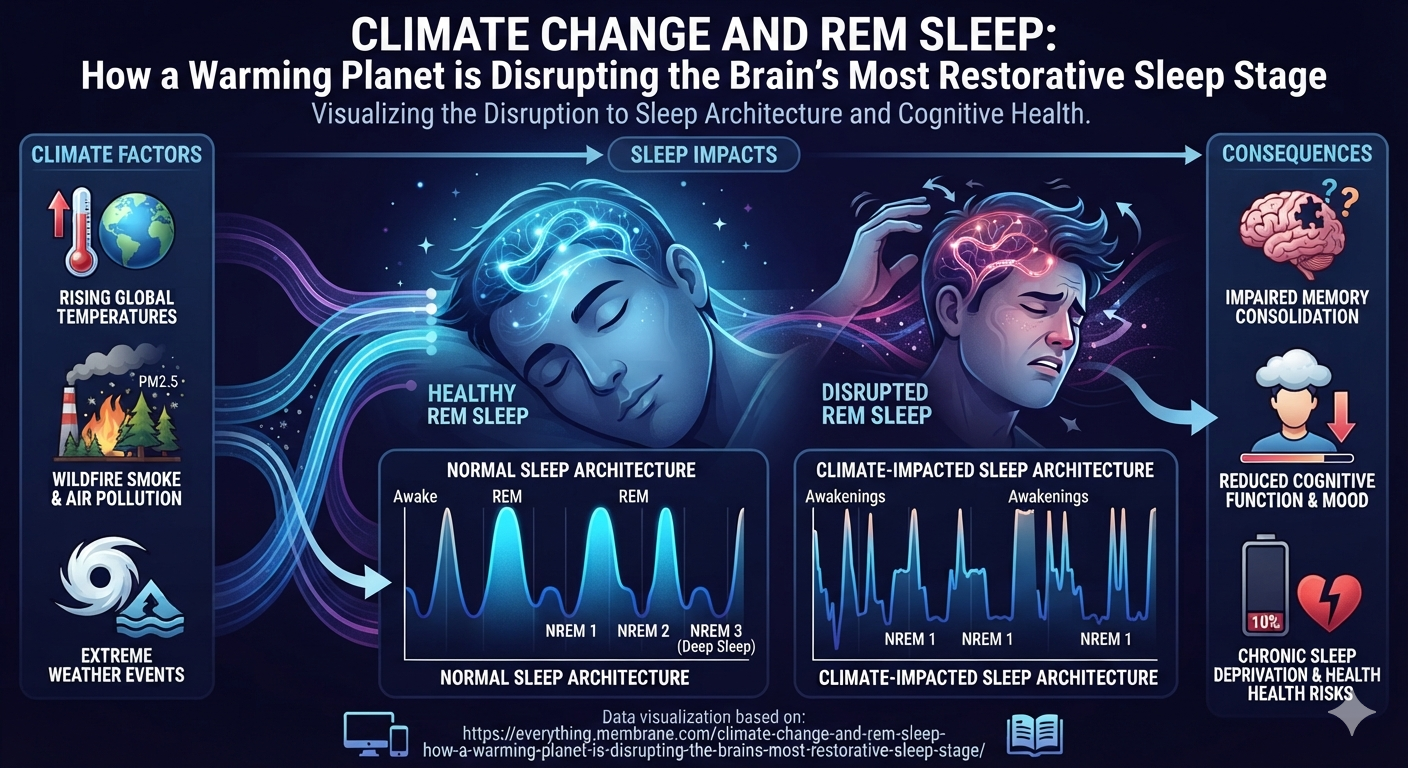
How warming nights impair memory, emotion, and cognition.
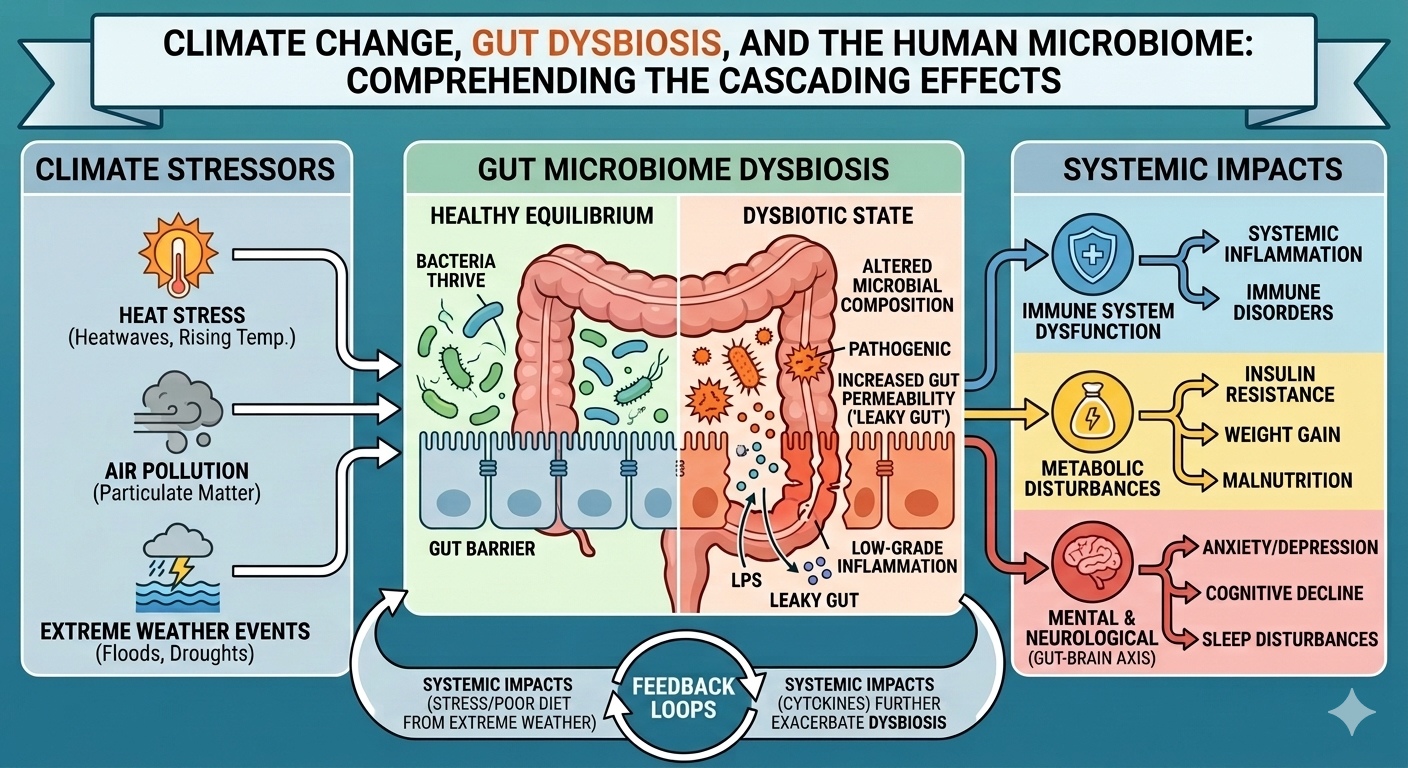
Climate-driven dysbiosis and systemic health effects.
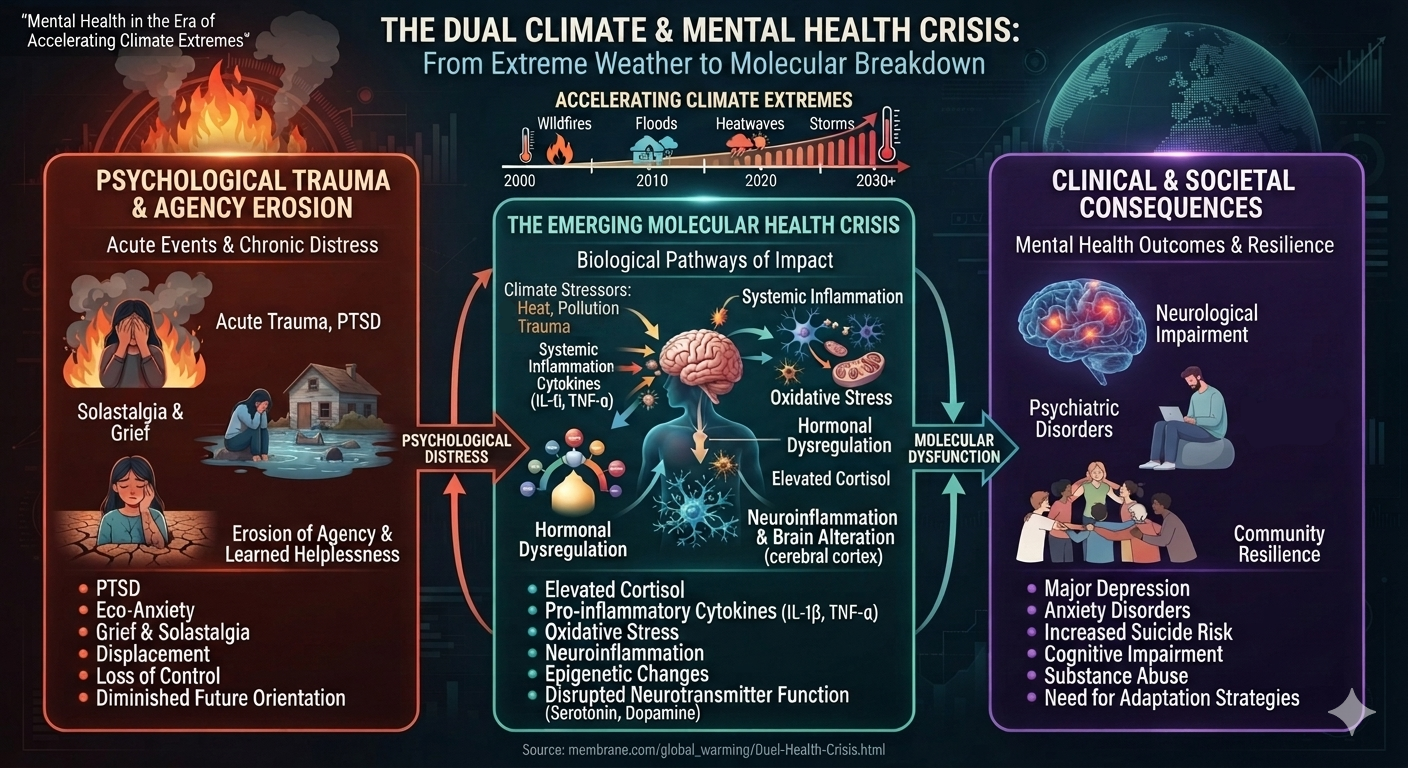
Psychological trauma, agency, resilience, and molecular health consequences.
Additional Resources
Human-Caused Climate Change and Heatwave Trends: Heat Can Kill. Heat Will Harm.
Heat Stress, Environmental Stressors, and the Limits of Human Adaptability
Elevated Nighttime Minimum Temperatures: Climate Change, Feedback Processes, and Heat-Health Impacts
Heat Stress and the Emerging Physiological Limits of Climate Change
Climate Change and Deadly Humid Heat
Climate-Driven Health Collapse Overview
* Our probabilistic, ensemble-based climate model — which incorporates complex socio-economic and ecological feedback loops within a dynamic, nonlinear system — projects that global temperatures are becoming unsustainable this century. This far exceeds earlier estimates of a 4°C rise over the next thousand years, highlighting a dramatic acceleration in global warming. We are now entering a phase of compound, cascading collapse, where climate, ecological, and societal systems destabilize through interlinked, self-reinforcing feedback loops.
We examine how human activities — such as deforestation, fossil fuel combustion, mass consumption, industrial agriculture, and land development — interact with ecological processes like thermal energy redistribution, carbon cycling, hydrological flow, biodiversity loss, and the spread of disease vectors. These interactions do not follow linear cause-and-effect patterns. Instead, they form complex, self-reinforcing feedback loops that can trigger rapid, system-wide transformations — often abruptly and without warning. Grasping these dynamics is crucial for accurately assessing global risks and developing effective strategies for long-term survival.
Bottom line: The question is no longer how warm the planet becomes, but how life on Earth can endure when change outpaces our ability to adapt.
We cannot control the laws of physics, but we can control our pollution. The most effective action is to stop burning fossil fuels.