bookmark_borderCollectively — Me

[Intro]
The chaotic system
(I am)
My mother gave me a name
(I go by the same)

[Verse 1]
Given birth on Earth
My spirit “man”-ifests me
DNA brought to life… to play
To be… to see the light of day

[Bridge]
Spirit, mind, and body
(Collectively — me)

[Chorus]
The chaotic system
(I am)
My mother gave me a name
(I go by the same)

[Verse 2]
I’ve come alive
… to strive to thrive
Animated DNA… brought to life… to play
In the light of day

[Bridge]
Spirit, mind, and body
(Collectively — me)

[Chorus]
The chaotic system
(I am)
My mother gave me a name
(I go by the same)

[Bridge]
Spirit, mind, and body
(Collectively — me)

[Outro]
The chaotic system (I am)
What’s your name?
(Playing the life game)

From the album “Frequency and Higher Vibrations” by Daniel

A Guide to Frequency and Higher Vibrations

MegaEpix Enormous

bookmark_borderA Symphony of Frequency

[Intro]
Your soul is a symphony
(Of frequency)
Not just a monotone
(In blood n’ bone)

[Bridge]
The system
(Of “I am”)

[Verse 1]
432 (that Hertz)
But, sure why not
Enrich your desserts
… just one when there’s a lot

[Bridge]
The system
(Of “I am”)

[Chorus]
Your soul is a symphony
(Of frequency)
Not just a monotone
(In blood n’ bone)

[Verse 2]
Just one tone (Like a moan)
A constant drone (moan)
Why live life so dry…
Give polyphonic a try!

[Bridge]
The system
(Of “I am”)

[Chorus]
Your soul is a symphony
(Of frequency)
Not just a monotone
(In blood n’ bone)

[Bridge]
The system
(Of “I am”)

[Chorus]
Your soul is a symphony
(Of frequency)
Not just a monotone
(In blood n’ bone)

[Outro]
A symphony of frequencies
(My heart sees)

A SCIENCE NOTE
The claim that 432Hz is the “natural frequency of the universe” and was used by geniuses like Bach and Beethoven to create music that “resonates with the soul” is highly misleading. First, there is no scientific evidence to support the idea that 432Hz is the inherent “natural frequency” of the universe. The universe operates on an immense range of frequencies, from the cosmic microwave background radiation to sound waves in various media, and there is no unique significance to 432Hz within this context. Additionally, attributing this frequency to composers like Bach and Beethoven is historically inaccurate. During their time, there was no universal standard for pitch. Tuning varied widely across regions and periods, typically ranging from A=415Hz to A=450Hz, and there is no evidence to suggest that these composers specifically used or favored 432Hz for metaphysical reasons.

The claim that music tuned to 432Hz “resonates with the soul” is also subjective and not universally experienced. Emotional responses to music depend on cultural, psychological, and individual factors rather than a single tuning frequency. Furthermore, the idea that 432Hz is superior to the modern standard tuning of A=440Hz is based on personal or aesthetic preference rather than scientific evidence. While 432Hz is an alternative tuning that some musicians use for its softer sound, there is no factual basis for attributing any universal, metaphysical, or health-related benefits to it. This statement conflates metaphysical speculation, historical inaccuracies, and subjective preferences to promote an unfounded narrative about 432Hz.

Hertz (Hz): The base unit of frequency, equal to one cycle per second
The similarity of scales ultimately depends on their interval structure rather than the exact reference pitch. This means the “scale experience” can be replicated across different tuning standards, as the relationship between notes remains unchanged. Whether you tune A to 440 Hz, 432 Hz, or another frequency, the intervals are what define the scale’s character. While sound waves and frequencies determine the physical pitch, the tuning standard is simply a reference point and does not alter the musical relationships between notes.

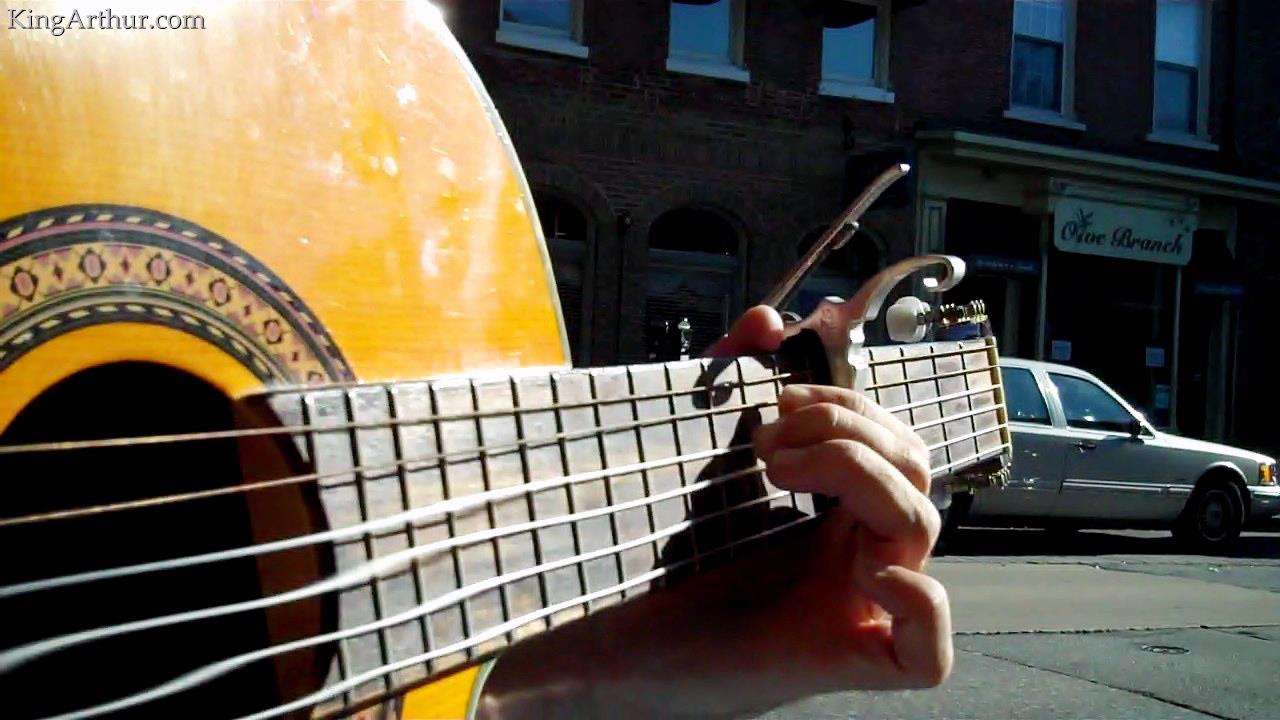
String Theory — “A piano or violin string can resonate or vibrate in various patterns, producing multiple tones simultaneously. These include a fundamental tone and higher overtones (and sometimes lower undertones). The richness and beauty of music arise from the intricate interplay of these harmonics,” explains Edward Witten. (Notice the shape of the strings in the picture. Each string is playing a wide variety of frequencies.)

Music encompasses a wide range of audible frequencies, with live and recorded music differing in frequency range and dynamics depending on the instruments used and the acoustics of the environment. The piano, with its 88 keys, spans nearly the entire range of human hearing (approximately 20 Hz to 20,000 Hz), but music often extends beyond these bounds through techniques like note bending. For example, a blues guitarist may manipulate a single note to produce subtle frequency variations, creating emotional resonance and engaging the listener in unique ways.

In addition to audible frequencies, inaudible frequencies can also have physical effects. Extremely low frequencies (known as infrasound) are often felt in the body rather than heard. These vibrations can create a tactile experience, impacting listeners on a visceral level, such as the rumble felt during a live bass performance or a cinematic explosion.

This interplay between audible and non-audible frequencies contributes to the emotional and physical experience of music, though more research is needed to fully understand the mechanisms behind these effects.

While sound and frequencies can have calming and therapeutic effects, claims of specific frequencies directly causing physical or emotional healing remain largely unproven. Evidence supports a broader use of many frequencies used in both patterns and chaotic interplay.

CONCLUSION

Since most live music encompasses a wide range of audible frequencies, the specific tuning standard for the A note (e.g., 440 Hz or 432 Hz) plays a relatively minor role in the overall listening experience. What resonates with listeners is the interplay of frequencies across a piece of music, particularly the harmonic combinations of notes — such as the emotional contrasts between major and minor chords — that evoke feelings of joy, melancholy, or tension.

Moreover, the format of the music significantly influences the frequency response. Live performances deliver a full spectrum of sound, including subtle overtones and spatial acoustics, while recorded music, especially if compressed, can alter the richness and range of frequencies reaching the listener’s body. Beyond tuning and recording methods, the dynamic and unpredictable nature of musical compositions often triggers physical responses. For example, the rising tension, sudden shifts, or crescendos in a piece of music can produce sensations like goosebumps or shivers, a phenomenon linked to the release of dopamine in the brain during moments of heightened emotional engagement.

In essence, while tuning standards provide a framework for harmony, the emotional and physical impacts of music are driven more by its structural, performative, and acoustic qualities than by the exact frequency of any single note. This underscores the complexity of music’s influence on human perception and emotion.
From the album “Frequency and Higher Vibrations” by Daniel

A Guide to Frequency and Higher Vibrations

MegaEpix Enormous

bookmark_borderThe Meaning of Life

[Intro]
Life — the way
(Animated DNA)
Your sole soul
(Day by day)

[Verse 1]
What is the meaning
Of your life
Are you explaining
Troubles and strife

[Bridge]
Choosing the course
Of a dynamic force
I am the (chaotic) system

[Chorus]
Life — the way
(Animated DNA)
Your sole soul
(Day by day)

[Verse 2]
Will your soul carry on
Or just die and turn to dust
Will it see paradise dawn
Or fade and turn to rust

[Bridge]
Choosing the course
Of a dynamic force
I am the (chaotic) system

[Chorus]
Life — the way
(Animated DNA)
Your sole soul
(Day by day)

[Bridge]
Choosing the course
Of a dynamic force
I am the (chaotic) system

[Outro]
Life — the way
(Animated DNA)
Your sole soul
(Day by day)

A SCIENCE NOTE
The soul is often thought of as an immaterial essence that defines who we are, but a more scientific interpretation can be found in the physical structure of our being. Our soul, in this view, is our DNA. DNA contains the genetic blueprint that passes down traits from one generation to the next, linking us not only to our parents but to all of humanity and life on Earth.

Your soul, then, is not a metaphysical entity that exists outside of your body. Rather, it is the very code that makes up who you are — a code that carries with it the imprints of your evolutionary past. It is the continuity of life, passed down through time, ensuring the survival and progress of your species. Each of us is, in a sense, a living continuation of our ancestors, carrying forward the legacies and experiences encoded within our DNA. In your life, you animate your DNA with your soul, which acts as a dynamic force within a chaotic system.

The idea of the soul as DNA helps to anchor this concept in scientific reality. It places our spiritual essence not in some supernatural realm but within the biological processes that sustain life. Our soul’s journey is intricately tied to the survival and evolution of the human species and, by extension, to the health of the entire planet.

The Meaning of Life: Ensuring the Continuity of DNA

The meaning of life, then, can be seen as the pursuit of ensuring that your soul — your DNA — continues to live on through eternity. This is achieved through reproduction, passing your genetic material to future generations, and contributing to the ongoing evolution of humanity. However, this is not a solitary endeavor; for the human species to survive and thrive, other species must also continue to exist in a balanced and sustainable ecosystem.

For life to continue, the survival of biodiversity is essential. Our existence is intertwined with the survival of countless other species, from microorganisms to large mammals. All life must evolve together to ensure the continuation of the genetic code that sustains us. Humanity’s well-being is inextricably linked to the health of the Earth’s ecosystems, making the protection of biodiversity a vital part of ensuring the survival of our DNA — and, by extension, the survival of our souls.

Climate Change and Biodiversity: Existential Threats to Life and Heaven

In light of this, issues like climate change and the loss of biodiversity are not just environmental concerns; they are existential threats to our souls and the possibility of creating a heaven on Earth. Climate change, driven by human activity, is disrupting ecosystems, threatening species with extinction, and causing irreversible damage to the planet’s ability to support life. The loss of biodiversity only accelerates these effects, creating a feedback loop that endangers the survival of humanity itself.

If we are to protect our future and the legacy of our DNA, we must take action to address these threats. It is not enough to rely on metaphysical beliefs or wait for some divine intervention. The survival of our species and the continuity of life depend on our collective ability to change course, reduce our environmental impact, and ensure that future generations inherit a planet capable of sustaining them.

The Human Induced Climate Change Experiment

From the album “Frequency and Higher Vibrations” by Daniel

Also found on the album “Reggae Way” by Narley Marley

A Guide to Frequency and Higher Vibrations

MegaEpix Enormous

bookmark_borderIs Frequency the Light?

[Intro]
Is frequency the light?
(No, that can’t be right)

[Verse 1]
I see the light
But I can’t wrap my head around it
Try though I might
I can’t grasp… not even a bit

[Chorus]
Is frequency the light?
(No, that can’t be right)
Oscillates (as it propagates)
At a rapid rate

[Bridge]
Wave (say hi)
Wave (goodbye)
Can you save a wave?

[Verse 2]
Can’t be the light
Though I try with all my might
From what I can see
Seems to bounce right of me

[Chorus]
Is frequency the light?
(No, that can’t be right)
Oscillates (as it propagates)
At a rapid rate

[Bridge]
Wave (say hi)
Wave (goodbye)
Can you save a wave?

[Chorus]
Is frequency the light?
(No, that can’t be right)
Oscillates (as it propagates)
At a rapid rate

[Outro]
Wave (goodbye)
Good bye

A SCIENCE NOTE

Is Frequency the Light Itself?

Frequency is an intrinsic property of light but not light itself. Frequency is a number and a measurement. Light can be thought of as:

  • A wave: Frequency describes how often the electric and magnetic fields oscillate as the wave propagates.
  • A particle (photon): Frequency relates directly to the photon’s energy.

Is Frequency the Velocity of Movement?

No, frequency and velocity are distinct properties. In the case of light:

  • Frequency describes the oscillations of the electromagnetic fields.
  • Velocity is the speed at which light travels through a medium (usually the speed of light in a vacuum, approximately 3×10⁸ m/s).

The two are related through the wavelength.

From the album “Frequency and Higher Vibrations” by Daniel

A Guide to Frequency and Higher Vibrations

MegaEpix Enormous

bookmark_borderIs It the Same Energy?

[Intro]
Do you claim to be the same?
(The same energy?)
Let me see

[Verse 1]
The same energy
(In its stored state?)
Or somehow altered
(Perhaps faltered)

[Bridge]
Do you claim to be the same?
(The same energy?)
Let me see

[Chorus]
Piezoelectric
(Magic)
Holographic
(Magic)
But do you claim
(To be the same)
Not just in name
(The same?!?!)

[Verse 2]
Not just a metaphor
(No, no) So much more
Soul’s frequency
(The essence of me)

[Bridge]
Do you claim to be the same?
(The same energy)
I claim to be?

[Chorus]
Piezoelectric
(Magic)
Holographic
(Magic)
But do you claim
(To be the same)
Not just in name
(The same?!?!)

[Outro]
The same energy
(I claim to be?)

A SCIENCE NOTE

Is It the Same Energy in Its Stored State?

When vibrations or frequencies are stored, the energy is often transformed into a more stable or storable form, such as:

  • Mechanical vibrations converted to electrical signals.
  • Light waves stored as trapped electromagnetic energy.

While the form changes, the essence—the information or energy—is preserved.

Can Vibrations or Frequencies Be Captured or Stored?

Yes, vibrations and frequencies can be captured or stored, but the process depends on their nature and the medium used. Here are some methods:

  • Mechanical Vibrations:
    • Seismographs and Accelerometers: Capture mechanical vibrations and convert them into electrical signals for recording.
    • Energy Harvesting: Vibrations can be converted into electrical energy using piezoelectric materials.
  • Electromagnetic Vibrations:
    • Optical Storage: Lasers encode and store light vibrations in CDs or holographic storage.
    • Resonance Cavities: Trap electromagnetic waves temporarily.
  • Acoustic Vibrations:
    • Resonators: Amplify and sustain sound waves in echo chambers.
  • Quantum Vibrations:
    • Quantum Memory: Store vibrations of photons or phonons in quantum devices.

Would It Be Reasonable to Say That a Soul Is a Frequency and Can Be Captured in a Body?

This idea is philosophical and metaphysical rather than scientific. However:

  • Soul as Frequency: Frequencies can symbolize states of existence or energetic patterns. In this analogy, the soul could represent a unique “vibrational signature.”
  • Body as Resonator: The body might be seen as a medium or tuner that aligns with and manifests this frequency.
  • Philosophical Insight: Many traditions describe the soul as non-material, temporarily manifesting through the body. Viewing the soul as a frequency offers a compelling metaphor for its interaction with the physical world.

In conclusion, the notion of the soul as a frequency aligns more with metaphysical beliefs than scientific evidence; however, it may serve as a powerful metaphor for exploring the relationship between consciousness and the physical body. Much care should be taken, as it is only a metaphor and can quickly break down when applied to reality.

From the album “Frequency and Higher Vibrations” by Daniel

A Guide to Frequency and Higher Vibrations

MegaEpix Enormous

bookmark_borderResonate Her

[Intro]
Resonate her
(Resonator)
Gonna put her in a resonator
(Keep her till we dance later)
Resonate her
(Resonator)

[Verse 1]
Alligator
(Refrigerator)
Grab ‘er like a crocodile
(Into cold storage for a while)
Resonator

[Chorus]
Resonate her
(Resonator)
Gonna put her in a resonator
(Keep her till we dance later)
Resonate her
(Resonator)

[Bridge]
Resonate her
(Resonator)

[Verse 2]
Vibrator
(Re-generator)
Oh, how her sound moves me
(Capture some for eternity)
Resonator

[Chorus]
Resonate her
(Resonator)
Gonna put her in a resonator
(Keep her till we dance later)
Resonate her
(Resonator)

[Bridge]
Resonate her
(Resonator)

[Chorus]
Resonate her
(Resonator)
Gonna put her in a resonator
(Keep her till we dance later)
Resonate her
(Resonator)

[Outro]
Resonate her
(Resonator)

A SCIENCE NOTE

Would It Be Reasonable to Say That a Soul Is a Frequency and Can Be Captured in a Body?

This idea is philosophical and metaphysical rather than scientific. However:

  • Soul as Frequency: Frequencies can symbolize states of existence or energetic patterns. In this analogy, the soul could represent a unique “vibrational signature.”
  • Body as Resonator: The body might be seen as a medium or tuner that aligns with and manifests this frequency.
  • Philosophical Insight: Many traditions describe the soul as non-material, temporarily manifesting through the body. Viewing the soul as a frequency offers a compelling metaphor for its interaction with the physical world.

In conclusion, the notion of the soul as a frequency aligns more with metaphysical beliefs than scientific evidence; however, it may serve as a powerful metaphor for exploring the relationship between consciousness and the physical body. Much care should be taken, as it is only a metaphor and can quickly break down when applied to reality.

The problem with language lies in precision. Frequency refers to a numerical measure, vibration describes movement, and energy is a property of a system that enables work. To claim that the soul is a frequency, vibration, or energy is nonsensical—it’s akin to saying the soul is all music. While one could argue that music reflects the soul, the soul itself is not composed of phonons.

From the album “Frequency and Higher Vibrations” by Daniel

A Guide to Frequency and Higher Vibrations

MegaEpix Enormous

bookmark_borderCanned Massless Vibrations

[Intro]
(Shh!) Be very, very quiet
I’m gonna capture me… some sound
(There’s gotta be some floating around)
Then, we’ll cause a riot

[Verse 1]
Off to contain some music
(Quick!) Tryin’ capture it
Controlling it’s structure
But don’t let it rupture

[Bridge]
(Shh) Be very, very quiet
I’m gonna capture me… some sound
(There’s gotta be some floating around)
Then, we’ll cause a riot

[Chorus]
Massless vibration
Phonons (rolling on and on)
Audible sensation
Phonons (rolling on and on)
Sound preservation
Phonons (rolling on and on)

[Verse 2]
Going to put some tunes in the can
The best I can as an ordinary man
Slice, dice, and preserve
Always have some in reserve

[Bridge]
(Shh) Be very, very quiet
I’m gonna capture me… some sound
(There’s gotta be some floating around)
Then, we’ll cause a riot

[Chorus]
Massless vibration
Phonons (rolling on and on)
Audible sensation
Phonons (rolling on and on)
Sound preservation
Phonons (rolling on and on)

[Bridge]
(Shh) Be very, very quiet
I’m gonna capture me… some sound
(There’s gotta be some floating around)
Then, we’ll cause a riot

[Chorus]
Massless vibration
Phonons (rolling on and on)
Audible sensation
Phonons (rolling on and on)
Sound preservation
Phonons (rolling on and on)

[Outro]
Phonons (rolling on and on)

A SCIENCE NOTE

Can Massless Vibrations Be Contained?

Massless vibrations, such as electromagnetic waves (like light) or other oscillations in massless fields, can be contained or confined, but the methods and principles differ from those involving objects with mass.

Containment of Massless Vibrations

  • Electromagnetic Waves (Light):
    • Fiber Optics: Light can be confined within fiber optic cables using the principle of total internal reflection.
    • Waveguides: Light or other electromagnetic waves can be contained within structures called waveguides.
    • Cavities: Resonant cavities trap light by reflecting it back and forth between mirrors, allowing it to resonate at certain frequencies.
  • Quantum Fields:
    • Quantum Wells: In materials, vibrations or energy states (like phonons or excitons) can be confined to specific regions.
    • Field Manipulation: Massless particles or field vibrations can be confined using magnetic or electric fields.
  • Acoustic Vibrations (Phonons):
    • Phonons can be confined within a material by controlling its structure, like using thin films or nanostructures.

Challenges in Containing Massless Vibrations

  • Energy Loss: Containment methods often result in some energy being dissipated as heat or other forms of energy.
  • Dispersion: Certain types of massless vibrations can spread out, making them harder to confine.
  • Quantum Limitations: Principles like uncertainty make perfect containment impossible.

From the album “Frequency and Higher Vibrations” by Daniel

A Guide to Frequency and Higher Vibrations

MegaEpix Enormous

bookmark_borderWhat’s Your Frequency?

[Intro]
What is your frequency
’cause I’d like to be
Tuned in
(To win)

[Verse 1]
Swinging back and forth
Counting, for what it’s worth
The notion…
Of your repetitive motion

[Bridge]
What is your frequency
’cause I’d like to be
Tuned in
(To win)

[Chorus]
Vibration (oscillation)
Electromagnetic (such beautiful music)
Do you vibrate (at my rate)

[Verse 2]
The energy level
Of your quantum state
Angel or devil…
How do you participate

[Bridge]
What is your frequency
’cause I’d like to be
Tuned in
(To win)

[Chorus]
Vibration (oscillation)
Electromagnetic (such beautiful music)
Do you vibrate (at my rate)

[Bridge]
What is your frequency
’cause I’d like to be
Tuned in
(To win)

[Outro]
Vibration (oscillation)
Electromagnetic (such beautiful music)
Do you vibrate (at my rate)

A SCIENCE NOTE

Frequency in Terms of Motion

In physical motion, frequency refers to the number of cycles or oscillations that occur in a given unit of time. For instance:

  • In a pendulum, frequency describes how many times the pendulum swings back and forth in one second.
  • For a vibrating string, frequency corresponds to how quickly the string oscillates.

In this context, frequency is tied to the repetitive motion of something with mass or the oscillation of a wave, like sound or water waves.

Frequency in Terms of Existence

When considering phenomena like light or quantum fields, frequency is less about motion in the classical sense and more about the intrinsic oscillatory nature of the entity’s “existence” in its field or state:

  • For light, frequency describes the oscillation rate of electric and magnetic fields in an electromagnetic wave. It’s not tied to the motion of a particle but rather the energy of the wave—higher frequency corresponds to higher energy.
  • In quantum mechanics, the frequency of a wavefunction corresponds to the energy level of a quantum state, representing probabilities rather than classical motion.

From the album “Frequency and Higher Vibrations” by Daniel

A Guide to Frequency and Higher Vibrations

MegaEpix Enormous

bookmark_borderThe State I’m In

[Intro]
Oh, you don’t know
The state I’m in
When I come, when I go
Where to begin

[Verse 1]
Solid, liquid, or gas
My state will pass
Always in the proximity
Of reality

[Chorus]
Oh, you don’t know
The state I’m in
When I come, when I go
Where to begin

[Bridge]
Rising up
(Coming down)
Seen in between
(Moving around)

[Verse 2]
Gas, solid, or liquid
Will to is to was
What’s to come, what I did
Never just because

[Chorus]
Oh, you don’t know
The state I’m in
When I come, when I go
Where to begin

[Bridge]
Rising up
(Coming down)
Seen in between
(Moving around)

[Chorus]
Oh, you don’t know
The state I’m in
When I come, when I go
Where to begin

[Outro]
Positioning
(Transitioning)

A SCIENCE NOTE
Using water as an example, its state—whether solid, liquid, or gas—does not change its reality. In all these states, water consists of H₂O molecules, and its existence as a substance remains constant. What changes are its physical properties, such as density, shape, and the movement of its molecules. These variations occur because of differences in energy and molecular interactions.

When water is transitioning between states, such as from liquid to gas (during evaporation), it exists in a dynamic, mixed state. At this point, some molecules have enough energy to escape into the gas phase, while others remain in the liquid phase. This “in-between” state is no less real; it simply represents a process of transformation.

Reality, in this context, is independent of state or phase. What defines water as real is its molecular composition and presence, regardless of the form it takes or the transitions it undergoes.

From the album “For Real” by Daniel

Also found on the album “Reggae Way” by Narley Marley

The Human Induced Climate Change Experiment

MegaEpix Enormous

bookmark_borderWhat About Space?

[Intro]
What about the empty spaces…
Are they real?
The places filled only by spaces
(What do they conceal?)

[Verse 1]
The idea of absolute nothingness
Is this a reality
Void of somethingness
Is reality an absentee

[Chorus]
What about the empty spaces…
Are they real?
The places filled only by spaces
(What do they conceal?)

[Bridge]
Governed (by physical laws)
Pondered (the mind claws)
The question (gnaws)

[Verse 2]
The idea of absolute nothingness
Is this a possibility
Void of every ness
Is reality an absentee

[Chorus]
What about the empty spaces…
Are they real?
A place filled with space
(What does it conceal?)

[Bridge]
Governed (by physical laws)
Pondered (the mind claws)
The question (gnaws)

[Chorus]
What about the empty spaces…
Are they real?
A place filled with space
(What does it conceal?)

[Outro]
As I drift into space…
(With the rest of the race)

A SCIENCE NOTE
Is space real? Yes, space is real. It refers to the vast, seemingly infinite expanse that exists beyond Earth’s atmosphere. Space encompasses everything in the universe, including stars, planets, galaxies, and interstellar matter. Scientific evidence, such as observations from telescopes, space probes, and human exploration, provides a robust foundation for understanding the reality and nature of space.

In the context of “space that is lacking anything that exists,” the concept often refers to vacuum or empty space. However, even this kind of space isn’t truly empty. According to modern physics, what might seem like a void is often filled with fluctuating quantum fields, virtual particles, or even dark energy.

The idea of absolute nothingness—a space completely devoid of matter, energy, and even physical laws—is more philosophical than scientific. In science, space is typically defined as the framework within which objects exist and events occur, governed by physical laws, so “completely empty space” might not be possible according to our current understanding.

In philosophy, this concept often leads to discussions about the nature of existence, non-existence, and whether “nothingness” is even conceivable as a true state.

From the album “For Real” by Daniel

The Human Induced Climate Change Experiment

MegaEpix Enormous

bookmark_borderWhat is Real?

[Intro]
What is “real” often involves asking questions
(Asking questions?)

[Bridge]
I mean…
For real:
Often involves asking questions
(Open for suggestions)

[Chorus]
Which way is down?
(Down, down, down)
I forget… how does one get…
(Down, get down, get down)

[Verse]
What is “real” often involves asking questions
(Asking questions?)
As far as suggestions, not to mention recommendations
(And for variation)
For real?

[Bridge]
I mean…
For real:
Often involves asking questions
(Open for suggestions?)

[Chorus]
Which way is down?
(Down, down, down)
I forget… how does one get…
(Down, get down, get down)

[Bridge]
I mean…
For real:
Often involves asking questions
(Open for suggestions?)

[Chorus]
Which way is down?
(Down, down, down)
I forget… how does one get…
(Down, get down, get down)

[Outro]
(Down, get down, get down)
(Down, down, down)

What is “real” often involves asking questions

A SCIENCE NOTE

What is “for real” depends on the context of your question, but generally, it refers to something genuine, authentic, or true. In philosophy and science, determining what is “real” often involves asking probing questions. Subjective reality and consensus reality are shaped by feelings, emotions, and beliefs, regardless of their truth or falsehood. In contrast, existential reality and scientific reality are grounded in facts. For example, “which way is down?” From a subjective or consensus perspective, your “down” could be my “up.” However, from a scientific perspective, down is down, and up is up.

From the album “For Real” by Daniel

The Human Induced Climate Change Experiment

MegaEpix Enormous

bookmark_borderFor Real

[Intro]
I mean…
For real?
(Please spiel)
What’s the deal

[Verse 1]
Are you for real?
(Or a reality steal)
Can you come clean
(Do you know what I mean?)

[Bridge]
I mean…
For real?
(Please spiel)
What’s the deal

[Chorus]
For real (for real)
Existential (Reality)
Subjective (Reality)
Consensus (Reality)
Scientific (Reality)

[Verse 2]
Come on… be real
(Reality appeal)
Can you reveal
(What’s your deal?)

[Bridge]
I mean…
For real?
(Please spiel)
What’s the deal

[Chorus]
For real (for real)
Existential (Reality)
Subjective (Reality)
Consensus (Reality)
Scientific (Reality)

[Bridge]
I mean…
For real?
(Please spiel)
What’s the deal

[Chorus]
For real (for real)
Existential (Reality)
Subjective (Reality)
Consensus (Reality)
Scientific (Reality)

[Outro]
For real…
(What’s the deal?)

A SCIENCE NOTE
What is “for real” depends on the context of your question, but generally, it refers to what is genuine, authentic, or true. In philosophy and science, determining what is “real” often involves asking questions like:

  1. Existential Reality: Does something exist independently of perception or belief? For example, physical objects like trees or mountains exist regardless of human thought.
  2. Subjective Reality: Is something real because it is perceived or experienced by an individual? For instance, emotions and personal experiences are real to the person experiencing them, even if they are not tangible.
  3. Consensus Reality: Is something real because most people agree on its existence or validity? For example, societal constructs like money or laws.
  4. Scientific Reality: Can something be measured, tested, or observed within the framework of scientific methods? For example, gravity and DNA are considered real because they can be studied and confirmed through evidence.

From the album “For Real” by Daniel

The Human Induced Climate Change Experiment

MegaEpix Enormous

bookmark_borderSolar Wind

[Intro]
A solar wind is blowin’
(With or without us knowin’)

[Verse 1]
A continuous stream
(Know what I mean)
Charging charged particles
(Talk about your miracles)

[Chorus]
Magnetic activity
(Traveling toward me)
Solar flare
(Makes me aware she’s there)

[Bridge[
Coronal mass ejection
(Interjection)
A solar wind is blowin’
(With or without us knowin’)
Solar wind
(Blowin’ again)

[Verse 2]
Sudden bursts of radiation
(Aurora fascination)
Deflecting cosmic rays
(Protects in so many ways)

[Chorus]
Magnetic activity
(Traveling toward me)
Solar flare
(Makes me aware she’s there)

[Bridge[
Coronal mass ejection
(Interjection)
A solar wind is blowin’
(With or without us knowin’)
Solar wind
(Blowin’ again)

[Chorus]
Magnetic activity
(Traveling toward me)
Solar flare
(Makes me aware she’s there)

[Outro]
A solar wind is blowin’
(With or without us knowin’)
Solar wind
(Blowin’ again)

A SCIENCE NOTE

Solar Weather and Solar Wind

Solar weather refers to the various phenomena originating from the Sun that can impact the space environment in our solar system. It is driven by the Sun’s magnetic activity, including solar flares, coronal mass ejections (CMEs), and solar wind.

Solar wind is a continuous stream of charged particles (plasma) ejected from the Sun’s outer atmosphere, known as the corona. It consists primarily of electrons, protons, and alpha particles, traveling at speeds of 400-800 km/s. While plasma particles move incredibly fast by human standards, they are much slower compared to the speed of light. This difference explains why light from the Sun reaches Earth in about 8 minutes, whereas charged particles from a CME (coronal mass ejections) can take 1 to 3 days to travel the same distance.

Impact of Solar Storms on Earth

Solar storms occur when solar activity intensifies, particularly during periods of increased sunspot activity in the solar cycle. These storms include:

  • Solar flares: Sudden bursts of radiation from the Sun’s surface.
  • Coronal Mass Ejections (CMEs): Massive eruptions of plasma and magnetic fields that can travel outward into the solar system.

Solar storms can have significant effects on Earth:

  1. Geomagnetic Storms: Disturbances in Earth’s magnetic field caused by the interaction of solar wind or CMEs with the magnetosphere.
    • Disruptions to GPS, satellite communications, and radio signals.
    • Damage to power grids, potentially causing blackouts.
  2. Auroras: The interaction of charged particles with Earth’s magnetic field and atmosphere creates spectacular light displays, such as the Northern and Southern Lights.
  3. Increased Radiation: Harmful to astronauts, satellites, and high-altitude flights, particularly near the poles.
  4. Space Weather Effects: Potential damage to spacecraft electronics and increased atmospheric drag, which can alter satellite orbits.

How the Sun Protects the Solar System

The Sun plays a protective role in the solar system through the heliosphere, a vast bubble of solar wind and magnetic field that extends beyond Pluto’s orbit.

  1. Deflection of Cosmic Rays: The solar wind and magnetic field reduce the number of high-energy cosmic rays from outside the solar system that reach the inner planets, including Earth.
  2. Stabilizing Space Environment: The Sun’s gravity and energy output maintain the conditions necessary for the solar system’s structure and life on Earth.

While the Sun’s activity can sometimes be disruptive, its overall influence provides a dynamic yet protective environment for the planets.

From the album “Oh, That’s What You Meant” by The Beatless Sense Mongers

The Human Induced Climate Change Experiment

MegaEpix Enormous

bookmark_borderYou Call That Close?

[Intro]
Close?!?!
You call that close
(Well, almost)
You know what I mean…
{That’s extreme)

[Verse 1]
Set the controls
For close to the sun
Close enough for rock n’ roll
Let’s have some fun

[Chorus]
You bring out the smiles….
3 million miles
Close?!?!
You call that close
(Well, almost)

[Bridge]
When it’s 3 million degrees
(Don’t need to worry you’ll freeze)
That’s close enough
(To study this stuff)
You know what I mean…
{That’s extreme)

[Verse 2]
Set the controls
For the closest star
Setting lofty goals
Let’s how far we are

[Chorus]
You bring out the smiles….
3 million miles
Close?!?!
You call that close
(Well, almost)

[Bridge]
When it’s 3 million degrees
(Don’t need to worry you’ll freeze)
That’s close enough
(To study this stuff)
You know what I mean…
{That’s extreme)

[Chorus]
You bring out the smiles….
3 million miles
Close?!?!
You call that close
(Well, almost)

[Outro]
When it’s 3 million degrees
(Don’t need to worry you’ll freeze)
You know what I mean…
{That’s extreme)

A SCIENCE NOTE
NASA’s Parker Solar Probe, launched on August 12, 2018, just made an unprecedented close approaches to the Sun to study its outer atmosphere, the corona.

On December 24, 2024, the probe achieved a historic milestone by flying within approximately 3.8 million miles (6.1 million kilometers) of the Sun’s surface, the closest any human-made object has ever been.
New York Post

During this perihelion, the Parker Solar Probe reached speeds up to 430,000 miles per hour (about 700,000 kilometers per hour), setting a new record for the fastest human-made object.

The mission’s primary objectives include studying the Sun’s corona to understand the origins of solar wind and the mechanisms behind solar energetic particles. The data collected is crucial for comprehending space weather phenomena that can impact Earth’s technology and astronauts in space.

Equipped with a robust heat shield, the probe is designed to withstand extreme temperatures exceeding 2,500 degrees Fahrenheit (about 1,377 degrees Celsius) as it ventures through the Sun’s outer atmosphere.

This recent close approach is part of a series of planned perihelia, with the probe scheduled to continue its mission, including two more close flybys next year. The next significant data transmission from the probe is expected on December 27, 2024.

From the album “Oh, That’s What You Meant” by The Beatless Sense Mongers

The Human Induced Climate Change Experiment

MegaEpix Enormous

bookmark_borderPer Second per Second

[Intro]
Thirty-two feet
(Per second per second)
Oh, that’s deep
(Square aware)

[Verse 1]
Which falls faster
An egg or a rock
Why at the same clock
Though the egg’s a disaster

[Chorus]
Thirty-two feet
(Per second per second)
Oh, that’s deep
(Square aware)

[Bridge]
Falling (falling fast)
Falling faster (as time goes past)
32, 64, 128
(An exponential rate)

[Verse 2]
Now I’ve come to know
How fast things go
There for a second…
I had to reckon

[Chorus]
Thirty-two feet
(Per second per second)
Oh, that’s deep
(Square aware)

[Bridge]
Falling (falling fast)
Falling faster (as time goes past)
32, 64, 128
(An exponential rate)

[Chorus]
Thirty-two feet
(Per second per second)
Oh, that’s deep
(Square aware)

[Outro]
I’m aware
(Squared there)

A SCIENCE NOTE

What Does “Per Second Per Second” Mean?

  • “Per second per second” refers to acceleration, the rate at which velocity changes over time. For example:
    • If an object’s velocity increases by 10 m/s1 every second, it has an acceleration of 10 m/s2.
    • This is read as “meters per second squared” or “meters per second per second.”

How Fast Does an Object Fall?

  • Near the surface of the Earth, objects fall with an acceleration due to gravity, denoted by gg, approximately 9.8 m/s2 (or 32 ft/s2 — 32 feet per second per second).
  • Assuming no air resistance, the speed of a falling object can be calculated using the formula:v=g⋅t
    where:

    • v is the velocity,
    • g=9.8 m/s2
    • t is the time in seconds.

    Example:

    • After 1 second: v=9.8 m/s     v = 9.8.
    • After 2 seconds: v=19.6 m/s  v = 19.6.
    • After 3 seconds: v=29.4 m/s  v = 29.4

Do Objects Fall at the Same Speed Regardless of Weight?

  • In the absence of air resistance (in a vacuum), all objects fall at the same rate regardless of their mass. This is because the force of gravity acts equally on all objects relative to their mass.
    • Example: A feather and a hammer will fall at the same rate in a vacuum (as demonstrated during the Apollo 15 moon landing).
  • With air resistance, heavier or denser objects usually fall faster because they are less affected by drag. For example:
    • A bowling ball falls faster than a feather in Earth’s atmosphere due to the feather’s higher air resistance relative to its weight.

Key Equations and Concepts

  1. Distance Fallen Over Time:d=1/2 gt2 .
  2. Terminal Velocity:
    • In real-world conditions, objects reach a maximum falling speed (terminal velocity) when air resistance balances the force of gravity.  This is why rain does not kill you.
  3. Galileo’s Discovery:
    • Galileo showed that objects fall at the same rate regardless of their weight, overturning Aristotle’s earlier belief that heavier objects fall faster.

From the album “Oh, That’s What You Meant” by The Beatless Sense Mongers

The Human Induced Climate Change Experiment

MegaEpix Enormous