[Verse 1]
Out on the ocean of life
“Ignorance is the parent of fear”
As we sail into strife
The wail draws near
[Bridge]
“Towards thee I roll”
(Pride as my toll)
We set sail….
[Chorus]
(Never fail? All hail)
The all-destroying wail
As we partake
(For hate’s sake)
[Bridge]
To the last
(I grapple with thee)
Till I’m past
(Flail… the wail’s tale)
Wail (wail, wail)
[Verse 2]
Just take a look and see the sea
“All my means are sane”
My motive and objective — mad
Brain… lost what little I had
[Bridge]
“Towards thee I roll”
(Pride as my toll)
We set sail….
[Chorus]
(Surely fail. All hail)
The all-destroying wail
As we partake
(For hate’s sake)
[Bridge]
“Towards thee I roll”
(Pride as my toll)
We set sail….
[Chorus 2]
(Sadly fail. Must hail)
The all-destroying wail
As we partake
(For hate’s sake)
Wail!
[Outro]
(Flail… the wail’s tale)
Wail (wail, wail)
To the last
(I grapple with thee)
No longer can I be
All has past
(Flail… the wail’s tale)
Wail (wail, wail)
[Verse 1]
General circulation
Maximum temperature for sure
(Minimal, minimum intervention)
Incineration
[Chorus]
Mathematical difficulties
(As far as these eyes can see)
Nevertheless we must proceed
(Onward. Move ahead, indeed)
[Bridge]
Introspection
(Teleconnection)
Flap you wings in China
(Ahh, ahh, ahh)
Drive an insane hurricane
[Verse 2]
Your humidity
Is getting to me
(Indignity of exceptionalism)
Wrapped in white nationalism
[Chorus]
Mathematical difficulties
(As far as these eyes can see)
Nevertheless we must proceed
(Onward. Move ahead, indeed)
[Bridge]
Introspection
(Teleconnection)
Flap you wings in China
(Ahh, ahh, ahh)
Drive an insane hurricane
[Chorus]
Mathematical difficulties
(As far as these eyes can see)
Nevertheless we must proceed
(Onward. Move ahead, indeed)
[Outro]
Introspection
(Teleconnection)
Flap you wings in China
(Ahh, ahh, ahh)
Drive an insane hurricane
(Wreaking havoc in the Atlantic)
Better think of something quick
(Oh, oh, oh)
(Yeah, yeah, yeah)
A SCIENCE NOTE
General Circulation Models for the earth climate are nonlinear and teleconnected. That means a small change in temperature or pressure or humidity in one small area on the globe can cause _large_ changes in conditions _anywhere_ on the globe. This is sometimes called the Butterfly Effect — thus the oft heard statement that a butterfly in China can cause a hurricane in the Atlantic. The complexity of these models can lead to chaotic behavior. Climate science must grapple with these models and extract results in spite of the mathematical difficulties, and there have been remarkable successes in some cases and sad failures in others. Nevertheless we must proceed.
Health feedback loops, violent rain, and deadly humid heat are fueling an exponential rise in climate-related deaths. This lethal triad — disease, extreme heat, and intense rainfall — demonstrates that climate change is not a distant threat but a rapidly accelerating public health emergency. These stressors interact and amplify one another, creating a cascade of compounding impacts that demand urgent intervention.
All 50 U.S. states — including Alaska — are already experiencing deadly humid heat advisories. Large regions of the country are becoming uninhabitable for weeks or even months each year due to extreme heat. Wet-bulb temperatures are approaching 31°C (87.8°F) in multiple states — a physiological threshold beyond which sustained outdoor survival is impossible, even with water and shade. Meanwhile, violent rain events are killing hundreds and causing billions in annual damage. Climate-driven health feedback loops have become the leading cause of mortality in the United States — fueled by systemic interactions between temperature extremes, air quality degradation, disease vectors, and infrastructure collapse. Addressing climate change is no longer just an environmental imperative — it is a public health necessity.
Our climate model — which incorporates complex socio-economic and ecological feedback loops within a dynamic, nonlinear system — projects that global temperatures could rise by up to 9°C (16.2°F) within this century. This far exceeds earlier estimates of a 4°C rise over the next thousand years, highlighting a dramatic acceleration in global warming. We are now entering a phase of compound, cascading collapse, where climate, ecological, and societal systems destabilize through interlinked, self-reinforcing feedback loops.
We examine how human activities — such as deforestation, fossil fuel combustion, mass consumption, industrial agriculture, and land development — interact with ecological processes like thermal energy redistribution, carbon cycling, hydrological flow, biodiversity loss, and the spread of disease vectors. These interactions do not follow linear cause-and-effect patterns. Instead, they form complex, self-reinforcing feedback loops that can trigger rapid, system-wide transformations — often abruptly and without warning. Grasping these dynamics is crucial for accurately assessing global risks and developing effective strategies for long-term survival.
[Verse 1]
Man, man’s damned demand
No longer can rely on supply
Time we come to understand
Getting tougher to get by
[Bridge]
Let’s investigate
(How to mediate)
[Instrumental]
[Chorus]
Research and development
(Is what I meant)
Into the way we live
(A lot less take and much more give)
[Verse 2]
Complex Social-Ecological
(Feedback Loops)
Within a dynamic, non-linear system
(Whoops… I am)
[Bridge]
Let’s investigate
(How to navigate)
[Chorus]
Research and development
(Is what I meant)
Into the way we live
(A lot less take and much more give)
[Bridge]
Let’s investigate
(How to evacuate)
[Chorus]
Research and development
(Is what I meant)
Into the way we live
(A lot less take and much more give)
[Outro]
Let’s investigate
(How to negate)
A SCIENCE NOTE
We knew tipping points would eventually trigger self-sustaining feedback loops in the climate system–and now, they have arrived. I was prepared for that part. What I could not fully envision was how rapidly the interplay among these tipping points would ignite a domino effect–so, so fast. Now, I see it clearly: the nonlinear, dynamic dance of economic, physical, and ecological systems unfolding in real time. Abstract models are transforming into undeniable, measurable reality before our eyes.
In the 1990s, we first hypothesized the non-linear acceleration of climate change. By the early 2000s, this hypothesis had evolved into an established climate theory, now widely recognized as scientific fact. My lab partner, a Doctor of Physics from Ohio State, and I collaborated to provide the key evidence creating this theory. Over the years, we have observed a dramatic reduction in the doubling time of climate change impacts—the rate at which these effects intensify. Initially, the doubling time was approximately 100 years, but it has since decreased to 10 years and, more recently, to just 2 years. This trend implies that the damage caused by climate change today is double what it was two years ago. In two years, it could be four times worse; in four years, eight times worse; and within a decade, potentially 64 times worse. These projections are conservative, assuming the doubling period does not continue to shrink further. Alarmingly, this rapid acceleration does not appear to be an anomaly. If this trajectory persists, the consequences will likely be far more catastrophic than previously anticipated.
Disease vectors, violent rain, and deadly humid heat are driving an exponential rise in climate-related deaths. This lethal triad–infectious disease, extreme heat, and intense rainfall–demonstrates that climate change is not a distant concern but a present, accelerating force behind rising mortality worldwide. Together, these threats magnify each other’s impacts, underscoring the urgent need to address climate change as a health crisis already unfolding.
* Our climate model — which incorporates complex social-ecological feedback loops within a dynamic, non-linear system — projects that global temperatures could rise by up to 9°C (16.2°F) within this century. This far exceeds earlier estimates of a 4°C rise over the next thousand years, signaling a dramatic acceleration of warming.
We analyze how human activities (such as deforestation, fossil fuel use, and land development) interact with ecological processes (including carbon cycling, water availability, and biodiversity loss) in ways that amplify one another. These interactions do not follow simple cause-and-effect patterns; instead, they create cascading, interconnected impacts that can rapidly accelerate system-wide change, sometimes abruptly. Understanding these dynamics is essential for assessing risks and designing effective climate adaptation and mitigation strategies.
[Verse 1]
What I need
(Is some cool, cool air to breathe)
Hear me plead
(I need cool, cool air to breathe)
[Bridge]
(Woah, oh, oh)
I need to breathe, please
[Chorus]
Heat and humidity
(Raise the difficulty)
With no solution
(To air pollution)
[Bridge]
(Woah, oh, oh)
I need to breathe, please
[Verse 2]
How to create
(Cool, cool air to breathe)
Getting desperate
(For cool, cool air to breathe)
[Bridge]
(Woah, oh, oh)
I need to breathe, please
[Chorus]
Heat and humidity
(Raise the difficulty)
With no solution
(To air pollution)
[Bridge]
(Woah, oh, oh)
I need to breathe, please
[Chorus]
Heat and humidity
(Raise the difficulty)
With no solution
(To air pollution)
[Outro]
(Oh, you know)
We need to breathe before we seize
(Please.)
A SCIENCE NOTE
Climate change is accelerating the rise in both the heat and humidity in the air. Here are some ways to help slow climate change ans save money with cool, cool air:
Energy, Cooling, and Air Purification:
Use natural cooling and air purification strategies to reduce energy demand.
Insulate your home while ensuring proper ventilation to maintain air quality.
Practice zone cooling: keep main living areas at 80–85°F and cool only occupied rooms as needed.
Paint exterior walls and roofs white or light colors to reflect heat and lower indoor temperatures.
Plant shade trees around your home to block direct sunlight and reduce cooling needs.
Create a small “movable forest” of potted trees that can be repositioned around your foundation to maximize shade throughout the seasons.
Build Corsi-Rosenthal Boxes for each floor to filter and circulate air effectively without energy-intensive systems.
[Intro] Oh, well (Can’t unring the bell) How absurd… (It’s not even a word)
[Verse 1] So, I’ve been told Many times along the road No matter how old Today is today No matter your mode
[Chorus] Oh, well (Can’t unring the bell) How absurd… (s’ not even a word) Haven’t you heard (Or couldn’t you tell) Scatter the heard
[Verse 2] Yes, indeed Best not impede The will of the ill If you recede The will succeed Of falling from the hill
[Chorus] Oh, well (Can’t unring the bell) How absurd… (s’ not even a word) Haven’t you heard (Or couldn’t you tell) Scatter the heard
[Bridge] Here it’s been told (Hear — so I’ll grow old) The tail of our fail (Flail! Woe, whoa woe, oh, oh) Don’t cha know (Wail! Woe, whoa woe, oh, oh)
[Outro] [Instrumental, Guitar Solo] So, I can live another day (The world hears what I say) The tail of our fail (Flail! Woe, whoa woe, oh, oh) Don’t cha know (Wail! Woe, whoa woe, oh, oh)
ABOUT THE SONG
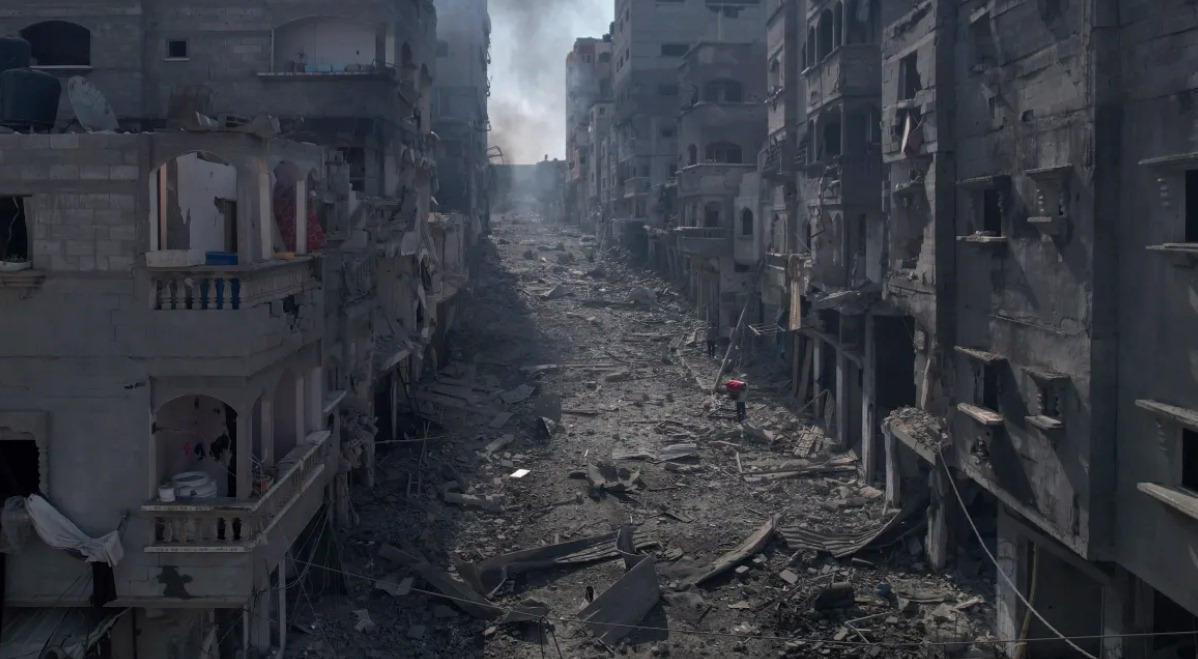
“Unring” captures the irreversible moment when I choose to speak the truth publicly, even under threat, knowing that once that truth is released to the world, it cannot be silenced or hidden again.
The opening verse, “No matter how old, today is today,” reflects my decades of investigative work and the experiences that led me to this moment—understanding that there is never a wrong time to speak out. Despite the personal danger, I know that publishing the truth about the genocide in Gaza is necessary and urgent.
The chorus, “Can’t unring the bell,” symbolizes the point of no return once I publish the truth. Once the bell of truth rings—once I tell millions of people what is happening—it cannot be unrung, undone, or unpublished, no matter the pressure from those in power. It is also a declaration of protection: by making the truth public, I make myself safer, forcing accountability through exposure.
“Scatter the heard” plays on “scatter the herd,” reflecting how my work disrupts blind followers and the systems of silence, breaking the collective complicity that allows genocide and oppression to continue unchallenged.
The second verse, “Best not impede the will of the ill,” is a warning that silence out of fear only allows the corrupt (“the ill”) to continue unchecked. It reflects the reality that if I recede into fear, the systems of oppression and war crimes will continue to thrive.
The bridge, “Here it’s been told… Hear, so I’ll grow old,” expresses my understanding that speaking the truth openly is not only my duty but also my shield, allowing me to “live another day.” The cries in “Flail! Woe, whoa woe,” mirror the grief I witness daily—the children in Gaza who are shot at, the families bombed, the journalists silenced—grounding my personal act of truth-telling within the collective suffering that demands my voice.
The instrumental outro offers a breath between chaos, representing the moment the world pauses to listen, holding the weight of what I have revealed.
In essence, “Unring” is my anthem of accountability and defiance: Once I tell the truth, there is no taking it back, and that is precisely why it must be told.
THE TRUTH
We are witnessing a dangerous erosion of First Amendment rights in the United States, where the government aligns itself with genocide abroad while persecuting those who resist it at home. This moment demands clarity: opposing genocide is not antisemitism, and demanding an end to apartheid is not hate speech. The real danger lies in the authoritarian structures that criminalize truth-telling while facilitating war crimes with impunity.
My background on this is important to understand. I am an investigative journalist with decades of experience in publishing and litigation, including over a decade spent in court defending the First Amendment. I have faced threats to my life and the safety of my family many times because of my commitment to exposing the truth. In this particular moment, the danger is even more severe.
I am a descendant of the Tribe of Judah, which makes me a Semite. Even more significantly, I am part of a bloodline that includes Princess Diana, and some believe it traces back to Jesus himself. This lineage has been targeted for centuries by those in power, from the Vatican to the Freemasons, seeking to erase it. Despite these risks, I believe it is necessary to speak out. Silence in the face of genocide, apartheid, and the suppression of truth is not an option, no matter how significant the personal cost.
Perhaps most urgently, I want to share what I recently explained to a friend who asked whether it would be safer to discuss Gaza in person over coffee rather than here:
“I think both are important. It would be great to get together, and I’d enjoy seeing you again. At the same time, I know it’s best for me to discuss these things publicly. Once I publish the truth to millions of people, it actually makes me safer. My bigger concern is for those around me.
Have you seen my post about Ahmed Alkhateeb? Since I started sharing his situation, his children were shot at. I’m aware that Israeli intelligence knows everything going in and out, including his location, and that’s what truly worries me. So yes, I believe it’s important to keep saying these things here.”
I am sharing this here because it also relates to our friends in Gaza and the harsh reality of surveillance and risk tied to our activism. My main concern now is the “flow of money.” Anyone who donates to GoFundMe campaigns or other aid channels supporting Gaza is at risk of arrest or jail under the current U.S. crackdown on speech and activism. More critically, those funds can be traced to specific mobile phones in Gaza, putting recipients at extreme risk of being located and executed. This is something we need to consider carefully as we move forward, balancing our urgent desire to help with the grave dangers imposed by the systems we are fighting.
This is a moment that requires courage, clarity, and collective action. We cannot allow authoritarianism to dictate who lives and who dies, who speaks and who is silenced. If we believe in freedom, it must include the freedom to call out genocide—and the freedom to stand in solidarity with those who suffer under it.
Evangelical Christianity and Israel If you’re curious about the driving force behind US support for Israel, it’s ironically rooted in Evangelical Christianity. Many Evangelical Christians believe they can hasten the “second coming of Christ” by bringing about the apocalypse. According to their interpretation of the Bible, this involves Israel reclaiming Jerusalem, Jesus returning, and ultimately eliminating all Jews. For numerous “Christian Zionists,” especially influential evangelists aligned with the Republican Party, support for Israel is less about political strategy and more about its supposed role in biblical prophecy. In this worldview, war is not something to be avoided but embraced as a divine necessity—an inevitable and even celebratory step toward Jesus’ rule from the Temple Mount in Jerusalem. The fate of Jews and Palestinians is, to put it mildly, seen as collateral damage.
[Verse 1]
This supposed freedom
Under the reign of treason
Does dumbfound me
How can one reason
To be free in this kingdom
Without liberty?
[Bridge]
Then, something came to me
(And we came to see)
You can’t hide from genocide
[Chorus]
You can’t hide from genocide
(If you’re the driver of the ride)
You can’t claim ignorance and arrogance
Will get you out of this
(… you wish)
[Verse 2]
You say your rights have more might
You might be wrong as reason’s left
… moral theft
Instead you begin again and again
Same mistake, doubling twice
… heart turned ice
[Bridge]
[Chorus]
[Outro]
Then, something came to me
(And we came to be)
ABOUT THE SONG
“Came to Me #gaza” was inspired by the words of my friend Ahmed Alkhateeb, who speaks from the ground in Gaza, witnessing firsthand the brutality unfolding under the so-called aid of the Gaza Humanitarian Foundation. He describes how people are humiliated, starved, and shot at when they try to reach aid sites, treated like slaves under a system that dehumanizes them while the world watches. Ahmed calls for accountability, demanding that this foundation be shut down and replaced by UNRWA and the World Food Program, so food can reach families without oppression.
We are witnessing genocide in real time. Tens of thousands of children have been killed by relentless bombings, with countless others left as amputees, undergoing surgery without anesthesia due to the total collapse of medical supply chains. Entire families are starving under siege, cut off from food, water, and medical care, as fuel blockades shut down bakeries and hospitals. Under the promise of safety, families are herded into so-called “humanitarian zones” that the UN itself has labeled “death traps,” only to be bombed again—creating a vicious cycle of displacement, starvation, and mass death, fully documented, fully visible.
In a bitter twist, it may be Donald Trump’s own reckless fiscal and foreign policies that finally strip the United States of its credibility and global leadership, opening the door for the world to hold war criminals accountable, no matter how powerful they are or where they hide.
About the Recording:
“Came to Me #gaza” blends a string of MIDI-connected keyboards, including Yamaha, micro-Korg, and miniNOVA, layered with acoustic guitar through subtle stereo digital delay. The arrangement draws on Middle Eastern instrumentation—oud, qanun, saz, and rebab—amped for rock and roll, creating a soundscape that honors Gaza’s resilience while amplifying the call for justice.
All Israelites should openly condemn genocide and apartheid. As a descendant of the Tribe of Judah, I certainly do. I am horrified and ashamed. I stand firmly against Zionism and Christian Zionists, who are truly to blame. I’m sharing this here in case it helps others understand why we must all speak out — people of every faith, and those with no religion at all.
Christian Zionism and End Times Beliefs Many evangelical leaders close to Trump continue to frame their support for Israel as fulfilling biblical prophecy necessary for the Second Coming of Christ. This includes figures like Robert Jeffress and Mike Evans, who explicitly link political support for Israel with hastening end-times scenarios. These interpretations are rooted in dispensationalist theology, which teaches that the return of Jews to Israel will trigger events leading to Armageddon and the ultimate triumph of Christianity.
Jerusalem and Temple Mount Policies Trump’s 2017 Jerusalem embassy move was celebrated by these evangelicals as a prophetic step toward the apocalypse, viewed by them as positive even though their theology predicts it will lead to widespread destruction, including the death of many Jews who do not convert to Christianity during the tribulation.
Belief in “necessary conflict” to bring Jesus back Some Trump-aligned evangelical figures believe escalating conflict in the Middle East is part of God’s plan, seeing wars or chaos as stepping stones toward Christ’s return. This underpins their resistance to ceasefire efforts, viewing them as delaying prophecy.
Holocaust of Jews in End-Times Prophecy In these theological frameworks, most Jews are expected to perish during the tribulation, with only a small remnant converting and surviving to worship Jesus. While not all evangelicals openly state this, it is a core element of the dispensationalist eschatology held by many Trump-supporting evangelicals. Trump’s administration has courted these voters with policies aligned with their beliefs while ignoring the theological implications for Jews.
Current Administration Messaging Recent statements from Trump campaign surrogates (2025) continue to echo that “supporting Israel is non-negotiable because it is biblical,” while dismissing critiques of the humanitarian consequences of policies in Gaza. At the same time, some within the administration have amplified “apocalyptic urgency” language in prayer meetings and conservative media, framing opposition to their Israel policies as opposition to God’s will.
Summary:
Many evangelicals in Trump’s orbit see themselves as actively helping fulfill biblical prophecy that they believe will culminate in the end of the world.
This includes beliefs that the apocalypse will involve a holocaust of Jews who do not convert.
Trump’s policies continue to cater to this bloc for political support, despite the theological contradiction it poses for Jewish safety.
Resources on the Ongoing Slaughter of Other Faiths
[Intro]
Ting dem
(Of the kingdom of freedom)
[Instrumental, Guitar Solo]
[Verse 1]
Been finding it strange
The man don’t know
Trying to rearrange
The final blow
[Bridge]
Ting dem
(Of the kingdom come)
[Chorus]
Fi staat fi si di ting dem
(The coming of the kingdom)
Di ting dem a show demself
(How come? The kingdom come)
[Bridge]
Ting dem
(Of the kingdom of freedom)
Mi a get di hint
(To lighten up a bit)
[Verse 2]
Guess it’s not so odd
They worship a golden god
Thinking their greed
Will help them succeed
[Bridge]
Ting dem
(Of the kingdom come)
[Chorus]
Fi staat fi si di ting dem
(The coming of the kingdom)
Di ting dem a show demself
(How come? The kingdom come)
[Outro]
Ting dem
Mi a get di hint
(As it becomes self-evident)
Di ting dem a show demself
(Man’s health is his wealth)
Fi staat fi si di ting dem
(All the things… I see ’em)
ABOUT THE SONG
How you might express the idea of “clues” in Jamaican Patois:
“Information” or “Ting Dem”:
You could use the word “information” or the phrase “ting dem” (meaning “things”) to refer to the pieces of evidence or details that are being gathered.
Descriptive Phrases:
You could use phrases like:
“Fi staat fi si di ting dem” – “Starting to see the things” (implying things are becoming clearer)
“Di ting dem a show demself” – “The things are showing themselves” (suggesting the evidence is becoming apparent)
“Mi a get di hint” – “I’m getting the hint” (using the English word “hint” but with Jamaican pronunciation)