- Whack-a-Goal.mp3
- Whack-a-Goal.mp4
- Whack-a-Goal-Reggae.mp3
- Whack-a-Goal-Reggae.mp4
- Whack-a-Goal-Unplugged-Underground-VI.mp3
- Whack-a-Goal-Unplugged-Underground-VI.mp4
- Whack-a-Goal-Unplugged.mp3
- Whack-a-Goal-Unplugged.mp4
- Whack-a-Goal-acoustic.mp3
- Whack-a-Goal-electric.mp3
[Verse 1]
Set your sights
On a moving target
As it takes flight
What did you forget?
(What the heck!)
[Chorus]
Whack, whack, whack
Plan under attack
Whack, whack, whack
There’s no going back
[Bridge]
The best-laid plan
Of mice and Man
Go awry
Despite the try
[Verse 2]
Steady your aim
On a moving target
Does it end the same…
What did you forget?
(What the heck!)
[Chorus]
Whack, whack, whack
Plan under attack
Whack, whack, whack
There’s no going back
[Bridge]
The best-laid plan
Of mice and Man
Go awry
Despite the try
[Chorus]
Whack, whack, whack
Plan under attack
Whack, whack, whack
There’s no going back
[Bridge]
The best-laid plan
Of mice and Man
Go awry
Despite the try
[Outro]
Whack, whack, whack
(No cutting slack)
A SCIENCE NOTE
Climate change is primarily driven by the escalation of thermal energy affecting biogeophysical and socio-economic systems. While biogeophysical factors can be studied using math, physics, and historical records, socio-economic systems pose greater challenges due to the unpredictable consequences of human behavior and inexplicable consumer choices.
Some unintended consequences contributing to climate change include:
- Ozone and the Biofuel Paradox: One of the more troubling contributors to tropospheric ozone is the increased use of ethanol in gasoline. Over the past few years, ethanol has become a mandated additive to gasoline blends, touted as a cleaner alternative to traditional fossil fuels. For example, in Pennsylvania, a 10% ethanol blend in gasoline and a 30% ethanol blend in diesel fuel are required to reduce harmful emissions. However, this practice has resulted in unintended consequences — specifically, the creation of more ozone. A 2024 study found that human-derived ozone has caused a significant decline in net primary productivity (NPP) across all tropical forests, resulting in an estimated 17% reduction in the tropical land carbon sink since 2000.
- Increased Carbon Dioxide (CO2) Emissions: Switching to cleaner fuels with lower sulfur content can inadvertently lead to higher CO2 emissions. For example, marine vessels burning cleaner fuels may emit more CO2, a potent greenhouse gas, contributing to global warming and climate change.
- Deforestation for Biofuel Production: The use of biofuels as an alternative to fossil fuels can lead to deforestation as forests are cleared to make way for biofuel crops. Deforestation releases stored carbon into the atmosphere, exacerbating climate change.
- Land Use Change: Converting land for agricultural or urban development alters natural ecosystems, releasing stored carbon into the atmosphere. This change in land use can contribute to climate change by reducing the planet’s capacity to absorb carbon dioxide.
- Methane Leakage from Natural Gas Production: Natural gas is often touted as a cleaner alternative to coal; however, methane, a potent greenhouse gas, can leak during natural gas extraction, processing, and transportation. Methane emissions contribute to global warming and climate change.
- Albedo Effect from Land Use Change: Changes in land cover, such as deforestation or urbanization, can alter the Earth’s albedo, or its ability to reflect sunlight. Darker surfaces absorb more heat, leading to increased warming. For example, replacing forests with urban areas can decrease albedo, contributing to local and regional warming.
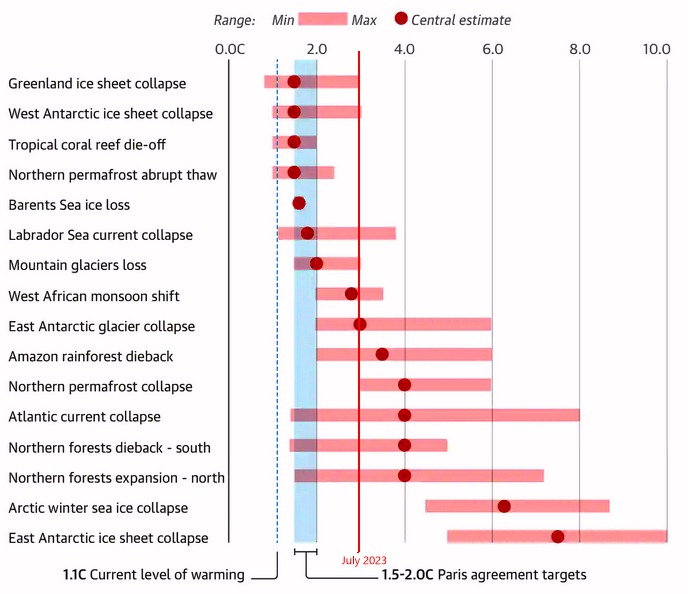
- Feedback Loops: Climate change can trigger feedback loops that further exacerbate warming. For example, melting ice caps reduce the Earth’s albedo, leading to more heat absorption and further melting. Similarly, thawing permafrost releases stored methane and carbon dioxide, amplifying greenhouse gas emissions.