bookmark_borderRapidly Approaching

Rapidly-Approaching-0.mp3
Rapidly-Approaching-0.mp4
Rapidly-Approaching-I.mp3
Rapidly-Approaching-I.mp4
Rapidly-Approaching-intro.mp3

[Intro]
Approaching at a rapid rate
(Fading debate over “too late”)
As I fear…
(It’s already here)

[Verse 1]
Are you aware
We’re already there
Not some distance
In our presence

[Chorus]
Approaching at a rapid rate
(Fading debate over “too late”)
As I fear…
(It’s already here)

[Bridge]
Rapidly approaching
(Encroaching)
Rapidly
(At me)

[Verse 2]
The time has passed
Where we can outlast
Self-gassed
Relegated to the past

[Chorus]
Approaching at a rapid rate
(Fading debate over “too late”)
As I fear…
(It’s already here)

[Bridge]
Rapidly approaching
(Encroaching)
Rapidly
(At me)

[Chorus]
Approaching at a rapid rate
(Fading debate over “too late”)
As I fear…
(It’s already here)

[Outro]
Rapidly approaching
(Encroaching)

A SCIENCE NOTE: The Past, Present, and Future of Climate Change
In the 1990s, we first hypothesized the non-linear acceleration of climate change. By the early 2000s, this hypothesis had evolved into established climate theory, now widely recognized as scientific fact. My lab partner, a Doctor of Physics from Ohio State, and I collaborated to provide key evidence supporting this theory. Over the years, we have observed a dramatic reduction in the doubling time of climate change impacts — the rate at which these effects intensify. Initially, the doubling time was approximately 100 years, but it has since decreased to 10 years and, more recently, to just 2 years. This trend implies that the damage caused by climate change today is double what it was two years ago. In two years, it could be four times worse; in four years, eight times worse; and within a decade, potentially 64 times worse. These projections are conservative, assuming the doubling period does not continue to shrink further. Alarmingly, this rapid acceleration does not appear to be an anomaly. If this trajectory persists, the consequences will likely be far more catastrophic than previously anticipated.

Our climate model employs chaos theory to comprehensively consider human impacts and projects a potential global average temperature increase of 9℃ above pre-industrial levels. Global warming is a consequence of elevated thermal energy in the climate system, which comprises various subsystems. Chaos theory underscores the intricate and nonlinear nature of dynamic systems. Human well-being is compromised above a 1.5-degree temperature rise, rendering much of the Earth uninhabitable. A 9-degree Celsius increase would bring the Earth close to a wet-bulb temperature incapable of sustaining human life.

What Can I Do? There are numerous actions you can take to contribute to saving the planet. Each person bears the responsibility to minimize pollution, discontinue the use of fossil fuels, reduce consumption, and foster a culture of love and care. The Butterfly Effect illustrates that a small change in one area can lead to significant alterations in conditions anywhere on the globe. Hence, the frequently heard statement that a fluttering butterfly in China can cause a hurricane in the Atlantic. Be a butterfly and affect the world.
What you can do today. How to save the planet.

From the album “90 Seconds to Midnight” by Daniel

The Human Induced Climate Change Experiment

MegaEpix Enormous

bookmark_borderDoomsday

Doomsday-I.mp3
Doomsday-I.mp4
Doomsday-II.mp3
Doomsday-II.mp4
Doomsday-intro.mp3

[Intro]
(Hey!) What do you have to say
About your role in doomsday
Hey! (Hey! Hey!)

[Verse 1]
Counting down
(90, 89)
Down, down, down
(Too late for 88)

[Bridge]
(Hey!) What do you have to say
About your role in doomsday
Hey! (Hey! Hey!)

[Chorus]
Are you O.K.
(With bringing on doomsday)
Won’t go away
(Doomsday is on the way)

[Verse 2]
The End Times are found
(90, 89)
Just look around
(Too late for 88)

[Bridge]
(Hey!) What do you have to say
About your role in doomsday
Hey! (Hey! Hey!)

[Chorus]
Are you O.K.
(With bringing on doomsday)
Won’t go away
(Doomsday is on the way)

[Bridge]
(Hey!) What do you have to say
About your role in doomsday
Hey! (Hey! Hey!)

[Outro]
(Hey!) What do you have to say
Hey! (Hey! Hey!)

A SCIENCE NOTE
The proximity to “doomsday” due to climate change has become more urgent, as the planet has already surpassed 1.5°C (2.7°F) of warming above pre-industrial levels in 2024. This milestone, which scientists warned could trigger irreversible impacts, marks a critical tipping point in the climate crisis. Here’s an updated overview of the situation:

Key Indicators of Climate Risk:

  1. Surpassing 1.5°C:
    • Crossing the 1.5°C threshold means the planet is now experiencing more severe and irreversible consequences, such as accelerated ecosystem collapse, higher risks of extreme weather events, and increased global instability.
  2. Melting Ice and Rising Seas:
    • The rate of polar ice sheet and glacier melting is accelerating, contributing to faster-than-expected sea level rise. Coastal areas are already facing more frequent flooding, and some regions are becoming uninhabitable.
  3. Extreme Weather Intensification:
    • Heatwaves, hurricanes, wildfires, and droughts have become more frequent and intense. These events are not just local disasters but are increasingly interconnected, creating cascading global disruptions.
  4. Tipping Points Becoming Reality:
    • Climate tipping points, such as the Amazon rainforest nearing a dieback state, Arctic permafrost releasing large amounts of methane, and significant disruptions to ocean currents like the Atlantic Meridional Overturning Circulation (AMOC), are no longer theoretical. Their impacts are now unfolding.
  5. Human and Economic Costs:
    • The human toll of climate change continues to mount, with millions displaced, increased food and water insecurity, and mounting economic losses. Insurance markets in high-risk areas are collapsing, and global economic damages are projected to exceed trillions annually by mid-century.

How Close Are We?

Having surpassed 1.5°C of warming, the world is dangerously close to catastrophic climate scenarios:

  • The risk of crossing 2°C of warming, which could lead to mass extinctions, ecosystem collapse, and widespread societal disruption, is now imminent unless drastic action is taken immediately.
  • The Intergovernmental Panel on Climate Change (IPCC) has emphasized that the window for limiting warming to 1.5°C has closed, and humanity must now focus on preventing temperatures from rising further toward 2°C or beyond.

Doomsday Clock Context:

The Doomsday Clock, maintained by the Bulletin of the Atomic Scientists, is set at 89 seconds to midnight as of 2025, its closest point ever. Climate change, alongside nuclear war and other existential threats, plays a significant role in this calculation. Surpassing 1.5°C of warming highlights the urgency of immediate climate action.

What Can Be Done?

Despite this sobering reality, there is still a narrow pathway to prevent the worst outcomes. It requires:

  1. Aggressive Emission Reductions:
    • The world must cut greenhouse gas emissions by at least 60% by 2030 to limit further warming and aim for net-zero emissions well before 2050.
  2. Transition to Renewable Energy:
    • A global shift away from fossil fuels to renewable energy sources like wind, solar, and hydroelectric power must accelerate immediately.
  3. Adaptation and Resilience:
    • Governments need to prioritize climate adaptation measures, including improved infrastructure, disaster preparedness, and protecting critical ecosystems.
  4. Global Cooperation:
    • Strong international agreements, such as the Paris Agreement, must be enforced and enhanced. Wealthier nations must also provide support to developing countries that are most vulnerable to climate impacts.

The Path Forward:

Surpassing 1.5°C is a wake-up call, underscoring that climate change is not a distant threat but a current crisis. While preventing further warming beyond 2°C is essential, every fraction of a degree matters. The time for incremental change has passed—immediate, systemic action is required to mitigate the escalating risks and secure a livable future.

From the album “90 Seconds to Midnight” by Daniel

Also found on the album “Reggae Gone Astray” by Narley Marley

The Human Induced Climate Change Experiment

MegaEpix Enormous

bookmark_border2025

2025-0.mp3
2025-0.mp4
2025-I.mp3
2025-I.mp4
2025-Unplugged-Underground-XIV.mp3
2025-Unplugged-Underground-XIV.mp4
2025-Unplugged.mp32025-Unplugged.mp4
2025-intro.mp3

[Intro]
Twenty twenty-five
(Still alive?)

[Verse 1]
Watch us burn
(Will we ever learn)
Watch us fight
(Won’t we see the light)

[Chorus]
This year
We’re the biggest fear
The calamity
Of humanity
(Pure insanity)

[Bridge]
Twenty twenty-five
(Still alive?)

[Verse 2]
Our hair is on fire
(Don’t care if it’s dire)
Watch us fight
(To make wrong right)

[Chorus]
This year
We’re the biggest fear
The calamity
Of humanity
(Pure insanity)

[Outro]
Twenty twenty-five
(Still alive?)

ABOUT THE SONG
he Doomsday Clock was set at 89 seconds to midnight on Tuesday morning, marking the closest the world has ever been to what scientists warn is “global catastrophe.” This symbolic clock, maintained by the Bulletin of the Atomic Scientists, is an internationally recognized indicator of humanity’s proximity to existential threats, such as nuclear war, climate change, and disruptive technologies.

Described by the Chicago-based nonprofit as a metaphorical measure of the risk of “human extinction,” the clock is updated annually to reflect the state of global security and stability. In January 2024, the clock remained at 90 seconds to midnight—the same position as in 2023—highlighting ongoing concerns. However, this latest adjustment to 89 seconds marks the first forward movement since 2023, signaling an escalation in perceived threats to humanity.

The change underscores a variety of urgent global challenges. These include heightened nuclear tensions, increasing climate-related disasters, and the proliferation of emerging technologies like artificial intelligence, which can both aid and destabilize international systems. The clock serves as a stark reminder that collective global action is needed to address these risks and avert catastrophe.

From the album “90 Seconds to Midnight” by Daniel

The Human Induced Climate Change Experiment

MegaEpix Enormous

bookmark_borderLost Time (Doomsday Clock 2025)

Lost-Time-0.mp3
Lost-Time-0.mp4
Lost-Time-I.mp3
Lost-Time-I.mp4
Lost-Time-II.mp3
Lost-Time-II.mp4
Lost-Time-III.mp3
Lost-Time-III.mp4
Lost-Time-intro.mp3

[Intro]
Could it be we…
Are a threat to humanity?

[Verse 1]
Another year lost
And what’s the cost
Ticking down
To global catastrophe
(Just look around… to see)

[Bridge]
Could it be we…
Are a threat to humanity?

[Chorus]
We’re losing time
In our losing times
It’s growing too late
To wait (Wait!)

[Verse 2]
Another year gone
While we carry on
Losing time
To our own crime
(Look to you and me… to see)

[Bridge]
Could it be we…
Are a threat to humanity?

[Chorus]
We’re losing time
In our losing times
It’s growing too late
To wait (Wait!)

[Bridge]
Could it be we…
Are a threat to humanity?
Watch us carry on
(But for how long?)

[Chorus]
We’re losing time
In our losing times
It’s growing too late
To wait (Wait!)

[Outro]
Could it be we…
Are a threat to humanity?

———————————————————
2
[Intro]
[Bridge]
Could it be we…
Are the threat to humanity?

[Verse 1]
Another year lost
And what’s the cost
Ticking down
To global catastrophe
(Just look around… to see)

[Chorus]
We’re losing time
In our losing times
It’s growing too late
To wait (Wait!)

[Verse 2]
Another year gone
While we carry on
Losing time
To our own crime
(Look to you and me… to see)

[Chorus]
We’re losing time
In our losing times
It’s growing too late
To wait (Wait!)

[Bridge]
Could it be we…
Are a threat to humanity?
Watch us carry on
(But for how long?)

[Chorus]
We’re losing time
In our losing times
It’s growing too late
To wait (Wait!)

[Outro]
Could it be we…
Are the threat to humanity?

ABOUT THE SONG
The Doomsday Clock was set at 89 seconds to midnight on Tuesday morning, marking the closest the world has ever been to what scientists warn is “global catastrophe.” This symbolic clock, maintained by the Bulletin of the Atomic Scientists, is an internationally recognized indicator of humanity’s proximity to existential threats, such as nuclear war, climate change, and disruptive technologies.

Described by the Chicago-based nonprofit as a metaphorical measure of the risk of “human extinction,” the clock is updated annually to reflect the state of global security and stability. In January 2024, the clock remained at 90 seconds to midnight—the same position as in 2023—highlighting ongoing concerns. However, this latest adjustment to 89 seconds marks the first forward movement since 2023, signaling an escalation in perceived threats to humanity.

The change underscores a variety of urgent global challenges. These include heightened nuclear tensions, increasing climate-related disasters, and the proliferation of emerging technologies like artificial intelligence, which can both aid and destabilize international systems. The clock serves as a stark reminder that collective global action is needed to address these risks and avert catastrophe.

From the album “90 Seconds to Midnight” by Daniel

The Human Induced Climate Change Experiment

MegaEpix Enormous

bookmark_borderMackerel Sky and Mares’ Tails

Mackerel-Sky-and-Mares-Tails-0.mp3
Mackerel-Sky-and-Mares-Tails-0.mp4
Mackerel-Sky-and-Mares-Tails-I.mp3
Mackerel-Sky-and-Mares-Tails-I.mp4
Mackerel-Sky-and-Mares-Tails-intro.mp3

[Intro]
Mackerel sky and mares’ tails
A warning that seldom fails

[Verse 1]
Have you noticed
Any signs
Try to focus
Feel what the gut finds

[Bridge]
When smoke descends…
Good weather ends

[Chorus]
Mackerel sky and mares’ tails
A warning that seldom fails
Look up to the sky
To find the answers to why

[Verse 2]
Warning signs all around
Just look (Look!) what can be found
Time to sound the alarm
Of the incoming harm

[Bridge]
When smoke descends…
Good weather ends

[Chorus]
Mackerel sky and mares’ tails
A warning that seldom fails
Look up to the sky
To find the answers to why

[Outro]
When smoke descends…
Good weather ends

A SCIENCE NOTE
There are many traditional weather proverbs and sayings, similar to “Red sky at morning, sailors take warning,” that have been passed down through generations based on observations of natural phenomena. Some other weather-related warnings include:

Sky and Cloud-Based Sayings:

  1. “Mackerel sky and mares’ tails make tall ships carry low sails.”
    • A “mackerel sky” (altocumulus clouds) and wispy cirrus clouds (“mares’ tails”) often indicate an approaching weather front, signaling worsening weather.
  2. “If the moon has a halo, rain or snow will follow.”
    • A halo around the moon is caused by ice crystals in high cirrus clouds, often preceding a storm.
  3. “Evening red and morning gray, sets the traveler on his way; evening gray and morning red, brings down rain upon his head.”
    • A red evening sky suggests fair weather, but a red morning sky can indicate an approaching storm.
  4. “Rain before seven, clear by eleven.”
    • Light rain in the early morning often clears up by midday.

Animal Behavior-Based Sayings:

  1. “When cows lie down, rain is coming soon.”
    • Cows are thought to sense falling pressure and lie down to keep a dry spot on the grass.
  2. “Birds flying low, expect rain and a blow.”
    • Birds tend to fly lower before storms due to changes in air pressure.
  3. “When spiders weave their webs thick and tight, the weather will be fair and bright; when webs are wet with morning dew, the weather will soon change too.”
    • Spiders adjust their web-spinning habits based on humidity and atmospheric pressure.

Temperature and Wind-Based Sayings:

  1. “When the wind is out of the west, the weather is always best.”
    • A prevailing westerly wind in many regions often brings fair weather.
  2. “A sudden chill brings water in a rill.”
    • A rapid temperature drop can indicate approaching precipitation.
  3. “When smoke descends, good weather ends.”
  • Smoke rising straight up indicates stable air, while falling smoke suggests low pressure and potential rain.

These sayings are rooted in empirical observations and local weather patterns, but with modern meteorology, they are often considered anecdotal rather than scientifically reliable.

From the album “Red Sky at Morning” by Daniel

The Human Induced Climate Change Experiment

MegaEpix Enormous

bookmark_borderRed Sky at Morning

Red-Sky-at-Morning-I-Unplugged-Underground-XIV.mp3
Red-Sky-at-Morning-I-Unplugged-Underground-XIV.mp4
Red-Sky-at-Morning-I.mp3;
Red-Sky-at-Morning-I.mp4
Red-Sky-at-Morning-II-Unplugged-Underground-XIV.mp3
Red-Sky-at-Morning-II-Unplugged-Underground-XIV.mp4
Red-Sky-at-Morning-II.mp3
Red-Sky-at-Morning-II.mp4
Red-Sky-at-Morning-intro.mp3

[Intro]
Red sky at night, sailor’s delight.
Red sky at morning, sailors take warning.

[Verse 1]
When I woke up this morning
I found it alarming
The reddest sky
I wonder why?

[Chorus]
Red sky at night
(Sailor’s delight)
Red sky at morning
(Sailors take warning)

[Bridge]
At dawn’s daylight
(A sky of red)
There’s no respite
(Bringing on the dread)

[Verse 2]
Heed the sign, take warning
Weather will be storming
Next of kin to mourning
Mother Nature’s informing

[Chorus]
Red sky at night
(Sailor’s delight)
Red sky at morning
(Sailors take warning)

[Bridge]
At dawn’s daylight
(A sky of red)
There’s no respite
(Bringing on the dread)

[Chorus]
Red sky at night
(Sailor’s delight)
Red sky at morning
(Sailors take warning)

[Outro]
Red sky at morning
(Sailors take warning)

A SCIENCE NOTE
Red sky at morning, sailors take warning.
Red sky at night, sailor’s delight.

The saying “Red sky at morning, sailors take warning. Red sky at night, sailor’s delight.” has its roots in meteorology and atmospheric physics. It is based on the scattering of sunlight by atmospheric particles and the typical movement of weather systems.

Physics Behind the Phenomenon:

  1. Rayleigh Scattering:
    • The Earth’s atmosphere scatters shorter (blue) wavelengths of light more than longer (red) wavelengths.
    • When the sun is low on the horizon (sunrise or sunset), sunlight passes through a thicker portion of the atmosphere, scattering away shorter wavelengths and allowing red and orange hues to dominate.
  2. Weather System Movement:
    • In mid-latitude regions, weather systems generally move from west to east due to the prevailing westerly winds driven by the rotation of the Earth (Coriolis effect).

Interpretation of the Saying:

1. “Red sky at night, sailor’s delight.”

  • A red sky in the evening suggests that the setting sun is illuminating dust and moisture particles in the atmosphere to the west.
  • This typically indicates stable, high-pressure conditions with clear skies and dry weather approaching.
  • Therefore, sailors can expect calm weather the following day.

2. “Red sky at morning, sailors take warning.”

  • If the sky is red in the morning, it means the rising sun is illuminating clouds and moisture to the west, suggesting that a storm system is approaching from the west.
  • This often indicates low-pressure systems and worsening weather conditions, such as rain, storms, or strong winds.

Scientific Accuracy:

While the saying is not foolproof, it is generally accurate in regions where weather systems predominantly travel west to east, such as temperate zones. However, it may not hold true in tropical or polar regions where weather patterns differ.


In summary, the colors in the sky are influenced by atmospheric scattering and cloud composition, and their interpretation relies on the typical west-to-east movement of weather systems in mid-latitudes.

From the album “Red Sky at Morning” by Daniel

The Human Induced Climate Change Experiment

MegaEpix Enormous

bookmark_borderDo You Have a Plan?

[Intro]
Well, then…
Do you have a plan
To deal with man
Often

[Verse 1]
It seems like more and more
We bring on what’s in store
Opened up the barn door
Chaos will explore

[Chorus]
Watch it rain… watch it pour
(Watch the reign wash us poor)
If you want to make a sure bet
(You’re going to get wet)

[Bridge]
Well, then…
Do you have a plan
To deal with man
Often

[Verse 2]
Indeed in both word and deed
We cause the Earth to bleed
While we try (try, try) to succeed
We seize the freed

[Chorus]
Watch it rain… watch it pour
(Watch the reign wash us poor)
If you want to make a sure bet
(You’re going to get wet)

[Bridge]
Well, then…
Do you have a plan
To deal with man
Often

[Chorus]
Watch it rain… watch it pour
(Watch the reign wash us poor)
If you want to make a sure bet
(You’re going to get wet)

[Outro]
Well, then…
Do you have a plan
To deal with man
Often

From the album “Expectations” by Daniel

The Human Induced Climate Change Experiment

MegaEpix Enormous

bookmark_borderExpectations

[Intro]
Are your expectations…
Balanced with realizations

[Verse 1]
Economic contraction
Mass extinction
Severity of mortality
The new norm reality

[Chorus]
What did you expect
(After years of neglect)
Certainly no surprise
About time you realize

[Bridge]
Are your expectations…
Sustainable for generations

[Verse 2]
Fragmentation
Mass migration
Breakdown all around
Nowhere safe to be found

[Chorus]
What did you expect
(After years of neglect)
Certainly no surprise
About time you realize

[Bridge]
Are your expectations…
Shattered by realizations

[Chorus]
What did you expect
(After years of neglect)
Certainly no surprise
About time you realize

[Outro]
Are your expectations…
Experiencing fluctuations

————————————
2

[Intro]
Are your expectations…
In line with realizations

[Verse 1]
Economic slowdown
(Species falling down)
Severity of mortality
(The new norm reality)

[Chorus]
What did you expect
(After years of neglect)
Certainly no surprise
(About time you realize)

[Bridge]
Are your expectations…
Sustainable for generations

[Verse 2]
Social fragmentation
Fast mass migration
Get down breakdown
Nowhere safe around

[Chorus]
What did you expect
(After years of neglect)
Certainly no surprise
(About time you realize)

[Bridge]
Are your expectations…
Shattered by realizations

[Chorus]
What did you expect
(After years of neglect)
Certainly no surprise
(About time you realize)

[Outro]
Are your expectations…
Experiencing fluctuations

A SCIENCE NOTE
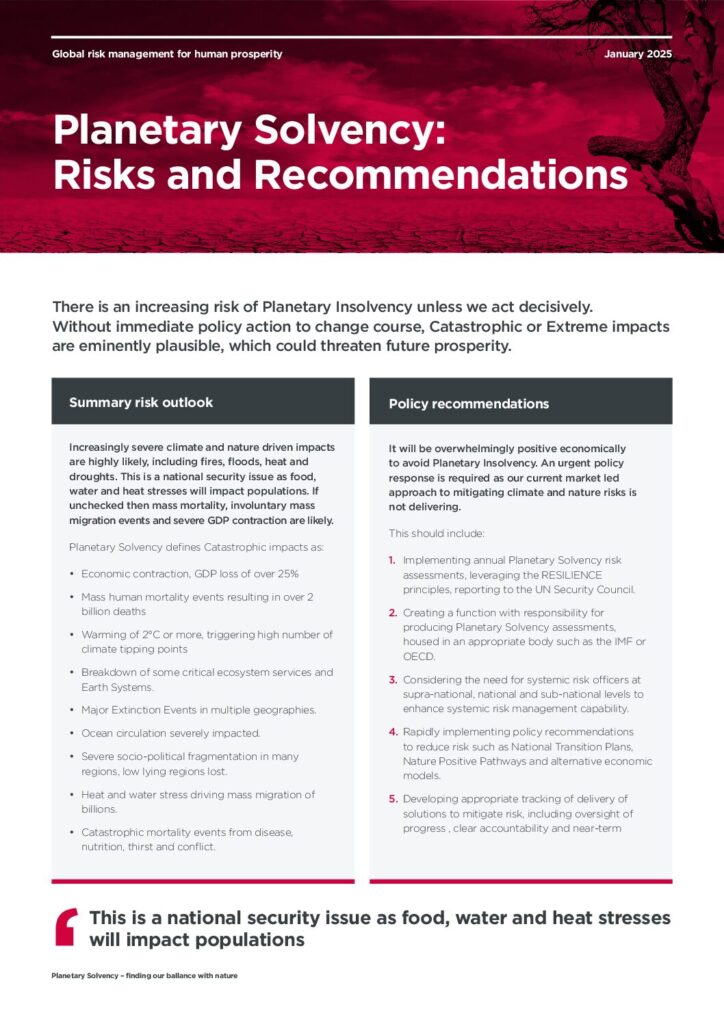
Increasingly severe climate and nature driven impacts are highly likely, including fires, floods, heat and droughts. This is a national security issue as food, water and heat stresses will impact populations. If unchecked then mass mortality, involuntary mass migration events and severe GDP contraction are likely.

Planetary Solvency defines Catastrophic impacts as:
• Economic contraction, GDP loss of over 25%
• Mass human mortality events resulting in over 2 billion deaths
• Warming of 2°C or more, triggering high number of climate tipping points
• Breakdown of some critical ecosystem services and Earth Systems.
• Major Extinction Events in multiple geographies.
• Ocean circulation severely impacted.
• Severe socio-political fragmentation in many regions, low lying regions lost.
• Heat and water stress driving mass migration of billions.
• Catastrophic mortality events from disease, nutrition, thirst and conflict

From the album “Expectations” by Daniel

The Human Induced Climate Change Experiment

MegaEpix Enormous

Planetary Solvency: Risks and Recommendations

bookmark_borderWithdrew

[Intro]
Withdrew your pledge
(To hedge your bet)
Now we regret
[Instrumental, Guitar Solo]
(Giving you the edge)

[Bridge]
You withdrew
(That’s what you do)
You withdrew
(Our point-of-view)

[Verse 1]
You withdrew (you do)
That’s what you do (you do)
Withdrew your heart
Right from the start

[Bridge]
Withdrew your pledge
(To hedge your bet)
Now we regret

(Giving you the edge)

[Chorus]
A double edged sword
(Not a man of your word)
You cut both ways
(Your soul betrays)
Till the end of days

[Bridge]
You withdrew
(That’s what you do)
You withdrew
(Our point-of-view)

[Verse 2]
A nationalist (supremacist)
Populism (barbarism)
Me first (cursed)
Arrogant (and ignorant)

[Bridge]
Withdrew your pledge
(To hedge your bet)
Now we regret

(Giving you the edge)

[Chorus]
A double edged sword
(Not a man of your word)
You cut both ways
(Your soul betrays)
Till the end of days

[Bridge]
You withdrew
(That’s what you do)
You withdrew
(Our point-of-view)

[Outro]
Boast, boast, boast
(Rump roast toast)

ABOUT THE SONG
During his presidency, Donald Trump withdrew the United States from several major international agreements, both during his first and second terms:

  • Paris Climate Agreement: Trump initially withdrew the U.S. from the Paris Climate Agreement in 2017, citing economic disadvantages and an unfair burden on American businesses. The withdrawal was finalized in 2020. Upon returning to office in 2025, Trump signed an executive order to withdraw the U.S. once again, reversing the Biden administration’s re-entry. The formal withdrawal process is expected to take about a year.
  • World Health Organization (WHO): In 2020, Trump announced the U.S. withdrawal from the WHO, criticizing the organization’s handling of the COVID-19 pandemic and its relationship with China. The Biden administration reversed this decision in 2021, but in 2025, Trump reissued an executive order to withdraw once more.
  • Iran Nuclear Deal (JCPOA): In 2018, Trump unilaterally withdrew the U.S. from the Joint Comprehensive Plan of Action (JCPOA), commonly known as the Iran nuclear deal, arguing that it was too lenient and failed to address Iran’s broader activities. This withdrawal led to the reinstatement of sanctions on Iran and heightened tensions in the region.
  • Intermediate-Range Nuclear Forces (INF) Treaty: In 2019, the Trump administration withdrew from this Cold War-era arms control agreement with Russia, citing repeated Russian violations. The move ended decades of restrictions on the deployment of intermediate-range missiles.
  • Trans-Pacific Partnership (TPP): Shortly after taking office in 2017, Trump withdrew from the TPP, a major trade agreement intended to strengthen economic ties with Pacific Rim nations, arguing that it harmed American workers and manufacturing.
  • UNESCO (United Nations Educational, Scientific and Cultural Organization): In 2017, the Trump administration announced the withdrawal from UNESCO, citing anti-Israel bias and the need for institutional reforms. The U.S. formally left the organization in 2018.
  • United Nations Human Rights Council (UNHRC): In 2018, the Trump administration pulled the U.S. out of the UNHRC, claiming it was biased against Israel and failed to hold human rights abusers accountable.
  • Open Skies Treaty: In 2020, Trump withdrew from this treaty, which allowed mutual surveillance flights over participating countries to promote transparency and reduce the risk of conflict, citing Russian violations.

These withdrawals reflected Trump’s broader “America First” policy, emphasizing national sovereignty over multilateral commitments and often sparking criticism from allies and international organizations.

From the album “Withdraw” by The Beatless Sense Mongers

The Human Induced Climate Change Experiment

MegaEpix Enormous

bookmark_borderThe WHO

[Intro]
Who are you?
(To do what you do)
Who are you?
(Have you no clue)
Know clue

[Verse 1]
World health
(A great wealth)
Organize
(To keep us alive)

[Chorus]
Who are you?
(To do what you do)
Who are you?
(Have you no clue)
Know clue

[Bridge]
Who! Who! Who!
(Can you be true?)
Who! Who! Who!
(I’m calling on you)

[Verse 2]
You spread disease
(As though to please)
Want us all to die
(Oh, why, oh why?)

[Chorus]
Who are you?
(To do what you do)
Who are you?
(Have you no clue)
Know clue

[Bridge]
Who! Who! Who!
(Can you be true?)
Who! Who! Who!
(I’m calling on you)

[Chorus]
Who are you?
(To do what you do)
Who are you?
(Have you no clue)
Know clue

[Outro]
Who! Who! Who!
(Can be so cruel)
Who! Who! Who!
(Do you think you rule)

A SCIENCE NOTE
In January 20, 2025, President Donald Trump signed an executive order initiating the withdrawal of the United States from the World Health Organization (WHO).

This action marks the second time the Trump administration has sought to exit the WHO. In July 2020, during his first term, President Trump began the withdrawal process, citing dissatisfaction with the WHO’s handling of the COVID-19 pandemic and alleging undue influence from China. However, this initial withdrawal was reversed in January 2021 by then-President Joe Biden.

The recent decision to withdraw has raised concerns among public health experts. They warn that the U.S. may lose access to critical information on emerging health threats and diminish its influence in global health policy. Additionally, the WHO faces a significant reduction in funding, as the U.S. has been one of its largest contributors.

Climate Change and Health Outcomes
The health consequences of climate change are vast and far-reaching, posing challenges to both life expectancy and quality of life:

  1. Increased Pollution and Respiratory Diseases
    Air pollution remains the leading environmental contributor to premature death worldwide, and climate change worsens its impact. Higher temperatures intensify ground-level ozone and particulate matter, both of which are linked to respiratory and cardiovascular diseases. Wildfires—becoming more frequent and intense due to climate change—release massive amounts of toxic smoke, further degrading air quality and increasing respiratory illnesses.
  2. Cardiovascular Strain from Heat Waves
    Heat waves, amplified by global warming, disproportionately affect vulnerable populations, including the elderly, infants, and those with pre-existing health conditions. Heat-related cardiovascular strain is a growing concern, especially in regions unaccustomed to extreme temperatures.
  3. Zoonotic Diseases and Pandemics
    Rising global temperatures and habitat disruptions are driving the spread of zoonotic diseases, as seen with increased cases of dengue fever, Lyme disease, and other vector-borne illnesses. This trend not only endangers public health but also imposes additional strain on already overstretched healthcare systems.
  4. Healthcare Supply Chain Disruptions
    Severe weather events, such as hurricanes and floods, disrupt healthcare delivery by damaging infrastructure and supply chains. For instance, Hurricane Helene in 2024 caused a severe shortage of IV solutions, demonstrating how climate-related disruptions can ripple through the healthcare system with life-threatening consequences.

From the album “Withdraw” by The Beatless Sense Mongers

The Human Induced Climate Change Experiment

MegaEpix Enormous

bookmark_borderWithdraw

[Intro]
(Ah, ah, ah)
Did we withdraw
(Jaw drops in awe)
Are we really that dumb
(To succumb)

[Verse 1]
Reneged on our promises
(Yes, we did)
No more near misses
(Hide what can be hid)

[Chorus]
(Ah, ah, ah)
Did we withdraw
(Jaw drops in awe)
Are we really that dumb
(To succumb)

[Bridge]
Prioritizing greed
Over what we need
Up to no good
Instead of what we should

[Verse 2]
Couldn’t keep our word
(How absurd!?!?)
Just lie, lie, lie
(Till the day we die)

[Chorus]
(Ah, ah, ah)
Did we withdraw
(Jaw drops in awe)
Are we really that dumb
(To succumb)

[Bridge]
Prioritizing greed
Over what we need
Up to no good
Instead of what we should

[Chorus]
(Ah, ah, ah)
Did we withdraw
(Jaw drops in awe)
Are we really that dumb
(To succumb)

[Outro]
Up to no good
Instead of what we should

A SCIENCE NOTE
President Donald Trump has directed the United States to withdraw from the Paris Climate Agreement. On January 20, 2025, he signed an executive order initiating the withdrawal process, marking the second time his administration has taken this action.

The Paris Climate Agreement, established in 2015, is a global accord where countries commit to reducing greenhouse gas emissions to mitigate climate change. The U.S. initially withdrew from the agreement in 2017 under President Trump, a decision that was reversed in early 2021 by President Joe Biden. This recent withdrawal reaffirms the Trump administration’s stance on prioritizing fossil fuel production and scaling back environmental regulations.

From the album “Withdraw” by The Beatless Sense Mongers

The Human Induced Climate Change Experiment

MegaEpix Enormous

bookmark_borderCrisis? Yes.

[Intro]
Crisis?

Yes.

[Verse 1]
This is the nexus
Of the crisis
All your dominoes
Lined up in rows

[Bridge]
Crisis?

Yes.

[Verse 2]
This is the nexus
Of the crisis
That’s what this is — (Crisis)
These crises
(Oh, please, oh, please)

[Chorus]
Watch them fall
(One and all)
Watch them fall
(One and all)

[Bridge]
Crisis?

Yes.

[Chorus]
Watch them fall
(One and all)
Watch them fall
(One and all)

[Outro]
Heed the call
(One and all)

A SCIENCE NOTE
Yes, we are in a climate crisis, and in 2024, we have officially crossed the critical 1.5°C global temperature threshold. This milestone, once considered a warning limit, has now become a reality, signaling that the Earth’s climate is changing more rapidly and severely than previously anticipated. Human activities—primarily the burning of fossil fuels, deforestation, and industrial emissions—continue to drive this unprecedented warming, with devastating consequences for ecosystems, economies, and human well-being.

Key Indicators of the Climate Crisis:

  1. Surpassing the 1.5°C Threshold:
    • In 2024, global average temperatures exceeded 1.5°C above pre-industrial levels, a limit once seen as a vital goal to avoid the most dangerous impacts of climate change.
    • This breach indicates that extreme climate events, ecosystem loss, and socio-economic disruptions are accelerating beyond previous predictions.
    • Scientists warn that sustained warming at or above this level could trigger irreversible climate tipping points.
  2. Extreme Weather Becoming the Norm:
    • The frequency and intensity of heatwaves, droughts, wildfires, hurricanes, and floods have surged, with 2024 witnessing record-breaking disasters globally.
    • Events like Hurricane Helene and devastating wildfires in the U.S. have caused massive destruction, displacement, and economic losses in the hundreds of billions of dollars.
  3. Rising Sea Levels and Melting Ice:
    • The Arctic and Antarctic ice sheets are shrinking faster than ever, leading to accelerating sea-level rise that threatens coastal communities and critical infrastructure.
    • Entire low-lying regions and island nations are facing the imminent threat of permanent inundation and displacement.
  4. Ecosystem Collapse and Biodiversity Loss:
    • Ecosystems around the world are collapsing under the stress of climate change, with coral reefs, rainforests, and polar habitats facing irreversible damage.
    • Species extinction rates have increased dramatically, threatening food security and natural resilience systems.
  5. Food and Water Insecurity:
    • Agricultural supply chains have been severely disrupted by prolonged droughts, floods, and shifting climate zones, leading to global food shortages and price volatility.
    • Freshwater resources are increasingly strained, exacerbating conflicts and humanitarian crises in vulnerable regions.
  6. Economic Consequences Escalating:
    • Climate-related disasters are costing the global economy trillions of dollars in damages, lost productivity, and insurance claims.
    • Industries such as agriculture, real estate, and infrastructure are under immense strain, with developing economies hit hardest.
  7. Health Impacts Worsening:
    • The rise in temperature has exacerbated heat-related illnesses, air pollution, and the spread of infectious diseases such as malaria and dengue fever.
    • Vulnerable populations, including the elderly and marginalized communities, are disproportionately affected by climate-related health crises.

Why It’s a Crisis:

Crossing the 1.5°C threshold confirms that we are in uncharted territory, and the consequences are now unfolding faster than expected. The risks of reaching catastrophic climate tipping points—such as the loss of Arctic ice, Amazon rainforest dieback, and the release of methane from permafrost—are growing. The time for gradual action has passed; urgent and transformative measures are the only path forward.

Solutions Needed Immediately:

The climate crisis demands an unprecedented global response, including:

  • Rapid transition to renewable energy and phasing out fossil fuels.
  • Stronger climate policies to enforce emissions reductions and climate adaptation measures.
  • Massive investment in resilience for vulnerable communities and infrastructure.
  • Reforming global food systems to adapt to changing climate conditions.
  • Holding corporations accountable for their environmental impact and encouraging sustainable business practices.

In conclusion, having surpassed 1.5°C of warming, we are already facing the dire consequences of climate change. Without immediate and drastic action, the crisis will spiral further out of control, endangering future generations and the very habitability of the planet.

From the album “90 Seconds to Midnight” by Daniel

Also found on the album “Reggae Gone Astray” by Narley Marley

The Human Induced Climate Change Experiment

MegaEpix Enormous

bookmark_borderWake-Up Call!

[Intro]
This is the front desk
Answering your request
A wake-up call:
(Announcing the fall)

[Verse 1]
You don’t want to be late
(For your own wake)
So, please don’t hesitate
(More give, less take)

[Chorus]
This is the front desk
Answering your request
Place a wake-up call:
(Announcing the fall)

[Bridge]
Movements reflect
(Expert assessment)
The urgent need
(To succeed)

[Verse 2]
Don’t wanna make people wait
(For your own wake)
All the world’s weight
(Determines your fate)

[Chorus]
This is the front desk
Answering your request
Place a wake-up call:
(Announcing the fall)

[Bridge]
Movements reflect
(Expert assessment)
The urgent need
(To succeed)

[Chorus]
This is the front desk
Answering your request
Place a wake-up call:
(Announcing the fall)

[Outro]
Your wake-up call…
After all.

A SCIENCE NOTE

The Doomsday Clock serves as a wake-up call, urging policymakers, scientists, and the public to take immediate, coordinated action to mitigate these threats. Despite its symbolic nature, the clock’s movement reflects expert assessments of real-world risks and underscores the urgent need for global cooperation to prevent irreversible damage to the planet and human civilization.

The clock does not predict specific dates or events but serves as a stark warning about humanity’s proximity to existential threats. The concept of “midnight” on the clock symbolizes a tipping point where these dangers spiral out of control, leading to irreversible consequences for life on Earth.

As of January 2024, the clock being set at 90 seconds to midnight—the closest it has ever been—reflects the severity of multiple, compounding global crises.

From the album “90 Seconds to Midnight” by Daniel

The Human Induced Climate Change Experiment

MegaEpix Enormous

bookmark_borderSymbolic Apocalypse

[Intro]
Weaponization (of information)
A giant thrust (erosion of trust)

[Verse 1]
Another pandemic
(Is sure to make you sick)
Given fair warning
(On the acceleration of warming)

[Bridge]
Weaponization (of information)
A giant thrust (erosion of trust)

[Chorus]
Symbolic nature
Of our nurture
How much crime
Till we’re out of time

[Verse 2]
It’s clear a nuclear arsenal
(Could make ashes of us all)
Ignorance will be our fall
(Making asses of us all)

[Bridge]
Weaponization (of information)
A giant thrust (erosion of trust)

[Chorus]
Symbolic nature
Of our nurture
How much crime
Till we’re out of time

[Outro]
[Instrumental, Guitar Solo]
Weaponization (of information)
A giant thrust (erosion of trust)

A SCIENCE NOTE
A symbolic apocalypse, as represented by the Doomsday Clock, refers to the potential for catastrophic global events that could fundamentally alter or even end human civilization. The clock does not predict specific dates or events but serves as a stark warning about humanity’s proximity to existential threats. The concept of “midnight” on the clock symbolizes a tipping point where these dangers spiral out of control, leading to irreversible consequences for life on Earth.

As of January 2024, the clock being set at 90 seconds to midnight—the closest it has ever been—reflects the severity of multiple, compounding global crises:

  1. Nuclear Risk:
    • Rising geopolitical tensions among nuclear-armed states, such as the conflict between Russia and Ukraine, threats from North Korea, and increasing friction between China and the United States, have heightened the risk of nuclear confrontation.
    • Modernization of nuclear arsenals and the dismantling of arms control agreements have further exacerbated fears of an unintentional or deliberate nuclear exchange.
  2. Climate Change:
    • The acceleration of global warming, marked by record-breaking temperatures, extreme weather events, and the melting of polar ice caps, signifies that climate thresholds are being crossed faster than previously anticipated.
    • Insufficient international action to curb greenhouse gas emissions and the ongoing reliance on fossil fuels have brought the world closer to ecological collapse, with rising sea levels, biodiversity loss, and food insecurity threatening billions.
  3. Disruptive Technologies:
    • The rapid advancement of artificial intelligence, biotechnology, and cyber warfare presents new, unpredictable threats to global stability.
    • Misinformation campaigns, AI-driven military applications, and the potential misuse of genetic engineering could lead to destabilization, societal disruption, and new forms of conflict.
  4. Pandemics and Biosecurity Threats:
    • The lessons learned from the COVID-19 pandemic highlight the fragility of global health systems and the potential for future biological threats, whether naturally occurring or engineered.
    • Inadequate preparedness and international cooperation could result in more frequent and deadly outbreaks in the future.
  5. Political Instability and Disinformation:
    • The spread of misinformation and erosion of trust in institutions have fueled political extremism, social unrest, and weakened democratic processes worldwide.
    • Cyberattacks and the weaponization of information are increasingly used to manipulate public opinion and destabilize governments.

The Doomsday Clock serves as a wake-up call, urging policymakers, scientists, and the public to take immediate, coordinated action to mitigate these threats. Despite its symbolic nature, the clock’s movement reflects expert assessments of real-world risks and underscores the urgent need for global cooperation to prevent irreversible damage to the planet and human civilization.

From the album “90 Seconds to Midnight” by Daniel

The Human Induced Climate Change Experiment

MegaEpix Enormous

bookmark_border90 Seconds to Midnight

[Intro]
Did I hear that right?
(90 seconds to midnight)
[Instrumental, Guitar Solo]
Self-destruction
(Detonation)

[Verse 1]
The Bulletin of the Atomic Scientists
(Suggests:)
Human-made threats
(Cause regrets)
90, 89, 88…
(At this rate)

[Chorus]
Did I hear that right?
(90 seconds to midnight)
[Instrumental, Guitar Solo]
Self-destruction
(Detonation)

[Bridge]
Doomsday clock
(Tick-tock, tick-tock)
Foundations rock
(Tick-tock, tick-tock)

[Verse 2]
Midnight’s a global catastrophe
(Hoping not to see)
Come on, man, really?!?!
(Stop the tragedy)
10, 9, 8…
(At this rate)

[Chorus]
Did I hear that right?
(90 seconds to midnight)
[Instrumental, Guitar Solo]
Self-destruction
(Detonation)

[Bridge]
Doomsday clock
(Tick-tock, tick-tock)
Foundations rock
(Tick-tock, tick-tock)
Check you clock
(Tick-tock, tick-tock)

[Chorus]
Did I hear that right?
(90 seconds to midnight)
[Instrumental, Guitar Solo]
Self-destruction
(Detonation)

[Outro]
(Tick-tock, tick-tock)
Too soon?
(Boom!)

A SCIENCE NOTE
The Doomsday Clock is a symbolic representation created by the Bulletin of the Atomic Scientists in 1947 to illustrate how close humanity is to self-destruction due to dangerous technologies and human-made threats. Midnight on the clock symbolizes a global catastrophe.

As of January 2024, the Doomsday Clock is set at 90 seconds to midnight, the closest it has ever been to symbolic apocalypse. This setting reflects ongoing threats such as nuclear risk, climate change, and disruptive technologies.

The Bulletin of the Atomic Scientists is scheduled to announce any adjustments to the Doomsday Clock later this month, considering recent global events and escalating conflicts.

From the album “90 Seconds to Midnight” by Daniel

Also found on the album “Reggae Gone Astray” by Narley Marley

The Human Induced Climate Change Experiment

MegaEpix Enormous