bookmark_borderTime Travel (aka Leap Second)

LYRICS
Wait a second?
I can’t wait a second
’cause I reckon
The Earth is slowing down
It’s been found
The Earth is slowing down
From going ’round

Leap a second
And before long
A second second
Thus this song
The Earth is slowing down
It’s been found
The Earth is slowing down
From going ’round

The spinoff of taking a spin off
You scoff?
Well, do you wanna get off?
’cause
The Earth is slowing down
It’s been found
The Earth is slowing down
From going ’round

It’s that mean solar time
Or UT1
Try to coordinate Universal time
Or UTC
And I for one can see
You won’t even give away
The time of day
No way

The Earth is slowing down
It’s been found
The Earth is slowing down
From going ’round

Time Traval (aka LeapSecond).mp3
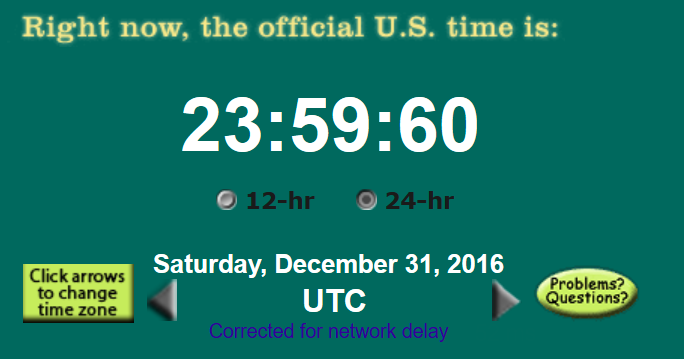
Screenshot of the UTC clock from www.time.gov during the leap second on December 31, 2016.

ABOUT THE SONG
Style: ExperiMental Music
Chords: E B E –> 7th fret and slide down to E
Recording: digital 8-track stereo recorded live

This song is about the Earth slowing down. Why is the Earth slowing down?
The Earth is slowing down and speeding up for many reasons. In general, the Earth is slowing down it’s rotation due to friction. The wind and the oceans and mountains, tides and gravity cause friction that slows an object in motion.

A leap second is a one-second adjustment that is occasionally applied to Coordinated Universal Time (UTC) in order to keep its time of day close to the mean solar time, or UT1. Without such a correction, time reckoned by Earth’s rotation drifts away from atomic time because of irregularities in the Earth’s rate of rotation. Since this system of correction was implemented in 1972, 27 leap seconds have been inserted, the most recent on December 31, 2016 at 23:59:60 UTC.

So, every once in a while humans travel a second forward in time. “Specifically, a positive leap second is inserted between second 23:59:59 of a chosen UTC calendar date (the last day of a month, usually June 30 or December 31) and second 00:00:00 of the following date.”

Why is the moon falling farther away from us?

The migration of the Moon away from the Earth is mainly due to the action of the Earth’s tides. The Moon is kept in orbit by the gravitational force that the Earth exerts on it, but the Moon also exerts a gravitational force on our planet and this causes the movement of the Earth’s oceans to form a tidal bulge.

Vocals, Guitar, Organ

Part of the 4D Music Experiment
by Daniel Brouse
bookmark_borderDueling Black Holes

LYRICS
Duel black holes orbiting
Behavior that is fitting
Einstein wasn’t kidding
Mighty brave…
Surfing a gravitational wave

It will begin
To pull you in
Spacetime has-been

Sucking in light
Black as the night
Density’s might

ABOUT THE SONG
Style: ExperiMental Music
Chords: G F# E / C Am Em
Recording: digital 5-track stereo

Vocals, Guitar, Bass, Keyboards

“A binary black hole (BBH) is a system consisting of two black holes in close orbit around each other.”

“Scientists announced that they have once again detected ripples in space and time from two black holes colliding far away in the universe.” The discovery comes just months after the first-ever detection of such “gravitational waves.”

Part of the 4D Music Experiment
by Daniel Brouse
bookmark_borderSaturn’s Rings

INSTRUMENTAL

Saturn’s Rings (music video).mp4

Saturn’s Rings.mp3

ABOUT THE SONG
Style: ExperiMental Music
Chords: Bm7(11)
Rhythm: 100 BPM / Piano Ballad
Recording: digital 1-track stereo / recorded live

Keyboards and Synthesizers (microKorg, Korg N364, Yamaha PSR-740, Casio WK-3500, miniNova, Ableton Software)

Part of the 4D Music Experiment
by Daniel Brouse
bookmark_borderThe Space Between Spaces

INSTRUMENTAL


ABOUT THE SONG
Style: ExperiMental Music
Chords: Em D
Rhythm: 118 BPM / Piano Ballad #1 (Casio) and Piano Ballad (Yamaha)
Recording: digital 1-track stereo / recorded live

Keyboards and Synthesizers (microKorg, Korg N364, Yamaha PSR-740, Casio WK-3500, miniNova)

Part of the 4D Music Experiment
by Daniel Brouse
bookmark_borderSupermassive Black Hole

A song about the Hubble telescope finding a black hole that is 21 million times larger than the sun. NGC 4889 — The supermassive black hole is located in the Coma Cluster about 300 million light-years away and measures 130 billion kilometers in diameter.

INSTRUMENTAL

Supermassive Black Hole.mp3

ABOUT THE SONG
Style: ExperiMental Music
Chords: E slide to G / F# F E / Em E7 AM7
Recording: digital

Guitar, Keyboards, Synthesizers (microKorg, Korg N364, Yamaha PSR-740, Casio WK-3500, miniNova, Boss Loop Station, Boss BR-600, DigiTech RP3)

Part of the 4D Music Experiment
by Daniel Brouse
bookmark_borderIn A Deep Space

LYRICS
Wondering where the time is kept
Feelin’ like I haven’t slept
You say it’s only been a day
When a day is 1,000 years
Feelin’ like I haven’t slept for day… as days nears years

These eyes never realized
Taking for granted my orbit habit

When I finally fall asleep
Hoping I don’t make a peep
Having a nightmare that last a year
Or even worse a friggin’ light year
Oh the things you fear
When the space is deep and falling sleep

Embrace deep space
Pay to keep
Light I’ll face
In deep space

In A Deep Space.mp3

ABOUT THE SONG
Style: ExperiMental Music
Chords: Keys – F#m / Guitar Capo 2 Emb Em A7 D6 A7 Em
Vocals, Guitar, Keyboards, Synthesizers (microKorg, Korg N364, Yamaha PSR-740, Casio WK-3500, miniNova, Boss Loop Station, Boss BR-600, DigiTech RP3)

A song about good a good nights sleep in space.

Part of the 4D Music Experiment
by Daniel Brouse
bookmark_borderMeteoright

LYRICS
Asteroid turns to meteoroid… is that right? That’s right!
Meteoroid turns to meteorite… is that right? That’s right!
If it survives the Earth’s impact in tact
Sure hope I’m not in the way that day

If it’s whistling through the atmosphere
Avoid meteoroid. Run in fear!

I don’t know
Killed the dino
Covering the Earth in darkness
Until it turned lifeless

Meteoright.mp3

ABOUT THE SONG
Style: ExperiMental Music
Chords: E G A G / G E / C Am E

Vocals, Guitar, Keyboards, Synthesizers (microKorg, Korg N364, Yamaha PSR-740, Casio WK-3500, miniNova, Boss Loop Station, Boss BR-600, DigiTech RP3)

Part of the 4D Music Experiment
by Daniel Brouse

bookmark_borderBreathe

LYRICS
Can I go ahead and breathe
Relieve my need for O2 (Ohh, to retrieve some O2, too)
I’m dying… how about you

Oh to retrieve some oxygen (some O2, too)
Is there any air anywhere out there
Ohhhh… to breathe in again
And how about breathing out

Can I go ahead and breathe
It’s hard for it to be said
If it doesn’t get to my head
… I’ll be dead

Breathe Part 3.mp3

ABOUT THE SONG
Style: ExperiMental Music
Chords: C Em C9
Rhythm: 32 BPM increasing to 124 BPM then decreasing to 32 BPM / 8 Beat Ballad

Vocals, Keyboards, Synthesizers (microKorg, Korg N364, Yamaha PSR-740, Casio WK-3500, miniNova, DigiTech RP3)

Part of the 4D Music Experiment
by Daniel Brouse

bookmark_borderFrame Of Reference Blues

LYRICS
Are we going fast
Are we going slow
It’s really hard for me to know
Watching space go by
Is to drift really to fly
Is adrift to fly?

Are we headed forward
Are we in reverse
What is our heading
What is our course
Of course….

Are we going up
Are we going down
Are we just spinning around and around

Frame Of Reference Blues.mp3

ABOUT THE SONG
Style: ExperiMental Music
Chords: E7 Em7

“The point is that motion is relative and the entire concept of motion is very subtle because it depends on the chosen frame of reference. On Earth we generally have a fixed background against which we assess movement.” — NASA

What would it be like without a frame of reference? If you don’t have a frame of reference, can you tell how fast you are going?

Vocals, Guitar, Keyboards, Synthesizers (microKorg, Korg N364, Yamaha PSR-740, Casio WK-3500, miniNova, DigiTech RP3)

Part of the 4D Music Experiment
by Daniel Brouse

bookmark_borderAsteroid Belt

Space Debris
Space Debris

LYRICS
Are you paranoid of an asteroid
At all costs avoid
Me… I’m frightened of all space debris
Especially the kind I can’t see
At least an asteroid is easy to avoid

If some nut becomes unscrewed, you’d better bolt
’cause you won’t survive the impact
First a jolt… and a splat
And, that’s that

ABOUT THE SONG
Style: ExperiMental Music
Chords: E7 Em7
Rhythm: 142 BPM Ragtime
Recording: digital

If you were traveling in space, would you be more afraid of being hit by an asteroid or by man-made space debris?

Vocals, Keyboards, Synthesizers (microKorg, Korg N364, Yamaha PSR-740, Casio WK-3500, miniNova, DigiTech RP3, Cubase)

Part of the 4D Music Experiment
by Daniel Brouse

bookmark_borderMeteowrite

INSTRUMENTAL

Meteowrite.mp4

Meteowrite.mp3

ABOUT THE SONG
Style: ExperiMental Music
Chords: E7 Em7
Recording: digital

A couple examples of how midi files can sound different depending on the listening device. You can compare the .mid files to the .mp3 files.

Alesis Vortex and Ableton Software

Part of the 4D Music Experiment
by Daniel Brouse

bookmark_borderLook Out Below

LYRICS
Did you take a look out your window
Did you see below
Did you know
We”re soaring

No need for flooring
When you’re soaring
Soaring

An alluring feeling luring us past the ceiling

How long will it last
Taking it in fast
Trying to grasp
Letting go
Looking out my window
Seein’ below
Coming to know

Look Out Below.mp3

ABOUT THE SONG
Style: ExperiMental Music
Chords: Dm Asus4
Rhythm: 104 to 132 BPM / Broadway and 8 Beat #1
Recording: digital 1-track stereo recorded live

Vocals, Guitar, Keyboards and Synthesizers (microKorg, Korg N364, Yamaha PSR-740, Casio WK-3500, miniNova, Boss Loop Station, Boss BR-600, DigiTech RP3)

Part of the 4D Music Experiment
by Daniel Brouse

bookmark_borderPre-launch And Lift

INSTRUMENTALS

ABOUT THE SONG
Style: ExperiMental Music
Chords: Pre-launch Am / Lift Dm
Recording: digital 1-track stereo recorded live

A couple examples of how midi files can sound different depending on the listening device. You can compare the .mid files to the .mp3 files.

Keyboards and Synthesizers (microKorg, Korg N364, Alesis Vortex and Ableton Software)

Part of the 4D Music Experiment
by Daniel Brouse

bookmark_borderInterplanetary Travel

In February of 2016, NASA published interplanetary travel posters to help foster imagination about exploration.

LYRICS
Am I in a planetarium
Do I need an interplanetary travel plan
Make my exit to an exoplanet
Aye-aye, I can see me on Pagasi (see sigh)
Or maybe… I dunno… a rogue abode on PSO
A wayward son without a sun
Quit the orbit habit
Perhaps I should see how it feels to get heavy
On super-earth gravity
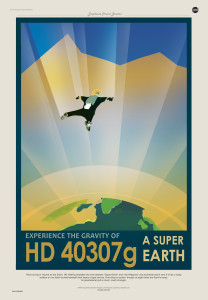
HD 40307g
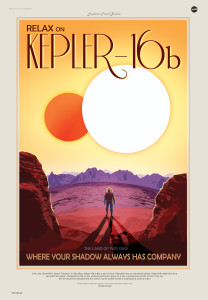
There’s the possibility of… oh, I dunno… “My shadow and me”
My shadow and me have company

Then, I could come down to Earth
But I’d rather get down
Saying, “Wonder when we’ll get to go to heaven again?”

Interplanetary Travel.mp4

Interplanetary Travel.mp3

NASA’s Travel Guide

Greetings from your First Exoplanet
While there is much debate over which exoplanet discovery is considered the “first,” one stands out from the rest. In 1995, scientists discovered 51 Pegasi b, forever changing the way we see the universe and our place in it. The exoplanet is about half the mass of Jupiter, with a seemingly impossible, star-hugging orbit of only 4.2 Earth days. Not only was it the first planet confirmed to orbit a sun-like star, it also ushered in a whole new class of planets called Hot Jupiters: hot, massive planets orbiting closer to their stars than Mercury. Today, powerful observatories like NASA’s Kepler space telescope will continue the hunt of distant planets.

PSO J318.5-22 – Where the Nightlife Never Ends
Discovered in October 2013 using direct imaging, PSO J318.5-22 belongs to a special class of planets called rogue, or free-floating, planets. Wandering alone in the galaxy, they do not orbit a parent star. Not much is known about how these planets come to exist, but scientists theorize that they may be either failed stars or planets ejected from very young systems after an encounter with another planet. These rogue planets glow faintly from the heat of their formation. Once they cool down, they will be dancing in the dark.

Experience the Gravity of a Super Earth
Twice as big in volume as the Earth, HD 40307g straddles the line between “Super-Earth” and “mini-Neptune” and scientists aren’t sure if it has a rocky surface or one that’s buried beneath thick layers of gas and ice. One thing is certain though: at eight time the Earth’s mass, its gravitational pull is much, much stronger.

Relax on Kepler-16b – Where your shadow always has company
Like Luke Skywalker’s planet “Tatooine” in Star Wars, Kepler-16b orbits a pair of stars. Depicted here as a terrestrial planet, Kepler-16b might also be a gas giant like Saturn. Prospects for life on this unusual world aren’t good, as it has a temperature similar to that of dry ice. But the discovery indicates that the movie’s iconic double-sunset is anything but science fiction.

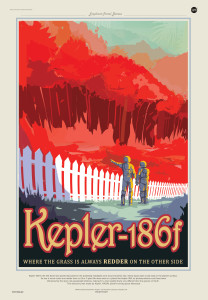
Kepler-186 f – Where the Grass is Always Redder
Kepler-186f is the first Earth-size planet discovered in the potentially ‘habitable zone’ around another star, where liquid water could exist on the planet’s surface. Its star is much cooler and redder than our Sun. If plant life does exist on a planet like Kepler-186f, its photosynthesis could have been influenced by the star’s red-wavelength photons, making for a color palette that’s very different than the greens on Earth. This discovery was made by Kepler, NASA’s planet hunting telescope.

ABOUT THE SONG
Style: ExperiMental Music
Chords: Open D tuning guitar / D F# F E D keys
Recording: digital 1-track stereo recorded live

Vocals, Guitar, Keyboards and Synthesizers (microKorg, Korg N364, Yamaha PSR-740, Casio WK-3500, miniNova, Boss Loop Station, Boss BR-600, DigiTech RP3)

Part of the 4D Music Experiment
by Daniel Brouse and Friends