bookmark_borderThe Equation: Part I

(Verse 1)
For decades now, I’ve been pondering,
The global warming formula, inside my mind wandering.
Human-induced change, an exponential part,
In an unordered system, chaos rules the chart.

(Chorus)
Acceleration, tipping points, feedback loops abound,
In this chaotic dance, our fate is found.
From the domino to the snowball’s roll,
In this whirlwind of change, we find our role.
In rock n’ roll
Find our role
Knock and know all

(Verse 2)
Complex equations, too vast to write,
But I’ll jot down a part, in the dimming light.
Tipping points and feedback loops, they steer the course,
Determining the rate, of climate’s force.
Of course,
Climate’s force
(Chorus)
Acceleration, tipping points, feedback loops abound,
In this chaotic dance, our fate is found.
From the domino to the snowball’s roll,
In this whirlwind of change, we find our role…

(Bridge)
Earth spins in a vortex, a cosmic whirl,
As we accelerate, our destiny unfurl.
The motion of time, in a turbulent sea,
Momentum’s impact, on you and me…
To be
Or not to be?
To be

(Verse 3)
Violent weather events, wreaking havoc’s might,
As momentum grows, in the dark of night.
Floods, storms, and hurricanes, they rage and spin,
As the planet’s pulse quickens, under chaos’ din.

(Chorus)
Acceleration, tipping points, feedback loops abound,
In this chaotic dance, our fate is found.
From the domino to the snowball’s roll,
In this whirlwind of change, we find our role.

(Outro)
So let’s ponder the equations, the theories, the fray,
In this spiral of change, let’s find a new way.
To slow down the momentum, without haste or fear,
For in this dance of chaos, our path becomes clear.

Chords: D C G D / C Em Am / D / D Db D / D Am / C Em Am / D / D C Am
Instrumentation: Vocals, Takamine Acoustic Guitar
Recorded at Lake Wynonah, Pennsylvania

THE SCIENCE
ChatGBT co-authored the lyrics utilizing this part of a research paper:

I’ve been thinking about the giant global warming formula that has been formulating in my head for the last few decades.

Human induced climate change is an exponential component of an unordered system (chaos theory). Our climate model uses chaos theory in an attempt to adequately account for humans and forecasts a global average temperature increase of 9 degrees Celsius above pre-industrial levels.

Though the equation is complex… too complicated to write down….
I’ve lately begun considering trying to write down a small part of it: Tipping points and feedback loops are parts of an equation that determine the rate of acceleration in climate change.

What do you think about this?
t = tipping point
f = feedback loop
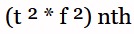
(t ² * f ²) nth

or

the domino effect * the snowball effect:

(h cos α−(s+d)sin θi+1) * a(1 + r) x

Acceleration, tipping points etc. I know that no simple formula exists for any of these. The reason you can’t write a formula is because they are chaotic systems. Chaos theory is the study of unordered systems; however, trying to write it down helps me quantify what I see in my mind’s eye.

These formulas have similarities to acceleration formulas we imagined in 1995:

Abstract
Earth is in a space-time continuum similar to the vortex of a flushing toilet.

if acceleration = velocity/time
and v = speed of light = 2.9979*10^8 m/s
and for the sake of argument we are accelerating at pi (rounded to 15 decimal places) m/s^2
then time = 95426120.77903860 seconds (rounded to 16 significant digits)
= 1104.468990498130 days
= 3.025942439720910 years = roughly 3 years + 9.5 days as relative to the rotation and revolution of the planet earth.

Important note: this is motion at constant speed in a circle. So the speed of light isn’t changing but the direction of motion is, so there is acceleration (= change in velocity, not speed is the acceleration. Velocity has a direction as well as a magnitude, it is a vector, not a scalar like speed.)

a couple other fundamental physical constants to contemplate:
permitivity of free space = 8.854*10^(-12) C^2/(N*m)
permeability of free space = 4(pi)*10^(-7) Wb/(A*m)

SIDD: The tricky part is… you cannot maintain a constant acceleration like pi m/s^2 on a massive body.

In 2023 Sidd added:
On another note, regarding the permeability mu and permittivity epsilon
… those are deeply related to the speed of light thru maxwell’s equations
c=1/sqrt(mu*epsilon)

As for deep contemplation, let me see, in terms of formal schooling
I deeply contemplated those for two years in undergraduate
and about a year and a half in grad school … made my head very pointy.

Conclusion:

Human induced climate change is an exponential component of an unordered system (chaos theory). That means global warming is accelerating at a rapid rate in a complex way — a climate crisis.

Additional Notes

I ask Sidd:
… and what does the answer mean?
” 3.025942439720910 years = roughly 3 years + 9.5 days as relative to the rotation and revolution of the planet earth”

Is it the Earth’s rotation in the flow of the vortex?

Sidd replied:
The answer doesn’t mean very much… for example the speed we chose is c,
but nothing except light moves at speed c, and we know that neither earth nor
any material object can move or does move at speed c … so that answer
isn’t too useful

I think we just intended to show a calculation and people can plug in their own, hopefully more realistic numbers

Then, I recalled:
At the time we were working on a couple of concepts. One had to do with the momentum of humankind. The other had to do with the perception of time as environmental conditions deteriorate. (As 500 year floods become 100 year floods, then 100 year floods become 10 year floods, how will we perceive time? Will it be similar to a mass moving toward the center of a vortex?)

So yes… what you did was get me thinking about the rate of acceleration in global warming…
it’s kind-a like we are spiraling out-of-control faster and faster.. as if in a vortex… and…
how climate change is a vector (not a scalar like speed.)

… which got me thinking a lot more about the energy in the whole system moving around… not just as heat.

As an example, in the first 6 months of 2023 there were 15 confirmed weather/climate disaster events with losses exceeding $1 billion each to affect United States. These events included 1 flooding event, 13 severe storm events, and 1 winter storm event.

None of these events were directly related to heat. Almost all of the events were caused by violent weather. Momentum caused the most damage. (Also see: A Hard Rain Is Falling)

Which reminded me of what started us on this study… what we were working on at the time and still are…
*How to change the momentum of the human race and climate change without going any faster.*
…like a big ship heading for a waterfall…
and all the crew and engine working at full steam could not go any faster to reverse direction
So we created one of the first www games… this was/is the final anti-IQ pop quiz question:

“What are at least two (2) ways that you can increase your momentum, without increasing your speed?”
Hint: Momentum is equal to mass x velocity (p=mv).

Technically Speaking, It’s Not the Momentum That Kills You

It’s not the fall that kills you; it’s the sudden stop at the end.

Technically speaking it is the impact from the momentum that causes damage and deaths. Global warming causes an increase in mass and/or velocity (momentum) of things that are mass flow driven by heat, like wind and flood.

The burning of fossil fuels and other human released emissions have impacted momentum’s impact. A warmer atmosphere can hold more moisture. Warmer air allows for the creation of more massive raindrops. Warmer ocean temperatures create stronger hurricanes. Hail and tornadoes form in strong thunderstorm clouds with intense updrafts, high liquid-water content, and large water droplets.

Sidd added: It’s worse than that. Wind and water flow forces scale as the square of velocity, so as flow speeds increase (say due to more intense heating or heavier rain) the damage scales as the square of the velocity.

About “square of the velocity”, I asked Sidd: is this Bernoulli’s Equation?

4D Music: Songs About Science

A song about The Human Induced Climate Change Experiment

bookmark_borderPhone Home

LYRICS
You better contact home, mister
’cause you’re about to see
In the combat zone, mister
Going down in history
Going down in His-story

Oh, it’s been so long, long, long
So very, very long
Always have some
Oh, there really is no doubt
We never go without
Always have some

Phone-Home.mp3 (unplugged to save energy)

Chords: E G / G F# E / E D# D D5 D#5 E5 / G F# D5 E5 / Second Verse E A
Instrumentation: Vocals, Takamine Acoustic Guitar
Written and recorded at Lake Wynonah, Pennsylvania

ABOUT THE SONG
This song serves as a powerful commentary on the destructive consequences of mass consumption and its contribution to climate change.

The opening lines, “You better contact home, mister, ’cause you’re about to see,” suggest a warning to the listener about the imminent consequences of their actions. The reference to “the combat zone” implies that the battle against climate change is underway and that individuals are directly involved, whether they realize it or not.

The repetition of “Going down in history, going down in His-story” emphasizes the significance of the moment and the lasting impact of humanity’s actions on the planet. It suggests that the choices we make today will shape the narrative of history, both in human terms and in the broader context of the Earth’s story.

4D Music: Songs About Science

A song about The Human Induced Climate Change Experiment

bookmark_borderNine Dominoes (Know No-No’s)

LYRICS
(Verse 1)
Under the guise of needy thirst
We lined them up, unaware of the worst
Greenland’s ice sheet, once mighty and tall
Collapsed under pressure, the first to fall

(Chorus)
Nine dominoes, each one a plight
As they topple down, into the night
From polar ice to forest green
The Domino Effect, a sight unseen
Dominoes know no-no’s
Dominoes

(Verse 2)
West Antarctica, with a deafening sound
Followed suit, as the ice crumbled down
Labrador-Irminger in demise
Convection collapsed, under warming skies

(Chorus)
Nine dominoes, each one a plight
As they topple down, into the night
From polar ice to forest green
The Domino Effect, a sight unseen
Dominoes know no-no’s
Dominoes

(Bridge)
East Antarctic Subglacial Basins, hidden deep below
Their collapse adds to the relentless flow
Arctic winter sea ice, once thick and vast
Now collapses lapses, lost to the past

(Verse 3)
East Antarctic Ice Sheet, once thought secure
Now joins the ranks of those no longer pure
Amazon Rainforest, lungs of the Earth
Dies back in silence, its value of worth

(Chorus)
Nine dominoes, each one a plight
As they topple down, into the night
From polar ice to forest green
The Domino Effect, a sight unseen
Dominoes know no-no’s
Dominoes

(Outro)
Boreal permafrost, locked in icy embrace
Now melts away, leaving barren space
Atlantic Meridional Overturning Circulation
The final blow, you know domino
As it collapses, the Domino Effect, we know

(Chorus)
Nine dominoes, each one a plight
As they topple down, into the night
From polar ice to forest green
The Domino Effect, a sight unseen.
Dominoes know no-no’s
Dominoes

Chords: F Bb / F / Ab Eb Bb / Ab Eb Bb F / Db F / Db C7 / F
Instrumentation: Vocals, Takamine Acoustic Guitar, Kurzweil Electric Piano, Percussion
Written and recorded at Lake Wynonah, Pennsylvania

ABOUT THE SCIENCE
Tipping points are Critical Milestones that directly impact the rate of acceleration in climate change by multiplying the number and intensity of feedback loops. Identifying and understanding these tipping points is crucial for climate science and policymaking. Crossing multiple tipping points could lead to a domino effect, resulting in a much more rapid and severe climate change than currently projected.

A look at nine (9) of the multiple tipping points that are in play during 2024. The first dominoes have fallen and will continue to knock down more tiles with each escalating step. The crossing of these nine climate tipping points represents a critical threshold in the Earth’s climate system, with potentially irreversible consequences for global ecosystems and human societies:

  1. Greenland Ice Sheet Collapse: The melting of the Greenland Ice Sheet has accelerated in recent years, leading to increased rates of ice loss and sea level rise. As glaciers retreat and ice shelves collapse, vast quantities of freshwater enter the ocean, disrupting marine ecosystems and contributing to global sea level rise.
  2. West Antarctic Ice Sheet Collapse: Similar to Greenland, the West Antarctic Ice Sheet is experiencing rapid melting and destabilization. The collapse of this ice sheet has the potential to raise sea levels by several meters, inundating coastal areas and triggering widespread impacts on infrastructure, agriculture, and human populations.
  3. Labrador-Irminger Seas/SPG Convection Collapse: The collapse of convection in the Labrador-Irminger Seas, part of the North Atlantic Ocean, could disrupt the Atlantic Meridional Overturning Circulation (AMOC). This circulation pattern plays a crucial role in regulating global climate and ocean circulation, influencing weather patterns and heat distribution worldwide.
  4. East Antarctic Subglacial Basins Collapse: The East Antarctic Ice Sheet contains vast quantities of ice, much of which is grounded below sea level. The collapse of subglacial basins in East Antarctica could lead to rapid ice loss and contribute to sea level rise, with potentially far-reaching consequences for coastal regions and global climate stability.
  5. Arctic Winter Sea Ice Collapse: Arctic sea ice has been declining rapidly in extent and thickness due to rising temperatures. The loss of winter sea ice in the Arctic not only accelerates regional warming but also affects global weather patterns, ocean circulation, and biodiversity in the Arctic ecosystem.
  6. East Antarctic Ice Sheet Collapse: While traditionally considered more stable than its western counterpart, the East Antarctic Ice Sheet is also vulnerable to collapse under continued warming. The disintegration of ice shelves and glaciers in East Antarctica could significantly contribute to sea level rise and alter ocean circulation patterns.
  7. Amazon Rainforest Dieback: Deforestation, drought, and climate change threaten the resilience of the Amazon Rainforest, the world’s largest tropical rainforest. The dieback of the Amazon could result in decreased rainfall, increased carbon emissions, and loss of biodiversity, impacting regional and global climate systems.
  8. Boreal Permafrost Collapse: Permafrost in the northern regions of the globe contains vast stores of carbon in the form of frozen organic matter. As permafrost thaws due to rising temperatures, it releases greenhouse gases such as methane and carbon dioxide, further exacerbating climate change and creating a feedback loop of increased warming.
  9. Atlantic Meridional Overturning Circulation Collapse: The collapse of the AMOC, driven by changes in ocean temperature and salinity, could have profound consequences for global climate stability. Disruption of this circulation pattern could lead to abrupt shifts in weather patterns, including changes in temperature, precipitation, and ocean currents, with far-reaching impacts on ecosystems and human societies.

The crossing of these tipping points underscores the urgent need for decisive action to mitigate climate change and adapt to its impacts. Without concerted efforts to reduce greenhouse gas emissions and protect vulnerable ecosystems, the consequences of these tipping points could pose significant challenges to the well-being of present and future generations.

4D Music: Songs About Science

A song about The Human Induced Climate Change Experiment

bookmark_borderRaindrops on the Window

LYRICS
Verse 1
Raindrops on the window
Make me wonder
Will Mother be a widow
As men rape and plunder

Chorus:
Teardrops from the sky
Asking why
Watching her children cry
Cry, Mother, cry

Verse 2
Rain upon the windowpane
Reflecting on the pain
Mother’s distress, can’t contain
Life’s value, what’s to gain?
(Chorus)

Bridge:
Raindrops on the window
Prompt me to ponder
From extreme wet to extreme dry
Will we sink, will we fry?
Cry, Mother, cry

Verse 3
Rain on the rooftop’s beat
Growing in repeat
Mother, halt this endless feat
Intensifying with each heartbeat
(Chorus)
Outro:
Raindrops on the window
Lead me to reflect
Will we come to comprehend
Tipping points’ effect?
… or… Cry, Mother, cry?

Chords: C D G / G F#m Em / Em F#m G / C Em / C B7 Em; Part II Ambient / Rock Ballad @ 66 Beats Per Minute
Instrumentation: Vocals (TC-Helicon VOICELIVE and MiniNova Vocorder), Ibanez Acoustic Guitar (AW54CE), Keyboards (Korg PS60, Casio WK-3500, Yamaha PSR-740, MiniNova, MicroKorg)

ABOUT THE SONG
This song serves as a poignant commentary on the devastating impact of climate change, portraying the Earth as a grieving mother witnessing the destruction wrought by humanity’s actions.

In the opening verse, raindrops on the window symbolize the tears of Mother Earth as she contemplates the uncertain fate of her inhabitants. The imagery of Mother potentially becoming a widow highlights the threat posed by human exploitation and disregard for the environment.

The chorus reinforces the theme of sorrow and despair, as the Earth’s tears fall from the sky and her children suffer. It evokes a sense of helplessness in the face of escalating climate crisis.

Verse 2 delves deeper into the emotional turmoil experienced by Mother Earth, as she reflects on the pain caused by human greed and exploitation. The questioning of life’s value underscores the destructive consequences of prioritizing profit over the well-being of the planet.

The bridge prompts introspection and contemplation, as raindrops on the window lead the narrator to ponder the extremes of climate change and the potential catastrophic outcomes for humanity.

Verse 3 continues the metaphor of rain as a reflection of Mother Earth’s distress, emphasizing the intensifying impact of climate change with each passing moment. The urgent plea for Mother to halt this destruction highlights the need for immediate action to mitigate the effects of climate change.

The outro leaves listeners with a sense of introspection and uncertainty, as raindrops on the window prompt reflection on humanity’s role in exacerbating the climate crisis and the need to comprehend the tipping points that could lead to irreversible damage.

Overall, this song serves as a powerful call to action, urging listeners to acknowledge the profound impact of climate change and take responsibility for preserving the planet for future generations.

ABOUT THE SCIENCE
Human induced climate change is an exponential component of an unordered system (chaos theory). That means global warming is accelerating at a rapid rate in a complex way.

“We are not saying that the Earth’s temperature is just going to rise. In general, as energy is added to a system, the fluctuations in the system increase. So, we expect more storms, more droughts, more wildfires, more floods, more fluctuations of all kinds. What we are saying is that weather conditions will become more volatile due to the impact of humans,” said Mukherjee and Brouse. (2004)

Climate change is primarily driven by the escalation of thermal energy affecting biogeophysical and socio-economic systems. While biogeophysical factors can be studied using math, physics, and historical records, socio-economic systems pose greater challenges due to the unpredictable consequences of human behavior and inexplicable consumer choices, exacerbating tipping points and feedback loops.

The Age of Loss and Damage is a new way of thinking about economics by combining economics, climate science, statistics, and physics. Until now, economic models have been unfit to capture the full extent of climate damage. Traditionally, “integrated assessment models” (IAMs) were used to forecast “shock” events. IAMs use “quadratic function” to calculate GDP losses by squaring the temperature change, yet ignore other methods (such as the exponential function) that are better suited for rapid change. “Climate change is fundamentally different to other shocks because once it has hit, it doesn’t go away,” said Thierry Philipponnat, author of a report by Finance Watch, a Brussels-based public interest NGO on financial issues. “And if the fundamental assumption is flawed, all the rest makes little sense — if any.”

Unfortunately, even scientists are failing to see, let alone forecast, the rapid acceleration in climate change. Due to their complexity, the impacts of the Domino Effect are being underestimated. The Domino Effect is also known as “tipping cascades” in climate science. Cascading impacts in relation to tipping points include cascading impacts across biogeophysical and social systems. Until recently, scientist have been drastically underestimating the social-ecological systems. The University of Exeter reports, “There is a notable lack of topic clusters dedicated to how humans will be impacted by climate-related tipping cascades.” 2023 was a wake-up call to social-ecological scientists. The record breaking physical and economical impacts could be felt worldwide. The record warming year was seventeen times greater than any other record increase in history. Typically, record-breaking temperatures are measured in 100th degrees. There were also 200 consecutive days of record-breaking temperatures. Usually, there are one or two record breaking days in a row. The increase in intensity and frequency of record-breaking heat requires forecasting models to be recast.

As flow velocities go up due to climate change, force and damage scale as square of the velocities.

How Do Pollution and Climate Change Kill People?

Pollution and climate change can have severe health impacts, leading to the loss of lives through various direct and indirect mechanisms. An overview of how pollution and climate change contribute to adverse health outcomes:

Pollution:

  1. Air Pollution:
    • Respiratory Issues: Inhalation of air pollutants, such as particulate matter (PM), nitrogen dioxide (NO2), sulfur dioxide (SO2), and ozone (O3), can cause or exacerbate respiratory conditions like asthma, bronchitis, and chronic obstructive pulmonary disease (COPD).
    • Cardiovascular Effects: Air pollution is linked to cardiovascular diseases, including heart attacks and strokes. Fine particulate matter can enter the bloodstream, affecting the cardiovascular system.
  2. Water Pollution:
    • Waterborne Diseases: Contaminated water sources can harbor pathogens, leading to waterborne diseases like cholera, dysentery, and gastrointestinal infections.
    • Chemical Exposure: Industrial pollutants, agricultural runoff, and untreated sewage can introduce harmful chemicals into water supplies, posing long-term health risks.
  3. Soil Pollution:
    • Food Contamination: Polluted soil can lead to the contamination of crops with heavy metals, pesticides, and other harmful substances. Consuming contaminated food can result in health issues, including neurological problems and cancer.
  4. Noise Pollution:
    • Stress and Mental Health: Chronic exposure to high levels of noise can contribute to stress, anxiety, and sleep disturbances. Long-term stress can impact mental health and, indirectly, physical well-being.

Climate Change:

  1. Extreme Heat:
    • Heat-Related Illnesses: Increasing temperatures, especially during heatwaves, can cause heat-related illnesses such as heat exhaustion and heatstroke, leading to organ failure and death.
  2. Extreme Weather Events:
    • Injuries and Fatalities: Hurricanes, floods, wildfires, and other extreme weather events associated with climate change can cause injuries and fatalities directly. These events may also displace populations, leading to increased vulnerability.
  3. Vector-Borne and Infectious Diseases:
    • Changing Disease Patterns: Climate change can alter the distribution and prevalence of vector-borne diseases like malaria, dengue, and Lyme disease. These diseases can lead to severe health complications and death. Climate change can influence the geographic range and seasonality of infectious diseases, potentially leading to the emergence of new health threats. “The magnitude of the vulnerability when you think about one or two diseases — okay, sure, we can deal with that,” professor Camilo Mora said. “But when you’re talking about 58% of the diseases, and 58% of those diseases can be affected or triggered in 1,000 different ways. So that, to me, was also revealing of the fact that we’re not going to be able to adapt to climate change.”
  4. Air Quality Impacts:
    • Worsening Respiratory Conditions: Changes in climate patterns can affect air quality, contributing to increased respiratory issues and exacerbating existing health conditions.
  5. Food and Water Scarcity:
    • Malnutrition and Dehydration: Climate change can impact agricultural productivity and water availability. This may lead to food and water scarcity, causing malnutrition, dehydration, and related health problems.
  6. Mental Health Impact:
    • Psychological Stress: The environmental changes and uncertainties associated with climate change can contribute to mental health issues, including anxiety, depression, and post-traumatic stress disorder (PTSD). Almost all survivors of climate-related disasters suffer from mental distress experiencing PTSD. Of those who have not experienced climate disasters, over two-thirds of U.S. adults (68%) report having climate change anxiety.

It’s important to note that vulnerable populations, such as the elderly, children, and those with pre-existing health conditions, are often disproportionately affected by the health impacts of pollution and climate change. Additionally, global efforts to mitigate these impacts and transition to more sustainable practices are crucial for protecting human health and well-being.

* Our climate model employs chaos theory to comprehensively consider human impacts and projects a potential global average temperature increase of 9℃ above pre-industrial levels.

What Can I Do?
There are numerous actions you can take to contribute to saving the planet. Each person bears the responsibility to minimize pollution, discontinue the use of fossil fuels, reduce consumption, and foster a culture of love and care. Be a butterfly and affect the world. The Butterfly Effect illustrates that a small change in one area can lead to significant alterations in conditions anywhere on the globe. Hence, the frequently heard statement that a butterfly in China can cause a hurricane in the Atlantic.
Here is a list of additional actions you can take.

4D Music: Songs About Science

A song about The Human Induced Climate Change Experiment

bookmark_borderAre You Sleeping?

LYRICS
At first, it was hard to tell
Perhaps just as well?
As they say, time will tell
If we rose
If we fell
I suppose….

Any wonder under
Our own spell
Mo matter if
I stomp and yell
Well,
It’s hard to tell
If there’s soul, does it dwell?
Your life’s toll… heaven… hell?

Are-You-Sleeping.mp3 (unplugged to conserve energy)

Chords: G / F C G
Instrumentation: Vocals (TC-Helicon VOICELIVE), Ibanez Acoustic Guitar (AW54CE)

ABOUT THE SONG
This song explores the uncertainty and introspection surrounding the issue of climate change. The lyrics suggest a contemplative mood, questioning whether humanity has truly recognized the gravity of the situation. The repetition of “hard to tell” reflects the ambiguity and complexity of the climate crisis, as well as the difficulty in discerning its full impact. The mention of “time will tell” emphasizes the need for patience and observation to understand the consequences of our actions. Overall, the song encourages listeners to reflect on their role in addressing climate change and to consider the broader existential questions it raises about life and its interconnectedness with the environment.

Our climate model / experiment employs chaos theory to comprehensively consider human impacts and projects a potential global average temperature increase of 9℃ above pre-industrial levels. Global warming is a consequence of elevated thermal energy in the climate system, which comprises various subsystems. Chaos theory underscores the intricate and nonlinear nature of dynamic systems. Human well-being is compromised above a 1.5-degree temperature rise, rendering much of the Earth uninhabitable. A 9-degree Celsius increase would bring the Earth close to a wet-bulb temperature incapable of sustaining human life.

What Can I Do? There are numerous actions you can take to contribute to saving the planet. Each person bears the responsibility to minimize pollution, discontinue the use of fossil fuels, reduce consumption, and foster a culture of love and care. The Butterfly Effect illustrates that a small change in one area can lead to significant alterations in conditions anywhere on the globe. Hence, the frequently heard statement that a fluttering butterfly in China can cause a hurricane in the Atlantic. Be a butterfly and affect the world.

Here is a list of additional actions you can take.

4D Music: Songs About Science

A song about The Human Induced Climate Change Experiment

bookmark_borderGrowing Up

LYRICS
Reaching for the light
Climbing to the sky
Through the prism
Of phototropism
Opt in to ensure
Optimal exposure

Rooted in the ground
Gravity is found
Newton’s adhesion
Through gravitropism
Opting in to endure
Anchorage… that’s for sure

Flush in auxins
Hormonal options
Guiding how to grow
Which way to go

Going down into the ground
Climbing high up to the sky

Growing-Up.mp3 (unplugged to conserve energy)

Chords: Bb Db Eb Bb / C F Bb / Eb Db Bb / Bb F Bb
Instrumentation: Vocals (TC-Helicon VOICELIVE), Ibanez Acoustic Guitar (AW54CE)

ABOUT THE SONG
Plants grow upward in response to various environmental cues and internal mechanisms. One primary reason is phototropism, the tendency of plants to grow towards sources of light. This process is crucial for maximizing photosynthesis, as it ensures that leaves receive optimal light exposure. Additionally, plants grow upward to compete for sunlight with neighboring vegetation, aiming to access light before it is intercepted by taller plants. Gravitropism, which is the plant’s response to gravity, also plays a role. Roots exhibit positive gravitropism, growing downward into the soil for anchorage and water absorption, while stems and leaves display negative gravitropism, growing upward against the force of gravity. This upward growth allows stems to reach for light and support the plant’s overall structure. Hormonal signals, particularly auxins, regulate these growth responses, coordinating the plant’s growth patterns in response to its environment.

ExperiMental Music: The music and lyrics are written and recorded extemporaneously. Extemporaneous, spontaneous, improvisation, jamming, freestyle, and impromptu music are most closely related to pure chaos. The music and lyrics evolve from the “sensitive initial conditions” similar to “a butterfly flapping its wings in China causing a hurricane in the Atlantic.”

Music as a Universal Language: Music has the power to communicate emotions universally. Certain melodies, harmonies, or rhythms can evoke specific feelings that resonate with people across different cultures and backgrounds.
The Science of Chaos Theory, String Theory, and Music

4D Music: Songs About Science

bookmark_borderChanges (The Shifting Winds)

LYRICS
Changes are blowing our way
Changes blowing us away
Indeed, the wind speed
Is in the lead

Changes in circulation
Shifts in gradients
Pressure gyration
Blowing radiants

Changes in weather
Frequency and intensity
Changes in whether
Austerity or prosperity

Changes in the surface
Reduction in friction
Suffice to service
From any direction

Changes in the patterns
See the sea land
Wind and rain on terrain
As the world turns

Changes.mp3 (unplugged to save energy)

Chords: F D / C D
Instrumentation: Vocals (TC-Helicon VOICELIVE), Ibanez Acoustic Guitar (AW54CE)

ABOUT THE SONG
This song seems to capture the dynamic relationship between wind patterns and climate change, highlighting how various factors contribute to shifts in the Earth’s atmospheric dynamics.

The repeated mention of “changes” blowing our way and blowing us away suggests a sense of urgency and unpredictability in the face of these shifts. The wind, often seen as a symbol of change and movement, becomes a central motif representing the broader transformations occurring in the climate system.

The lyrics delve into the mechanisms behind these changes, referencing alterations in circulation patterns, pressure gradients, and weather phenomena like wind speed, frequency, and intensity. These changes are not just superficial but deeply ingrained in the fundamental processes that govern Earth’s climate.

There’s also a recognition of the interconnectedness between different elements of the Earth system, such as the interaction between the sea and land, and how they influence wind and rainfall patterns. This underscores the complexity of climate dynamics and the cascading effects that changes in one component can have on the entire system.

Overall, the song portrays a sense of both awe and concern at the power of these changes, urging listeners to pay attention to the shifting winds of climate change and the profound impact they have on the world around us.

ABOUT THE SCIENCE
Climate change can impact wind speeds in various ways, but the specific effects can vary depending on regional and local factors. Some potential impacts include:

  1. Changes in atmospheric circulation patterns: Climate change can alter atmospheric circulation patterns, which in turn can affect wind speeds. For example, shifts in temperature gradients between different regions may lead to changes in pressure systems and the strength and direction of winds.
  2. Changes in weather patterns: Climate change can influence the frequency and intensity of weather events such as storms, hurricanes, and cyclones. These extreme weather events can result in temporary increases in wind speeds in affected areas.
  3. Alterations in land surface characteristics: Changes in land use, such as deforestation or urbanization, can affect local wind patterns. For example, the removal of vegetation can lead to increased wind speeds due to reduced frictional effects on the surface.
  4. Ocean-atmosphere interactions: Changes in sea surface temperatures and ocean circulation patterns driven by climate change can influence wind patterns, particularly in coastal regions. For example, alterations in the strength and position of ocean currents can impact wind speeds over nearby land areas.

Overall, while climate change can lead to changes in wind speeds, the specific impacts are complex and can vary depending on a range of factors, including geographic location, topography, and regional climate dynamics.

Human-induced climate change is a dynamic component of an intricate and unordered system, as per chaos theory. This implies that global warming is accelerating exponentially in a complex manner. Over the period from 1992 to 2023, we have presented compelling evidence, proposed remedies to mitigate climate change, and amassed valuable information through the engagement of millions with this climate model. Your participation has been invaluable. The incontrovertible data underscores that human-induced climate change is rapidly deteriorating our habitat.

Global warming is caused by an increase in thermal energy in the climate system. The Earth is a climate system. Many subsystems make up our climate. Chaos theory emphasizes the complexity and nonlinearity of dynamic systems, and this complexity is inherent in the interactions between soil, atmosphere, and oceans in the Earth’s climate system.

Atmospheric circulation together with ocean circulation is how thermal energy is redistributed throughout the world. Chaos theory offers insights into the complex, nonlinear dynamics of climate systems role in the redistribution of thermal energy. The Earth’s climate is a highly complex and dynamic system, influenced by various factors such as ocean currents, atmospheric circulation, and feedback loops.

General Circulation Models for the earth climate are nonlinear and teleconnected. That means a small change in temperature or pressure or humidity in one small area on the globe can cause _large_ changes in conditions _anywhere_ on the globe. This is sometimes called the Butterfly effect. The complexity of these models can lead to chaotic behaviour. Climate science must grapple with these models and extract results in spite of the mathematical difficulties, and there have been remarkable successes in some cases and sad failures in others. Nevertheless we must proceed.

Our climate model / experiment employs chaos theory to comprehensively consider human impacts and projects a potential global average temperature increase of 9℃ above pre-industrial levels. Global warming is a consequence of elevated thermal energy in the climate system, which comprises various subsystems. Chaos theory underscores the intricate and nonlinear nature of dynamic systems. Human well-being is compromised above a 1.5-degree temperature rise, rendering much of the Earth uninhabitable. A 9-degree Celsius increase would bring the Earth close to a wet-bulb temperature incapable of sustaining human life.

What Can I Do? There are numerous actions you can take to contribute to saving the planet. Each person bears the responsibility to minimize pollution, discontinue the use of fossil fuels, reduce consumption, and foster a culture of love and care. The Butterfly Effect illustrates that a small change in one area can lead to significant alterations in conditions anywhere on the globe. Hence, the frequently heard statement that a fluttering butterfly in China can cause a hurricane in the Atlantic. Be a butterfly and affect the world.

Here is a list of additional actions you can take.

ExperiMental Music: The music and lyrics are written and recorded extemporaneously. Extemporaneous, spontaneous, improvisation, jamming, freestyle, and impromptu music are most closely related to pure chaos. The music and lyrics evolve from the “sensitive initial conditions” similar to “a butterfly flapping its wings in China causing a hurricane in the Atlantic.”

Music as a Universal Language: Music has the power to communicate emotions universally. Certain melodies, harmonies, or rhythms can evoke specific feelings that resonate with people across different cultures and backgrounds.
The Science of Chaos Theory, String Theory, and Music

4D Music: Songs About Science

A song about The Human Induced Climate Change Experiment

bookmark_borderScratching at the Surface

LYRICS
Suffice to say
Surfaces weigh
That’s not to say
The other way
Won’t sway you, too
Oceans in play

For sure
The land temperature
Also in the picture
Energy exchange
Rearrange
Home and homeostasis
Status of us

Guess it’s not surprising
Sea level’s rising
Currently, the current
Turns to run rampant

Altering the rain
Terrain and strain
Absorbing more heat
Turning Man to meat

Radiation budget
Becoming suspect
Vegetation aggravation
Atmospheric saturation

Scratching-at-the-Surface.mp3 (unplugged to conserve energy)

Chords: Em C B7 Em / Em G D Em / Bm Em
Instrumentation: Vocals (TC-Helicon VOICELIVE), Ibanez Acoustic Guitar (AW54CE)

ABOUT THE SONG
This song “Scratching at the Surface” delves into the intricate relationship between surface temperature and climate change. It begins by acknowledging the significance of surface temperatures and emphasizes that both land and ocean temperatures play crucial roles in shaping global climate patterns.

The lyrics highlight the complex dynamics of energy exchange between different components of the Earth’s system, such as the land, oceans, and atmosphere. The mention of “homeostasis” underscores the delicate balance that maintains stable environmental conditions, which is being disrupted by human-induced changes.

The song reflects on the consequences of rising sea levels, attributing them to the altering currents and their impact on weather patterns. It also touches upon the effects of climate change on precipitation patterns, terrain, and vegetation, illustrating how these changes are leading to increased heat absorption and environmental degradation.

The reference to the “radiation budget” becoming suspect suggests that human activities are disrupting the Earth’s energy balance, leading to further warming and climate instability. Overall, the song portrays a vivid picture of the interconnected processes driving climate change and underscores the urgency of addressing these issues to mitigate their impacts on the planet and humanity.

Human-induced climate change is a dynamic component of an intricate and unordered system, as per chaos theory. This implies that global warming is accelerating exponentially in a complex manner. Over the period from 1992 to 2023, we have presented compelling evidence, proposed remedies to mitigate climate change, and amassed valuable information through the engagement of millions with this climate model. Your participation has been invaluable. The incontrovertible data underscores that human-induced climate change is rapidly deteriorating our habitat.

Our climate model / experiment employs chaos theory to comprehensively consider human impacts and projects a potential global average temperature increase of 9℃ above pre-industrial levels. Global warming is a consequence of elevated thermal energy in the climate system, which comprises various subsystems. Chaos theory underscores the intricate and nonlinear nature of dynamic systems. Human well-being is compromised above a 1.5-degree temperature rise, rendering much of the Earth uninhabitable. A 9-degree Celsius increase would bring the Earth close to a wet-bulb temperature incapable of sustaining human life.

What Can I Do? There are numerous actions you can take to contribute to saving the planet. Each person bears the responsibility to minimize pollution, discontinue the use of fossil fuels, reduce consumption, and foster a culture of love and care. The Butterfly Effect illustrates that a small change in one area can lead to significant alterations in conditions anywhere on the globe. Hence, the frequently heard statement that a fluttering butterfly in China can cause a hurricane in the Atlantic. Be a butterfly and affect the world.

Here is a list of additional actions you can take.

4D Music: Songs About Science

A song about The Human Induced Climate Change Experiment

bookmark_borderGlowing Edge

LYRICS
There’s a glowing edge
Passing by in the sky
A glimmer of light
A ray of hope
In scope
In sight / insight
(Through the night!)
Move over doom
We’ve got to make room
To let in optimism
Move over gloom
You know there’s no room
For skepticism
Got to cross this chasm
Move over soon
We’ve got to make room
Welcome optimism

Glowing Edge.mp3 (unplugged to conserve energy)

Chords: Bb Db F Bb / Db F Bb C7 F / C F
Instrumentation: Vocals (TC-Helicon VOICELIVE), Ibanez Acoustic Guitar (AW54CE)

ABOUT THE SONG
This song reflects on the urgency of addressing climate change while also emphasizing the importance of maintaining hope and optimism in the face of challenges. The “glowing edge passing by in the sky” could symbolize a moment of clarity or enlightenment, a realization that there is still hope for positive change.

The lyrics suggest a need to move past feelings of doom and gloom and instead make room for optimism and positivity. The repetition of “move over” implies a sense of urgency and a call to action to shift away from pessimism and skepticism.

By welcoming optimism, the song encourages listeners to embrace a mindset of possibility and resilience in addressing climate change. It acknowledges the daunting task ahead but also highlights the importance of maintaining hope and belief in the potential for positive outcomes. Overall, the song conveys a message of determination and optimism in the face of environmental challenges.

Our climate model / experiment employs chaos theory to comprehensively consider human impacts and projects a potential global average temperature increase of 9℃ above pre-industrial levels. Global warming is a consequence of elevated thermal energy in the climate system, which comprises various subsystems. Chaos theory underscores the intricate and nonlinear nature of dynamic systems. Human well-being is compromised above a 1.5-degree temperature rise, rendering much of the Earth uninhabitable. A 9-degree Celsius increase would bring the Earth close to a wet-bulb temperature incapable of sustaining human life.

What Can I Do? There are numerous actions you can take to contribute to saving the planet. Each person bears the responsibility to minimize pollution, discontinue the use of fossil fuels, reduce consumption, and foster a culture of love and care. The Butterfly Effect illustrates that a small change in one area can lead to significant alterations in conditions anywhere on the globe. Hence, the frequently heard statement that a fluttering butterfly in China can cause a hurricane in the Atlantic. Be a butterfly and affect the world.

Here is a list of additional actions you can take.

4D Music: Songs About Science

A song about The Human Induced Climate Change Experiment

bookmark_borderGet Back

LYRICS
At the top
And still looking up
Just won’t stop
No, no giving up
Till I know the distance to go
Going to throw everything I know
Once I know the distance to go
Follow through
Sprints in view
Bring on new
A hundred-thousand years of ice
Would be nice
For reasons
Four seasons
Paradise
As a matter of fact
We’ve got to get back
To the garden
I beg your pardon?
Back to the garden
We’ve got to get back to the garden

Get-Back.mp3 (unplugged to conserve energy)

Chords: D5 D#5 E5 / Em / D G Em / C D Em
Instrumentation: Vocals, Takamine Acoustic Guitar
Written and recorded at Lake Wynonah, Pennsylvania

ABOUT THE SONG
This song metaphorically conveys a sense of determination and urgency in addressing climate change. The repeated refrain of “At the top, and still looking up” suggests a relentless pursuit of progress and understanding. The refusal to give up implies a commitment to tackling the challenges ahead, no matter how daunting they may seem.

The mention of “knowing the distance to go” and “throwing everything I know” speaks to the need for a comprehensive understanding of the problem and a willingness to apply all available knowledge and resources to address it.

The reference to “sprints in view” and “bringing on new” suggests a readiness to embrace innovation and change in pursuit of solutions to climate change.

The imagery of “a hundred-thousand years of ice” and “four seasons paradise” evokes a longing for a return to a balanced and harmonious natural world. The mention of “getting back to the garden” echoes themes of environmental stewardship and the need to reconnect with nature.

Overall, the song conveys a message of determination, hope, and a call to action in the face of climate change.

ABOUT THE SCIENCE
Human-induced climate change is a dynamic component of an intricate and unordered system, as per chaos theory. This implies that global warming is accelerating exponentially in a complex manner. Over the period from 1992 to 2023, we have presented compelling evidence, proposed remedies to mitigate climate change, and amassed valuable information through the engagement of millions with this climate model. Your participation has been invaluable. The incontrovertible data underscores that human-induced climate change is rapidly deteriorating our habitat.

Our climate model / experiment employs chaos theory to comprehensively consider human impacts and projects a potential global average temperature increase of 9℃ above pre-industrial levels. Global warming is a consequence of elevated thermal energy in the climate system, which comprises various subsystems. Chaos theory underscores the intricate and nonlinear nature of dynamic systems. Human well-being is compromised above a 1.5-degree temperature rise, rendering much of the Earth uninhabitable. A 9-degree Celsius increase would bring the Earth close to a wet-bulb temperature incapable of sustaining human life.

What Can I Do? There are numerous actions you can take to contribute to saving the planet. Each person bears the responsibility to minimize pollution, discontinue the use of fossil fuels, reduce consumption, and foster a culture of love and care. The Butterfly Effect illustrates that a small change in one area can lead to significant alterations in conditions anywhere on the globe. Hence, the frequently heard statement that a fluttering butterfly in China can cause a hurricane in the Atlantic. Be a butterfly and affect the world.

Here is a list of additional actions you can take.

4D Music: Songs About Science

A song about The Human Induced Climate Change Experiment

bookmark_borderIf Only

LYRICS
Doing well
How ’bout yourself
Bountiful happiness and health
Fortunate recipient of an Earth birth
Loving every minute
For what it’s worth
If we all could just see
How happy we could be
If only we’d restore our habitat
Happiness ensues, imagine that?
We’d be back out front
Havin’ fun under the sun
Pick-up slack, confront
Love resolved
Problem solved

Chords: Am G / C G Am / Em C A / C Em A / A D A / A E A
Instrumentation: Vocals (TC-Helicon VOICELIVE and MiniNova Vocorder), Ibanez Acoustic Guitar (AW54CE)

ABOUT THE SONG
“If Only” is a song that conveys a message of optimism and hope regarding the state of the Earth and humanity’s impact on it. The lyrics express contentment with personal well-being and emphasize the potential for widespread happiness if collective efforts were made to restore the environment. The singer envisions a world where people recognize the importance of preserving their habitat, leading to increased joy and a return to carefree enjoyment of life. The phrase “If only” suggests a longing for positive change and a belief that a harmonious coexistence with nature can bring about solutions to global challenges. The song encourages listeners to consider the transformative power of environmental stewardship in creating a better future.

Human-induced climate change is a dynamic component of an intricate and unordered system, as per chaos theory. This implies that global warming is accelerating exponentially in a complex manner. Over the period from 1992 to 2023, we have presented compelling evidence, proposed remedies to mitigate climate change, and amassed valuable information through the engagement of millions with this climate model. Your participation has been invaluable. The incontrovertible data underscores that human-induced climate change is rapidly deteriorating our habitat.

Our climate model / experiment employs chaos theory to comprehensively consider human impacts and projects a potential global average temperature increase of 9℃ above pre-industrial levels. Global warming is a consequence of elevated thermal energy in the climate system, which comprises various subsystems. Chaos theory underscores the intricate and nonlinear nature of dynamic systems. Human well-being is compromised above a 1.5-degree temperature rise, rendering much of the Earth uninhabitable. A 9-degree Celsius increase would bring the Earth close to a wet-bulb temperature incapable of sustaining human life.

What Can I Do? There are numerous actions you can take to contribute to saving the planet. Each person bears the responsibility to minimize pollution, discontinue the use of fossil fuels, reduce consumption, and foster a culture of love and care. The Butterfly Effect illustrates that a small change in one area can lead to significant alterations in conditions anywhere on the globe. Hence, the frequently heard statement that a fluttering butterfly in China can cause a hurricane in the Atlantic. Be a butterfly and affect the world.

Here is a list of additional actions you can take.

4D Music: Songs About Science

A song about The Human Induced Climate Change Experiment

bookmark_borderRealize

LYRICS
Real, real, realize
Open our eyes
Real, real, realize
It’s that time
I’m…
To surmise
At 1.5
It’s hard to stay alive
Let alone thrive
Add to the fear
The atmosphere
When ppm…
But it’s not then
Gotta strive
For a temperature dive
Aspire…
Strive to thrive
Beyond alive
Aspire
Higher

Realize.mp3

Chords: E F F# slide back to E / C D G / G F# E / E C / C B7 E
Instrumentation: Vocals, Ibanez Acoustic Guitar (AW54CE)

ABOUT THE SONG
According to the European Geosciences Union’s statement on January 2, 2024, specific tipping points include a temperature increase of 1.2℃ above pre-industrial levels and atmospheric CO2 concentrations exceeding 350 parts per million. Disturbingly, as of February 2024, the Earth’s yearly average temperature has already risen to +1.5℃ and CO2 to 425 ppm.

These lyrics convey a sense of urgency and concern about the escalating impact of climate change. The reference to the European Geosciences Union’s statement sets the context, emphasizing specific tipping points, such as a temperature increase of 1.2℃ above pre-industrial levels and atmospheric CO2 concentrations exceeding 350 parts per million.

The repeated use of “Real, real, realize” suggests a call to acknowledge the harsh reality of the situation. “Open our eyes” reinforces the idea of recognizing the seriousness of climate change. The repetition of “It’s that time” implies a critical moment that demands attention and action.

The lines “At 1.5, it’s hard to stay alive, let alone thrive” conveys the dire consequences of a 1.5℃ temperature increase. The addition of “Add to the fear, the atmosphere, when ppm…” implies that rising CO2 concentrations contribute to the overall fear and threat to the atmosphere.

The phrase “But it’s not then, gotta strive” suggests a need for proactive efforts to address the current situation. “For a temperature dive, aspire, strive to thrive, beyond alive, aspire, higher” emphasizes the aspiration for a temperature decrease and a call to not merely survive but to thrive and aim for higher goals.

Overall, these lyrics are a poetic expression urging awareness, action, and a collective effort to mitigate the impacts of climate change, especially in the face of surpassing critical thresholds mentioned by scientific organizations.

What Can I Do?
Our climate model uses chaos theory in an attempt to adequately account for humans and forecasts a global average temperature increase of 9℃ above pre-industrial levels. Everybody has the responsibility not to pollute. There are plenty of things you can do to help save the planet. Stop using fossil fuels. Consume less. Love more. Be a butterfly and affect the world. The Butterfly Effect: “a small change in one small area can cause _large_ changes in conditions _anywhere_ on the globe.” Here is a list of additional actions you can take.

How is All Real Estate at Risk From Climate Change?

ALSO SEE:
Toppled Tipping Points: The Domino Effect / Brouse and Mukherjee (2023)
Sea-level Rise: Greenland and the Collapse of the East Antarctic Ice Sheet / Mukherjee and Brouse (2022 and 2023)
Sea Level Rise: Then and Now / Mukherjee and Brouse (2023)
Feedback Loops / Daniel Brouse and Sidd Mukherjee (2016)

ExperiMental Music: The music and lyrics are written and recorded extemporaneously. Extemporaneous, spontaneous, improvisation, jamming, freestyle, and impromptu music are most closely related to pure chaos. The music and lyrics evolve from the “sensitive initial conditions” similar to “a butterfly flapping its wings in China causing a hurricane in the Atlantic.”

Music as a Universal Language: Music has the power to communicate emotions universally. Certain melodies, harmonies, or rhythms can evoke specific feelings that resonate with people across different cultures and backgrounds.
The Science of Chaos Theory, String Theory, and Music

A song about The Human Induced Climate Change Experiment

bookmark_borderDon’t Forget the Light

LYRICS
Looking through
To a view
View of new
Come to know
Now came to knew
Her hue…
Green and blue
And don’t forget the light
The sweet sunlight
Making colors bright
Sights delight
Her hue…
Green and blue

Chords: C Dm Em D Em F / A G E / D Bb G / Bb F D; 140 to 160 BPM
Instrumentation: Vocals, Keyboards (Korg PS60, Casio WK-500, Korg N364, MiniNova, MicroKorg)

bookmark_borderFronts Confront

LYRICS
Overhead the fronts confront
Overheard North wind’s whisper
Mother Nature’s sister
A cold affront
Well, they don’t make winters
Like they use to
Ole Jack Front can barely do dew
Going to mess the fall feeling
Since the temperature’s gone reeling
Overhead the fronts confront
Overheard North wind’s whisper
Mother Nature’s sister
A cold affront

A song about climate change and extreme weather events.

Chords: B E# / E B C#7 F#
Instrumentation: Vocals, Guitar, Alesis Vortex Controller and Ableton Software
Written and recorded at Lake Wynonah on a digital 6-track

From the album: Booster
Instrumentals: The Silent Killer

bookmark_borderSirens

LYRICS
Sirens sounding seriously
Dreams going up in smoke preposterously
If the alarm is alarming
Maybe it’s time to react
We know our harm is harming
That’s just a matter of fact

Sirens sounding seriously
Dreams going up in smoke preposterously
If the harm is alarming
Maybe it’s time to react
We know our harm is disarming
Nature’s under attack

Sirens sounding seriously
Dreams going up in smoke preposterously
When the harm is disarming
Maybe it’s time to react
we know our farm is harming
Nature’s going to fight back

A song about climate change and extreme weather events.

Chords: Em C D / Am D
Instrumentation: Vocals, Guitar, Loop Pedal, Keyboards and Synthesizers
Written and recorded live

From the album: Booster
Instrumentals: The Silent Killer