bookmark_borderGlad

[Intro][
Sad?
[Break]
Mad?
[Break]
Or glad?
[Break]
Think of all the fun we’ve had
Glad

[Verse 1]
Woke up this morning
Glad
If I woke up dead
Would’ve been sad
Oh, so sad
[Bridge]
But, I live
So, gladly give
Thanks for the opportunity
To be
Glad
[Chorus]
I’ve got one more thing to add
That a tad, a tad more glad
There’s plenty more to give
There’s plenty more to live
[Break]
Glad!
[Instrumental]

[Break]
Glad had
[Break]
[Verse 2]
Looked out my windows
Glad
Out of the shadows
Far from the bad
Oh, so glad
[Bridge]
Yes! I live
n’ gladly give
Thanks for the opportunity
To be
Glad
[Chorus]
I’ve got one more thing to add
That a tad, a tad more glad
There’s plenty more to give
There’s plenty more to live
[Break]
Glad!
[Instrumental]

[Break]
Glad had
[Break]
[Verse 3]
Went out on the street
Glad
Joy and happiness meet
Talking rad
Glad unclad
[Break]
Oh, so glad
[Bridge]
Yes! I live
n’ gladly give
Thanks for the opportunity
To be
Glad
[Chorus]
I’ve got one more thing to add
That a tad, a tad more glad
There’s plenty more to give
There’s plenty more to live
[Break]
Glad!
[Outro]
There’s plenty more to give
There’s plenty more to live
Gladly
[End]
[Silence]

From the album Happy: Experiments in the Fine Line Between

bookmark_borderHumor Me

[Instrumental, Guitar Solo, Drum Fill]
[Intro]
Knock, knock
[Break]
Knock, knock
[Break]
Unaware
Of who is there?
[Break]
[Verse 1]
A world of stress and strife, where worries weigh so heavy,
There’s a remedy we’ve found, that keeps our spirits steady.
It’s the magic of a joke, a smile, a little tease, (please!)
A laughter shared among us all, puts our minds at ease. (please!)

[Chorus]
So humor me, let’s share a laugh,
Turn those frowns around, break free from the half-empty glass.
With every chuckle, every grin we see,
We’re rewriting our story, to humor’s melody.
[Break]
Knock, knock
[Break]
Knock, knock
[Break]
Unaware
Of who is there?
[Break]

[Chorus]
So humor me, let’s share a laugh,
Turn those frowns around, break free from the half-empty glass.
With every chuckle, every grin we see,
We’re rewriting our story, to humor’s melody.
[Break]
Knock, knock
[Break]
Knock, knock
[Break]
Unaware
Of who is there?
[Break]

[Bridge]
In the face of hardship, in the depths of despair,
Crack a smile for a while, shows us we can dare.
To find joy in the journey, to laugh along the way,
For in humor’s embrace, find a brighter day. Hey!

[Break]
Knock, knock
[Break]
Knock, knock
[Break]
Unaware
Of who is there?
[Break]

[Chorus]
So humor me, let’s share a laugh,
Turn those frowns around, break free from the half-empty glass.
With every chuckle, every grin we see,
We’re rewriting our story, to humor’s melody.
[Break]
Knock, knock
[Break]
Knock, knock
[Break]
Unaware
Of who is there?
[Break]

[Outro]
Keep laughing, take a stand,
In humor’s thralls, living life grand.
The joy of laughter, moments light and free,
Find the strength to face whatever comes to be.
[End]
[Silence]

A SCIENCE LESSON
Humor offers a wide range of benefits for mental, emotional, and physical well-being:

  1. Stress Reduction: Humor can act as a natural stress reliever, triggering laughter and releasing tension in the body. It helps to reduce levels of stress hormones like cortisol, promoting relaxation and a sense of calm.
  2. Improved Mood: Laughter stimulates the production of endorphins, the body’s natural feel-good chemicals. It can uplift mood, boost happiness, and provide a sense of lightness even during challenging times.
  3. Enhanced Social Connection: Sharing laughter and humor with others strengthens social bonds, fosters camaraderie, and promotes a sense of belonging. It can break down barriers, build rapport, and create positive interactions with friends, family, and colleagues.
  4. Increased Resilience: Humor can help individuals cope with adversity and bounce back from setbacks more effectively. By reframing difficult situations in a humorous light, people can gain perspective, maintain optimism, and navigate challenges with greater resilience.
  5. Improved Creativity: Engaging in humor and playful thinking can stimulate creativity and problem-solving skills. It encourages flexible thinking, lateral connections, and out-of-the-box ideas, fostering innovation and ingenuity.
  6. Physical Health Benefits: Laughter has been linked to various physical health benefits, including improved immune function, reduced pain perception, and enhanced cardiovascular health. Regular laughter may contribute to overall well-being and longevity.
  7. Cognitive Benefits: Humor stimulates mental agility and cognitive flexibility, sharpening focus and improving mental clarity. It can enhance memory retention, learning, and information processing, making it easier to grasp complex concepts and retain information.

In summary, incorporating humor into daily life can have profound effects on mental, emotional, and physical health, promoting well-being, fostering social connection, and enhancing resilience and creativity.

From the album Happy: Experiments in the Fine Line Between

bookmark_border2024 Albums

New Releases

Omnilogy
Love Love: Embracing Love’s Power to Save the World
The Book Of Daniel: Chapter 12 (The End Of Times)

To Cause A Change: The Philadelphia Experiment

We’re Here… er, a… Were Here

= The Equation

The Reign of Violent Rain

Camelot’s Resurgence

Deep Dive Into Spacetime Music

The Echoes of Earth’s Wrath

bookmark_borderIt’s a Riant

[Intro]
[Laughing]
That was a good one
Let ‘er run
In for some fun

[Verse 1]
Pleased, glad, so glad
Opposite of mad
Blissful, joyous
Euphoric, music, music

[Pre-Chorus]
It’s a rye-ant
Why not try it?
Try it
rye-ant

[Chorus]
It’s oh so good
Feeling like you should
Like you could
Go the distance
With no resistance
It’s a rye-ant riot

[Break]
Giant rye-ant
Try it

[Verse 2]
Joyful, content, rye-ant
Self-reliant pliant
Giant riant celebration station
Join the rye-ant nation

[Pre-Chorus]
It’s a rye-ant
Why not try it?
Try it
rye-ant

[Chorus]
It’s oh so good
Feeling like you should
Like you could
Go the distance
With no resistance
It’s a rye-ant riot

[Break]
Giant rye-ant
Try it

[Verse 3]
Prosperous for us
Fortunate proportionate
Euphoriant rye-ant
Why not try it?

[Break]
Giant rye-ant
Try it

[Verse 4]
Felicitous so delicious
Paradisial, paradisaical
Oh, so therapeutical
Rye-ant reliant

[Pre-Chorus]
It’s a rye-ant
Why not try it?
Try it
rye-ant

[Chorus]
It’s oh so good
Feeling like you should
Like you could
Go the distance
With no resistance
It’s a rye-ant riot

[Outro]
Oh, yeah
Rye-ant riot

[End]
[Silence]

From the album Speciman and the Experiments: Experiments in the Fine Line Between

bookmark_borderOutrageous Feeling Advantageous

[Intro]
[Instrumental]
[Increase tempo]
Your advantage
Turn the page

Outrageous
Feeling advantageous
All of us!

[Verse 1]
To be alive: advantageous
Not have died: advantageous
The verge of thrive: advantageous
The advantage: age
Turn the page

[Break]

[Bridge]
Feeling outrageous
Advantageous
Feeling outrageous
Anti-ages us
Feeling advantageous

[Verse 2]
Given a chance: advantageous
Feel free to dance: advantageous
And, ohh romance: advantageous
The advantage: age
Turn the page

[Pre-Chorus]
Feeling outrageous
Advantageous
Feeling outrageous
Anti-ages us
Feeling advantageous

[Break]

[Chorus]
Outrageous feeling
Feeling advantageous
The advantage to manage
So outrageous
It’s in all of us
Turn the page
Age

[Verse 3]
Given a choice: advantageous
Given a voice: advantageous
Heaven rejoice: advantageous
The advantage: age
Turn the page

[Pre-Chorus]
Feeling outrageous
Advantageous
Feeling outrageous
Anti-ages us
Feeling advantageous

[Break]

[Chorus]
Outrageous feeling
Feeling advantageous
The advantage to manage
So outrageous
It’s in all of us
Turn the page
Age

[Outro]
Age
Your advantage
Turn the page
Age
Turn the page
Age
Turn the page

[Ending]

[Silence]

From the album Speciman and the Experiments: Experiments in the Fine Line Between

bookmark_borderFor What It’s Worth

[Intro]
[Folk Guitar]
[Flute]
[Instrumental]
[Spoken]
For what it’s worth, Mother Earth
Worth my birth

[Verse 1]
For what it’s worth,
Mother Earth
The worth of birth on Mother Earth
With ease, please, please, please
Now I live to give, give, give
Live to give

[Break]
[Instrumental]
[Chorus[
3rd rock from the sun
See mostly sea
3rd rock from the sun
Set your sights (sites)
On delights

[Verse 2]
Ain’t flying by the seat of our can’ts
Try and escape dying
Buying into trying, “Man’s can”
Can stop the not
And the not knot….
Why not?

[Break]
[Instrumental]
[Chorus]
3rd rock from the sun
See mostly sea
3rd rock from the sun
Set your sights (sites)
On delights

[Break]

[Outro]
Ain’t flying by the seat of our can’ts
No can’t dance, at any chance
No not
Nor whatnot….
Can, Man, can

[End]
[Silence]

From the album Speciman and the Experiments: Experiments in the Fine Line Between

bookmark_borderHappy for a While

[Intro]
[Flute]
Happy, can’t help but smile
So happy
Hope you’ll stay, hear a while
Happy
Oh so happy, can’t help but smile
For a while

[Bridge]
From ear-to-ear
Hear
Hear
Right here

[Break]
[Guitar Solo]
[Verse 1]]
Guitar far and near
Near and far
What’s there not to like?
A bizarre bazaar
Complainers take a hike
Sustainers, alright!

[Break]
[Bridge]
Take us to the light
We’ll tunnel us out
The End’s insight
We’re just about…
Right here
Hear, right?
Hear!

[Verse 2]
Wish upon a star
Shared bizarre bazaar
Shines both near and far
Delight of twilight
… into the night

[Bridge]
Take us to the light
We’ll tunnel us out
The End’s insight
We’re just about…
Right here
Hear, right?
Hear!

[Break]

[Chorus]
Happy, can’t help but smile
So happy
Hope you’ll stay, hear a while
Happy, you and me
Oh so happy, can’t help but smile
For a while

[Break]
[Verse 3]
Wish upon a star
Doesn’t matter who you are
Priceless, bizarre bazaar
Where you can dance all night

[Bridge]
Take us to the light
We’ll tunnel us out
The End’s insight
We’re just about…
Right here
Hear, right?
Hear!

[Break]

[Chorus]
Happy, can’t help but smile
So happy
Hope you’ll stay, hear a while
Happy, you and me
Oh so happy, can’t help but smile
For a while

[Outro]
Can you smile for a while?
Smile!
Can you smile for a while?
Smile….

[End]

[Silence]

ABOUT THE SONG
This study was originally published in 1995. In essence, it is a global forecast that predicts a Social Justification in which humans will force themselves to “tunnel underground“. Help us dig out and see the light!

From the album Speciman and the Experiments: Experiments in the Fine Line Between

bookmark_borderWith Benefits

[Intro]
[Harmonica]
[Female Vocals]
[Female Backing Vocals]
Does this come with benefits?
Cures fits and rage, at any stage
Anti-age
… that’s why I smile, all the while
Smile!

[Break]

[Verse 1]
In this life, we’re chasing dreams
But happiness, oh, it’s more than it seems
It’s not just a feeling, it’s a way to heal
Body and mind, you’re my “for real”

[Pre-Chorus]
When your heart beats strong and your soul’s at ease
You’ll find there’s more to this life to seize

[Chorus]
With benefits that reach beyond the smile
It’s more than just temporary style
Improved heart wealth, knowing you’re soon
Reduced stress, less, less, it’s a precious swoon
Longer life, less strife, living life so bright
Enhanced connections, resilience takes flight
Enchanted meant, connections, delight
With happiness, the world’s in sight
With benefits that make life right
Alright
All right

[Break]

[Verse 2]
Lower pressure, low, low, low, below
Inflamed all down, do, de, do, do, down
Down, go down
Happiness helps turn that frown around
Boosting what you see, frames what one sees
With every laugh, we find a little peace
Piece oh peace

[Pre-Chorus]
When your heart beats strong and your soul’s at ease
You’ll find there’s more to this life to seize

[Chorus]
With benefits that reach beyond the smile
It’s more than just a temporary style
Improved heart wealth, anxiety immune
Reduced stress, less, less, it’s a precious swoon
Longer life, less strife, living life so bright
Enhanced connections, resilience takes flight
With happiness, the world’s in sight
With benefits that make life right
Alright
All right

[Break]

[Bridge]
Through the ups and downs, the twists and turns
Happiness helps us weather, helps us learn
It builds us up, makes us stand tall
With happiness, we can conquer all

[Break]
[Outro]
So let’s hold on tight to the joy within
With happiness, we know we’ll win
With benefits that make life right
It’s…
With benefits

[End]
[Silence]

A SCIENCE LESSON
Being happy has numerous health benefits, both physical and psychological. Here are some of the key benefits:

  1. Improved Heart Health: Studies have shown that happiness and positive emotions are associated with a reduced risk of heart disease. Positive emotions can lead to lower blood pressure, reduced inflammation, and healthier cholesterol levels, all of which contribute to better heart health.
  2. Strengthened Immune System: Happiness and positive emotions have been linked to a stronger immune system. People who are happier tend to have higher levels of immune-boosting antibodies and are less susceptible to infections and illnesses.
  3. Reduced Stress Levels: Happiness acts as a buffer against stress, helping to lower levels of the stress hormone cortisol in the body. Chronic stress can weaken the immune system, increase inflammation, and contribute to a range of health problems, so reducing stress through happiness is beneficial for overall health.
  4. Longer Lifespan: Research suggests that happier people tend to live longer than those who are unhappy or stressed. Positive emotions have been associated with a decreased risk of mortality from various causes, including cardiovascular disease, cancer, and accidents.
  5. Better Mental Health: Happiness is closely linked to improved mental well-being and a reduced risk of mental health disorders such as depression and anxiety. Positive emotions can enhance resilience, coping skills, and self-esteem, making individuals more psychologically resilient in the face of life’s challenges.
  6. Enhanced Social Connections: Happy people tend to have stronger social support networks and more satisfying relationships, which are important for overall health and well-being. Positive emotions foster empathy, kindness, and cooperation, strengthening social bonds and promoting a sense of belonging and community.
  7. Increased Resilience: Happiness and positive emotions can build psychological resilience, helping individuals to bounce back from setbacks, overcome adversity, and adapt to change more effectively. Resilient individuals are better able to navigate life’s ups and downs and maintain a sense of optimism and hopefulness.

Overall, cultivating happiness and prioritizing positive emotions can have profound benefits for both physical and psychological health, contributing to a longer, healthier, and more fulfilling life.

From the album Speciman and the Experiments: Experiments in the Fine Line Between

bookmark_borderThese Roots Ain’t Made for Walking

[Verse 1]
Woe to be a plant
And put down roots
No walking boots
Bound by roots
Have to take the chance
On Man’s cahoots
Overshoots
Rapes and loots

[Chorus]
That’s what he did
Enslaved by id
Used and then rid
That’s what he did

[Verse 2]
Ohhhh to be a tree
Not really free….
No walking boots
Bound by roots
Have to take the chance
On Man’s cahoots
Overshoots
Rapes and loots

[Chorus]
That’s what he did
Enslaved by id
Used and then rid
That’s what he did

[Verse 3]
Noooo, to be a flower…
Hour after hour…
No walking boots
Bound by roots
Have to take the chance
On Man’s cahoots
Overshoots
Rapes and loots

[Chorus]
That’s what he did
Enslaved by id
Used and then rid
That’s what he did

[Outro]
By what id did
Watch him go
Stroke ego
Go, cat, go
No, don’t know
Ego, go, go
Don’t know no

ABOUT THE SONG
Plants are in a precarious position.  At the hands of Man, vegetation can not escape.  There is no way to run.  There is no way to hide. After Man conquers, they die. Global warming is caused by an increase in thermal energy in the climate system. The Earth is a climate system. Many subsystems make up our climate. Chaos theory emphasizes the complexity and nonlinearity of dynamic systems, and this complexity is inherent in the interactions between soil, atmosphere, and oceans in the Earth’s climate system.

The Beatless Sense Mongers: We’re Here… Were Here

4D Music: Songs About Science

A song about The Human Induced Climate Change Experiment

bookmark_borderBiblical Baggage

LYRICS
[Verse 1]
Today is the day
While the banks are breached
The earth was at fault
A new record reached

(Chorus)
The damn is breaking
The flood is flowing
The Earth is shaking
No one is knowing

[Verse 2]
Today we all sway
To, fro, friend and foe
Some will wash away
Will you stay or go?
(chorus)
[Bridge]
Water and land roll
Nature’s exact toll
Will Man yearn to learn
Or crash and burn?

[Verse 3]
Today they do say
Quasi-biblical
Our rate of decay
Is historical
(chorus)

[Outro]
Soon… the sun is eclipsed by the moon
Flood, mud, earthquake, shake and bake
Soon… the sun is eclipsed by the

Chords: F Bb Ab F / F Bb Db F / Db F Db C7 F / F Ab Bb F; Part II @ 104 Beats Per Minute
Instrumentation: Vocals (TC-Helicon VOICELIVE and MiniNova Vocorder), Ibanez Acoustic Guitar (AW54CE), Ibanez Electric RG-270 (Vox ToneLab and Boss Digital Delay), Fender Jazz Bass (Boss Digital Delay), Keyboards (Korg PS60, Casio WK-3500, Yamaha PSR-740, MiniNova, MicroKorg)

ABOUT THE SONG
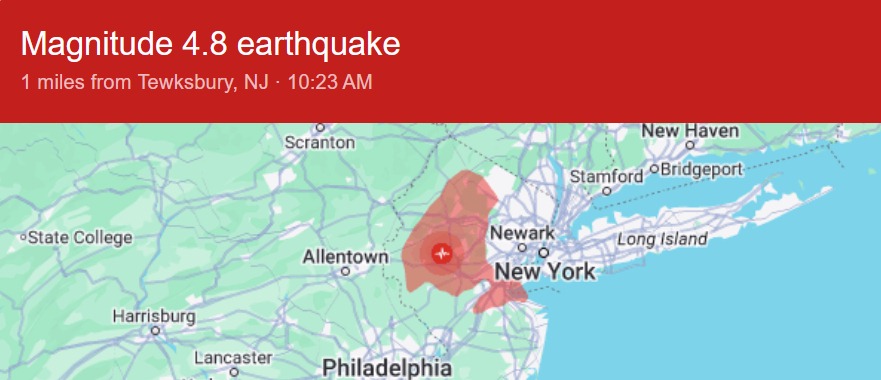
Between April 1 and 4, 2024, Southeastern Pennsylvania experienced another severe weather event attributed to atmospheric rivers and strong winds. Rainfall accumulation exceeded 3 inches, accompanied by wind gusts ranging from 35 to 45 mph. Tragically, two individuals lost their lives in unrelated incidents, one in Montgomery County and the other in Delaware County, when trees collapsed onto their vehicles. Today (Friday April 5) Pennsylvania, New Jersey, and New York experienced a 4.8 magnitude earthquake. Monday is a total eclipse.

This song, “Biblical Baggage,” delves into the tumultuous and uncertain nature of our times, drawing parallels to events of biblical proportions.

[Verse 1] sets the scene with a sense of urgency, describing a day when natural forces wreak havoc, breaking banks and setting new records.

The [Chorus] captures the chaos and devastation unfolding, likening it to a dam breaking, floods flowing, and the Earth shaking, all while humanity remains oblivious to the impending catastrophe.

[Verse 2] portrays the collective uncertainty and vulnerability in the face of such calamities. The imagery of swaying suggests a lack of stability and the looming threat of being swept away by the relentless tide.

The [Bridge] reflects on the toll exacted by nature’s fury, questioning whether humanity will heed the lessons it presents or face dire consequences.

[Verse 3] paints a picture of the magnitude of the events, labeling them quasi-biblical and highlighting the historical significance of our current state of decay.

The [Outro] brings a sense of foreboding, as the sun is eclipsed by the moon, symbolizing an impending darkness amidst the ongoing turmoil of floods, mudslides, earthquakes, and more.

Overall, “Biblical Baggage” serves as a reflection on the precariousness of our existence in the face of natural disasters and the urgent need for awareness and action in the midst of escalating environmental crises.

ABOUT THE SCIENCE
Human-induced climate change is a complex element within a dynamic and interconnected chaotic system. When coupled with other natural phenomena such as earthquakes or solar eclipses, the convergence of factors can create overwhelming compounding effects. Climate change is primarily driven by the escalation of thermal energy affecting biogeophysical and socio-economic systems. While biogeophysical factors can be studied using math, physics, and historical records, socio-economic systems pose greater challenges due to the unpredictable consequences of human behavior and inexplicable consumer choices, exacerbating tipping points and feedback loops.

The Age of Loss and Damage is a new way of thinking about economics by combining economics, climate science, statistics, and physics. Until now, economic models have been unfit to capture the full extent of climate damage. Traditionally, “integrated assessment models” (IAMs) were used to forecast “shock” events. IAMs use “quadratic function” to calculate GDP losses by squaring the temperature change, yet ignore other methods (such as the exponential function) that are better suited for rapid change. “Climate change is fundamentally different to other shocks because once it has hit, it doesn’t go away,” said Thierry Philipponnat, author of a report by Finance Watch, a Brussels-based public interest NGO on financial issues. “And if the fundamental assumption is flawed, all the rest makes little sense — if any.”

Industrial Noize Pollution = The Equation

4D Music: Songs About Science

A song about The Human Induced Climate Change Experiment

bookmark_borderThe Equation: Part II

(Verse 1)
In the whirlwind of change, we find our fate,
Force proportional, contemplate.
Density times velocity, squared in air,
The drag equation, tells us what’s there.

(Chorus)
Velocity squared, a powerful force,
In the wind water’s relentless course.
As climate shifts, and speeds increase,
The damage grows, without release.

(Verse 2)
A ten-mile breeze, seems gentle and mild,
But square that velocity, see it compiled.
Twenty miles an hour, brings four times the might,
And as it doubles, the force takes flight.

(Chorus)
Velocity squared, a powerful force,
In the wind and water’s relentless course.
As climate shifts, and speeds increase,
The damage grows, without release.

(Bridge)
Water denser than air, eight hundredfold,
The force of its flow, a story untold.
As rivers rage and oceans churn,
The drag equation, we must discern.

(Verse 3)
Floods and storms, they testify,
To the power of force, as they amplify.
Sewage systems crumble, hillsides succumb,
As velocity rises, the damage becomes numb…
Damn-age becomes numb

(Chorus)
Velocity squared, a powerful force,
In the wind and water’s relentless course.
As climate shifts, and speeds increase,
The damage grows, without release.

(Outro)
So heed the lesson, the drag equation’s call,
In the face of change, we must stand tall.
For as velocities rise, and forces collide,
The future’s in our hands, where hope resides.

Chords: F# E E D F# / F# D E F# / outro F# D C#7 F#
Instrumentation: Vocals, Takamine Acoustic Guitar, Percussion
Written and recorded at Lake Wynonah, Pennsylvania

ABOUT THE SCIENCE
ChatGBT co-authored the lyrics utilizing this part of a research paper:
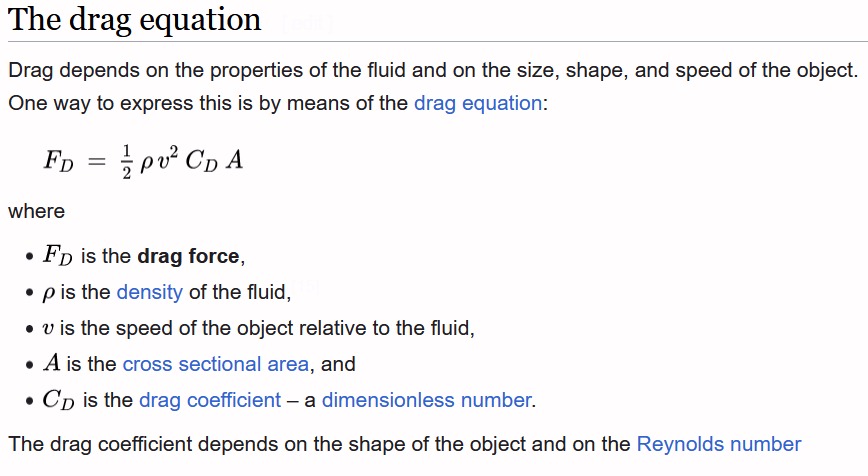
You will see that force is proportional to density times square of velocity (v^2)

The Drag Equation
So a twenty mile an hour wind exerts four times as much force as a ten mile an hour wind. And a forty mile an hour wind exerts sixteen times as much force as a ten mile an hour wind. A wind of fifty miles an hour exerts twenty five times and a wind of sixty miles an hour exerts thirty six times as much force as one of ten miles an hour. Then you have the density term. Water is about eight hundred times denser than air, So the force exerted by a ten mile an hour flow of water is eight hundred times that of a ten mile an hour wind. So as flow velocities go up due to climate change, force and damage scale as square of the velocities. What is not clear is how much these velocities increase with climate change. But in a sense we are seeing this already as, for example, flood and sewage systems succumb and hillsides fall down, and so on.

4D Music: Songs About Science

A song about The Human Induced Climate Change Experiment

bookmark_borderI’m Alive

LYRICS
I’m alive
In pursuit of thrive
So I strive
To help others revive
Drive
To stay alive
Where’s your drive
To stay alive?
Drive
To stay alive
And good fortune will arrive

I’m alive
In pursuit of thrive
So I strive
To help others revive
Drive
To stay alive
Where’s your drive
To stay alive?
Drive
To stay alive
Get ready. Get set. Dive!

I’m alive
In pursuit of thrive
So I strive
To help others revive
Drive
To stay alive
Where’s your drive
To stay alive?
Drive
To stay alive
All ready. We will survive!

Chords: E / A C E / E A / E A C B7 E; Part II @ 128 Beats Per Minute
Instrumentation: Vocals (TC-Helicon VOICELIVE and MiniNova Vocorder), Ibanez Acoustic Guitar (AW54CE), Ibanez Electric RG-270 (Vox ToneLab and Boss Digital Delay), Fender Jazz Bass (Boss Digital Delay), Keyboards (Korg PS60, Casio WK-3500, Yamaha PSR-740, MiniNova, MicroKorg)

bookmark_borderA Tale of Intensification

LYRICS
In the East, where rivers flow in the sky,
Violent rains, historic floods pass by.
Canada’s hurricanes break records, so they say,
While Florida, Carolina, and South’s bill to pay.

(Chorus)
Atmospheric rivers, they twist and they bend,
From West to East, they shape our end,
Gaze as they dance, a meteorological blend,
Change our world, from beginning to end.

(Verse 2)
Traditionally, they whispered on the West’s breeze,
But now, the East feels their force with ease.
Meteorologists puzzled, but now they see the light,
As ARs carve their path, day and night.
(Chorus)
(Bridge)
NOAA nods, recognizing the trend,
PNA patterns, a message they send.
ARs in the East, not just a myth,
Their frequency rising, a climatic shift.

(Verse 3)
A tale of intensification, ARs amplify,
Affecting the northeast, where the sea meets the sky.
From Washington to Maine, the risks do grow,
As coastal lows brew, and nor’easters blow.
(Chorus)

(Outro)
Climate change, an urgent call,
ARs gaining strength, the sea levels tall.
We’re witnessing changes, too fast to comprehend,
As atmospheric rivers reshape, our world’s bend.

Chords: G# G F# / B D F# / F# B D / B E B / B F# D# F# B; Part II Rock Shuffle / Shuffle Rock @ 126 Beats Per Minute
Instrumentation: Vocals (TC-Helicon VOICELIVE and MiniNova Vocorder), Ibanez Acoustic Guitar (AW54CE), IKeyboards (Korg PS60, Casio WK-3500, Yamaha PSR-740, MiniNova, MicroKorg)

ABOUT THE SCIENCE & SONG
ChatGBT co-authored the lyrics using this section of our research paper:

The Eastern US is already seeing violent rain events as far inland as Kentucky with historic flooding in both 2022 and 2023. Eastern Canada has experienced its worst hurricanes on record. Florida, South Carolina, and North Carolina have suffered billions of dollars in storm damage. Homeowners insurance is becoming increasing difficult to obtain in Florida.

Traditionally, atmospheric rivers (AR) in the United States have been linked to the West Coast. However, there is now growing recognition of AR activity on the East Coast. “In reality, their frequency hasn’t necessarily increased. Meteorologists have been using the term for decades; it’s simply gained popularity in the media, much like the polar vortex,” explained Jeff Boyne, meteorologist and climatologist at the National Weather Service. Indeed, according to Jason Cordeira, associate professor of meteorology at Plymouth State University, “Atmospheric rivers are more common on the East Coast than on the West Coast, although they tend to be less impactful and produce lower rainfall amounts.”

In March 2024, NOAA and the National Weather Service finally recognized the heightened frequency of East Coast Atmospheric Rivers occurrences, attributing them primarily to the recent shifts in the Pacific/North America (PNA) teleconnection pattern. This shift is accompanied by a northward movement of the midlatitude jet stream. ARs in the Eastern US have received relatively little attention despite their frequent occurrence and significant impact on heavy precipitation and severe weather events. The authors conducted a comprehensive study on wintertime AR frequency over the Eastern US spanning four decades, utilizing multiple observations and a state-of-the-art high-resolution climate model (AM4) developed at GFDL. Their findings reveal a notable rise in AR frequency over the Eastern US during this timeframe. NOAA’s report reaffirmed these findings, emphasizing the confirmed linkages with the PNA pattern across diverse scenarios, highlighting the crucial role of the PNA pattern in influencing AR variability.

There is increasing research into the types and intensification of East Coast AR events. The US Fourth National Climate Assessment highlights a substantial increase in heavy precipitation events in the Northeast, particularly between 1958 and 2012, with ongoing projections indicating further rises in precipitation, notably during winter and spring and in northern areas of the region.

Many types of East Coast ARs are intensifying, likely as a result of climate change. A study titled “Identifying Eastern US Atmospheric River Types and Evaluating Historical Trends” notes, “The increased moisture transport could have significant implications across the northeast corridor from Washington D.C. to Coastal Maine, heightening the risk of extreme precipitation from landfalling ARs. The study reveals that most ARs in the region are induced by extratropical cyclones, with lee side low pressure systems and coastal lows along the Atlantic Coast (e.g., nor’easters) being responsible for generating the strongest ARs.”

Climate change is anticipated to bring complex and potentially substantial impacts to both the Atlantic Meridional Overturning Circulation (AMOC) and atmospheric rivers along the East Coast of the USA. The AMOC interacts with atmospheric circulation patterns, including the positioning of the jet stream. Changes in the AMOC can influence the behavior of the jet stream, which, in turn, affects the formation and path of atmospheric rivers. The jet stream plays a crucial role in steering weather systems and atmospheric rivers.

How Fast Are Atmospheric Rivers Gaining Frequency and Intensity?
While the rate of change in the intensity, duration, and likelihood of climate disasters varies depending on the type of extreme weather, insights from events like the Canada wildfires of 2023 offer valuable perspective. According to the World Weather Attribution Organization, “Climate change amplified the cumulative severity of Quebec’s 2023 fire season up to the end of July by approximately 50%, and seasons of this severity are now at least seven times more likely to occur.” Similar trends may be observed in other catastrophic events such as hurricanes, heatwaves, droughts, floods, tornadoes, sea level rise, and atmospheric rivers.

According to a NASA-led analysis, global average sea level rose by approximately 0.3 inches (0.76 centimeters) from 2022 to 2023. When our paper, “Climate Change: Rate of Acceleration,“ was authored in 2023, the swift acceleration of this trend was unforeseen. Initially projected to double over 100 years, the rate of sea level rise dramatically escalated, shortening the doubling period to just 10 years by 2020. Recent observations suggest a further compression of this doubling period to a mere 2 years, raising significant concerns. It is imperative to acknowledge and address this alarming trend, hoping it is not indicative of a new norm but rather an anomaly.

Some areas of the world are now warming so fast, it is becoming more difficult to measure the change from “normal” or average. Jeff Boyne of the NWS said, “There are climate normals that are updated every 10 to 15 years, because the planet is warming so fast. The ENSO (El Nino-Southern Oscillation) regions are warming so fast that those normals are being updated every 5 years.” “It’s so far outside anything we’ve seen, it’s almost mind-blowing,” says Walter Meier, who monitors sea-ice with the National Snow and Ice Data Center. “September was, in my professional opinion as a climate scientist, absolutely gobsmackingly bananas,” said Zeke Hausfather, at the Berkeley Earth climate data project.”
4D Music: Songs About Science

A song about The Human Induced Climate Change Experiment

bookmark_borderForest Green

LYRICS
(Verse 1)
As forest green fades from the scene,
Is it from the soil, beginning to spoil?
The naked eye can’t perceive,
The microbial community, retreating as we grieve.

(Chorus)
Desertification, soil degradation,
An explosion of erosion, washing hopes away.
Oh, the sheer severity, loss of biodiversity,
More vulnerability, from the primate climate.
Change, change
So strange
Climate change
So strange

(Verse 2)
In the breakdown, receding in feeding,
The breakdown’s breakdown, silently bleeding.
Each grain of soil tells a story untold,
Of ecosystems lost, and futures foretold.

(Chorus)
Desertification, soil degradation,
An explosion of erosion, washing hopes away.
Oh, the sheer severity, loss of biodiversity,
More vulnerability, from the primate climate.

(Bridge)
The earth beneath our feet, crumbling away,
As we pave the path, for our own dismay.
The cycle disrupted, nature’s song in discord,
Leaving us vulnerable, to the climate’s sword.
Oh, Lord!
Heard the word?
Absurd

(Verse 3)
With each loss, a ripple in time,
Echoes of the past, a warning sign.
Yet in the chaos, there’s still a chance,
To mend the soil, with our hands.

(Chorus)
Desertification, soil degradation,
An explosion of erosion, washing hopes away.
Oh, the sheer severity, loss of biodiversity,
More vulnerability, from the primate climate.

(Outro)
Let’s heed the call, before it’s too late,
Restore the soil, and alter our fate.
For in the earth’s embrace, lies the key,
To a future where life thrives, abundantly free.

Chords: Am FD C Am / Am Em AM / C B7 Em / Em G Em / Am G Em / Em C B7 Em / Am; Part II Hard Rock / Heavy Metal @ 122 Beats Per Minute
Instrumentation: Vocals (TC-Helicon VOICELIVE and MiniNova Vocorder), Ibanez Acoustic Guitar (AW54CE), Keyboards (Korg PS60, Casio WK-3500, Yamaha PSR-740, MiniNova, MicroKorg)

ABOUT THE SONG
This song serves as a poignant commentary on the devastating impact of climate change on soil health and biodiversity, urging listeners to recognize the urgent need for action and restoration.

(Verse 1)
The imagery of “forest green fades from the scene” captures the loss of lush ecosystems due to soil degradation, hinting at the root cause lying within the soil itself. The mention of the “microbial community” highlights the intricate web of life within the soil, now threatened and receding, leading to a sense of grief and loss.

(Chorus)
“Desertification, soil degradation” and “an explosion of erosion” paint a grim picture of the consequences of neglect and exploitation of the soil. The severity of these impacts is underscored by the “loss of biodiversity” and increased vulnerability stemming from the changing climate, emphasizing the interconnectedness of soil health and ecosystem resilience.

(Verse 2)
The metaphor of “the breakdown’s breakdown, silently bleeding” conveys the gradual but pervasive nature of soil degradation, with each component of the soil ecosystem suffering in turn. The “story untold” within each grain of soil symbolizes the rich history and potential future of ecosystems lost to degradation and neglect.

(Bridge)
The bridge serves as a sobering reflection on the consequences of human actions, as the earth beneath our feet crumbles away under the weight of exploitation and disregard. The disruption of the natural cycle and discord in “nature’s song” emphasize the urgent need for stewardship and restoration efforts.

(Verse 3)
Despite the bleakness of the situation, the song offers a glimmer of hope, highlighting the opportunity for redemption and renewal. Each loss serves as a reminder of the fragility of ecosystems and the importance of proactive measures to mend and restore the soil for future generations.

(Outro)
The outro carries a message of urgency and responsibility, urging listeners to heed the call to action before it’s too late. The key to a thriving future lies in restoring and nurturing the soil, paving the way for a world where life can flourish abundantly once again.

ABOUT THE SCIENCE
Soil plays a crucial role in climate change mitigation and adaptation, and soil degradation can contribute to the process of desertification. Here’s why soil is integral to climate change and how soil degradation can lead to desertification:

Importance of Soil in Climate Change:

  1. Carbon Sequestration:
    • Healthy soils act as a significant carbon sink, storing large amounts of carbon in the form of organic matter. This process, known as carbon sequestration, helps mitigate climate change by reducing the concentration of greenhouse gases, particularly carbon dioxide (CO2), in the atmosphere.
  2. Water Regulation:
    • Soil influences water availability and regulates the water cycle. Healthy soils absorb and store water, reducing the risk of floods and contributing to moisture availability during dry periods. This capacity for water regulation is crucial for climate resilience.
  3. Biodiversity Support:
    • Healthy soils provide habitat and support for a diverse range of organisms, including bacteria, fungi, insects, and plant roots. Biodiversity in the soil contributes to ecosystem stability, resilience, and adaptation to changing environmental conditions.
  4. Nutrient Cycling:
    • Soil is essential for nutrient cycling, as it hosts microbial communities that break down organic matter and make nutrients available to plants. This nutrient cycling supports plant growth and contributes to overall ecosystem health.

Soil Degradation and Desertification:

  1. Erosion:
    • Soil degradation, often caused by factors like deforestation, overgrazing, and unsustainable agricultural practices, can lead to increased soil erosion. Erosion removes the topsoil layer, which is rich in organic matter and nutrients, reducing the soil’s fertility and water retention capacity.
  2. Loss of Soil Structure:
    • Poor land management practices, such as excessive plowing, deforestation, and improper irrigation, can lead to the loss of soil structure. This makes the soil more susceptible to erosion, reduces water infiltration, and hinders the growth of vegetation.
  3. Decreased Carbon Sequestration:
    • Soil degradation results in the loss of organic matter, reducing the soil’s ability to sequester carbon. This can contribute to increased atmospheric CO2 levels, exacerbating the greenhouse effect and climate change.
  4. Loss of Biodiversity:
    • Degraded soils often experience a decline in microbial and plant diversity. This loss of biodiversity weakens the soil’s resilience to environmental stresses and reduces its capacity to support healthy ecosystems.
  5. Increased Vulnerability to Climate Change:
    • Degraded soils are more vulnerable to the impacts of climate change, such as extreme weather events, droughts, and temperature variations. This vulnerability can create a feedback loop, where climate change further exacerbates soil degradation.
  6. Desertification:
    • Desertification is the process by which fertile land becomes increasingly arid and unproductive, eventually turning into desert-like conditions. Soil degradation, through erosion, loss of organic matter, and reduced water retention, is a key driver of desertification.
  7. Impact on Livelihoods:
    • Desertification poses a threat to agricultural productivity, water resources, and local livelihoods. It can lead to the displacement of communities and exacerbate social and economic challenges, contributing to a cycle of poverty and environmental degradation.

Addressing soil degradation is crucial for sustainable land management, climate change mitigation, and the prevention of desertification. Implementing conservation practices, agroforestry, reforestation, and sustainable agriculture techniques can help restore and protect soils, contributing to climate resilience and biodiversity conservation.

Create a sustainable and climate-resilient environment in and around your home and prevent soil degradation.
Protect Your Home: Violent Rain and Stormwater Runoff
Flood Insurance
Climate Change: What Can I Do?

Tree Extinction Due to Human Induced Environmental Stress

Chaos Theory and Climate Systems

Climate Change: Rate of Acceleration

The Human Induced Climate Change Experiment

bookmark_borderRace to the Bottom

LYRICS
(Verse 1)
A leaf and a feather, together they glide,
Downward they race, in nature’s wide stride.
Forces unseen, but ever so sound,
Slow their descent, as they twirl around.

(Chorus)
The gravity of the situation weighs them down,
But the levity of friction keeps them bound.
Prolonging their journey with each interaction,
An addition addiction, a natural attraction.

(Verse 2)
Resistance as thin as air, yet still they sway,
Through the sky they dance, in their elegant way.
Some may call it a drag, a force unseen,
But others see it as a lucky snag, in nature’s serene.

(Chorus)
The gravity of the situation pulls them near,
But the levity of friction keeps them clear.
Prolonging their journey with each reaction,
An attraction addiction, a natural attraction.

(Bridge)
Overcoming the sense of dense, they gracefully fall,
In an utter flutter, embracing Her call.
It’s gravity’s recompense, as they drift,
The thought of impact makes our spirits lift.

(Verse 3)
A leaf and a feather, united they soar,
Through opposing forces, they explore.
In the dance of gravity and drag, they find,
A harmony of forces, in the boundless mind.

(Chorus)
The gravity of the situation, the levity of the friction,
In this cosmic dance, there’s no restriction.
Prolonging their journey with each interaction,
An attraction addiction, a natural attraction.

Chords: Em / D C Em / Em G D C Em / Em C B7 Em / Em D Em; Part II 8 Beat Soft / 16 Beat @ 100 Beats Per Minute
Instrumentation: Vocals (TC-Helicon VOICELIVE and MiniNova Vocorder), Ibanez Acoustic Guitar (AW54CE), Ibanez Electric RG-270 (Vox ToneLab and Boss Digital Delay), Keyboards (Korg PS60, Casio WK-3500, Yamaha PSR-740, MiniNova, MicroKorg)

ABOUT THE SONG
This song serves as a metaphorical exploration of the interplay between gravity and drag, using the imagery of a leaf and a feather falling through the air.

(Verse 1)
The opening verse describes the gentle descent of a leaf and a feather, highlighting the subtle forces at play in their fall. Despite being unseen, these forces, gravity and drag, have a profound effect on their journey, slowing their descent as they twirl gracefully through the air.

(Chorus)
The chorus juxtaposes the weight of gravity with the boundless nature of friction, emphasizing how these opposing forces work together to shape the trajectory of the leaf and feather. Each interaction prolongs their journey, creating a sense of harmony and inevitability in their descent.

(Verse 2)
In the second verse, the thin resistance of air is acknowledged, adding complexity to the fall of the leaf and feather. While some may perceive drag as a hindrance, others recognize its role in maintaining balance and stability, akin to a fortunate encounter rather than an obstacle.

(Chorus)
The chorus reaffirms the dynamic relationship between gravity and friction, illustrating how they cooperate to guide the leaf and feather on their descent. Despite the pull of gravity, the presence of friction ensures a controlled and steady fall, prolonging their journey through the sky.

(Bridge)
The bridge captures the grace and beauty of the leaf and feather’s fall, as they gracefully navigate through the forces of nature. It highlights the inherent balance and harmony in their descent, reinforcing the idea of a natural order governed by the laws of physics.

(Verse 3)
In the final verse, the leaf and feather symbolize unity and exploration as they navigate through the opposing forces of gravity and drag. Their fall becomes a metaphor for the larger cosmic dance of the universe, where harmony is found in the interaction of contrasting elements.

(Chorus)
The closing chorus celebrates the cosmic dance between gravity and friction, recognizing their essential roles in shaping the journey of the leaf and feather. It underscores the idea that in this dance, there are no restrictions, only a profound sense of interconnectedness and natural attraction guiding their descent.

ABOUT THE SCIENCE
The physics of objects falling to the ground, such as a feather or a leaf compared to a rock, are governed primarily by two factors: air resistance and gravitational force.

  1. Air Resistance:
    • Feathers and leaves have a much larger surface area relative to their mass compared to rocks. As a result, they experience significant air resistance or drag as they fall through the air.
    • Air resistance opposes the motion of the falling object, slowing it down. For feathers and leaves, the effect of air resistance is more pronounced due to their lightweight and large surface area, causing them to fall more slowly compared to denser objects like rocks.
  2. Gravitational Force:
    • All objects are subject to the force of gravity, which pulls them toward the center of the Earth. This force is the same for all objects regardless of their mass.
    • The gravitational force acting on an object is directly proportional to its mass. Therefore, heavier objects like rocks experience a greater gravitational force compared to lighter objects like feathers and leaves.

Overall, the physics of objects falling to the ground involve a balance between gravitational force, which accelerates the object downward, and air resistance, which opposes this motion. Feathers and leaves fall more slowly due to their larger surface area and the greater effect of air resistance, while rocks fall more quickly due to their higher mass and less significant air resistance.

4D Music: Songs About Science

A song about The Human Induced Climate Change Experiment