[Chorus]
The termite might
Take flight
(The aardvark did embark)
As matter of fact…the impact
Of insectivores
(Soars)
[Bridge]
Eating you out of house and home
(You’re not alone)
[Verse 2]
You mock…
(Knock on wood)
Unluckily
You…
(Misunderstood)
Tragically
[Chorus]
The termite might
Take flight
(The aardvark did embark)
As matter of fact…the impact
Of insectivores
(Soars)
[Bridge]
Eating you out of house and home
(You’re not alone)
Crumbling foundation
(Found crumbling)
Dumbfounding gyration
(Found mumbling)
[Outro]
A termite’s fate
You can’t debate
Is to eat you out of house and home
(They intertwine…
With yours and mine)
So, you could… you should…
Protect your would
System nears a critical threshold (edge of chaos).
Seemingly small trigger (like a bad El Nino year) causes cascading failures.
Climate change is not a slow, linear shift — it is a dynamic, nonlinear process governed by complex systems and feedback loops. Traditional notions of averages and incremental change can be dangerously misleading when applied to climate science. The true nature of climate disruption lies in tipping points: critical thresholds beyond which change accelerates irreversibly.
To visualize this, imagine a glass sitting at the center of a table. You begin to push it slowly toward the edge. At first, it moves just millimeters per minute. But over time, the pace quickens — centimeters per second — as momentum builds. Eventually, the glass reaches a point where no amount of caution or force can stop it from falling. The tipping point has been crossed; the fall is inevitable.
Climate tipping points operate in much the same way. They aren’t about any one extreme event, but rather the cumulative impact of stress over time — on ice sheets, forests, oceans, and atmospheric systems. Once crossed, these thresholds unleash rapid, self-reinforcing changes like runaway ice melt, forest dieback, or ocean current disruption. These are not hypothetical outcomes — they are grounded in peer-reviewed science and unfolding in real time. Just look out your window.
Understanding the nonlinear nature of climate change is essential for anticipating its consequences and acting to limit the irreversible damage being done. It is not a matter of opinion or debate, but of scientific urgency.
Health feedback loops, violent rain, and deadly humid heat are fueling an exponential rise in climate-related deaths. This lethal triad — disease, extreme heat, and intense rainfall — demonstrates that climate change is not a distant threat but a rapidly accelerating public health emergency. These stressors interact and amplify one another, creating a cascade of compounding impacts that demand urgent intervention.
All 50 U.S. states — including Alaska — are already experiencing deadly humid heat advisories. Large regions of the country are becoming uninhabitable for weeks or even months each year due to extreme heat. Wet-bulb temperatures are approaching 31°C (87.8°F) in multiple states — a physiological threshold beyond which sustained outdoor survival is impossible, even with water and shade. Meanwhile, violent rain events are killing hundreds and causing billions in annual damage. Climate-driven health feedback loops have become the leading cause of mortality in the United States — fueled by systemic interactions between temperature extremes, air quality degradation, disease vectors, and infrastructure collapse. Addressing climate change is no longer just an environmental imperative — it is a public health necessity.
Our climate model — which incorporates complex socio-economic and ecological feedback loops within a dynamic, nonlinear system — projects that global temperatures could rise by up to 9°C (16.2°F) within this century. This far exceeds earlier estimates of a 4°C rise over the next thousand years, highlighting a dramatic acceleration in global warming. We are now entering a phase of compound, cascading collapse, where climate, ecological, and societal systems destabilize through interlinked, self-reinforcing feedback loops.
We analyze how human activities (such as deforestation, fossil fuel use, mass consumption, and land development) interact with ecological processes (including carbon cycling, water availability, disease vectors, and biodiversity loss) in ways that amplify one another. These interactions do not follow simple cause-and-effect patterns; instead, they create cascading, interconnected impacts that can rapidly accelerate system-wide change, sometimes abruptly. Understanding these dynamics is essential for assessing risks and designing effective survival strategies.
[Intro] Shot! (What’s the matter with you people) Have you forgot? (We’re under the same steeple)
[Verse 1] Playing with your friend When they meet their end This is no way to be young (Dirge done… requiem sung)
[Bridge] Shot! (What’s the matter with you people) Have you forgot? (We’re under the same steeple)
[Chorus] God! (Of Moses) God! (Of Jesus) God! (Of Muhammad) Have you all gone mad?
[Bridge] Tragically sad
[Verse 2] What once was a friend Has met their tragic end Man, do you understand… (The message YOU send)
[Bridge] Shot! (What’s the matter with you people) Have you forgot? (We’re under the same steeple)
[Chorus] God! (Of Moses) God! (Of Jesus) God! (Of Muhammad) Have you all gone mad?
[Outro] Tragically sad
ABOUT THE SONG Jews, Christians, and Muslims all believe in one God. They share a common ancestor in Abraham.
“Shot” captures the stark, raw reality of children in Gaza, like Ayham and Adam, whose childhoods are shattered by bullets and bombs while they are simply playing with friends. The song begins with the haunting image of children playing, only to witness the death of their friends in an instant, emphasizing the unnatural cruelty of children growing up surrounded by violence and death, robbed of safety, innocence, and the right to simply be young.
The repeated “Shot!” in the bridge is a direct confrontation, demanding accountability: “What’s the matter with you people?” It challenges a world that turns away, including those claiming faith under the “same steeple.” It confronts religious hypocrisy among Jews, Christians, and Muslims, invoking “God of Moses, God of Jesus, God of Muhammad” to ask if we have all gone mad, allowing genocide and ethnic cleansing in the name of politics, nationalism, or false claims of security.
The guitar solo and instrumental sections are a moment of collective grief, representing the silence of the world punctuated by the piercing pain of each new child’s death, a requiem for the young lives lost in Gaza.
The second verse, “What once was a friend / Has met their tragic end,” is a personal reflection on the bonds shattered by violence, calling on listeners to understand the message that these deaths send: a world tolerating the systematic murder of children under siege is a world that has lost its moral compass.
The song’s “Tragically sad” outro leaves the listener in a space of reflection and discomfort, forcing us to sit with the reality of war crimes and collective punishment inflicted upon children and families in Gaza, demanding we not look away.
“Shot” is a condemnation of the systematic, deliberate violence occurring in Gaza under Netanyahu and Trump’s genocidal policies, backed by U.S. complicity, and a cry for accountability, empathy, and a return to shared humanity across all faiths and nations.
Updates from Gaza: Ahmed Alkhateeb Speaks
July 7, 2025 Ahmed Alkhateeb reports:
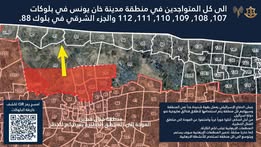
“In a new example of this ongoing crime, they are now threatening us with displacement and eviction from our areas to locations near the beach, where there is no clean water or basic necessities for life—let alone enough space to accommodate all who will be forced to leave. Imagine, they want about 500,000 people to live near the beach now. This is madness and a profound injustice.”
July 9, 2025 Ahmed shared that his children, Ayham and Adam, were shot at while playing with their friends near their tent. Bullets struck a nearby car, narrowly missing them. The children ran back, shaking and pale with fear, traumatized by yet another moment of a childhood stolen by war. Ahmed thanked God they are still alive. Tragically, the friends they were playing with were shot, and we are awaiting an update on their condition.
This is yet another horrifying example of the war crimes being committed with impunity by Israel, backed by the United States. No child should live in fear of being shot while playing. No parent should have to watch their children’s innocence shattered by bullets and bombs. This is the daily reality under siege in Gaza, where systematic targeting and terrorizing of civilians, including children, is not collateral damage—it is the predictable outcome of policies rooted in collective punishment and ethnic cleansing. The world cannot look away or remain silent while these crimes continue.
July 10, 2025 Ahmed shared devastating news:
“Yesterday, my children were shot at, and today, my nephew was murdered. Paradise has received Abu Muhammad. The martyrdom of my nephew, Khaled Abu Hamra, who now joins his brother, the martyr Muhammad. We belong to Allah, and to Him we shall return.”
This is the brutal reality families in Gaza are enduring each day under occupation and siege. It is a call for all who witness these crimes to speak out and demand accountability before more innocent lives are lost.
July 10, 2025
Ahmed said:
Thank you, my friend, for shedding light on this crime. I would also like to inform you that all of Abu Muhammad’s children have been injured. His son Muhammad has been paralyzed due to a spinal injury. His eldest daughter is in intensive care. His youngest daughter had her fingers amputated and her face burned. Their mother had her foot amputated. This is a calamity and a disaster that has befallen this family.
الملتقى الجنة أبو محمد
استشهاد إبن أختي خالد أبو حمرة
ليلتحق بأخيه الشهيد محمد
إنا لله و إنا إليه راجعون
Palestinian Murdered
Evangelical Christianity and Israel If you’re curious about the driving force behind US support for Israel, it’s ironically rooted in Evangelical Christianity. Many Evangelical Christians believe they can hasten the “second coming of Christ” by bringing about the apocalypse. According to their interpretation of the Bible, this involves Israel reclaiming Jerusalem, Jesus returning, and ultimately eliminating all Jews. For numerous “Christian Zionists,” especially influential evangelists aligned with the Republican Party, support for Israel is less about political strategy and more about its supposed role in biblical prophecy. In this worldview, war is not something to be avoided but embraced as a divine necessity—an inevitable and even celebratory step toward Jesus’ rule from the Temple Mount in Jerusalem. The fate of Jews and Palestinians is, to put it mildly, seen as collateral damage.
[Verse 1] Tom, it may seem petty But, please have some pity Ask Billie Joe… He is in the know
[Chorus] Anger and frustration (In need of regulation) During the construction (Of creation)
[Bridge] Now that’s… “knock and know all” (Rock n’ roll!) [Instrumental, Guitar Solo] It takes what it takes When one makes… (creates)
[Instrumental, Synth Solo, Bass, Drum Fills]
[Verse 2] Tom and Billie Joe, though Who! I’m asking you (Yes) I confess The Who, too
[Chorus] Anger and frustration (In need of regulation) During the construction (Of creation)
[Bridge] Now that’s… “knock and know all” (Rock n’ roll!) [Instrumental, Guitar Solo] It takes what it takes When one makes… (creates)
[Chorus] Anger and frustration (In need of regulation) During the construction (Of creation)
[Outro] Now that’s… “knock and know all” (Rock n’ roll!)
By Jack Brouse and Daniel Brouse
ABOUT THE SONG This track comes from the “Floyd the Barber” sessions. It was born out of pure anger and frustration. I originally expected to record the song quickly and easily, but by the time I started this take, I had already gone through 34 attempts that day. (The full session ended up with 41 takes, including vocal and final versions.) I had injured my hand, and when I hit record for this one, I just said, “F**k it,” and let loose with this noise jam.
Here are a few notable instances of rock-and-roll frustration literally leaving its mark:
Tom Petty During the Southern Accents sessions, Petty grew so exasperated with endless tweaks to the track “Rebels” that he punched a studio wall—hard enough to shatter bones and tendons in his hand and put the project on hold while he healed.
Billie Joe Armstrong In 2012, after a string of technical glitches at Clear Channel’s iHeartRadio Festival, Armstrong erupted onstage, smashing his guitar so violently that he cut himself and was ushered off for medical attention before later entering rehab.
Kurt Cobain got so furious during the recording of “Lithium” that he couldn’t nail the take, he exploded in frustration and ended up creating the hidden track “Endless, Nameless.” Butch Vig has said that, to this day, he’s never seen anyone that angry in a recording session.
Pete Townshend The Who’s signature windmill strum nearly backfired in Tacoma, WA (1989), when Townshend’s whammy bar drove through his palm mid-set—an accident born of his hyper-physical playing style.
Keith Moon On the Who’s U.S. TV debut on The Smothers Brothers Comedy Hour (1967), Moon rigged his bass drum with explosives. The ensuing blast showered him with shrapnel, cutting his arm—and singeing Pete Townshend’s hair—before the segment even ended.
Each of these moments shows how the highs and lows of performance or recording can literally inflict physical wounds when creative tensions boil over.
[Intro]
Is there trouble in paradise…
Need I ask twice
(Trouble in paradise?)
[Verse 1]
We were living in the Golden Age
Everything could have been just fine
But over love we chose damage
Till the light faded its shine
[Bridge]
Is there trouble in paradise…
(Are we men or mice?)
[Chorus]
Is there trouble in paradise…
Need I ask twice
(Trouble in paradise?)
Turned the American dream
Into obscene
(Do you know what I mean?)
[Bridge]
Trouble in paradise
(Take my advice)
Sacrifice!
(Trouble in paradise)
[Verse 2]
Everything we needed, at our finger tips
All the fancy toppings… pretzels and microchips
But, hey, fumble and tumble with our loose lips
Throwing it all away… day after day
[Bridge]
Is there trouble in paradise…
(Are we men or mice?)
[Chorus]
Is there trouble in paradise…
Need I ask twice
(Trouble in paradise?)
Turned the American dream
Into obscene
(A truly ugly scene)
[Outro]
Trouble in paradise
(Take my advice)
Sacrifice!
(Trouble in paradise)
[Verse 1]
Right before our eyes
There’s no surprise
We don’t realize
… stolen prize
[Chorus]
Are you aware
(In all fairness)
There’s a lack of awareness
(There)
Did you hear
(Blinders and harness)
There’s a lack of awareness
(Here)
[Bridge]
We’ve got to raise
(Awareness)
Bring up the praise
(Raise)
Awareness
[Verse 2]
Right before our eyes
Fail to recognize
Beyond jeopardize
… stolen prize
[Chorus]
Are you aware
(In all fairness)
There’s a lack of awareness
(There)
Did you hear
(Blinders and harness)
There’s a lack of awareness
(Here)
[Bridge]
We’ve got to raise
(Awareness)
Bring up the praise
(Raise)
Awareness
[Outro]
We’ve got to raise
(Awareness)
Bring up the praise
(Raise)
Awareness
ABOUT THE SONG
The song “Awareness” is a pointed reflection on the willful ignorance, denial, and complacency that enabled and perpetuated the Trump presidency. It critiques both Trump’s actions and the public’s failure to fully confront or understand their consequences.
[Verse 1 & 2: “Right before our eyes / There’s no surprise / We don’t realize / … stolen prize”]
These lines express a sense of collective blindness or denial:
“Right before our eyes” implies that the damage — to democracy, truth, justice — was plain to see, yet many chose not to confront it.
“There’s no surprise” reflects normalization of chaos and corruption.
The “stolen prize” may metaphorically refer to:
The erosion of democratic values,
The loss of America’s moral standing, or
Even a stolen sense of national identity.
It may also allude to Trump’s own election lies — falsely claiming he was the one robbed, while in fact robbing the public of trust and stability.
[Chorus: “Are you aware / In all fairness / There’s a lack of awareness”]
This is a direct challenge to listeners:
It asks if we’re truly paying attention to what’s happening around us.
“In all fairness” acknowledges that not everyone was complicit, but most were underinformed, distracted, or misled.
“Lack of awareness” points to:
Civic ignorance,
Media manipulation,
And possibly complicity through silence.
“Blinders and harness” conveys how many Americans were restrained — by ideology, media bubbles, or fear — from seeing clearly or acting boldly.
[Bridge: “We’ve got to raise (Awareness)”]
This is the song’s call to action:
It shifts from critique to mobilization — encouraging truth-telling, education, and vigilance.
“Bring up the praise” may refer to:
Celebrating those who spoke out,
Or urging society to value awareness itself as a civic virtue.
Repetition of “Raise Awareness” in Outro
The repetition emphasizes urgency:
The damage has been done, but it’s not irreversible — if people wake up.
It’s a kind of chant or mantra, meant to inspire consciousness and accountability.
Interpretive Summary
“Awareness” critiques the Trump era not only for its corruption and extremism, but for how much of the public — and the media — allowed it to happen in plain sight. It identifies a crisis of perception and civic understanding, and insists that only through heightened awareness can the country prevent further decline.
It is less about Trump himself, and more about what we allowed — and what we must now fix.
M-theory is a theory of “everything” in physics that attempts to unify the five string theories. The “Theory of Everything” (TOE) is a theoretical framework in physics that aims to explain all fundamental forces and particles in the universe within a single, unified theory. This theory seeks to unify the laws of physics, encompassing both quantum mechanics (which describes the behavior of very small particles) and general relativity (which describes the force of gravity on large scales.)
String theory aims to explain the fundamental nature of particles and forces in the universe. According to string theory, the basic building blocks of the universe are not point-like particles, as assumed in traditional particle physics, but tiny, one-dimensional “strings.” These strings can vibrate at different frequencies, and the various vibrational modes of these strings correspond to different particles. The idea is that different particles, such as quarks, electrons, and photons, are manifestations of the same fundamental string vibrating in different ways. This unified perspective seeks to provide a consistent and comprehensive description of all fundamental forces and particles in the universe.The vibrational nature of strings is a crucial aspect of string theory. The different vibrational modes give rise to the diverse particles observed in the universe. The mathematical framework of string theory involves describing the dynamics of these vibrating strings and their interactions.
Some scientists and theorists have explored the idea that the vibrational nature of strings could have parallels with the vibrational nature of musical notes. String theory hypothesizes that very small “strings” vibrations produce the observed particles and forces of nature similar to a vibrating guitar string and heard in Pythagorean harmonies. If you view a guitar string in slow motion, it moves in a variety of ways at the same time in a similar fashion as the forces in subatomic particles.
“A piano or violin string can resonate or vibrate in various patterns, producing multiple tones simultaneously. These include a fundamental tone and higher overtones (and sometimes lower undertones). The richness and beauty of music arise from the intricate interplay of these harmonics,” explains Edward Witten.