bookmark_borderPsyched

Yo,
Psyched Up

[Verse 1]
Getting psyched
Highlight excite
Fuse lit
Soon to ignite

[Chorus]
Good things about to happen
Taking on the absurd
Made a sword out of pen
Stroking out the word

[Bridge]
Haven’t you heard
You best days lie ahead
Scribe the word so it’s read
What’s true will cure you

[Instrumental, Guitar Solo, Drum Fills, Bass]

[Verse 2]
Oh so psyched
Pen and paper reunite
The message we send
Love through The End

[Chorus]
Good things about to happen
Taking on the absurd
Made a sword out of pen
Stroking out the word

[Bridge]
Haven’t you heard
You best days lie ahead
Scribe the word so it’s read
What’s true will cure you

[Instrumental, Saxophone Solo, Drum Fills, Bass]

[Outro]
Getting psyched
Up

[End]

A SCIENCE NOTE
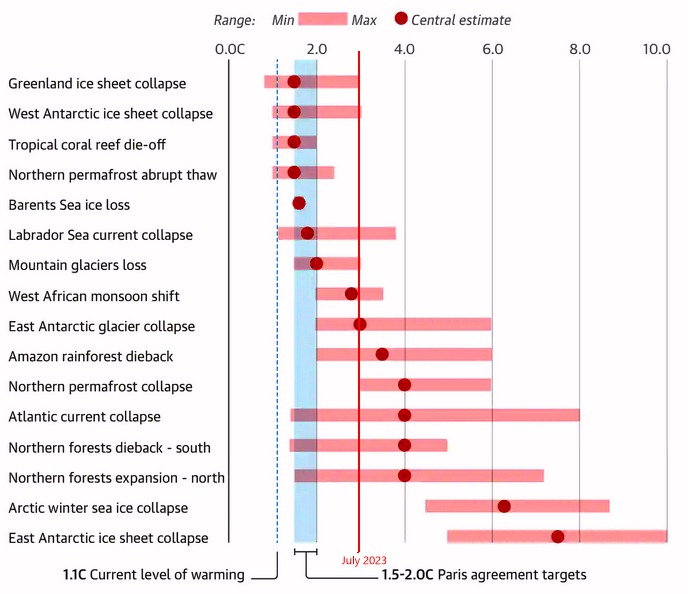
This is a song about a climate scientist encouraging others to go to battle with social media climate change deniers. On this day, it was about the coral reef tipping point:
Coral reefs face unprecedented challenges stemming from various stressors, many of which are directly linked to human activities. These stressors possess critical tipping points, beyond which coral ecosystems face the risk of collapse. According to the European Geosciences Union’s statement in January 2024, specific tipping points include a temperature increase of 1.2°C above pre-industrial levels and atmospheric CO2 concentrations exceeding 350 parts per million. Alarmingly, as of February 2024, the Earth’s yearly average temperature has already risen to +1.5°C and CO2 levels to 425 ppm, emphasizing the urgent need to address climate-related threats to coral reefs.

In a significant update from May 2024, scientists determined through tree ring analysis that the average temperature increase in 2023 reached 2.07 degrees Celsius, further underscoring the escalating pace of climate change and its profound impact on global ecosystems.

by Δ To Cause a Change from the album Psyched

MegaEpix Enormous

A song about The Human Induced Climate Change Experiment

bookmark_borderJamaican Jerk

[Verse 1]
Down in Kingston town
There is a denier
A climate change liar
And he’s bringing us down
(Down, down, down)

[Chorus]
A real Jamaican jerk
A fossil fuel fool
A real piece of work
Corruption’s tool

[Instrumental, Guitar Solo, Drum Fills]

[Verse 1]
Went to Montego Bay
To hear what he had to say
But it was the same lie
Defy yesterday
(Cry, cry, cry)

[Chorus]
A real Jamaican jerk
A fossil fuel fool
A real piece of work
Corruption’s tool

[Instrumental, Saxophone Solo, Drum Fills]

[Bridge]
Jamaican jerk
Took my irie away from me
I long to see irie
Jamaican jerk
Needs to do his homework

[Chorus]
A real Jamaican jerk
A fossil fuel fool
A real piece of work
Corruption’s tool

[Outro]
Took my irie away from me

A SCIENCE NOTE
In Jamaica, several lines of evidence point to the impacts of climate change:

  1. Rising Temperatures: Jamaica has experienced a gradual increase in temperatures over the past century, consistent with global warming trends. Higher temperatures contribute to heat stress, affect agricultural productivity, and exacerbate the risk of heat-related health problems for vulnerable populations.
  2. Changing Precipitation Patterns: Climate change has altered precipitation patterns in Jamaica, leading to shifts in rainfall distribution, intensity, and frequency. Changes in precipitation patterns can influence water availability, drought occurrence, and the frequency of extreme weather events such as heavy rainfall and floods.
  3. Sea Level Rise: Jamaica’s coastal areas are experiencing the effects of sea level rise, which contributes to coastal erosion, inundation of low-lying areas, and saltwater intrusion into freshwater sources. Rising sea levels pose significant threats to coastal communities, infrastructure, and ecosystems, including coral reefs and mangroves.
  4. Extreme Weather Events: Jamaica is susceptible to extreme weather events such as hurricanes, tropical storms, and heavy rainfall associated with climate change. These events can cause significant damage to infrastructure, disrupt economic activities, and lead to loss of life and property.
  5. Coral Bleaching: Coral reefs, critical marine ecosystems in Jamaica, are experiencing bleaching events due to warmer sea temperatures associated with climate change. Coral bleaching can lead to the loss of coral cover, decline in biodiversity, and degradation of ecosystem services such as fisheries and coastal protection.
  6. Changing Agricultural Conditions: Climate change affects Jamaica’s agriculture sector by altering growing seasons, water availability, and pest and disease patterns. Farmers may face challenges adapting to changing climatic conditions, impacting crop yields, food security, and livelihoods.
  7. Health Impacts: Climate change has implications for public health in Jamaica, including increased risks of vector-borne diseases, heat-related illnesses, and respiratory problems associated with air pollution and extreme weather events.

These various indicators of climate change highlight the need for Jamaica to prioritize climate adaptation and mitigation efforts. Implementing policies and measures to enhance resilience, reduce greenhouse gas emissions, and promote sustainable development can help mitigate the impacts of climate change and safeguard Jamaica’s environment, economy, and communities for future generations.

From the album The Real World by Narley Marley

MegaEpix Enormous

A song about The Human Induced Climate Change Experiment

bookmark_borderI Sea

I see, I sea
No more irie

[Verse 1]
I see the rising sea
And it troubles me
The certainty
Inevitability

[Chorus]
The mental masturbate
Exacerbate
The situation
The situation dire
Water’s rising higher

[Instrumental, Rumba Box, Bass, Drum Fills]

[Verse 2]
The rising sea tide
No place to hide
The blistering sun
No place to run

[Chorus]
The mental masturbate
Exacerbate
The situation
The situation dire
Water’s rising higher

[Instrumental, Rumba Box, Bass, Drum Fills]

[Bridge]
Inundation
Intrusion
Are we living a life of illusion
Inundation
Intrusion
All washed up in confusion

[Chorus]
The mental masturbate
Exacerbate
The situation
The situation dire
Water’s rising higher

[Outro]
Inundation
Intrusion
All washed up in confusion

[End]

A SCIENCE NOTE
The rising sea level poses significant risks to Jamaica, particularly due to its vulnerability to coastal erosion, inundation, and saltwater intrusion. As the sea level continues to rise, Jamaica faces several interconnected threats:

  1. Coastal Erosion: Rising sea levels exacerbate coastal erosion, leading to the loss of land, infrastructure, and property along Jamaica’s coastline. Beach erosion undermines the stability of coastal communities and threatens tourism infrastructure, which is a vital economic sector for the country.
  2. Inundation of Low-Lying Areas: Low-lying coastal areas, including densely populated urban centers and agricultural lands, are at risk of inundation during storm surges and high tides. Inundation can lead to property damage, displacement of communities, and disruption of economic activities, particularly in vulnerable coastal zones.
  3. Saltwater Intrusion: As sea levels rise, saltwater intrusion into freshwater aquifers becomes a pressing concern for Jamaica’s water security. Saltwater intrusion contaminates freshwater sources, jeopardizing drinking water supplies, agricultural irrigation, and ecosystem health. This phenomenon poses significant challenges for sustainable development and resilience-building efforts.
  4. Impact on Biodiversity: Jamaica’s coastal ecosystems, including mangroves, seagrass beds, and coral reefs, are highly vulnerable to the effects of rising sea levels. These ecosystems provide critical habitats for diverse marine species, support fisheries productivity, and buffer coastal communities against storms and erosion. However, as sea levels rise, these ecosystems face increased stress and degradation, threatening biodiversity and ecosystem services.
  5. Economic Implications: The impacts of rising sea levels extend beyond environmental concerns to economic consequences for Jamaica. Coastal infrastructure, tourism facilities, agriculture, and fisheries are all at risk from sea level rise, potentially leading to economic losses, reduced productivity, and increased vulnerability to natural disasters.

Addressing the risks associated with rising sea levels requires integrated coastal management strategies, climate adaptation measures, and sustainable development practices. Jamaica needs to invest in shoreline protection, coastal defense infrastructure, land-use planning, and disaster risk reduction initiatives to enhance resilience and mitigate the impacts of sea level rise on coastal communities and ecosystems. Collaboration between government agencies, local communities, scientific institutions, and international partners is essential to develop and implement effective adaptation strategies that safeguard Jamaica’s coastal areas and promote sustainable development in the face of climate change.

From the album The Real World by Narley Marley

MegaEpix Enormous

A song about The Human Induced Climate Change Experiment

bookmark_borderThe Caribbean Coral Crisis

Wailing!
Flailing
We’re wailing

[Verse 1]
Relief for the reef!
Do you see the sea?
Coral collapse
Civilization wraps

[Chorus]
Define coral reef decline
When the sea near me
Is the dead sea (really)
A tragedy! (tragic tragedy)

[Instrumental, Rumba Box, Bass, Drum Fills]

[Verse 2]
In disbelief, the reef!
Do you see the sea?
Coral collapse
All our gas traps

[Chorus]
Define coral reef decline
When the sea near me
Is the dead sea (really)
A tragedy! (tragic tragedy)

[Instrumental, Rumba Box, Bass, Drum Fills]

[Bridge]
The implications, dire
The ocean’s on fire
What do we teach
Watching the coral bleach
Acidification
Declaration

[Chorus]
Define coral reef decline
When the sea near me
Is the dead sea (really)
A tragedy! (tragic tragedy)

[Outro]
The implications, dire
The ocean’s on fire
Fire, fire, fire

[End]

A SCIENCE NOTE
Jamaica is a Caribbean island nation with a lush topography of mountains, rainforests and reef-lined beaches.

The Caribbean, renowned for its stunning coral reefs and vibrant marine life, is confronting a looming environmental crisis as ocean acidification poses a grave threat to its coastal livelihoods. With more than half of the Caribbean’s coral reefs at risk of disappearing by 2050, urgent and concerted action is imperative to safeguard these invaluable ecosystems and preserve the region’s economic sustainability.

Ocean acidification, driven primarily by the absorption of carbon dioxide emissions from human activities, poses a significant risk to coral reefs and the myriad of marine species that depend on them for habitat and sustenance. The acidification process disrupts the delicate balance of ocean chemistry, hindering the ability of corals to build their calcium carbonate skeletons and increasing their susceptibility to bleaching, disease, and mortality.

The implications of coral reef decline extend far beyond environmental concerns, reverberating throughout the Caribbean’s economy and society. Coral reefs provide essential ecosystem services, including shoreline protection, fisheries support, and tourism revenue, which underpin the region’s economic well-being and livelihoods of millions of people.

Preserving the Caribbean’s coral reefs requires a comprehensive and collaborative approach involving governments, local communities, scientific institutions, and international organizations. Efforts to mitigate ocean acidification and its impacts on coral reefs must encompass measures to reduce carbon emissions, improve coastal management practices, enhance marine conservation efforts, and promote sustainable tourism practices.

Furthermore, investing in research, monitoring, and capacity-building initiatives is essential to enhance our understanding of the complex interactions driving coral reef decline and to develop innovative solutions for reef restoration and resilience-building. By fostering partnerships and mobilizing resources at the local, regional, and global levels, the global community can rally together to address the Caribbean’s coral crisis and secure a sustainable future for the region’s iconic reefs and coastal communities.

From the album The Real World by Narley Marley

MegaEpix Enormous

A song about The Human Induced Climate Change Experiment

bookmark_borderHataclaps (Jamaica’s Grappling)

Clap, clap, clap

[Verse 1]
Jamaica is grappling
With what is happening
Did you see the sea
It’s troubling me

[Chorus]
Hataclaps
Climate mishaps
Hataclaps
Climate collapse

[Verse 2]
Jamaica is grappling
Primates baffling
Troubling hot
Why? Why not?

[Instrumental, Saxophone Solo, Bass]

[Chorus]
Hataclaps
Climate mishaps
Hataclaps
Climate collapse

[Bridge]
Hataclaps:
(translation : Crisis)
Hataclaps:
A time of crisis, trouble
Trouble
Left in the rubble
Trouble
Burst your bubble

[Chorus]
Hataclaps
Climate mishaps
Hataclaps
Climate collapse

[Outro]
Trouble
Left in the rubble
Trouble
Burst your bubble

[End]

A SCIENCE NOTE
Hataclaps: (translation : Crisis) A time of crisis, trouble.

Jamaica is grappling with a myriad of significant challenges stemming from the impacts of climate change, posing serious threats to both its environment and its people. Rising temperatures, intensified droughts, and increased frequency of flooding events are among the key manifestations of climate change that the island nation is contending with. These environmental shifts not only disrupt ecosystems but also directly impact human livelihoods, agriculture, and infrastructure.

One of the most pressing concerns facing Jamaica is the existential threat posed by sea level rise. As global temperatures continue to climb, thermal expansion of ocean waters and the melting of polar ice caps contribute to rising sea levels. For Jamaica, a country with extensive coastal areas and a reliance on tourism and fishing industries, the implications of sea level rise are profound. Low-lying coastal communities are particularly vulnerable to inundation and erosion, leading to displacement of populations, loss of property, and damage to critical infrastructure such as roads, ports, and hotels.

Furthermore, the increased frequency and intensity of extreme weather events, such as hurricanes and tropical storms, exacerbate the risks posed by rising sea levels. These events can unleash destructive storm surges, heavy rainfall, and powerful winds, causing widespread devastation and hampering recovery efforts. Jamaica’s vulnerability to such weather extremes underscores the urgent need for robust adaptation measures and resilient infrastructure to safeguard lives and livelihoods.

In response to these multifaceted challenges, Jamaica is actively engaged in efforts to strengthen its climate resilience and mitigate the impacts of climate change. This includes initiatives to enhance coastal protection, implement sustainable land-use practices, improve water resource management, and promote renewable energy adoption. Collaborative partnerships with international organizations, regional bodies, and other stakeholders play a crucial role in supporting Jamaica’s climate adaptation and mitigation efforts.

Despite the formidable obstacles posed by climate change, Jamaica remains resolute in its commitment to safeguarding its natural heritage and securing a sustainable future for its people. By prioritizing climate action, fostering innovation, and embracing resilience-building strategies, Jamaica aims to confront the climate crisis head-on and emerge stronger and more resilient in the face of adversity.

From the album The Real World by Narley Marley

MegaEpix Enormous

A song about The Human Induced Climate Change Experiment

bookmark_borderBangarang

We sang of Bangarang!

[Verse 1]
Do we detect a disturbance
Of quite some importance
It’s becoming quite clear
Disturbance in the atmosphere
(Oh, dear!)

[Chorus]
Look who’s come and rang
Bangarang
Knocking at my door
Implore, no more

[Instrumental, Saxophone Solo, Bass]

[Verse 2]
No problem? Problem
Problem for us, problem for them
It’s becoming quite clear
Problem with the atmosphere
(Oh, dear!)

[Chorus]
Look who’s come and rang
Bangarang
Knocking at my door
Implore, no more

[Instrumental, Guitar Solo, Drum Fills]

[Bridge]
Bangarang:
(translation a trouble, or disturbance)
We sang of Bangarang
A troubling thing
Sing: Bangarang
Dang!

[Chorus]
Look who’s come and rang
Bangarang
Knocking at my door
Implore, no more

[Outro]
We sang of Bangarang
A troubling thing
Sing: Bangarang
Dang!

A SCIENCE NOTE
Bangarang: (translation : trouble or disturbance) A. problem, disturbance or mischief.

“Jamaica faces very serious threats from hotter temperatures, droughts and floods linked to climate change, and an existential threat due to sea level rise.”

From the album The Real World by Narley Marley

MegaEpix Enormous

A song about The Human Induced Climate Change Experiment

bookmark_borderThey Wood Know

[Verse 1]
“Wooden” you know
Running rings around Man
The trees understand
Our woe
Wouldn’t you know

[Chorus]
We push the temperature higher
The consumers, the buyer
Man’s demand demands
A dollar command

[Instrumental, Guitar Solo, Drum Fills]

[Verse 2]
“Wooden” you know
For 2,000 years they grow
If they can withstand the span of Man
… I don’t know?

[Chorus]
We push the temperature higher
The consumers, the buyer
Man’s demand demands
A dollar command

[Instrumental, Saxophone Solo, Bass]

[Bridge]
At the root of the situation
Man’s habitation
No pollution solution
Bringing an End
To our evolution
Sad message we send….

[Chorus]
We push the temperature higher
The consumers, the buyer
Man’s demand demands
A dollar command

[Outro]
At the root of the situation
Man’s habitation

[End]

A SCIENCE NOTE
Climate scientists have consistently demonstrated the rapid rise in global temperatures in recent decades. According to the UN’s climate body, the world may not have experienced such sustained warmth since over 100,000 years ago. Tree rings play a crucial role in understanding this phenomenon. Not only do they reveal a tree’s age, but they also preserve detailed information about the climate conditions during each year of their growth. “That’s the beauty of tree ring records,” remarked Ulf Büntgen, professor of environmental systems analysis at the University of Cambridge and co-author of the study, in an interview with BBC News.

Researchers utilized the nine longest temperature-sensitive tree ring chronologies to construct a comprehensive picture of summer temperatures spanning two millennia across the northern hemisphere, excluding the tropics. By leveraging such an extensive dataset, encompassing thousands of trees from various regions, the researchers could offer more reliable insights into how temperatures have evolved over time, mitigating the influence of localized disturbances like disease.

Combining the extensive historical tree ring data with modern temperature records, the authors made a striking discovery. They found that the summer of 2023 experienced temperatures 2.07°C warmer than the “pre-industrial” period of 1850-1900.

A SCIENCE NOTE
Climate scientists have consistently demonstrated the rapid rise in global temperatures in recent decades. According to the UN’s climate body, the world may not have experienced such sustained warmth since over 100,000 years ago. Tree rings play a crucial role in understanding this phenomenon. Not only do they reveal a tree’s age, but they also preserve detailed information about the climate conditions during each year of their growth. “That’s the beauty of tree ring records,” remarked Ulf Büntgen, professor of environmental systems analysis at the University of Cambridge and co-author of the study, in an interview with BBC News.

Researchers utilized the nine longest temperature-sensitive tree ring chronologies to construct a comprehensive picture of summer temperatures spanning two millennia across the northern hemisphere, excluding the tropics. By leveraging such an extensive dataset, encompassing thousands of trees from various regions, the researchers could offer more reliable insights into how temperatures have evolved over time, mitigating the influence of localized disturbances like disease.

Combining the extensive historical tree ring data with modern temperature records, the authors made a striking discovery. They found that the summer of 2023 experienced temperatures 2.07°C warmer than the “pre-industrial” period of 1850-1900.

From the album “Nowadays” by The Beatless Sense Mongers

MegaEpix Enormous

A song about The Human Induced Climate Change Experiment

bookmark_borderZombie Fire

Zombie fires!
Fire, fire, fire

[Verse 1]
Oh, Canada (Da, da, da)
Have we failed ya? (Ya, ya, ya)
Up in smoke
Is no joke

[Chorus]
Zombie fire
Rising higher
Zombie fire
Situation’s dire
[Break]
Zombie…
Fire, fire, fire

[Instrumental, Guitar Solo, Drum Fills]

[Verse 2]
Oh, Canada (Oh, Oh, No)
Where will we go (Go, go, go)
Up in smoke
No zombie joke

[Chorus]
Zombie fire
Rising higher
Zombie fire
Situation’s dire
[Break]
Zombie…
Fire, fire, fire

[Instrumental, Saxophone Solo, Drum Fills]

[Bridge]
Zombie after me
Nowhere to flea
God help me!
Zombie fire
Rising higher
Heed the crier
Fire, fire, fire

[Chorus]
Zombie fire
Rising higher
Zombie fire
Situation’s dire
[Break]
Zombie…
Fire, fire, fire

[Instrumental, Bass, Drum Fills]

[Outro]
Zombie after me
Nowhere to flea
God help me!
Zombie fire
Rising higher
Heed the crier
Fire, fire, fire

[End]

A SCIENCE NOTE
Daniel asked, “Do you think the permafrost and peatlands will have zombie fires and cause the permafrost tipping point?”

Sidd responded, “Yes. They are gone, too. We already know from the permafrost peatland fires in Siberia.”

Daniel ponders, “Hmmmm… I guess that means my plan went up in smoke? My worst case scenario / last resort emergency plan was to escape to Canada.”

NASA reported: Wildland fire experts have described Canada’s 2023 fire season as record-breaking and shocking. Over the course of a fire season that started early and ended late, blazes have burned an estimated 18.4 million hectares. Hundreds of fires exceeded 10,000 hectares (39 square miles), large enough to be considered “megafires.” These megafires were also unusually widespread this season, charring forests from British Columbia and Alberta in the west to Quebec and the Atlantic provinces in the east to the Northwest Territories and the Yukon in the north.

Forest fires cause a carbon feedback loop. The carbon emissions of Canada’s fires outweighed the combined emissions from its oil and gas, transport, and agriculture sectors. The fires also cause the melting of the permafrost and zombie fires to burn in the permafrost. The permafrost collapse is a self-sustaining feedback loop/tipping point. As the permafrost melts, the peatlands emit CO2 and methane. The increase in CO2 and methane results in more warming that results in more peatland emissions. A third feedback loop is created with lightning strikes. The study Forests at Risk Due to Lightning Fires found a sensitivity of extratropical intact forests to potential increases in lightning fires, which would have far-reaching consequences for terrestrial carbon storage and biodiversity. The results show that, on a global scale, lightning is the primary ignition source of fires in temperate and boreal forests. Global warming causes more extreme weather events and conditions for lightning, creating more forest fires that create more warming and more lightning strikes.

The study Wildfire as a major driver of recent permafrost thaw in boreal peatlands published in the Journal Nature Communications found wildfires have caused a quarter of permafrost thaw (2,000 square kilometers) in Western Canada’s boreal peatlands over the past 30 years. “Historically, permafrost in this area underwent a natural cycle of thawing and reforming, but given current climate conditions and projections for the future, this fire-induced thaw appears to be irreversible,” said Carolyn Gibson, who conducted the research.

On January 1, 2024, the article, Why Are Alaska’s Rivers Turning Orange?, was published in Scientific America. “Streams in Alaska are turning orange with iron and sulfuric acid. Scientists who have studied these rusting rivers agree that the ultimate cause is climate change. Kobuk Valley National Park has warmed by 2.4 degrees Celsius (4.32 degrees Fahrenheit) since 2006 and could get another 10.2 degrees C hotter by 2100, a greater increase than projected for any other national park. The heat may already have begun to thaw 40 percent of the park’s permafrost, the layer of earth just under the topsoil that normally remains frozen year-round. McPhee wanted to protect the Salmon River because humans had ‘not yet begun to change it.’ Now, less than 50 years later, we have done just that. The last great wilderness in America, which by law is supposed to be ‘untrammeled by man,’ is being trammeled from afar by our global emissions.”

(May 2024) Even in the dead of Canada’s winter, the embers of last year’s record-setting wildfire season remain. So-called zombie fires are burning under thick layers of snow at an unprecedented rate, raising fears about what the coming summer may bring. People driving on the highway through the town of Fort Nelson, British Columbia (BC) in the winter can easily see – and smell – the clouds of white smoke flowing from the soil around them. Sonja Leverkus, a firefighter and scientist who is local to the small northeastern BC town, recalled driving during a snowstorm in November, but the snowfall didn’t look white. Rather, she said, it was blueish-grey because of the smoke in the air. “I’ve never experienced a snowstorm that smelled like smoke,” said Ms. Leverkus, who has lived in northern BC for more than 15 years.

From the album “Nowadays” by The Beatless Sense Mongers

MegaEpix Enormous

A song about The Human Induced Climate Change Experiment

bookmark_borderEvolution Forcing Revolution

This evolution forcing revolution
(Evolution revolution)

[Verse 1]
This evolution forcing revolution
With no solution to our institution
(Pro-pollution)
Self-centered position
(For repetition)

[Chorus]
Going round and round
In a feedback loop
Adding more and more
To recoup
[Bridge]
Round n’ round in a loop (loo-pity-loop)
Found around (loo-pity-loop)
Loop, Loop (loo-pity-loop)

[Verse 2]
The inept apt to force (adaptation?)
With no solution (Citizens Pro-pollution)
Self-centered position
(For repetition)

[Chorus]
Going round and round
In a feedback loop
Adding more and more
To recoup
[Bridge]
Round n’ round in a loop (loo-pity-loop)
Found around (loo-pity-loop)
Loop, Loop (loo-pity-loop)

A SCIENCE NOTE
Tipping cascades have emerged between biogeophysical and social-ecological systems. This Domino Effect is causing climate change to accelerate at an exponential rate.

Tipping points are Critical Milestones that directly impact the rate of acceleration in climate change by multiplying the number and intensity of feedback loops. Identifying and understanding these tipping points is crucial for climate science and policymaking. Crossing multiple tipping points could lead to a domino effect, resulting in a much more rapid and severe climate change than currently projected.

Tipping Points

Push a glass toward the edge of a table and eventually it will fall off on its own. No matter how slowly or meticulously you push… no matter how you weight or fill the glass, it will reach a tipping point and fall off before being pushed completely off the table. No matter whether you believe the glass is half-empty or half-full, when the tipping point is reached it will plummet out-of-control to its end. This is science not fate, faith, nor belief. Human induced climate change has resulted in environmental tipping points being breached.

Tipping points, when crossed, trigger self-sustaining feedback loops that are no longer dependent on human activity. Similar to when a domino topples over hitting two more dominoes that in turn fall hitting more dominoes. Thus, the name The Domino Effect. It can also be visualized as The Snowball Effect. A tipping point is like a snowball rolling down a hill growing in mass and velocity (momentum). When a tipping point is crossed, it results in cumulative and reinforced global warming.

From the album “Nowadays” by The Beatless Sense Mongers

MegaEpix Enormous

A song about The Human Induced Climate Change Experiment

bookmark_borderYour Local Neighborhood Savior

Are the Jones Home?

[Verse 1]
Does the grass always seem greener
For your next door neighbor
Well, maybe green grass
Is a thing of the past?
[Turn Around]
Perhaps you’re the neighborhood Savior? (Save our)

[Chorus]
Down on your knees, planting trees
Hold your head high, counting birds in the sky
Dig in with the soul (and roll)
Oh, yea, let the music play all day

[Bridge]
It’s time you, all
Grew a little more wild
(For a while)
You went insane
(With the tame)
Anoint exploit
(Since gone lame)
Why not become a neighborhood savior
(and save our….)

[Outro]
Savior, save our
This could be our last hour
Savior, save our

[End]

A SCIENCE NOTE
“Your Local Neighborhood Savior” seems to convey a message of individual responsibility and empowerment in the face of climate change. The song suggests that instead of envying the apparent greener pastures of others, individuals have the power to make positive changes in their own neighborhoods and communities.

In the first verse, the lyrics question the perception of greener grass elsewhere, hinting at the declining environmental conditions that affect everyone. The turn in the lyrics suggests a shift in perspective, with the listener potentially being positioned as the neighborhood savior, capable of making a difference.

The chorus emphasizes taking tangible actions like planting trees and observing wildlife as ways to contribute positively to the environment. These actions are portrayed as empowering and fulfilling, encouraging listeners to embrace their role as stewards of their local environment.

The bridge urges listeners to break free from societal norms and embrace a more natural and wild way of living, contrasting with the tamed and exploited state of the environment. The call to become a neighborhood savior underscores the urgency of the situation and the importance of collective action to safeguard the planet.

The outro reinforces the message of urgency, portraying the role of the neighborhood savior as crucial in potentially saving humanity from environmental catastrophe. Overall, the song serves as a rallying cry for individual action and environmental stewardship in the face of climate change.

From the album “Nowadays” by The Beatless Sense Mongers

MegaEpix Enormous

A song about The Human Induced Climate Change Experiment

bookmark_borderWords of Wisdom

[Verse 1]
A lot of cold hard facts
Are hard to digest
So, might I suggest
Relax

[Chorus]
Listen to words of wisdom
Learn to learn earn awesome
Try to understand
The world at the hand of Man
[Break]
Damned demand

[Instrumental, Guitar Solo, Drum Fills]

[Verse 2]
The prime primate
Has been messing with the climate
With absolutely no plan
Nor desire to disband

[Chorus]
Listen to words of wisdom
Learn to learn earn awesome
Try to understand
The world at the hand of Man
[Break]
Damned demand

[Instrumental, Saxophone Solo, Bass]

[Bridge]
Have you asked yourself why
We don’t care who will die
Self-annihilation desire
Going higher (dire, dire)

[Chorus]
Listen to words of wisdom
Learn to learn earn awesome
Try to understand
The world at the hand of Man
[Outro]
Damned demand

A SCIENCE NOTE
“Words of Wisdom” is a poignant reflection on humanity’s impact on the environment and the urgent need for introspection and action in the face of climate change.

The opening lines of the song acknowledge the challenge of confronting difficult truths about climate change. The suggestion to “Relax” serves as a call for listeners to approach the topic with an open mind and a willingness to engage with uncomfortable realities.

The chorus emphasizes the importance of listening to “words of wisdom” and learning from the collective knowledge and experiences of others. It urges listeners to seek understanding and awareness of the world’s challenges, particularly those caused by human activity. The repetition of the phrase “Learn to learn earn awesome” suggests that by educating ourselves and taking meaningful action, we can create a better future.

In the second verse, the song addresses the role of humanity, metaphorically referred to as the “prime primate,” in exacerbating climate change. The lack of a coherent plan or desire to address the issue is highlighted, emphasizing the need for accountability and responsibility.

The bridge delves deeper into the motivations behind humanity’s destructive behavior, questioning why we seem indifferent to the consequences of our actions. The reference to “self-annihilation desire” suggests a reckless disregard for the long-term consequences of our behavior, leading to a sense of urgency and desperation.

Throughout the song, there is a sense of frustration and urgency, echoed in the repeated phrase “Damned demand.” This phrase encapsulates the idea that despite the urgent need for action, there is often resistance or apathy, hindering progress towards addressing climate change.

“Words of Wisdom” tries to serve as a powerful reminder of the importance of collective action and awareness in confronting the existential threat of climate change. It calls on listeners to heed the lessons of the past, educate themselves, and strive for a more sustainable and equitable future.

From the album “Nowadays” by The Beatless Sense Mongers

MegaEpix Enormous

A song about The Human Induced Climate Change Experiment

bookmark_borderSt. Kilda

Imminent harm,
Sound the alarm!

[Verse 1]
In Scotland’s misty embrace, St. Kilda stands tall,
Sea birds and creatures, answer nature’s call.
But primate change lurks, like a shadow in the night,
Threatening this haven, with all of its might.

[Chorus]
Increasing temperatures, storms on the rise,
Changing currents, painting ominous skies.
The National Trust, with worries they bear,
As St. Kilda’s future hangs in the air.

[Break}
Imminent harm,
Sound the alarm!

[Instrumental, Guitar Solo, Drum Fills]

[Verse 2]
Scholars’ voices echo, a warning to heed,
As warming seas disrupt, the islands’ life feed.
Seabirds in peril, sadly numbers decline,
Facing a fate, once so divine.

[Chorus]
Increasing temperatures, storms on the rise,
Changing currents, painting ominous skies.
The National Trust, with worries they bear,
As St. Kilda’s future hangs in the air.

[Break}
Imminent harm,
Sound the alarm!

[Instrumental, Saxophone Solo, Drum Fills]

[Bridge]
Just like Lyonesse, in Arthurian tale,
St. Kilda’s fate, on a similar trail.
A land once thriving, now lost to the sea,
Will St. Kilda, too, meet the same destiny?

[Verse 3]
In tales of old, Lyonesse did drown,
A kingdom’s demise, in a night’s cruel gown.
Could St. Kilda face, a similar plight,
As climate change roars, with all of its might?

[Chorus]
Increasing temperatures, storms on the rise,
Changing currents, painting ominous skies.
The National Trust, with worries they bear,
As St. Kilda’s future hangs in the air.

[Break}
Imminent harm,
Sound the alarm!

[Outro]
So let us take heed, and act with great care,
To protect St. Kilda, from the fate we share.
For if we ignore, the signs that we see,
St Kilda may vanish, like Lyonesse in the sea.
Tragedy

[End]

A SCIENCE AND HISTORY NOTE
Scientists have pinpointed the most significant climate change threats to one of Scotland’s most delicate environments, St Kilda, located more than 40 miles (64km) west of the Western Isles. This remote archipelago is not only home to thousands of seabirds but also hosts unique sub-species of mouse and wren. A recent study indicates that rising temperatures, alongside more frequent and severe storms, and alterations in ocean currents, pose the greatest risks to the ecosystem of St Kilda.

The National Trust for Scotland (NTS), which oversees St Kilda, has already observed the impact of warmer seas on the islands’ avian food chain. Scientists utilized the Climate Vulnerability Index (CVI) to assess climate change threats comprehensively.

Susan Bain, NTS manager for St Kilda, highlighted the study’s warnings about the future challenges facing the trust in managing the archipelago. She emphasized, “Warming sea temperatures are already disrupting the food chain crucial for the hundreds of thousands of seabirds that breed here annually, putting certain species at risk of disappearing from St Kilda permanently.” Bain further expressed concerns that changing currents could exacerbate these impacts, fundamentally altering habitats and consequently affecting the bird populations.

A recent seabird species count in 2023 indicated an overall decline in numbers by 61%. Bain noted that stormier weather could lead to damage to historic properties on Hirta, one of the islands comprising St Kilda, and could also pose logistical challenges for staff, volunteers, and tourists visiting the area.

Historic Similarities
Lyonesse holds a significant place in Arthurian legend, notably featuring in the tragic tale of Tristan and Iseult. It served as the homeland of the heroic Tristan, a distinguished Knight of the Round Table, whose father, King Meliodas, ruled over Lyonesse. In Arthurian lore, Lyonesse is a mythical and “lost” land believed to have once connected Cornwall in western England to the Isles of Scilly in the English Channel.

The name “Lyonesse” first emerged in Thomas Malory’s late 15th-century work, Le Morte Darthur, where it was portrayed as the native land of Tristan. Interestingly, earlier Arthurian legends had associated Tristan with Leonois, likely the region around Saint-Pol-de-Léon in Brittany. Malory’s adoption of the name “Lyonesse” is a deviation from the original association.

Legend holds that Lyonesse met a tragic fate by sinking beneath the waves in a single night. Discrepancies exist in stories regarding the date of this catastrophic event, with some narratives pointing to 11 November 1099, while others suggest it occurred a decade earlier. According to one version, the kingdom faced divine retribution for an unspecified heinous crime committed by its people. The ensuing night witnessed a devastating storm culminating in a colossal wave that engulfed Lyonesse.
From the album “Nowadays” by The Beatless Sense Mongers

MegaEpix Enormous

A song about The Human Induced Climate Change Experiment

bookmark_borderWhat’s for Dinner?

Come and get it

[Verse 1]
I’m getting thinner
Could use something to eat
What’s for dinner
Hope it beats this heat

[Bridge]
Abused the land
(Do you understand)
Built a slaughter
(On our water)

[Chorus]
What’s to eat (I’m beat)
Getting crude (About food)
Can’t you see (I’m hungry)
Better feed me (Or you’ll see)

[Instrumental, Guitar, Solo, Drums]

[Verse 2]
Famished
I could use a dish
What’s for dinner
Hope it beats this heat

[Bridge]
Abused the land
(Do you understand)
Built a slaughter
(On our water)

[Chorus]
What’s to eat (I’m beat)
Getting crude (About food)
Can’t you see (I’m hungry)
Better feed me (Or you’ll see)

[Instrumental, Guitar Solo, Drums Fills]

[Verse 2]
Famished
Could sure use a dish
Ravished
Like a fascist

[Bridge]
Abused the land
(Do you understand)
Built a slaughter
(On our water)

[Chorus]
What’s to eat (I’m beat)
Getting crude (About food)
Can’t you see (I’m hungry)
Better feed me (Or you’ll see)

[Instrumental, Saxophone Solo, Drum Fills]

A SCIENCE NOTE
Agricultural activities can contribute to food insecurity through various channels:

  1. Land Degradation: Intensive farming practices, such as overuse of chemical fertilizers and pesticides, monocropping, and improper irrigation, can degrade soil quality and reduce its fertility. This degradation makes it challenging to sustainably produce crops, leading to lower yields and diminished agricultural productivity over time.
  2. Water Depletion: Agriculture is a major consumer of freshwater resources, often accounting for a significant portion of water usage in many regions. Excessive water extraction for irrigation can deplete groundwater reserves and diminish surface water sources, leading to water scarcity for both agricultural and non-agricultural purposes. This scarcity can result in reduced crop production and limited access to water for drinking and sanitation, contributing to food insecurity.
  3. Climate Change: Agricultural activities, particularly large-scale farming and deforestation, contribute to greenhouse gas emissions, which drive climate change. Climate change can lead to more frequent and severe weather events, such as droughts, floods, storms, and heatwaves, which can adversely affect crop yields and livestock productivity. Shifts in temperature and precipitation patterns can also disrupt traditional agricultural practices, making it challenging for farmers to predict growing seasons and adapt their cultivation methods accordingly.
  4. Loss of Biodiversity: Intensive agricultural practices often prioritize high-yield crop varieties and livestock breeds, leading to a loss of biodiversity in agroecosystems. This loss of biodiversity reduces the resilience of agricultural systems to pests, diseases, and environmental stressors, making crops and livestock more vulnerable to outbreaks and failures. Furthermore, monocultures are more susceptible to catastrophic crop failures due to their lack of genetic diversity, posing risks to food security.
  5. Food Waste: Inefficient agricultural practices, inadequate infrastructure, and poor post-harvest handling contribute to significant food losses and waste throughout the food supply chain. Food loss occurs at various stages, including harvesting, transportation, storage, processing, and distribution. Food waste not only represents a lost opportunity to alleviate hunger but also exacerbates food insecurity by reducing the availability of nutritious food for consumption.

Addressing these challenges requires implementing sustainable agricultural practices that prioritize environmental conservation, resource efficiency, and resilience to climate change. Additionally, promoting equitable access to land, water, and other productive resources can enhance the livelihoods of smallholder farmers and rural communities, ultimately contributing to global food security.

From the album “Nowadays” by The Beatless Sense Mongers

MegaEpix Enormous

A song about The Human Induced Climate Change Experiment

bookmark_borderMan’s Best Enemy

There’s a little song
And it goes like this:
Life can’t be
Hit or miss

[Verse]
When it comes to Man’s best friend
It could be him
Man’s best friend
Once again
[Bridge]
’cause somehow
right about now
It’s clear to see

His worst enemy
A rear-view mirror fantasy

[Chorus]
The foot-on-the-gas free pass
Just cannot last
The pumping of the gas
Is way, way too fast
The primate climate
Is a thing of the past

[Verse]
When it comes to Man’s best friend
It could be Man
Then Man ran
Ran amuck, what the….

[Bridge]
’cause somehow
right about now
It’s clear to see

His worst enemy
A rear-view mirror fantasy

[Chorus]
The foot-on-the-gas free pass
Just cannot last
The pumping of the gas
Is way, way too fast
The primate climate
Is a thing of the past

A SCIENCE NOTE
“Man’s Best Enemy” offers a thought-provoking commentary on humanity’s role in climate change, using the metaphor of man’s relationship with his supposed best friend to illustrate the destructive impact of human actions on the environment.

The opening lines set the stage for introspection, suggesting that life cannot simply be left to chance or taken for granted. As the verse unfolds, the focus shifts to the concept of man’s best friend, traditionally thought to be the loyal and faithful dog. However, the song subverts this notion, implying that man himself may be his own worst enemy, particularly when it comes to environmental stewardship.

The bridge introduces the idea that this realization is dawning on humanity, as it becomes increasingly clear that the actions of the past, symbolized by the rear-view mirror, are catching up with us. The phrase “rear-view mirror fantasy” implies that our previous disregard for the consequences of our actions is no longer sustainable in the face of the climate crisis.

The chorus drives home the urgency of the situation, highlighting the unsustainable nature of our reliance on fossil fuels and the rapid pace at which we are degrading the environment. The imagery of the foot on the gas pedal represents humanity’s relentless pursuit of progress and consumption, which is ultimately leading to our own downfall and the demise of the planet’s climate stability.

In the second verse, the focus returns to man as the central figure in this narrative. The repetition of “It could be Man” underscores the idea that humanity is both the perpetrator and victim of its own actions, as our shortsightedness and greed lead to environmental catastrophe.

“Man’s Best Enemy” serves as a poignant reminder of the urgent need for humanity to reassess its relationship with the planet and take meaningful action to mitigate the effects of climate change before it’s too late.

From the album “Nowadays” by The Beatless Sense Mongers

MegaEpix Enormous

A song about The Human Induced Climate Change Experiment

bookmark_borderMy Love

[Verse 1]
Well, my love’s in despair
Does anybody care
(Deep) Deep despair
Is anybody there?
(Anyone there care?)

[Chorus]
The end of her atmosphere
Draws near
Please send goodwill
And cheer (We will)

[Verse 2]
My love’s in need of repair
Is anyone aware
(Deep) Deep need of air
Is anyone there?
(Anybody there care?)

[Chorus]
The end of her atmosphere
Draws near
Please send goodwill
And cheer (We will)

[Instrumental, Saxophone Solo, Piano, Bass]

[Bridge]
My love’s in need of love
My love, your love
From down low
To on high (higher, higher)
Love above

[Chorus]
Above her atmosphere
Love’s dear
Please send goodwill
And cheer (We will)

[End]The song “My Love” poignantly captures the emotional distress caused by climate change, personifying the Earth as a beloved entity in need of care and attention.

In the verses, the narrator expresses concern and despair over the deteriorating condition of the Earth (“my love”). The repeated question “Does anybody care?” highlights the sense of helplessness and isolation felt in the face of environmental destruction. The deep need for repair and air symbolize the urgent need for action to address climate change and protect the planet’s atmosphere.

The chorus emphasizes the gravity of the situation, with the end of the Earth’s atmosphere drawing near. Despite the impending crisis, there is a plea for goodwill and cheer, suggesting a glimmer of hope and a call for collective action to mitigate the effects of climate change.

The instrumental interlude, featuring a saxophone solo accompanied by piano and bass, adds depth and emotion to the song, reflecting the longing and urgency expressed in the lyrics.

In the bridge, the focus shifts to the importance of love and compassion in addressing the environmental challenges faced by the Earth. The call for love “from down low to on high” underscores the universal nature of this responsibility and the need for collective efforts to protect the planet.

“My Love” serves as a heartfelt plea to recognize the severity of climate change and to respond with empathy, action, and love to safeguard the Earth and its atmosphere for future generations.

A SCIENCE NOTE

From the album “Nowadays” by The Beatless Sense Mongers

MegaEpix Enormous

A song about The Human Induced Climate Change Experiment