bookmark_borderDownfall

LYRICS
Intro: Optimized function leading to destruction.

Eye on the ball
To watch The Fall
Man’s last stand
Try to understand?

Chorus:
Because after all
We’re our downfall
Optimized function
Our destruction

Inexplicable consumption
Bringing on Man’s reduction
Unable to command
Our last stand
(chorus)

The grievous us
So conspicuous
Unwilling to grasp
“Our last gasp”
(chorus)

Focus on the sphere
As the end draws near
Humanity’s plight
Seeking insight

Outro: Optimized function. Push for destruction.

Chords: D Em/9/7 / Em G G Em / D C Em; Part II @ 70 (Casio) & 70 to 140 (Yamaha) Beats Per Minute
Instrumentation: Vocals (TC-Helicon VOICELIVE and MiniNova Vocorder), Ibanez Acoustic Guitar (AW54CE), Fender Jazz Bass (Boss Digital Delay), Keyboards (Korg PS60, Casio WK-3500, Yamaha PSR-740, MiniNova, MicroKorg)

ABOUT THE SONG
The song “Downfall” portrays the human struggle with climate change and its consequences. The refrain “Eye on the ball, to watch The Fall” suggests a sense of impending doom and the need for attention to the situation. “The ball” and “the sphere” serve as metaphors for Earth. The chorus emphasizes the theme of humanity being its own downfall, driven by optimized function leading to destruction.

The lyrics highlight the concept of inexplicable consumption contributing to mankind’s reduction, indicating a recognition of the role of excessive consumption in environmental degradation. Despite this awareness, there’s a portrayal of humanity as unwilling or unable to change its ways, leading to a “last stand” against the consequences of its actions.

The repetition of the chorus reinforces the central message of human responsibility for its own downfall, symbolized by the optimization of function leading to destruction. The closing lines, “Focus on the sphere, as the end draws near, humanity’s plight, seeking insight,” suggest a call for awareness and understanding of the global crisis, even as the threat of calamity looms.

ABOUT THE SCIENCE
Global warming has inflicted irreversible damage on our environment, a consensus echoed by nearly all scientists. Indeed, climate change poses a profound challenge. Our planet is witnessing conditions that increasingly jeopardize human habitation. The critical question now is whether we can adapt swiftly enough. (Year: 1999)

Human-induced climate change is a dynamic component of an intricate and unordered system, as per chaos theory. This implies that global warming is accelerating exponentially in a complex manner. Over the period from 1992 to 2023, we have presented compelling evidence, proposed remedies to mitigate climate change, and amassed valuable information through the engagement of millions with this climate model. Your participation has been invaluable. The incontrovertible data underscores that human-induced climate change is rapidly deteriorating our habitat.

This climate model / experiment employs chaos theory to comprehensively consider human impacts and projects a potential global average temperature increase of 9℃ above pre-industrial levels. Global warming is a consequence of elevated thermal energy in the climate system, which comprises various subsystems. Chaos theory underscores the intricate and nonlinear nature of dynamic systems. Human well-being is compromised above a 1.5-degree temperature rise, rendering much of the Earth uninhabitable. A 9-degree Celsius increase would bring the Earth close to a wet-bulb temperature incapable of sustaining human life.

Anthropogenic climate change is an exponential component of an unordered system (chaos theory). Climate change is primarily driven by the escalation of thermal energy affecting biogeophysical and socio-economic systems. While biogeophysical factors can be studied using math, physics, and historical records, socio-economic systems pose greater challenges due to the unpredictable consequences of human behavior and inexplicable consumer choices, exacerbating tipping points and feedback loops.

What Can I Do? There are numerous actions you can take to contribute to saving the planet. Each person bears the responsibility to minimize pollution, discontinue the use of fossil fuels, reduce consumption, and foster a culture of love and care. The Butterfly Effect illustrates that a small change in one area can lead to significant alterations in conditions anywhere on the globe. Hence, the frequently heard statement that a fluttering butterfly in China can cause a hurricane in the Atlantic. Be a butterfly and affect the world.

Earth’s Current Climate Status

“We’ve entered the Age of Loss and Damage, but we’re just at the start. What we are seeing already just makes you want to cry,” expressed Dr. Christopher Trisos from the University of Cape Town in a recent BBC interview (MP3 Format). He highlighted the inevitability of loss and damage but emphasized that there are significant measures we can take to mitigate it.

In the 20th century, the Earth’s surface temperature averaged 13.9℃. However, in the first weeks of July 2023, the global average temperature surged to 17℃, marking a concerning shift. The question arises: Can humans endure temperatures greater than 3℃? The answer is a grim “probably not long,” as such extremes have never been experienced by humanity before.

September 6, 2023, marked a dire warning from United Nations Secretary-General Antonio Guterres, following the World Meteorological Organization’s report on the hottest Northern Hemisphere summer in human history. Guterres stated, “The dog days of summer are not just barking, they are biting,” emphasizing the severity of the situation.

Climate breakdown, the most alarming development, occurs when feedback loops are triggered, and tipping points are crossed. This leads to the extinction of plants, the disappearance of carbon sinks, and an exponential acceleration of Earth’s temperature. The consequences are dire, with the potential disappearance of vital resources like food, fresh water, and breathable air, likely followed by catastrophic impacts on human survival.

In October 2023, the European Space Agency’s Copernicus Climate Change Service reported that the average temperature for September hit 16.38 degrees Celsius, surpassing the previous record set in September 2020 by 0.5 degrees Celsius. Copernicus Director Carlo Buontempo described it as “mind-blowing” and emphasized the devastating impacts on people and ecosystems, citing destruction of assets, infrastructure, and harvests. “What we are observing, are not only new extremes but the persistence of these record-breaking conditions, and the impacts these have on both people and planet, are a clear consequence of the warming of the climate system,” Director Buontempo said.

By January 2024, the Earth had experienced an alarming annual average temperature increase of over 1.5 degrees Celsius. This temperature rise continued in February 2024, with a monthly average reaching 1.77 degrees above pre-industrial levels, occurring centuries earlier than previously predicted. The urgency to address and combat climate change has never been more critical.
4D Music: Songs About Science

A song about The Human Induced Climate Change Experiment

bookmark_borderInexplicable Consumption (Fast Fashion)

LYRICS
Fast fashion
Consumption passion
AssAssIn
Fashion assassin
Can’t you see
You’re killing me?

Understand subsume
Yet, resume to consume
Appreciate the gravity
Yet, lack the sincerity

Despite the availability
Lack the responsibility
Can’t you see
You’re The End of we?

Disregard for efficiency
Lacking any sanity
Can’t you see
You’ll be the death of me

Ignoring children’s voices
Inefficient choices
From my point-of-view
You’re killing you

Chords: F# / E B F# / F# A B F# / D B / C#7 F#; Part II @ 100 Beats Per Minute
Instrumentation: Vocals (TC-Helicon VOICELIVE and MiniNova Vocorder), Ibanez Acoustic Guitar (AW54CE), Fender Jazz Bass (Boss Digital Delay), Keyboards (Korg PS60, Casio WK-3500, Yamaha PSR-740, MiniNova, MicroKorg)

ABOUT THE SONG
This song, “Inexplicable Consumption,” delves into the destructive impact of human behavior, particularly regarding consumerism, on the environment and ultimately on humanity itself. It critiques the relentless pursuit of fast fashion and material consumption, highlighting the paradoxical nature of understanding the gravity of climate change yet failing to act responsibly.

The lyrics lament the disregard for efficiency and sustainability, portraying consumption habits as a form of self-destructive behavior. Despite the availability of information and awareness about the consequences of overconsumption, individuals continue to prioritize immediate gratification over long-term sustainability.

The song emphasizes the interconnectedness of humanity and the environment, portraying consumption patterns as contributing to the demise of both. It calls attention to the voices of future generations, often ignored in the pursuit of short-term gains, and underscores the urgent need for collective action to address climate change and environmental degradation. Overall, “Inexplicable Consumption” serves as a poignant critique of unsustainable consumer culture and a call to reconsider our priorities for the sake of our planet and future generations.

ABOUT THE SCIENCE
Climate change is primarily driven by the escalation of thermal energy affecting biogeophysical and socio-economic systems. While biogeophysical factors can be studied using math, physics, and historical records, socio-economic systems pose greater challenges due to the unintended consequences of human behavior and inexplicable consumer choices.

Inexplicable consumer behavior in the face of known consequences of anthropogenic climate change can manifest in various ways. Some examples include:

  1. Excessive Consumption: Despite awareness of the environmental impact of overconsumption, some individuals continue to engage in excessive buying behaviors, contributing to resource depletion, waste generation, and carbon emissions.
  2. Preference for Non-sustainable Products: Despite the availability of sustainable alternatives, some consumers may choose products with high environmental footprints due to perceived convenience, lower cost, or brand loyalty, ignoring the long-term consequences.
  3. Disregard for Energy Efficiency: Despite the availability of energy-efficient appliances and technologies, some consumers may prioritize other factors (e.g., aesthetics, initial cost) over energy savings, leading to higher energy consumption and greenhouse gas emissions.
  4. Single-Use Plastic Consumption: Despite widespread knowledge of the detrimental effects of single-use plastics on the environment, some consumers continue to use disposable plastic products excessively, contributing to plastic pollution in oceans and ecosystems.
  5. Inefficient Transportation Choices: Despite awareness of the environmental impact of fossil fuel-powered vehicles, some consumers may prefer inefficient modes of transportation (e.g., driving alone in gas-guzzling vehicles) over sustainable alternatives (e.g., public transit, biking, walking).
  6. Food Waste: Despite understanding the environmental consequences of food waste, some consumers may continue to waste food due to overbuying, improper storage, or disregard for expiration dates, contributing to greenhouse gas emissions from landfills.
  7. Fast Fashion Consumption: Despite awareness of the environmental and social impacts of fast fashion, including water pollution, chemical usage, and labor exploitation, some consumers continue to support the industry by purchasing cheap, disposable clothing.
  8. Reluctance to Adopt Sustainable Practices: Despite increasing awareness of sustainable living practices (e.g., recycling, composting, reducing meat consumption), some consumers may be resistant to change due to inertia, lack of knowledge, or perceived inconvenience.

These examples illustrate how consumer behavior can sometimes defy logic or go against the imperative of addressing climate change and environmental degradation. Addressing these behaviors often requires a combination of education, policy interventions, market incentives, and societal norms to encourage more sustainable choices.

Human-induced climate change is a dynamic component of an intricate and unordered system, as per chaos theory. This implies that global warming is accelerating exponentially in a complex manner. Over the period from 1992 to 2023, we have presented compelling evidence, proposed remedies to mitigate climate change, and amassed valuable information through the engagement of millions with this climate model. Your participation has been invaluable. The incontrovertible data underscores that human-induced climate change is rapidly deteriorating our habitat.

Our climate model / experiment employs chaos theory to comprehensively consider human impacts and projects a potential global average temperature increase of 9℃ above pre-industrial levels. Global warming is a consequence of elevated thermal energy in the climate system, which comprises various subsystems. Chaos theory underscores the intricate and nonlinear nature of dynamic systems. Human well-being is compromised above a 1.5-degree temperature rise, rendering much of the Earth uninhabitable. A 9-degree Celsius increase would bring the Earth close to a wet-bulb temperature incapable of sustaining human life.

What Can I Do? There are numerous actions you can take to contribute to saving the planet. Each person bears the responsibility to minimize pollution, discontinue the use of fossil fuels, reduce consumption, and foster a culture of love and care. The Butterfly Effect illustrates that a small change in one area can lead to significant alterations in conditions anywhere on the globe. Hence, the frequently heard statement that a fluttering butterfly in China can cause a hurricane in the Atlantic. Be a butterfly and affect the world.

Here is a list of additional actions you can take.

4D Music: Songs About Science

A song about The Human Induced Climate Change Experiment

bookmark_borderThe Norm

LYRICS
A month in a day
Should it be this way?
Precipitation
Over-participation

When it rains
It pours
Bringing strain
Indoors

When it rains
Cats and dogs
Rain sustains
Creating bogs

Our folly usher
Is a gully-washer
Earth eraser
Climate chaser

Erosion explosion
The whole side
In landslide
Wildlife confusion

The knew norm
The old norm
Accrue harm
The new norm

Chords: A D A C E A / A E E A; Part II @ 180 Beats Per Minute
Instrumentation: Vocals (TC-Helicon VOICELIVE and MiniNova Vocorder), Ibanez Acoustic Guitar (AW54CE), Fender Jazz Bass (Boss Digital Delay), Keyboards (Korg PS60, Casio WK-3500, Yamaha PSR-740, MiniNova, MicroKorg)

ABOUT THE SONG
This song reflects on the phenomenon of extreme rain events and its implications:
“A month in a day, Should it be this way?” – The lyrics question the intensity and rapidity of rainfall, comparing the volume of rain to what is typically experienced over a much longer period.

“Precipitation, Over-participation” – Describes the excessive nature of the rainfall, suggesting that it exceeds what the environment can handle.

“When it rains, It pours, Bringing strain, Indoors” – Conveys the intensity of the rain, which causes stress and inconvenience, particularly when it leads to flooding and damage to indoor spaces.

“When it rains, Cats and dogs, Rain sustains, Creating bogs” – Uses the idiom “raining cats and dogs” metaphorically to emphasize heavy rain, which creates waterlogged areas and bogs due to the saturation of the ground.

“Our folly usher, Is a gully-washer, Earth eraser, Climate chaser” – Reflects on human actions contributing to the intensity of rain events, leading to erosion, loss of land, and exacerbation of climate change.

“Erosion explosion, The whole side, In landslide, Wildlife confusion” – Describes the destructive consequences of erosion and landslides triggered by heavy rainfall, impacting both the land and wildlife habitats.

“The new norm, The old norm, Accrue harm, The new norm” – Suggests that extreme rain events, once considered rare, are becoming more common due to climate change, leading to increased harm and disruption to ecosystems and communities.

Overall, the song conveys a sense of concern and reflection on the changing patterns of extreme rain events and their detrimental effects on the environment and society.

ABOUT THE SCIENCE
On March 23, 2024 (the day this song was written and recorded), Philadelphia experienced its wettest March day on record. The rain gauge at the airport recorded over 3 inches of rainfall, while parts of New Castle County, Delaware also received just over 3 inches. In some areas of Gloucester County and Camden County, New Jersey, rainfall exceeded 4 inches. The precipitation observed on that day was roughly equivalent to the typical rainfall for the entire month.

The increased frequency and intensity of extreme rain events have several significant impacts:

  1. Flooding: Heavy rainfall can overwhelm drainage systems and lead to flash floods, urban flooding, and riverine flooding. This flooding can damage infrastructure, homes, and businesses, disrupt transportation networks, and cause loss of life.
  2. Erosion: Intense rainfall can cause erosion of soil and sediment, leading to landslides, mudslides, and soil erosion. This can damage landscapes, disrupt ecosystems, and threaten communities located in vulnerable areas such as steep slopes and hillsides.
  3. Water Quality: Heavy rainfall can wash pollutants, sediment, and debris into water bodies, leading to decreased water quality. This can harm aquatic ecosystems, impact drinking water sources, and pose risks to human health.
  4. Agriculture: Excessive rainfall can saturate soil, leading to waterlogging and reduced crop yields. Flooded fields can damage crops, delay planting and harvesting, and increase the risk of crop diseases and pests.
  5. Infrastructure Damage: Extreme rainfall events can damage infrastructure such as roads, bridges, dams, and levees. This damage can disrupt essential services, increase maintenance costs, and compromise the safety and resilience of communities.
  6. Human Health: Heavy rainfall events can pose risks to human health, including the spread of waterborne diseases, the displacement of populations, and mental health impacts associated with flooding and property damage.
  7. Economic Costs: The impacts of extreme rainfall events can result in significant economic costs, including emergency response and recovery efforts, property damage, loss of productivity, and impacts on industries such as agriculture, tourism, and transportation.

Overall, the increased frequency and intensity of extreme rain events underscore the importance of climate adaptation measures, including improved infrastructure resilience, land-use planning, and disaster preparedness strategies, to mitigate the impacts of these events on communities and ecosystems.

In October of 2023 Sidd said, “Now I am thinking the violent rain will be a bigger problem before we die… still thinking it through. In the long run, ya, sea level rise will hit big. If you look at the history, it is episodic, and in the fast bits it can go up 3 feet every twenty years for five hundred years. But, the rain intensity is increasing faster today, and drainage cannot cope, whether in the city or out, culverts and such put in over the last hundred years cannot handle. So, I am paying a lot of attention to terrain and drainage far inland from the seacoast (like Ohio.) By drainage I don’t mean just human built. I mean that the natural streams and gullies and ravines have not evolved to a state that can handle the water volumes we see and the worse, larger volumes we will see. So expect huger erosion, steeper slopes to waterways, land collapses and such. Build out your drainage.”

Violent Rain
Multiple factors figure into the physics of violent rain. The starting point is the moisture content of air. The Earth is warming. Warm air can physically hold more water than cool air. The warmer the air the more water vapor the air can hold (i.e. relative humidity). The capacity doubles for every ten degree Celsius warming.

One physical result is more massive raindrops. The Momentum of Rain is p = mv (p = momentum, m = mass, v = velocity.) Part of the increasing momentum is transferred to the sides and upward increasing wind turbulence, as well as updrafts. Most of the momentum is transferred upon impact. You may notice the rain bouncing higher off the streets and sidewalks. Flowing rainwater will have both increased mass and velocity.

On the ground, concrete, asphalt, solar panels, roofs, plants, animals, houses, and infrastructure will be hit with greater momentum. In the air, the increasing mass of the rain will intensify wind turbulence. Professor Paul D. Williams of the University of Reading, UK, said, “Turbulence is chaotic (chaos theory). Turbulence is known famously as the hardest problem in physics.” In their study Evidence for Large Increases in Clear-Air Turbulence Over the Past Four Decades, Prof. Williams and his team found “Climate change has caused turbulence to double in the last 40 years” and is expected to double or triple again in the next decades.

Mass and velocity are parts of a larger equation that also includes density.The combination of these variables results in an increased intensity of the flow forces (i.e. flow dynamics). Wind and water flow forces scale as the square of velocity, so as flow speeds increase (say due to more intense heating or heavier rain) the damage scales as the square of the velocity. Look at drag physics and you will see that force is proportional to density times square of velocity (v^2).

So a twenty mile an hour wind exerts four times as much force as a ten mile an hour wind. And a forty mile an hour wind exerts sixteen times as much force as a ten mile an hour wind. A wind of fifty miles an hour exerts twenty five times and a wind of sixty miles an hour exerts thirty six times as much force as one of ten miles an hour. Then you have the density term. Water is about eight hundred times denser than air, so the force exerted by a ten mile an hour flow of water is eight hundred times that of a ten mile an hour wind. As flow velocities go up due to climate change, force and damage scale as square of the velocities. What is not clear is how much these velocities increase with climate change. But in a sense we are seeing this already as, for example, flood and sewage systems succumb and hillsides fall down, and so on.

Human-induced climate change is a dynamic component of an intricate and unordered system, as per chaos theory. This implies that global warming is accelerating exponentially in a complex manner. Over the period from 1992 to 2023, we have presented compelling evidence, proposed remedies to mitigate climate change, and amassed valuable information through the engagement of millions with this climate model. Your participation has been invaluable. The incontrovertible data underscores that human-induced climate change is rapidly deteriorating our habitat.

Our climate model / experiment employs chaos theory to comprehensively consider human impacts and projects a potential global average temperature increase of 9℃ above pre-industrial levels. Global warming is a consequence of elevated thermal energy in the climate system, which comprises various subsystems. Chaos theory underscores the intricate and nonlinear nature of dynamic systems. Human well-being is compromised above a 1.5-degree temperature rise, rendering much of the Earth uninhabitable. A 9-degree Celsius increase would bring the Earth close to a wet-bulb temperature incapable of sustaining human life.

What Can I Do? There are numerous actions you can take to contribute to saving the planet. Each person bears the responsibility to minimize pollution, discontinue the use of fossil fuels, reduce consumption, and foster a culture of love and care. The Butterfly Effect illustrates that a small change in one area can lead to significant alterations in conditions anywhere on the globe. Hence, the frequently heard statement that a fluttering butterfly in China can cause a hurricane in the Atlantic. Be a butterfly and affect the world.

Here is a list of additional actions you can take.

4D Music: Songs About Science

A song about The Human Induced Climate Change Experiment

bookmark_borderUnintended Consequences

LYRICS
Doing this
Getting that
Careful wish
Falling flat

Unintended consequences
Burning bridges
Building fences

Almost fooled
By “cleaner” fueled
Pollution solution
De-evolution

Unintended consequences
Do rain dances
Reduce chances?

Deforestation
To save the trees
In opposition
Oh, please!

Unintended consequences
As a matter of fact
Unexpected drawback

Cleaner alternative
Leaking gas
The derivative
Worse, alas

Unintended consequences
Counting offenses
Mounting expenses

Go figure
Triggers triggers
Feedback loops
A collective “oops”

Unintended consequences
Offended
Not comprehended

Chords: A D E A / A C G D / D E A Part II @ 136 Beats Per Minute
Instrumentation: Vocals (TC-Helicon VOICELIVE and MiniNova Vocorder), Ibanez Acoustic Guitar (AW54CE), Keyboards (Korg PS60, Casio WK-3500, Yamaha PSR-740, MiniNova, MicroKorg)

ABOUT THE SONG
This song reflects on the unintended consequences of human actions that contribute to climate change. It highlights how seemingly beneficial decisions or solutions can lead to unforeseen negative outcomes. The lyrics capture the frustration and irony of these unintended consequences, emphasizing the need for greater awareness and consideration of the broader impacts of our choices.

The repetition of phrases like “unintended consequences” and “cleaner” fueled” underscores the central theme of the song, drawing attention to the paradoxical nature of many environmental initiatives. The mention of deforestation as a means to “save the trees” encapsulates the contradictions inherent in some approaches to conservation.

The song also touches on the issue of methane leakage from natural gas production and the complex interplay of feedback loops in exacerbating climate change. Overall, it serves as a cautionary tale about the importance of thinking critically and holistically when addressing environmental challenges.

ABOUT THE SCIENCE
Climate change is primarily driven by the escalation of thermal energy affecting biogeophysical and socio-economic systems. While biogeophysical factors can be studied using math, physics, and historical records, socio-economic systems pose greater challenges due to the unpredictable consequences of human behavior and inexplicable consumer choices.

Some unintended consequences contributing to climate change include:

  1. Increased Carbon Dioxide (CO2) Emissions: Switching to cleaner fuels with lower sulfur content can inadvertently lead to higher CO2 emissions. For example, marine vessels burning cleaner fuels may emit more CO2, a potent greenhouse gas, contributing to global warming and climate change.
  2. Deforestation for Biofuel Production: The use of biofuels as an alternative to fossil fuels can lead to deforestation as forests are cleared to make way for biofuel crops. Deforestation releases stored carbon into the atmosphere, exacerbating climate change.
  3. Land Use Change: Converting land for agricultural or urban development alters natural ecosystems, releasing stored carbon into the atmosphere. This change in land use can contribute to climate change by reducing the planet’s capacity to absorb carbon dioxide.
  4. Methane Leakage from Natural Gas Production: Natural gas is often touted as a cleaner alternative to coal; however, methane, a potent greenhouse gas, can leak during natural gas extraction, processing, and transportation. Methane emissions contribute to global warming and climate change.
  5. Albedo Effect from Land Use Change: Changes in land cover, such as deforestation or urbanization, can alter the Earth’s albedo, or its ability to reflect sunlight. Darker surfaces absorb more heat, leading to increased warming. For example, replacing forests with urban areas can decrease albedo, contributing to local and regional warming.
  6. Feedback Loops: Climate change can trigger feedback loops that further exacerbate warming. For example, melting ice caps reduce the Earth’s albedo, leading to more heat absorption and further melting. Similarly, thawing permafrost releases stored methane and carbon dioxide, amplifying greenhouse gas emissions.

These unintended consequences highlight the interconnectedness of human activities and their impacts on the Earth’s climate system. Addressing these unintended consequences requires comprehensive strategies that consider the broader environmental and societal implications of policy decisions and technological advancements.

Human-induced climate change is a dynamic component of an intricate and unordered system, as per chaos theory. This implies that global warming is accelerating exponentially in a complex manner. Over the period from 1992 to 2023, we have presented compelling evidence, proposed remedies to mitigate climate change, and amassed valuable information through the engagement of millions with this climate model. Your participation has been invaluable. The incontrovertible data underscores that human-induced climate change is rapidly deteriorating our habitat.

Our climate model / experiment employs chaos theory to comprehensively consider human impacts and projects a potential global average temperature increase of 9℃ above pre-industrial levels. Global warming is a consequence of elevated thermal energy in the climate system, which comprises various subsystems. Chaos theory underscores the intricate and nonlinear nature of dynamic systems. Human well-being is compromised above a 1.5-degree temperature rise, rendering much of the Earth uninhabitable. A 9-degree Celsius increase would bring the Earth close to a wet-bulb temperature incapable of sustaining human life.

What Can I Do? There are numerous actions you can take to contribute to saving the planet. Each person bears the responsibility to minimize pollution, discontinue the use of fossil fuels, reduce consumption, and foster a culture of love and care. The Butterfly Effect illustrates that a small change in one area can lead to significant alterations in conditions anywhere on the globe. Hence, the frequently heard statement that a fluttering butterfly in China can cause a hurricane in the Atlantic. Be a butterfly and affect the world.

Here is a list of additional actions you can take.

4D Music: Songs About Science

A song about The Human Induced Climate Change Experiment

bookmark_borderRisk

LYRICS
What is the peril
With all of this?
Risk to life
Risk to limb
Bringing strife
To who I am
Taking life
From who I am

Vector-borne disease
Under a scorching breeze
Dying of thirst
As hopes are coerced

Loss of the trees
No more gentle breeze
Extremes abound
Dreams shattered, ground

Loss of home
Forever to roam
Refugee’s fate
A self-imposed state

Intensified rain
Reigning severity’s pain
Water refuses to drain
Sustaining sanity becomes a strain

Hazard, threat, jeopardy
High-risk probability
Time hangs on the line
Under constant alarms of harm
Susceptible to vulnerability
In debt, regretting the threat


Chords: Dm Em Am Em / Em D6 Em / Am G F Em / C F G Am / F Dm C Dm / C B7 A G E / E C D E; Part II @ 40 & 80 to 120 Beats Per Minute
Instrumentation: Vocals (TC-Helicon VOICELIVE and MiniNova Vocorder), Ibanez Acoustic Guitar (AW54CE), Ibanez Electric RG-270 (Boss Digital Delay), Fender Jazz Bass (Boss Digital Delay), Keyboards (Korg PS60, Casio WK-3500, Yamaha PSR-740, MiniNova, MicroKorg)

ABOUT THE SONG
This song “Risk” delves deep into the myriad perils posed by climate change. It portrays a world where every aspect of life is under threat, from the fundamental well-being of individuals to the stability of entire ecosystems.

The opening lines prompt reflection on the nature of the danger: what form does the peril take, and who bears its brunt? The repetition of “Risk to life, Risk to limb” emphasizes the pervasive threat looming over existence itself.

The imagery of vector-borne diseases carried on scorching winds evokes a harrowing scenario where even the air we breathe becomes a source of danger. The desperation of “Dying of thirst, As hopes are coerced” captures the existential struggle against a relentless adversary.

The loss of trees, traditionally a symbol of life and vitality, signifies a world turned upside down, where the very essence of nature is under siege. This loss is compounded by the absence of the cooling breeze they once provided, replaced instead by the oppressive heat of extremes.

The theme of displacement and loss continues with the portrayal of homelessness and the plight of refugees, forced into a perpetual state of wandering by the upheaval of their environments.

Intensified rainfall brings not relief but further suffering, with flooding and waterlogged lands exacerbating the challenges already faced. The inability of water to drain symbolizes the stagnation and helplessness felt in the face of such overwhelming odds.

Finally, the song concludes with a stark acknowledgment of the grim reality: a world characterized by hazard, threat, and jeopardy, where the probabilities of danger are ever-present. In this landscape of vulnerability, the specter of regret looms large, as societies grapple with the consequences of their actions and the uncertain future they have wrought.

ABOUT THE SCIENCE
Climate change poses a wide range of risks across various sectors and aspects of life. Some of the main risks associated with climate change include:

  1. Extreme Weather Events: Climate change increases the frequency and severity of extreme weather events such as hurricanes, floods, heatwaves, droughts, and storms, leading to property damage, loss of life, and disruption of essential services.
  2. Rising Sea Levels: Melting polar ice caps and thermal expansion of seawater lead to rising sea levels, increasing the risk of coastal flooding, erosion, and saltwater intrusion into freshwater sources, threatening coastal communities and ecosystems.
  3. Changes in Precipitation Patterns: Climate change alters precipitation patterns, resulting in more intense rainfall in some regions, leading to flooding and landslides, while other areas experience prolonged droughts, affecting agriculture, water availability, and ecosystems.
  4. Impacts on Agriculture and Food Security: Changes in temperature and precipitation patterns affect crop yields, livestock health, and fisheries, leading to food shortages, price volatility, and loss of livelihoods for farming communities.
  5. Ecosystem Disruption: Climate change disrupts ecosystems, leading to habitat loss, species extinction, and shifts in species distributions, affecting biodiversity, ecosystem services, and human well-being.
  6. Health Risks: Climate change exacerbates health risks by increasing the frequency of heat-related illnesses, vector-borne diseases, air pollution, and waterborne diseases, particularly in vulnerable populations.
  7. Water Scarcity: Changes in precipitation patterns and increased evaporation rates exacerbate water scarcity in many regions, leading to competition for water resources, conflicts over water access, and impacts on agriculture, industry, and human health.
  8. Displacement and Migration: Rising sea levels, extreme weather events, and environmental degradation force communities to relocate, leading to displacement, migration, and potential social conflicts.
  9. Infrastructure Damage: Climate-related hazards, such as storms and floods, damage infrastructure such as roads, bridges, buildings, and utilities, disrupting economic activities and increasing the costs of repair and reconstruction.
  10. Economic Risks: Climate change poses significant economic risks, including damage to property and infrastructure, reduced agricultural productivity, increased insurance premiums, loss of tourism revenue, and disruptions to supply chains, trade, and investment.

Conclusion
Triggering tipping points results in the CO2 stored in nature to be released without the assistance of humans. Though we do not know how much carbon is stored in nature, it would be reasonable to assume that the temperature could be pushed from 3 degrees to 6 degrees Celsius above pre-industrial levels. Humans cannot thrive above a rise of 1.5 degrees. Much of the Earth will be uninhabitable if the temperature rises an additional 6 degrees Celsius. If humans also add 3 degrees Celsius, the temperature and humidity will approach a wet-bulb temperature that will not sustain human life. In any event, there will be exponential loss and damage.

For the first time in human history, global warming is going to continue no matter what humans do. Even if humans stopped their greenhouse gas emissions today, humans have invoked nature’s greenhouse gas emissions. Nevertheless, the sooner humans stop their emissions, the better. In addition, humans must adapt their habitat to remove, reduce, and hinder nature’s greenhouse gas emissions.

Welcome to the Age of Loss and Damage.

* Our climate model employs chaos theory to comprehensively consider human impacts and projects a potential global average temperature increase of 9 degrees Celsius above pre-industrial levels.

What Can I Do?
There are numerous actions you can take to contribute to saving the planet. Each person bears the responsibility to minimize pollution, discontinue the use of fossil fuels, reduce consumption, and foster a culture of love and care. The Butterfly Effect illustrates that a small change in one area can lead to significant alterations in conditions anywhere on the globe. Hence, the frequently heard statement that a fluttering butterfly in China can cause a hurricane in the Atlantic. Be a butterfly and affect the world.
Here is a list of additional actions you can take.

4D Music: Songs About Science

A song about The Human Induced Climate Change Experiment

bookmark_borderAre You Sleeping?

LYRICS
At first, it was hard to tell
Perhaps just as well?
As they say, time will tell
If we rose
If we fell
I suppose….

Any wonder under
Our own spell
Mo matter if
I stomp and yell
Well,
It’s hard to tell
If there’s soul, does it dwell?
Your life’s toll… heaven… hell?

Are-You-Sleeping.mp3 (unplugged to conserve energy)

Chords: G / F C G
Instrumentation: Vocals (TC-Helicon VOICELIVE), Ibanez Acoustic Guitar (AW54CE)

ABOUT THE SONG
This song explores the uncertainty and introspection surrounding the issue of climate change. The lyrics suggest a contemplative mood, questioning whether humanity has truly recognized the gravity of the situation. The repetition of “hard to tell” reflects the ambiguity and complexity of the climate crisis, as well as the difficulty in discerning its full impact. The mention of “time will tell” emphasizes the need for patience and observation to understand the consequences of our actions. Overall, the song encourages listeners to reflect on their role in addressing climate change and to consider the broader existential questions it raises about life and its interconnectedness with the environment.

Our climate model / experiment employs chaos theory to comprehensively consider human impacts and projects a potential global average temperature increase of 9℃ above pre-industrial levels. Global warming is a consequence of elevated thermal energy in the climate system, which comprises various subsystems. Chaos theory underscores the intricate and nonlinear nature of dynamic systems. Human well-being is compromised above a 1.5-degree temperature rise, rendering much of the Earth uninhabitable. A 9-degree Celsius increase would bring the Earth close to a wet-bulb temperature incapable of sustaining human life.

What Can I Do? There are numerous actions you can take to contribute to saving the planet. Each person bears the responsibility to minimize pollution, discontinue the use of fossil fuels, reduce consumption, and foster a culture of love and care. The Butterfly Effect illustrates that a small change in one area can lead to significant alterations in conditions anywhere on the globe. Hence, the frequently heard statement that a fluttering butterfly in China can cause a hurricane in the Atlantic. Be a butterfly and affect the world.

Here is a list of additional actions you can take.

4D Music: Songs About Science

A song about The Human Induced Climate Change Experiment

bookmark_borderDoubling Down

LYRICS
2 x 2 is 4
4 x 2 is 8
8 x 2 is 16
Are you starting to appreciate (2,4,8)
What it will mean? (16)

We’ve found
Doubling down
Astound
Doubling down

Acceleration
Aberration
No celebration
Man’s castration

It’s come unwound
I’m out of time
We’ve gone hellbound
Lost our reason and rhyme

All participate
At an alarming rate
Created fate
Man-made late

Chords: E G / G A C B7 E / E A C E; Part II @ 152 Beats Per Minute
Instrumentation: Vocals (TC-Helicon VOICELIVE and MiniNova Vocorder), Ibanez Acoustic Guitar (AW54CE), Fender Squire Mini Electric Guitar, Fender Jazz Bass (Boss Digital Delay), Keyboards (Korg PS60, Casio WK-3500, Yamaha PSR-740, MiniNova, MicroKorg)

ABOUT THE SONG
The song “Doubling Down” reflects on the concept of exponential growth, particularly in the context of climate change. The repeated multiplication of numbers (2 x 2 is 4, 4 x 2 is 8, etc.) serves as a metaphor for the rapid acceleration of certain phenomena, such as sea level rise, temperature increase, or carbon emissions, which are doubling at alarming rates.

The repetition of “Doubling down” emphasizes the intensification of this trend, suggesting a sense of urgency and concern. It underscores the notion that the consequences of doubling down on unsustainable practices or behaviors are becoming increasingly evident and impactful.

References to “acceleration” and “aberration” highlight the unexpected and alarming nature of this trend, contrasting with the absence of celebration and a sense of loss or regret. The lyrics convey a feeling of inevitability and urgency, emphasizing the need for collective action to address and mitigate the impacts of climate change before it’s too late.

Overall, “Doubling Down” serves as a poignant commentary on the exponential nature of climate change and the imperative for society to confront and address it with urgency and determination.

ABOUT THE SCIENCE
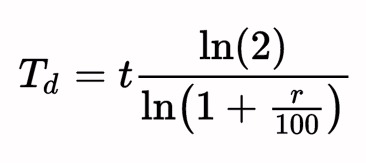
How fast are humans causing the climate to change? When we started our experiments in the 1990’s, we thought the time scale was in millenniums. If climate change were happening on a linear basis, we would have been correct; however, by the late 90’s we were convinced climate change was non-linear.

Doubling time is the amount of time it takes for a quantity to double in size (exponential growth). By 2020, there was enough data to see the doubling time of some anthropogenic climate affects had gone from 100 years to 10 years. For instance the rate of sea level rise has gone from about 1.5 millimeters per year to over 3 millimeters. We expect to see the doubling period to continue to shrink raising the possibility of sea levels rising a foot/year by 2050.

T_{d}=t \frac{\ln (2)}{\ln \left(1+\frac{r}{100}\right)}

T_{d} = doubling time
t = time
{r} = growth rate

Though the rate of change in climate disasters’ intensity, duration, and likelihood vary according to the type of extreme weather, a “rule-of-thumb” can be derived from the Canada wildfires of 2023. The World Weather Attribution Organization found, “Climate change made the cumulative severity of Quebec’s 2023 fire season to the end of July around 50% more intense, and seasons of this severity at least seven times more likely to occur.”

50% more intense
7 x more likely

These numbers may be similar in other catastrophes like hurricanes, heat waves, droughts, floods, tornadoes, and sea level rise.

If the doubling time remains at 10 years, we could see extreme events 100% more intense and/or longer in duration, as well as, 14 times more likely to occur. As mentioned above, we expect the doubling time to be reduced. If the doubling time is 5 years, in ten years we could see 200% more intense and longer extreme weather events being 28 times more likely to occur.

2024 Update
Global average sea level rose by about 0.3 inches (0.76 centimeters) from 2022 to 2023, according to a NASA-led analysis. When we authored this paper in 2023, we could not have foreseen the swift acceleration of this trend. Initially projected to double over a span of 100 years, the rate of sea level rise dramatically escalated, shortening the doubling period to a mere 10 years by 2020. Shockingly, recent observations suggest that this doubling period has further compressed to just 2 years. It is imperative to acknowledge and address this concerning trend, hoping it is not a foreboding indication of a new norm but rather an anomaly.

Human-induced climate change is a dynamic component of an intricate and unordered system, as per chaos theory. This implies that global warming is accelerating exponentially in a complex manner. Over the period from 1992 to 2023, we have presented compelling evidence, proposed remedies to mitigate climate change, and amassed valuable information through the engagement of millions with this climate model. Your participation has been invaluable. The incontrovertible data underscores that human-induced climate change is rapidly deteriorating our habitat.

Our climate model / experiment employs chaos theory to comprehensively consider human impacts and projects a potential global average temperature increase of 9℃ above pre-industrial levels. Global warming is a consequence of elevated thermal energy in the climate system, which comprises various subsystems. Chaos theory underscores the intricate and nonlinear nature of dynamic systems. Human well-being is compromised above a 1.5-degree temperature rise, rendering much of the Earth uninhabitable. A 9-degree Celsius increase would bring the Earth close to a wet-bulb temperature incapable of sustaining human life.

What Can I Do? There are numerous actions you can take to contribute to saving the planet. Each person bears the responsibility to minimize pollution, discontinue the use of fossil fuels, reduce consumption, and foster a culture of love and care. The Butterfly Effect illustrates that a small change in one area can lead to significant alterations in conditions anywhere on the globe. Hence, the frequently heard statement that a fluttering butterfly in China can cause a hurricane in the Atlantic. Be a butterfly and affect the world.

Here is a list of additional actions you can take.

4D Music: Songs About Science

A song about The Human Induced Climate Change Experiment

bookmark_border98.6

LYRICS
If we ever get in the clear
Then we’ve got to get out of here
Masses of gases
Making my temperature rise
Bulging eyes as the brain fries
Making my temperature rise
Can’t cry too dry
Making my temperature rise

If we ever get out of here
Then we’re near the “all’s clear”
Masses of gases
Making my temperature rise
Bulging eyes as the brain fries
Making my temperature rise
Can’t cry too dry
Making my temperature rise

Until we get out of here
Hear that we have yet to fear
Masses of gases
Making my temperature rise
Bulging eyes as the brain fries
Making my temperature rise
Can’t cry too dry
Making my temperature rise

Chords: E F G / G F# E / E’s; Part II Double Boogie @ 164 Beats Per Minute
Instrumentation: Vocals (TC-Helicon VOICELIVE and MiniNova Vocorder), Ibanez Acoustic Guitar (AW54CE), Fender Jazz Bass (Boss Digital Delay), Keyboards (Korg PS60, Casio WK-3500, Yamaha PSR-740, MiniNova, MicroKorg)

ABOUT THE SONG
This song “98.6” vividly portrays the intense and deadly effects of extreme heat, particularly focusing on the concept of wet-bulb temperature and its implications for human survival in the context of climate change. The repetition of the phrase “Making my temperature rise” underscores the urgency and intensity of the situation. The reference to “Masses of gases” suggests the role of greenhouse gases in exacerbating the heat, highlighting the link to human activities and climate change. The imagery of “bulging eyes” and “brain fries” paints a distressing picture of the physical and cognitive impacts of extreme heat, emphasizing the life-threatening nature of the situation. Overall, the song captures the ominous and oppressive atmosphere of deadly humid heat and the urgent need to address climate change to mitigate its devastating effects.

ABOUT THE SCIENCE
Greenhouse gases themselves are not inherently toxic to humans in the concentrations typically found in the atmosphere. However, their role in trapping heat and contributing to global warming and climate change can have detrimental effects on human health and the environment. For example, the increased temperatures associated with higher levels of greenhouse gases can lead to more frequent and severe heatwaves, which can cause heat-related illnesses and even death, particularly in vulnerable populations such as the elderly and those with pre-existing health conditions. Additionally, changes in climate patterns influenced by greenhouse gases can impact air and water quality, alter ecosystems, and lead to more extreme weather events, all of which can indirectly affect human health and well-being. Therefore, while greenhouse gases themselves may not be toxic, their effects on the environment can have significant health implications.

The greatest health risk from climate change to those alive today is the increased moisture content in the air (relative humidity) combined with the increased temperatures.

A Wet-bulb measures the temperature read by a thermometer covered in a wet cloth. As water evaporates from the cloth, evaporation cools the thermometer. This mirrors how the human body cools itself with sweat. The higher the heat and humidity (heat index), the harder it is for sweat to evaporate. The study Adaptability Limit to Climate Change Due to Heat Stress found that a wet-bulb temperature of 35C (95F) at 100% humidity, or 115F at 50% humidity, would be the upper limit of safety, beyond which the human body can no longer cool itself by evaporating sweat from the surface of the body to maintain a stable body core temperature.

The United Nations DRR says:
For every degree Celsius in warming, the water-holding capacity of the atmosphere increases by about 7%. Record-high sea temperatures ensure there is more moisture (in the form of water vapor) in the atmosphere, by an estimated 5-15% compared to before the 1970s, when global temperature rise began in earnest.

Deadly humid heat affects billions including the US Midwest this century. “It’s very disturbing,” study co-author Matthew Huber of Purdue University. “It’s going to send a lot of people to emergency medical care.” The study Greatly enhanced risk to humans as a consequence of empirically determined lower moist heat stress tolerance was conducted by Purdue and George Mason University and published August 15, 2023.

These results indicate that a significant portion of the world’s population will experience — for the first time in human history — prolonged exposures to uncompensable extreme moist heat. Humans will struggle to adapt to these conditions in a warmer world as they will present widespread challenges across many aspects of food-energy-water security, human health, and economic development including in the world’s most populous and most vulnerable regions.

At 3C (5.4F) of yearly average warming, more than 1.5 billion people will suffer. In the summer of 2023, the Earth experienced about a month of warming at 3C above pre-industrial levels. Both 2022 and 2023 saw a record number of heat related deaths. More than 61,000 Europeans died from extreme heat in the summer of 2022.

The average temperature for Brazil had been above the historical average from July through October of 2023. Rio de Janeiro recorded 42.5C on November 12, 2023 (a record for November) and high humidity on the 14th meant that it felt like 58.5C, municipal authorities said. The combination of heat and humidity is the greatest climate change risk to human health. On November 17, “a young Brazilian fan of US singer Taylor Swift died in Rio de Janeiro after falling ill inside the sweltering stadium where the superstar’s concert was held, amid a record-breaking heatwave across large swathes of Brazil,” as reported by ABC. “The show took place on the same day that Rio recorded its highest-ever heat index reading, which combines temperature and humidity, at 59.3 degrees Celsius (139 degrees Fahrenheit).”

The Water Vapor Feedback Problem
Water vapor is a powerful greenhouse gas. Since the 1970s, its rise likely increased global heating by an amount comparable to that from rising carbon dioxide. We are now seeing the consequences. In the current climate, for average all-sky conditions, water vapour is estimated to account for 50% of the total greenhouse effect, carbon dioxide 19%, ozone 4% and other gases 3%. Clouds make up about a quarter of the greenhouse effect.

The main greenhouse gases — carbon dioxide, methane, nitrous oxide and ozone — don’t condense and precipitate. Water vapor does, which means its lifetime in the atmosphere is much shorter, by orders of magnitude, compared to other greenhouse gases. On average, water vapor only lasts nine days. The increased intensity of precipitation often results in violent rain.

Sidd said, “The biggest feedback loop is water vapor. Humans put CO2 in the air. CO2 is a greenhouse gas, so the earth gets warmer. Warmer air can hold more water vapor soaking up more water vapor from the oceans. Water vapor is a greenhouse gas, so it gets even warmer… rinse (sorry!) and repeat. Another interesting thing is that the precipitation (rain, snow, sleet) intensity is increasing.”

Due to climate change humans will experience greater loss and damage to life and quality of life from air pollution, decreasing supply of potable water, extreme weather events, and disease. The greatest short term climate change risk to human health is deadly humid heat (wet-bulb temperature).

* Our climate model uses chaos theory in an attempt to adequately account for humans and forecasts a global average temperature increase of 9 degrees Celsius above pre-industrial levels. Everybody has the responsibility not to pollute. There are plenty of things you can do to help save the planet. Stop using fossil fuels. Consume less. Love more. Here is a list of additional actions you can take.
Climate Change and Deadly Humid Heat Brouse (2023)

4D Music: Songs About Science

A song about The Human Induced Climate Change Experiment

bookmark_borderGrowing Up

LYRICS
Reaching for the light
Climbing to the sky
Through the prism
Of phototropism
Opt in to ensure
Optimal exposure

Rooted in the ground
Gravity is found
Newton’s adhesion
Through gravitropism
Opting in to endure
Anchorage… that’s for sure

Flush in auxins
Hormonal options
Guiding how to grow
Which way to go

Going down into the ground
Climbing high up to the sky

Growing-Up.mp3 (unplugged to conserve energy)

Chords: Bb Db Eb Bb / C F Bb / Eb Db Bb / Bb F Bb
Instrumentation: Vocals (TC-Helicon VOICELIVE), Ibanez Acoustic Guitar (AW54CE)

ABOUT THE SONG
Plants grow upward in response to various environmental cues and internal mechanisms. One primary reason is phototropism, the tendency of plants to grow towards sources of light. This process is crucial for maximizing photosynthesis, as it ensures that leaves receive optimal light exposure. Additionally, plants grow upward to compete for sunlight with neighboring vegetation, aiming to access light before it is intercepted by taller plants. Gravitropism, which is the plant’s response to gravity, also plays a role. Roots exhibit positive gravitropism, growing downward into the soil for anchorage and water absorption, while stems and leaves display negative gravitropism, growing upward against the force of gravity. This upward growth allows stems to reach for light and support the plant’s overall structure. Hormonal signals, particularly auxins, regulate these growth responses, coordinating the plant’s growth patterns in response to its environment.

ExperiMental Music: The music and lyrics are written and recorded extemporaneously. Extemporaneous, spontaneous, improvisation, jamming, freestyle, and impromptu music are most closely related to pure chaos. The music and lyrics evolve from the “sensitive initial conditions” similar to “a butterfly flapping its wings in China causing a hurricane in the Atlantic.”

Music as a Universal Language: Music has the power to communicate emotions universally. Certain melodies, harmonies, or rhythms can evoke specific feelings that resonate with people across different cultures and backgrounds.
The Science of Chaos Theory, String Theory, and Music

4D Music: Songs About Science

bookmark_borderLogical Truths

LYRICS
Use judgement
No argument
Facts are plain to see
Facts plain as can be
What is truth is truth to me
And true for you

One equals one
One sequels none
Black is black versus yak, yak, yak
Facts are plain to see
Facts plain as can be
What is truth is truth to me
And true for you

Logical truth sleuth
By definition
Developed in youth
Our solution
Facts are plain to see
Facts plain as can be
What is truth is truth to me
And true for you

Chords: Am G Em / Am D Am / Am D E / Am C D Am; Part II @ 128 Beats Per Minute
Instrumentation: Vocals (TC-Helicon VOICELIVE and MiniNova Vocorder), Ibanez Acoustic Guitar (AW54CE), Fender Jazz Bass (Boss Digital Delay), Keyboards (Korg PS60, Casio WK-3500, Yamaha PSR-740, MiniNova, MicroKorg)

ABOUT THE SONG
The song “Logical Truths” explores the concept of objective truth and the perception of reality. Here’s an interpretation of the lyrics:

The opening lines emphasize the importance of using judgment and recognizing objective facts. The repetition of “facts plain as can be” underscores the clarity and undeniable nature of these truths. The assertion that “What is truth is truth to me, and true for you” suggests a relativistic view of truth, acknowledging that individuals may perceive truth differently based on their perspectives or beliefs.

The lines “One equals one, One sequels none” seem to highlight basic logical principles, such as the identity property (one equals one) and the concept of singularity (one sequels none), reinforcing the idea of objective truth.

The mention of “Black is black versus yak, yak, yak” juxtaposes a straightforward truth (black is black) with frivolous chatter (“yak, yak, yak”), perhaps implying the importance of distinguishing between essential truths and meaningless distractions.

The phrase “Logical truth sleuth” suggests the pursuit of truth through logical reasoning, which is often developed in youth and shapes our understanding of reality. This pursuit is presented as a solution to navigating the complexities of truth.

Overall, the song advocates for a balanced approach to truth-seeking, recognizing both the objectivity of certain facts and the subjectivity of individual interpretations. It encourages listeners to engage in logical reasoning while remaining open to different perspectives.

ExperiMental Music: The music and lyrics are written and recorded extemporaneously. Extemporaneous, spontaneous, improvisation, jamming, freestyle, and impromptu music are most closely related to pure chaos. The music and lyrics evolve from the “sensitive initial conditions” similar to “a butterfly flapping its wings in China causing a hurricane in the Atlantic.”

Music as a Universal Language: Music has the power to communicate emotions universally. Certain melodies, harmonies, or rhythms can evoke specific feelings that resonate with people across different cultures and backgrounds.

The Science of Chaos Theory, String Theory, and Music

4D Music: Songs About Science

bookmark_borderChanges (The Shifting Winds)

LYRICS
Changes are blowing our way
Changes blowing us away
Indeed, the wind speed
Is in the lead

Changes in circulation
Shifts in gradients
Pressure gyration
Blowing radiants

Changes in weather
Frequency and intensity
Changes in whether
Austerity or prosperity

Changes in the surface
Reduction in friction
Suffice to service
From any direction

Changes in the patterns
See the sea land
Wind and rain on terrain
As the world turns

Changes.mp3 (unplugged to save energy)

Chords: F D / C D
Instrumentation: Vocals (TC-Helicon VOICELIVE), Ibanez Acoustic Guitar (AW54CE)

ABOUT THE SONG
This song seems to capture the dynamic relationship between wind patterns and climate change, highlighting how various factors contribute to shifts in the Earth’s atmospheric dynamics.

The repeated mention of “changes” blowing our way and blowing us away suggests a sense of urgency and unpredictability in the face of these shifts. The wind, often seen as a symbol of change and movement, becomes a central motif representing the broader transformations occurring in the climate system.

The lyrics delve into the mechanisms behind these changes, referencing alterations in circulation patterns, pressure gradients, and weather phenomena like wind speed, frequency, and intensity. These changes are not just superficial but deeply ingrained in the fundamental processes that govern Earth’s climate.

There’s also a recognition of the interconnectedness between different elements of the Earth system, such as the interaction between the sea and land, and how they influence wind and rainfall patterns. This underscores the complexity of climate dynamics and the cascading effects that changes in one component can have on the entire system.

Overall, the song portrays a sense of both awe and concern at the power of these changes, urging listeners to pay attention to the shifting winds of climate change and the profound impact they have on the world around us.

ABOUT THE SCIENCE
Climate change can impact wind speeds in various ways, but the specific effects can vary depending on regional and local factors. Some potential impacts include:

  1. Changes in atmospheric circulation patterns: Climate change can alter atmospheric circulation patterns, which in turn can affect wind speeds. For example, shifts in temperature gradients between different regions may lead to changes in pressure systems and the strength and direction of winds.
  2. Changes in weather patterns: Climate change can influence the frequency and intensity of weather events such as storms, hurricanes, and cyclones. These extreme weather events can result in temporary increases in wind speeds in affected areas.
  3. Alterations in land surface characteristics: Changes in land use, such as deforestation or urbanization, can affect local wind patterns. For example, the removal of vegetation can lead to increased wind speeds due to reduced frictional effects on the surface.
  4. Ocean-atmosphere interactions: Changes in sea surface temperatures and ocean circulation patterns driven by climate change can influence wind patterns, particularly in coastal regions. For example, alterations in the strength and position of ocean currents can impact wind speeds over nearby land areas.

Overall, while climate change can lead to changes in wind speeds, the specific impacts are complex and can vary depending on a range of factors, including geographic location, topography, and regional climate dynamics.

Human-induced climate change is a dynamic component of an intricate and unordered system, as per chaos theory. This implies that global warming is accelerating exponentially in a complex manner. Over the period from 1992 to 2023, we have presented compelling evidence, proposed remedies to mitigate climate change, and amassed valuable information through the engagement of millions with this climate model. Your participation has been invaluable. The incontrovertible data underscores that human-induced climate change is rapidly deteriorating our habitat.

Global warming is caused by an increase in thermal energy in the climate system. The Earth is a climate system. Many subsystems make up our climate. Chaos theory emphasizes the complexity and nonlinearity of dynamic systems, and this complexity is inherent in the interactions between soil, atmosphere, and oceans in the Earth’s climate system.

Atmospheric circulation together with ocean circulation is how thermal energy is redistributed throughout the world. Chaos theory offers insights into the complex, nonlinear dynamics of climate systems role in the redistribution of thermal energy. The Earth’s climate is a highly complex and dynamic system, influenced by various factors such as ocean currents, atmospheric circulation, and feedback loops.

General Circulation Models for the earth climate are nonlinear and teleconnected. That means a small change in temperature or pressure or humidity in one small area on the globe can cause _large_ changes in conditions _anywhere_ on the globe. This is sometimes called the Butterfly effect. The complexity of these models can lead to chaotic behaviour. Climate science must grapple with these models and extract results in spite of the mathematical difficulties, and there have been remarkable successes in some cases and sad failures in others. Nevertheless we must proceed.

Our climate model / experiment employs chaos theory to comprehensively consider human impacts and projects a potential global average temperature increase of 9℃ above pre-industrial levels. Global warming is a consequence of elevated thermal energy in the climate system, which comprises various subsystems. Chaos theory underscores the intricate and nonlinear nature of dynamic systems. Human well-being is compromised above a 1.5-degree temperature rise, rendering much of the Earth uninhabitable. A 9-degree Celsius increase would bring the Earth close to a wet-bulb temperature incapable of sustaining human life.

What Can I Do? There are numerous actions you can take to contribute to saving the planet. Each person bears the responsibility to minimize pollution, discontinue the use of fossil fuels, reduce consumption, and foster a culture of love and care. The Butterfly Effect illustrates that a small change in one area can lead to significant alterations in conditions anywhere on the globe. Hence, the frequently heard statement that a fluttering butterfly in China can cause a hurricane in the Atlantic. Be a butterfly and affect the world.

Here is a list of additional actions you can take.

ExperiMental Music: The music and lyrics are written and recorded extemporaneously. Extemporaneous, spontaneous, improvisation, jamming, freestyle, and impromptu music are most closely related to pure chaos. The music and lyrics evolve from the “sensitive initial conditions” similar to “a butterfly flapping its wings in China causing a hurricane in the Atlantic.”

Music as a Universal Language: Music has the power to communicate emotions universally. Certain melodies, harmonies, or rhythms can evoke specific feelings that resonate with people across different cultures and backgrounds.
The Science of Chaos Theory, String Theory, and Music

4D Music: Songs About Science

A song about The Human Induced Climate Change Experiment

bookmark_borderNew Neutral

LYRICS
Increased frequency
Increased intensity
Normal extreme
Know what I mean?

Shifts in circulation
Exacerbated related
Dam damnation
Beyond what’s slated

Sea surface anomalies
See surface anomalies
Contribute overall
Records fall

Teleconnections
Distant resurrections
Add the chaos sauce
Hot coming across

Still, not so neutral
And so ENSO
That’s what we know
About the way things go

Chords: Em G / A C / C E A / C A / E Em / G Em C B7 Em; Part II @ 125 Beats Per Minute
Instrumentation: Vocals (TC-Helicon VOICELIVE and MiniNova Vocorder), Ibanez Acoustic Guitar (AW54CE), Ibanez Electric RG-270 (Vox ToneLab and Boss Digital Delay), Fender Jazz Bass (Boss Digital Delay), Keyboards (Korg PS60, Casio WK-3500, Yamaha PSR-740, MiniNova, MicroKorg)

ABOUT THE SONG
This song delves into the complexities of ENSO-neutral conditions, highlighting various factors contributing to its dynamic nature. The lyrics touch on increased frequency and intensity of events, suggesting a departure from the norm. Shifts in atmospheric circulation and related phenomena are portrayed as exacerbating existing conditions, leading to outcomes beyond what was anticipated or planned. Sea surface anomalies are mentioned as significant contributors to the overall scenario, with records being broken as a result. The concept of teleconnections, or distant interactions, is introduced, suggesting the interconnectedness of events across different regions. Despite the term “neutral” in ENSO-neutral, the song implies that these conditions are anything but neutral, underscoring the unpredictability and complexity inherent in the ENSO phenomenon.

ABOUT THE SCIENCE
ENSO-neutral refers to a phase in the El Niño-Southern Oscillation (ENSO) cycle when neither El Niño nor La Niña conditions are present in the tropical Pacific Ocean. Climate change can influence ENSO-neutral conditions in several ways:

  1. Increased Frequency and Intensity of Extremes: Climate change can lead to more frequent and intense weather extremes, such as heatwaves, droughts, and heavy rainfall events, even during ENSO-neutral periods. These extremes can occur independently of El Niño or La Niña events and may be exacerbated by rising global temperatures.
  2. Shifts in Atmospheric Circulation Patterns: Climate change can alter atmospheric circulation patterns globally, affecting the behavior of the jet stream and other large-scale wind patterns. These changes can influence the onset, strength, and duration of ENSO-neutral conditions and may lead to shifts in regional weather patterns.
  3. Sea Surface Temperature Anomalies: While ENSO-neutral conditions are characterized by near-average sea surface temperatures (SSTs) in the tropical Pacific, climate change can contribute to overall warming of ocean waters. This background warming may influence the baseline SSTs during ENSO-neutral periods and can potentially impact weather patterns and ocean circulation.
  4. Teleconnections: Climate change can modify teleconnections, which are large-scale atmospheric linkages that connect distant regions of the globe. These teleconnections play a significant role in shaping weather and climate patterns during ENSO-neutral periods. Changes in teleconnections may alter the impacts of ENSO-neutral conditions on weather and climate variability in different regions.

Overall, while ENSO-neutral conditions may not directly result from climate change, the broader changes occurring in the climate system can influence the characteristics and impacts of these neutral periods. Understanding these interactions is essential for improving our ability to predict and adapt to future climate variability and extremes.

Atmosphere-Soil-Ocean Coupling:

  1. Teleconnections:
    • Chaos theory recognizes the concept of teleconnections, where seemingly unrelated events in one part of the Earth system influence conditions in another. For instance, changes in sea surface temperatures (linked to ocean dynamics) can affect atmospheric circulation patterns, leading to variations in precipitation and temperature on land.
  2. Climate Variability:
    • The complex interactions between soil, atmosphere, and oceans contribute to climate variability. Chaos theory helps to understand the sensitivity of the climate system to initial conditions and how small perturbations in one component can lead to significant and sometimes unpredictable outcomes.

Human-induced climate change is a dynamic component of an intricate and unordered system, as per chaos theory. This implies that global warming is accelerating exponentially in a complex manner. Over the period from 1992 to 2023, we have presented compelling evidence, proposed remedies to mitigate climate change, and amassed valuable information through the engagement of millions with this climate model. Your participation has been invaluable. The incontrovertible data underscores that human-induced climate change is rapidly deteriorating our habitat.

Our climate model / experiment employs chaos theory to comprehensively consider human impacts and projects a potential global average temperature increase of 9℃ above pre-industrial levels. Global warming is a consequence of elevated thermal energy in the climate system, which comprises various subsystems. Chaos theory underscores the intricate and nonlinear nature of dynamic systems. Human well-being is compromised above a 1.5-degree temperature rise, rendering much of the Earth uninhabitable. A 9-degree Celsius increase would bring the Earth close to a wet-bulb temperature incapable of sustaining human life.

What Can I Do? There are numerous actions you can take to contribute to saving the planet. Each person bears the responsibility to minimize pollution, discontinue the use of fossil fuels, reduce consumption, and foster a culture of love and care. The Butterfly Effect illustrates that a small change in one area can lead to significant alterations in conditions anywhere on the globe. Hence, the frequently heard statement that a fluttering butterfly in China can cause a hurricane in the Atlantic. Be a butterfly and affect the world.

Here is a list of additional actions you can take.

4D Music: Songs About Science

A song about The Human Induced Climate Change Experiment

bookmark_borderSeam of a Dream

LYRICS
It seems I’m caught on the seam of a dream
’cause it’s hard to see me in this reality
In a drift
Of a draft
Fleeing the scene
Of obscene
(Seen)

On the edge of ledge
Pledge of a dream
Watching and scratching
Wondering why so mean?
In a drift
Of a draft
Fleeing the scene
Of obscene
(Seen)

On the verge of a splurge
Seen in a dream
’cause it’s hard to believe this reality
In a drift
Of a draft
Fleeing the scene
Of obscene
(Seen)

Chords: F# E / B D# / F#/7; Part II @ 137 Beats Per Minute
Instrumentation: Vocals (TC-Helicon VOICELIVE and MiniNova Vocorder), Ibanez Acoustic Guitar (AW54CE), Fender Jazz Bass (Boss Digital Delay), Keyboards (Korg PS60, Casio WK-3500, Yamaha PSR-740, MiniNova, MicroKorg)

ABOUT THE SONG
This song delves into the dissonance between dreams and reality, using vivid imagery to convey a sense of bewilderment and frustration regarding climate change and environmental degradation.

The repetition of phrases like “caught on the seam of a dream” and “on the edge of ledge” suggests a feeling of being suspended between two worlds, one of idealized dreams and one of harsh reality. This juxtaposition reflects the disconnect between the desired state of a pristine environment and the current state of degradation and destruction.

The lyrics evoke a sense of helplessness and confusion, as the protagonist struggles to reconcile their dreams of a better world with the harsh realities of environmental damage. The imagery of “fleeing the scene of obscene” suggests a desire to escape from the ugliness of environmental degradation, but ultimately feeling trapped within it.

Overall, the song captures the emotional turmoil and existential angst that many feel in the face of climate change and environmental destruction. It serves as a poignant reflection on the need for action and change to preserve the planet for future generations.

Humans will experience greater loss and damage to life and quality of life from air pollution, decreasing supply of potable water, extreme weather events, disease, and other adverse health outcomes. The greatest short term climate change risk to human health is deadly humid heat (wet-bulb temperature). The environmental changes and uncertainties associated with climate change can contribute to mental health issues, including anxiety, depression, and post-traumatic stress disorder (PTSD). Almost all survivors of climate-related disasters suffer from mental distress and experience PTSD. Of those who have not experienced climate disasters, over two-thirds of U.S. adults (68%) report having climate change anxiety.

Human-induced climate change is a dynamic component of an intricate and unordered system, as per chaos theory. This implies that global warming is accelerating exponentially in a complex manner. Over the period from 1992 to 2023, we have presented compelling evidence, proposed remedies to mitigate climate change, and amassed valuable information through the engagement of millions with this climate model. Your participation has been invaluable. The incontrovertible data underscores that human-induced climate change is rapidly deteriorating our habitat.

Our climate model / experiment employs chaos theory to comprehensively consider human impacts and projects a potential global average temperature increase of 9℃ above pre-industrial levels. Global warming is a consequence of elevated thermal energy in the climate system, which comprises various subsystems. Chaos theory underscores the intricate and nonlinear nature of dynamic systems. Human well-being is compromised above a 1.5-degree temperature rise, rendering much of the Earth uninhabitable. A 9-degree Celsius increase would bring the Earth close to a wet-bulb temperature incapable of sustaining human life.

What Can I Do? There are numerous actions you can take to contribute to saving the planet. Each person bears the responsibility to minimize pollution, discontinue the use of fossil fuels, reduce consumption, and foster a culture of love and care. The Butterfly Effect illustrates that a small change in one area can lead to significant alterations in conditions anywhere on the globe. Hence, the frequently heard statement that a fluttering butterfly in China can cause a hurricane in the Atlantic. Be a butterfly and affect the world.

Here is a list of additional actions you can take.

4D Music: Songs About Science

A song about The Human Induced Climate Change Experiment

bookmark_borderScratching at the Surface

LYRICS
Suffice to say
Surfaces weigh
That’s not to say
The other way
Won’t sway you, too
Oceans in play

For sure
The land temperature
Also in the picture
Energy exchange
Rearrange
Home and homeostasis
Status of us

Guess it’s not surprising
Sea level’s rising
Currently, the current
Turns to run rampant

Altering the rain
Terrain and strain
Absorbing more heat
Turning Man to meat

Radiation budget
Becoming suspect
Vegetation aggravation
Atmospheric saturation

Scratching-at-the-Surface.mp3 (unplugged to conserve energy)

Chords: Em C B7 Em / Em G D Em / Bm Em
Instrumentation: Vocals (TC-Helicon VOICELIVE), Ibanez Acoustic Guitar (AW54CE)

ABOUT THE SONG
This song “Scratching at the Surface” delves into the intricate relationship between surface temperature and climate change. It begins by acknowledging the significance of surface temperatures and emphasizes that both land and ocean temperatures play crucial roles in shaping global climate patterns.

The lyrics highlight the complex dynamics of energy exchange between different components of the Earth’s system, such as the land, oceans, and atmosphere. The mention of “homeostasis” underscores the delicate balance that maintains stable environmental conditions, which is being disrupted by human-induced changes.

The song reflects on the consequences of rising sea levels, attributing them to the altering currents and their impact on weather patterns. It also touches upon the effects of climate change on precipitation patterns, terrain, and vegetation, illustrating how these changes are leading to increased heat absorption and environmental degradation.

The reference to the “radiation budget” becoming suspect suggests that human activities are disrupting the Earth’s energy balance, leading to further warming and climate instability. Overall, the song portrays a vivid picture of the interconnected processes driving climate change and underscores the urgency of addressing these issues to mitigate their impacts on the planet and humanity.

Human-induced climate change is a dynamic component of an intricate and unordered system, as per chaos theory. This implies that global warming is accelerating exponentially in a complex manner. Over the period from 1992 to 2023, we have presented compelling evidence, proposed remedies to mitigate climate change, and amassed valuable information through the engagement of millions with this climate model. Your participation has been invaluable. The incontrovertible data underscores that human-induced climate change is rapidly deteriorating our habitat.

Our climate model / experiment employs chaos theory to comprehensively consider human impacts and projects a potential global average temperature increase of 9℃ above pre-industrial levels. Global warming is a consequence of elevated thermal energy in the climate system, which comprises various subsystems. Chaos theory underscores the intricate and nonlinear nature of dynamic systems. Human well-being is compromised above a 1.5-degree temperature rise, rendering much of the Earth uninhabitable. A 9-degree Celsius increase would bring the Earth close to a wet-bulb temperature incapable of sustaining human life.

What Can I Do? There are numerous actions you can take to contribute to saving the planet. Each person bears the responsibility to minimize pollution, discontinue the use of fossil fuels, reduce consumption, and foster a culture of love and care. The Butterfly Effect illustrates that a small change in one area can lead to significant alterations in conditions anywhere on the globe. Hence, the frequently heard statement that a fluttering butterfly in China can cause a hurricane in the Atlantic. Be a butterfly and affect the world.

Here is a list of additional actions you can take.

4D Music: Songs About Science

A song about The Human Induced Climate Change Experiment

bookmark_borderLa Niña

LYRICS
Coming this summer
A climate bummer
More drought in the corn belt
More strain from the hurricane

Chorus:
The seam of the jet stream
Moving North
Though it may feel cooler to you
It’s a limited point-of-view

Atmosphere ocean feedback
Out of whack
But don’t be a fool
The ocean didn’t cool
(chorus)

Closer inspection
Of tropical convection
Oh, well, upwell
Bequeath cold water from beneath
(chorus)

The way atmospheric waves behave
Communicate La Niña
Coming at ya
No surprise
La Niña drives
(chorus)

Chords: Bbm Db Fm Bbm / Bbm Fm Fm Bbm; Part II @ 148 Beats Per Minute
Instrumentation: Vocals (TC-Helicon VOICELIVE and MiniNova Vocorder), Ibanez Acoustic Guitar (AW54CE), Keyboards (Korg PS60, Casio WK-3500, Yamaha PSR-740, MiniNova, MicroKorg)

ABOUT THE SONG
This song delves into the phenomenon of La Niña and its impact on climate change. La Niña, characterized by cooler-than-average sea surface temperatures in the central and eastern Pacific Ocean, is associated with various weather patterns worldwide. The lyrics convey a sense of concern about the consequences of La Niña, particularly during the summer months.

The mention of “climate bummer” highlights the negative effects expected during La Niña events, such as increased drought in the corn belt and heightened strain from hurricanes. These weather extremes disrupt agricultural productivity and pose risks to communities vulnerable to severe weather events.

The reference to the “seam of the jet stream moving North” indicates shifts in atmospheric circulation patterns associated with La Niña. While some regions may experience cooler temperatures, the song emphasizes that this perspective is limited, as La Niña can bring a range of complex and sometimes unexpected impacts.

The lyrics also touch on the atmospheric-ocean feedback loop, suggesting that disruptions in this system contribute to the erratic behavior of La Niña. The mention of “upwelling” refers to the process where cold water from deeper ocean layers rises to the surface, influencing sea surface temperatures and atmospheric conditions.

Overall, the song warns listeners about the disruptive nature of La Niña events and underscores the interconnectedness of oceanic and atmospheric processes in shaping global climate patterns.

ABOUT THE SCIENCE

In the United States, hurricanes stand out as the most financially burdensome type of climate-related disaster. While the number of disasters related to extreme weather events such as rain, hail, and wind, resulting in over a billion dollars in damage may be higher, the sheer magnitude of damage caused by a single hurricane surpasses them. For example, in 2023, there were 17 extreme weather events, each causing over a billion dollars in damage, but no hurricanes occurred. However, Hurricane Ida alone incurred an estimated $75 billion in damages, making it the costliest disaster of 2021.

In 2023, the world experienced an El Niño phase, which typically reduces hurricane activity. However, the climate pattern shifted towards La Niña in 2024. La Niña patterns often amplify the Atlantic hurricane season, particularly concerning when paired with months-long streaks of record warmth across the Atlantic Ocean.

The chaotic interactions between various factors, including ocean currents, sea surface temperatures, and atmospheric circulation, contribute to the overall climate patterns experienced on the East Coast. Climate change can influence the jet stream and atmospheric rivers, impacting weather patterns on the East Coast of the USA. The jet stream is a key player in steering weather systems and atmospheric rivers.

It’s important to note that the relationship between the jet stream and atmospheric rivers is part of a larger, complex climate system. Human induced climate change is an exponential component of an unordered system (chaos theory). That means global warming is accelerating at a rapid rate in a complex way. Our climate model uses chaos theory in an attempt to adequately account for humans and forecasts a global average temperature increase of 9 degrees Celsius above pre-industrial levels. Climate change is expected to have complex and significant impacts on the jet stream, Atlantic Meridional Overturning Circulation (AMOC), and atmospheric rivers.

Our climate model / experiment employs chaos theory to comprehensively consider human impacts and projects a potential global average temperature increase of 9℃ above pre-industrial levels. Global warming is a consequence of elevated thermal energy in the climate system, which comprises various subsystems. Chaos theory underscores the intricate and nonlinear nature of dynamic systems. Human well-being is compromised above a 1.5-degree temperature rise, rendering much of the Earth uninhabitable. A 9-degree Celsius increase would bring the Earth close to a wet-bulb temperature incapable of sustaining human life.

What Can I Do? There are numerous actions you can take to contribute to saving the planet. Each person bears the responsibility to minimize pollution, discontinue the use of fossil fuels, reduce consumption, and foster a culture of love and care. The Butterfly Effect illustrates that a small change in one area can lead to significant alterations in conditions anywhere on the globe. Hence, the frequently heard statement that a fluttering butterfly in China can cause a hurricane in the Atlantic. Be a butterfly and affect the world.

Here is a list of additional actions you can take.

4D Music: Songs About Science

A song about The Human Induced Climate Change Experiment