bookmark_borderThe Lady of Shalott

She left the web, she left the loom,
She made three paces through the room,
She saw the water-lily bloom,
She saw the helmet and the plume,
She look’d down to Camelot.

Out flew the web and floated wide;
The mirror crack’d from side to side;
“The curse is come upon me,” cried
The Lady of Shalott.
— Tennyson, Lord Alfie

Chords: Am Dm C Em Am
Instrumentation: Vocals (TC-Helicon VOICELIVE), Ibanez Acoustic Guitar (AW54CE)

LYRICS
A mirror image of our age
Viewing backward toward the stage
The reverse of our course…
A worse curse?

Detached perspective of reality
Not to see how things shall be
Left alone in isolation
Ever feeling desolation

Neglecting all outside
Ignoring your inside
Where can hope reside
When feelings have died
[Bridge: the mirror cracks]
At an increasing rate
Leading to a tragic fate
What of the broader circumstance
Love, dance, and romance?

Will you let your life rot
Like the Lady of Shalott?

Chords: Am / Dm C Em Am / Am G Am / C D E; Part III Trip-Hop Epic Ballad @ 70 to 120 Beats Per Minute
Instrumentation: Vocals (TC-Helicon VOICELIVE and MiniNova Vocorder), Ibanez Acoustic Guitar (AW54CE), Keyboards (Korg PS60, Casio WK-3500, Yamaha PSR-740, MiniNova, MicroKorg)

ABOUT THE SONG (AND POEMS)
The first four of the 1842 second version of the poem describe a pastoral setting. The Lady of Shalott lives in an island castle in a river which flows to Camelot, but the local farmers know little about her.

And by the moon the reaper weary,
Piling sheaves in uplands airy,
Listening, whispers, “‘Tis the fairy
Lady of Shalott.”

Stanzas five to eight describe the lady’s life. She suffers from a mysterious curse and must continually weave images on her loom without ever looking directly out at the world. Instead, she looks into a mirror, which reflects the busy road and the people of Camelot who pass by her island.

She knows not what the curse may be,
And so she weaveth steadily,
And little other care hath she,
The Lady of Shalott.

The reflected images are described as “shadows of the world”, a metaphor that makes it clear they are a poor substitute for seeing directly (“I am half-sick of shadows”).

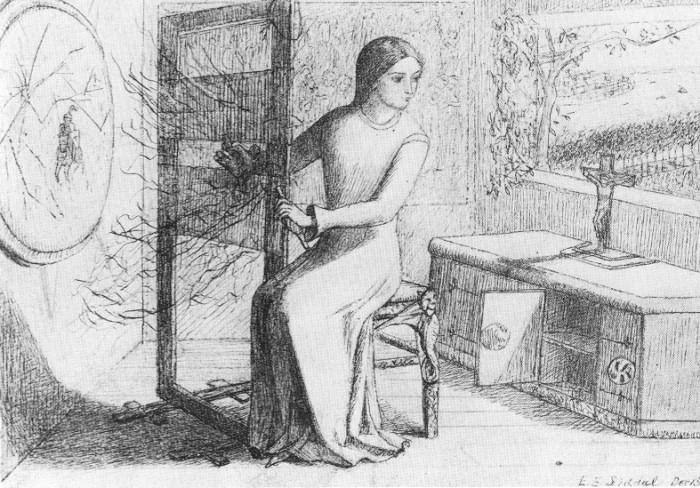
William Maw Egley, The Lady of Shalott, 1858

Stanzas nine to twelve describe “bold Sir Lancelot” as he rides by and is seen by the lady.

All in the blue unclouded weather
Thick-jewell’d shone the saddle-leather,
The helmet and the helmet-feather
Burn’d like one burning flame together,
As he rode down to Camelot.

The remaining seven stanzas describe the effect on the lady of seeing Lancelot; she stops weaving and looks out of her window toward Camelot, bringing about the curse.

Out flew the web and floated wide—
The mirror crack’d from side to side;
“The curse is come upon me,” cried
The Lady of Shalott.

She leaves her tower, finds a boat upon which she writes her name, and floats down the river to Camelot. She dies before arriving at the palace. Among the knights and ladies who see her is Lancelot, who thinks she is lovely.

“Who is this? And what is here?”
And in the lighted palace near
Died the sound of royal cheer;
And they crossed themselves for fear,
All the Knights at Camelot;
But Lancelot mused a little space
He said, “She has a lovely face;
God in his mercy lend her grace,
The Lady of Shalott.”

ABOUT The Lady of Shalott
Alfred Lord Tennyson’s four-part poem, ‘The Lady of Shalott,’ narrates the tale of a young medieval woman mysteriously confined on an island near Camelot. Her existence revolves around the solitary tasks of weaving a vibrant web and observing the outside world solely through a mirror. A curse looms over her: gazing directly at Camelot will bring about misfortune. The poem unfolds the tragic narrative of Elaine of Astolat, a young noblewoman marooned in a tower upstream from Camelot. Tennyson’s exploration of Arthurian themes is depicted as “a valid setting for the study of the artist and the perils of personal isolation,” as noted by one of his biographers.

CLIMATE CHANGE METAPHOR
The Lady of Shalott, in Alfred Lord Tennyson’s poem, can be metaphorically linked to climate change through the theme of isolation and the consequences of disregarding the world outside her confined existence. The Lady, secluded on her island and restricted to experiencing life indirectly through her mirror, represents a detached perspective on reality.

Similarly, humanity, in the context of climate change, can be seen as isolating itself from the environmental challenges that surround it. The Lady’s curse, triggered by the direct view of Camelot, symbolizes the repercussions of ignoring or neglecting the outside world. In the climate change metaphor, this could signify the adverse effects that result from turning a blind eye to environmental issues, such as rising temperatures, pollution, and loss of biodiversity.

The Lady’s curse leads to her tragic fate, emphasizing the potential dire consequences of disregarding the broader context. In the climate change metaphor, it underscores the urgency of addressing environmental concerns and the interconnectedness of human actions with the health of the planet. The Lady’s story serves as a cautionary tale, urging us to break free from isolation, acknowledge the reality of climate change, and actively engage in preserving the delicate balance of our environment.

From the album: Camelot’s Resurgence

A song about The Human Induced Climate Change Experiment

>The Lady of Shalott
bookmark_borderLancelot

LYRICS
Addressing the hidden root
Residing under the boot
May not be obvious to me
Yet, all the world can see

Fits of madness
Suicidal tendencies
Sits in sadness
Homicidal remedies

How destructive action
Leads to lack of satisfaction
Bad things that you pass
Come back to bite in the ass

Claim that life isn’t fair
Induce a sense of despair
Totally unaware
You, yourself declare

The Earth’s edict
Contributors to conflict
Will wallow
In their own hollow
Till there is war
No more

[Lancelot, it’s getting hot!
How much time?
Not a lot!]

Chords: Em D / C D G D / C6 D Bb D; Part II Ambient Pop Cha Cha @ 132 Beats Per Minute
Instrumentation: Vocals (TC-Helicon VOICELIVE and MiniNova Vocorder), Ibanez Electric RG-270 (Boss Digital Delay), Fender Jazz Bass (Boss Digital Delay), Keyboards (Korg PS60, Casio WK-3500, Yamaha PSR-740, MiniNova, MicroKorg)

ABOUT LANCELOT
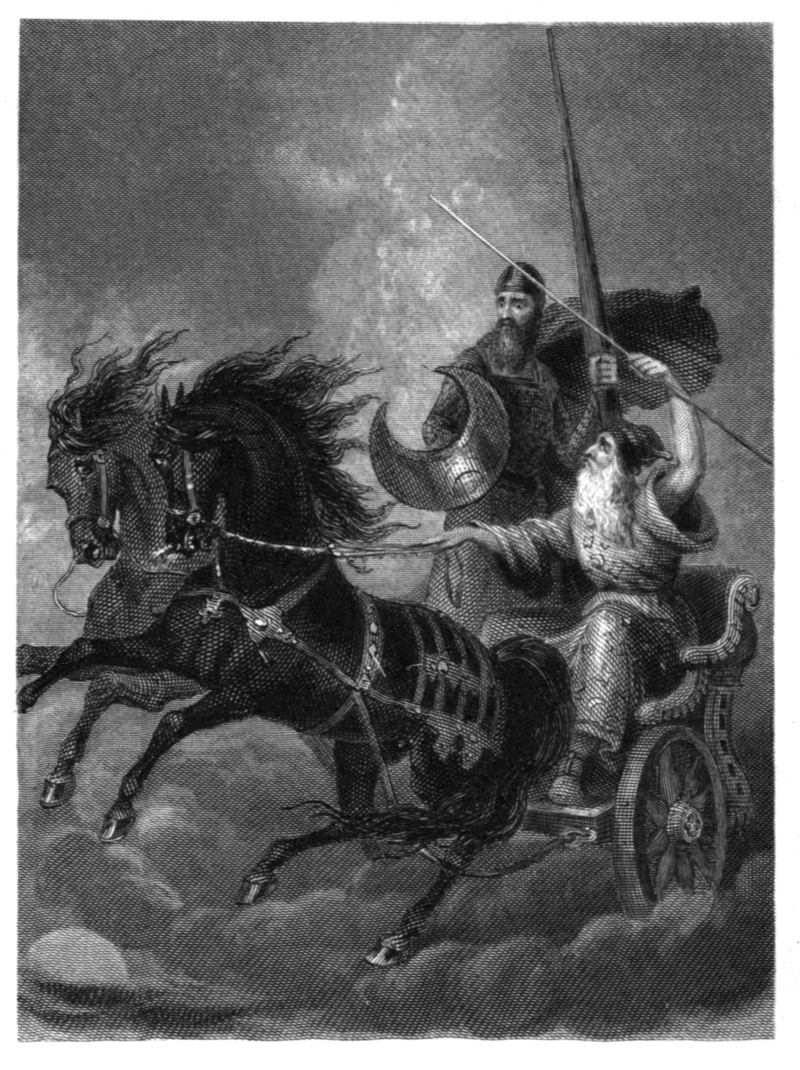
Lancelot, a prominent figure in the Arthurian legend, served as King Arthur’s close companion and stood among the greatest Knights of the Round Table. Born an orphan, Lancelot was the son of King Ban of the lost kingdom of Benoic. Orphaned and raised in a fairy realm by the Lady of the Lake, he emerged as a hero known for his exceptional prowess in battles, quests, and tournaments, establishing himself as an unparalleled swordsman and jouster. Lancelot eventually became the lord of the castle Joyous Gard and the personal champion of Arthur’s wife, Queen Guinevere.

Despite his formidable achievements, Lancelot faced challenges in the form of frequent and occasionally prolonged fits of madness. His tragic affair with Queen Guinevere, once discovered, triggered a civil war that ultimately led to the downfall of Arthur’s kingdom, exploited by the cunning Mordred.

According to the Vulgate Cycle, Lancelot’s backstory unfolds in the borderland between Gaul and Brittany, where he is born as Galahad, the son of King Ban of Bénoïc. Fleeing the fall of Ban’s kingdom to King Claudas, the infant Lancelot is carried away by the Lady of the Lake, a fairy enchantress. Lancelot’s journey continues as he earns a place at Arthur’s elite Round Table by freeing King Arthur’s nephew Gawain from captivity.

Lancelot’s romantic entanglement with Queen Guinevere is marked by a magical connection, leading to a profound and forbidden love. His knight-errant adventures include triumphing in tournaments, rescuing knights held captive by villains like Turquine, and overcoming betrayals. Lancelot’s dedication to Queen Guinevere is evident in his heroic feats, such as slaying dragons and giants and playing a crucial role in the war against the Saxons in Lothian.

However, Lancelot’s life is marred by recurring fits of madness, often triggered by emotional turmoil, false news of the death of allies like Gawain, or encounters with sexually charged situations. These episodes contribute to the complexity of his character.

The destructive consequences of Lancelot’s affair with Queen Guinevere become evident when the truth is exposed, leading to the violent rescue of the condemned queen and the death of Gawain’s brothers. This tragic event sets in motion the chain of events that culminate in Mordred’s treason, the disappearance of Arthur, and the apparent demise of the once-mighty Camelot. Lancelot’s tale serves as a poignant narrative of love, betrayal, and the far-reaching repercussions of personal choices within the legendary realm of King Arthur.

THE CLIMATE CHANGE METAPHOR

The story of Lancelot, particularly aspects of his character and the consequences of his actions, can be metaphorically linked to certain aspects of the challenges posed by climate change:

  1. Hidden Origins and Lost Kingdom:
    • Lancelot’s Backstory: Lancelot is an orphan with a mysterious origin, hailing from the lost kingdom of Benoic.
    • Climate Change Metaphor: Climate change often involves addressing the hidden origins of environmental issues, and the impact of lost ecosystems and habitats.
  2. Magical Connection and Love:
    • Lancelot’s Connection: Lancelot and Queen Guinevere share a magical connection, leading to a forbidden love that has significant consequences.
    • Climate Change Metaphor: The interconnectedness of ecosystems and the environment emphasizes the need for responsible stewardship to avoid unintended and detrimental consequences.
  3. Destructive Consequences of Actions:
    • Lancelot’s Affair: Lancelot’s affair with Guinevere results in a civil war and the downfall of Arthur’s kingdom.
    • Climate Change Metaphor: Human actions, such as unsustainable practices and environmental degradation, can lead to destructive consequences for the planet and its ecosystems.
  4. Fits of Madness and Suicidal Tendencies:
    • Lancelot’s Struggles: Lancelot experiences fits of madness and suicidal tendencies, often related to false or real news of death.
    • Climate Change Metaphor: The challenges posed by climate change can induce a sense of despair or hopelessness, emphasizing the importance of addressing these challenges with resilience and effective solutions.
  5. War and Consequences for Arthur’s Kingdom:
    • Lancelot’s Role: Lancelot’s actions, especially the rescue of Guinevere, lead to a war and the eventual downfall of Arthur’s kingdom.
    • Climate Change Metaphor: Climate change contributes to conflicts over resources and poses threats to the stability of societies and ecosystems.
  6. Revelation and Unraveling Truths:
    • Lancelot’s Revelation: The revelation of Lancelot’s affair with Guinevere leads to a series of tragic events.
    • Climate Change Metaphor: The revelation of environmental truths and the acknowledgment of climate change impacts are crucial steps toward addressing and mitigating its effects.

From the album: Camelot’s Resurgence

A song about The Human Induced Climate Change Experiment

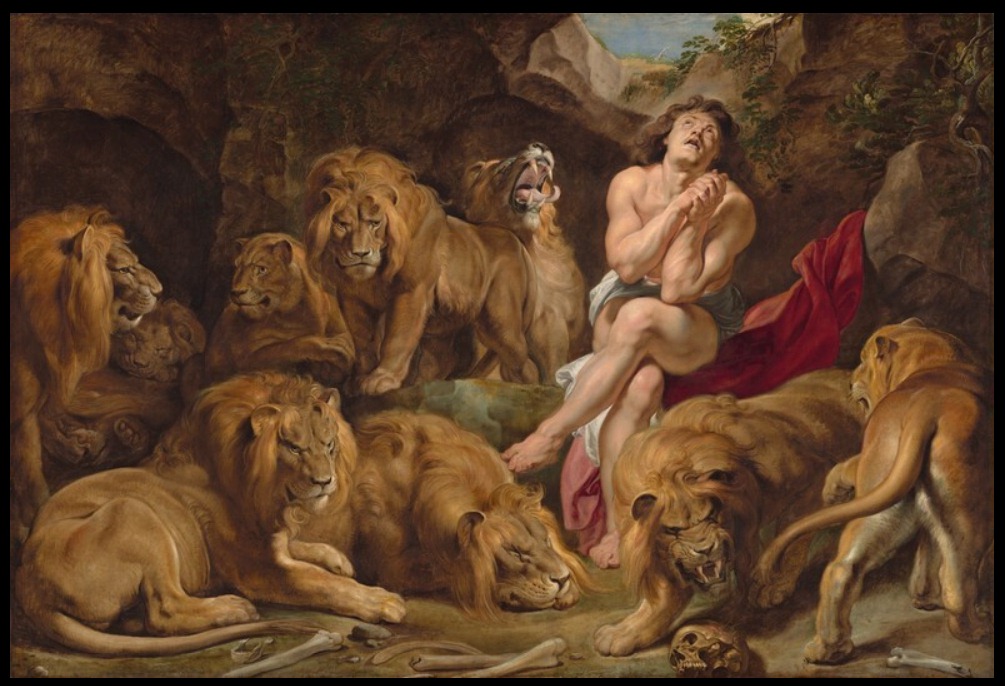
bookmark_borderDaniel

LYRICS
We require our attention
As divine intervention
No need for a seer to see
We create our destiny

Man is overactive
Holding the climate captive
Steadfast devotion
To our solution
For evolution

Interpret the signs
Of Man’s designs
Long-term consequences
To satisfy our instance
And, the lion dines

Working towards redemption
For future generations
Could be our salvation
Redeem the drudge and sludge
God as our judge

Chords: E/7/m/m7(11) A E / B7 A A G e; Part II @ 128 Beats Per Minute
Instrumentation: Vocals (TC-Helicon VOICELIVE and MiniNova Vocorder), Ibanez Acoustic Guitar (AW54CE), Fender Squire Mini Electric Guitar (Boss Digital Delay), Fender Jazz Bass (Boss Digital Delay), Keyboards (Korg PS60, Casio WK-3500, Yamaha PSR-740, MiniNova, MicroKorg)

ABOUT THE SONG
The story of Daniel, as recounted in the Hebrew Bible, offers metaphorical parallels to the challenges and consequences associated with climate change.

  1. Captivity and Environmental Impact:
    • Story of Daniel: Daniel faces captivity in Babylon, a foreign land, due to circumstances beyond his control.
    • Climate Change: Human activities have led to environmental changes, impacting ecosystems and causing unforeseen consequences.
  2. Faith and Resilience:
    • Story of Daniel: Despite societal pressures to conform to Babylonian practices, Daniel and his friends maintain their faith and principles.
    • Climate Change: Dealing with climate change requires steadfastness in adhering to sustainable practices and values even when faced with opposing influences.
  3. Interpretation of Signs and Visions:
    • Story of Daniel: Daniel is known for interpreting dreams and visions that foretell significant events.
    • Climate Change: Scientists interpret environmental data and signs, providing insights into the consequences of climate change.
  4. Divine Intervention and Protection:
    • Story of Daniel: Daniel miraculously survives the lions’ den, symbolizing divine intervention and protection for those with unwavering faith.
    • Climate Change: Mitigating climate change requires divine-like intervention in the form of global cooperation, sustainable practices, and responsible stewardship of the planet.
  5. Long-Term Consequences and Redemption:
    • Story of Daniel: The visions in the Book of Daniel include prophecies about the rise and fall of kingdoms, suggesting long-term consequences for actions.
    • Climate Change: Human actions today have long-term consequences for the planet, and efforts to address climate change involve working towards redemption and sustainable practices for future generations.
  6. Theological and Symbolic Resonance:
    • Story of Daniel: The story of Daniel holds theological significance, with themes of faith, divine protection, and the promise of redemption.
    • Climate Change: Addressing climate change requires considering ethical, moral, and symbolic dimensions to ensure a sustainable and just future.

While not a direct analogy, these connections highlight how narratives from religious texts can be metaphorically applied to contemporary challenges such as climate change, emphasizing the importance of faith, resilience, interpretation of signs, and responsible stewardship of the environment.

ABOUT DANIEL
According to the Hebrew Bible, Daniel was a noble Jewish youth from Jerusalem who faced captivity under Nebuchadnezzar II of Babylon. Throughout his service to Babylonian kings, including Nebuchadnezzar and Cyrus, Daniel remained steadfast in his devotion to the God of Israel. He shared this period of captivity with his friends Shadrach, Meshach, and Abednego, and despite societal pressures to conform, they held firm to their faith. God blessed Daniel with wisdom and the ability to interpret dreams, showcasing his unwavering commitment.

The Book of Daniel, a 2nd-century BC biblical apocalypse set in the 6th century BC, offers an account of Daniel’s activities and visions during his exile. The name Daniel itself means “God is my judge.”

In Nebuchadnezzar’s dreams, Daniel interprets a giant statue representing four kingdoms, with God ultimately establishing His own kingdom. Another dream involves a great tree destroyed by a heavenly decree, foretelling divine judgment. Daniel’s visions include symbolic representations of historical events, such as the rise and fall of kingdoms, and a struggle between the “king of the north” and the “king of the south,” culminating in the establishment of God’s kingdom on Earth.

One notable event from Daniel’s life recounts how Persian King Darius I condemned him to a night in a lions’ den for his unwavering worship of God. Miraculously, Daniel emerged unharmed.

Overall, Daniel’s narrative is a testament to resilience and faithfulness, offering profound lessons about enduring faith even in the face of adversity.

From the album: The Echoes of Earth’s Wrath:
A Musical Journey Through Mythical Metaphors on Human-Induced Climate Change

A song about The Human Induced Climate Change Experiment

bookmark_borderLyonesse

Part I
When I Set Out For Lyonesse
by Thomas Hardy

When I set out for Lyonnesse,
A hundred miles away,
The rime was on the spray,
And starlight lit my lonesomeness
When I set out for Lyonnesse
A hundred miles away.

What would bechance at Lyonnesse
While I should sojourn there
No prophet durst declare,
Nor did the wisest wizard guess
What would bechance at Lyonnesse
While I should sojourn there.

When I came back from Lyonnesse
With magic in my eyes,
All marked with mute surmise
My radiance rare and fathomless,
When I came back from Lyonnesse
With magic in my eyes!

Chords: Am C Em Am / Am C B7
Instrumentation: Vocals, Ibanez Acoustic Guitar (AW54CE)

PART II
Lyonesse,
We must confess
To see you under the sea
Is our mess
Not destiny

1. Submersion beneath the waves
No one anywhere saves
We just wait and see
Environmental catastrophe

2. There’s less Lyonesse
Man’s solution
Divine retribution
Loss and transformation
Of our submerged nation

3. There’s less Lyonesse
A crime committed against nature
The crime a failure to nurture
For overexploitation
There is no explanation

(Look around
We’re going down)

Chords: Am C Em Am / Am E F / F G Am; Part II Electric Ambient Rock and Roll @ 128 Beats Per Minute
Instrumentation: Vocals (TC-Helicon VOICELIVE), Keyboards (Korg PS60, Casio WK-3500, Yamaha PSR-740, MiniNova, MicroKorg)

ABOUT LYONESSE
Lyonesse holds a significant place in Arthurian legend, notably featuring in the tragic tale of Tristan and Iseult. It served as the homeland of the heroic Tristan, a distinguished Knight of the Round Table, whose father, King Meliodas, ruled over Lyonesse. In Arthurian lore, Lyonesse is a mythical and “lost” land believed to have once connected Cornwall in western England to the Isles of Scilly in the English Channel.

The name “Lyonesse” first emerged in Thomas Malory’s late 15th-century work, Le Morte Darthur, where it was portrayed as the native land of Tristan. Interestingly, earlier Arthurian legends had associated Tristan with Leonois, likely the region around Saint-Pol-de-Léon in Brittany. Malory’s adoption of the name “Lyonesse” is a deviation from the original association.

Legend holds that Lyonesse met a tragic fate by sinking beneath the waves in a single night. Discrepancies exist in stories regarding the date of this catastrophic event, with some narratives pointing to 11 November 1099, while others suggest it occurred a decade earlier. According to one version, the kingdom faced divine retribution for an unspecified heinous crime committed by its people. The ensuing night witnessed a devastating storm culminating in a colossal wave that engulfed Lyonesse.

Alfred, Lord Tennyson’s Arthurian epic, Idylls of the King, contributes to Lyonesse’s mythical legacy. Within this narrative, Lyonesse becomes the backdrop for the climactic battle between King Arthur and Mordred, the king’s nephew and illegitimate son. Tennyson’s verses weave in references to the legends of Lyonesse, emphasizing its emergence from and eventual submersion into the ocean.

Then rose the King and moved his host by night
And ever pushed Sir Mordred, league by league,
Back to the sunset bound of Lyonesse—
A land of old upheaven from the abyss
By fire, to sink into the abyss again;
Where fragments of forgotten peoples dwelt,
And the long mountains ended in a coast
Of ever-shifting sand, and far away
The phantom circle of a moaning sea.

The legend of Lyonesse can be interpreted as a metaphor for climate change in several ways:

  1. Submersion beneath the waves: The sinking of Lyonesse into the ocean overnight mirrors the rapid changes and environmental catastrophes associated with climate change. Rising sea levels, intensified storms, and coastal erosion are all phenomena linked to climate change that can lead to the literal submergence of land beneath the waves.
  2. Divine retribution: In some versions of the legend, Lyonesse meets its watery end as a punishment from a higher power for the wrongdoing of its inhabitants. This can symbolize the consequences humanity faces due to its unsustainable actions and disregard for the environment. Climate change, often viewed as a result of human activities such as deforestation, pollution, and greenhouse gas emissions, can be seen as a form of collective retribution for these transgressions against nature.
  3. Loss and transformation: The legend of Lyonesse is also a story of loss and transformation. The sudden disappearance of an entire kingdom beneath the waves represents the loss of habitat, biodiversity, and cultural heritage that can occur due to climate change. However, like Lyonesse, there is potential for transformation and adaptation in the face of environmental challenges. Just as the legend speaks of the rise and fall of Lyonesse, the story of climate change encompasses both the destruction of ecosystems and the opportunity for renewal through conservation efforts and sustainable practices.

Overall, the legend of Lyonesse serves as a cautionary tale about the consequences of environmental degradation and the need for humanity to address the impacts of climate change before it’s too late.

The legend of Lyonesse can be metaphorically linked to climate change through its narrative of environmental upheaval and the consequences of human actions. In the legend, Lyonesse, a once-thriving land connecting Cornwall to the Isles of Scilly, meets a tragic end by sinking beneath the waves in a single night. This myth echoes themes relevant to climate change in the following ways:

  1. Rapid Environmental Change: The sudden submersion of Lyonesse signifies a swift and dramatic alteration in the physical landscape. Similarly, climate change often involves rapid shifts in environmental conditions, including rising sea levels and extreme weather events, impacting ecosystems and communities.
  2. Human Impact and Divine Retribution: The legend suggests that the people of Lyonesse faced divine retribution for a crime committed against nature. This mirrors the idea that human activities, such as deforestation, pollution, and overexploitation of natural resources, contribute to climate change. In both cases, there are consequences for ecological mismanagement.
  3. Unspecified Crime and Consequences: The legend leaves the nature of Lyonesse’s crime open to interpretation. This ambiguity aligns with the varied and complex causes of climate change, where multiple human activities collectively contribute to environmental degradation. The consequences, like the storm and engulfing wave, symbolize the repercussions of these actions.
  4. Loss of Homeland and Displacement: The sinking of Lyonesse leads to the loss of a homeland, echoing concerns about rising sea levels and the potential displacement of communities due to climate change. Coastal regions around the world are vulnerable to submersion, posing challenges for inhabitants and contributing to the issue of climate-induced migration.
  5. Symbolic Return and Remembrance: In some versions, Lyonesse is said to return briefly before disappearing again. This cyclical pattern can be seen metaphorically as a reminder of the interconnectedness of environmental issues and the need for sustained efforts to address and mitigate the impacts of climate change.

By viewing the legend of Lyonesse as a metaphor for climate change, it becomes a cautionary tale emphasizing the importance of responsible stewardship of the environment to avoid catastrophic consequences.

Thomas Hardy’s poem “When I Set Out For Lyonesse” can be interpreted as a metaphor for the journey of addressing climate change. The poet’s voyage to Lyonesse, a mythical and distant place, may symbolize the collective effort to tackle environmental challenges. Here’s a potential interpretation:

  1. The Journey and Distance: The hundred miles to Lyonesse could represent the extensive and challenging path humanity must traverse to combat climate change. The poet embarks on this journey, emphasizing the considerable distance to be covered.
  2. The Unknown Future: The uncertainty about what will happen in Lyonesse mirrors the unpredictable outcomes of environmental efforts. Despite setting out on this quest, the poet acknowledges that the future consequences are unclear, much like the unpredictable impacts of climate change mitigation.
  3. Magic and Radiance: The magic in the poet’s eyes upon returning from Lyonesse may symbolize the transformative power of collective action and environmental initiatives. The radiance and fathomless quality suggest the profound and lasting effects that positive changes can bring to the world.
  4. Mute Surmise: The marked and mute surmise of those witnessing the poet’s return may represent the astonishment or skepticism faced by society when environmental efforts yield unexpected positive results. The radiance in the poet’s eyes becomes evidence of a successful quest, leaving observers in awe.

In this interpretation, the poem becomes a metaphorical journey toward addressing climate change, emphasizing the challenges, uncertainties, and transformative potential of collective action in safeguarding the environment.

From the album: Camelot’s Resurgence

A song about The Human Induced Climate Change Experiment

bookmark_borderDragon’s Breath

Dragon’s breath
Kiss of death
Exhale
Fire
Exhale
Higher
Pay these…
… in Hades

It’s a gas
We’ll come to pass

Chords: Gm Fm / Fm Bb / Fm C / C scale bridges; Reggae Trip-Hop @ 90 Beats Per Minute
Instrumentation: Vocals (TC-Helicon VOICELIVE and MiniNova Vocorder), Keyboards (Korg PS60, Casio WK-3500, Yamaha PSR-740, MiniNova, MicroKorg)

ABOUT THE SONG
The depiction of dragons breathing fire is believed by scholars to have originated from medieval representations of hell’s entrance. Artists like the Dutch painter Hieronymus Bosch portrayed hell’s mouth as a monstrous entity emitting flames and smoke akin to the characteristics of Hades. These fiery depictions influenced the mythical concept of dragons as fire-breathing creatures.

Considered among the most formidable beings on Earth due to their colossal size, dragons possess extraordinary capabilities. They can soar through the skies, exhale fire, and demonstrate exceptional strength and intelligence. The robust scales covering their bodies provide formidable protection, rendering them impervious to swords, arrows, and conventional weaponry. Additionally, dragons wield lethal poisons within their teeth and claws, adding to their formidable arsenal.

The concept of “dragon’s breath” can be metaphorically linked to climate change through the imagery of fire-breathing dragons. In this metaphor, the dragon’s breath represents the detrimental impact of human activities on the environment, particularly the emission of greenhouse gases. The relentless release of pollutants, akin to the relentless exhalation of fire from a dragon, contributes to the warming of the Earth’s atmosphere.

Just as the fiery breath of dragons is a destructive force in mythical tales, human-induced activities, such as the burning of fossil fuels, deforestation, and industrial processes, release gases like carbon dioxide into the atmosphere. This metaphor highlights the destructive consequences of our actions, drawing parallels between the mythical power of dragons and the tangible, often devastating effects of climate change on the planet.

From the album: The Echoes of Earth’s Wrath:
A Musical Journey Through Mythical Metaphors on Human-Induced Climate Change

A song about The Human Induced Climate Change Experiment

bookmark_borderUther Pendragon

LYRICS
Uther,
What about Mother?
My birth
On Earth
Son of the head dragon
Born of pain
To Ygraine

Mother tires
Over irresponsible pursuit of desires
Arthur pauses
Addressing the root causes
Man’s confusion
Over magical deception and illusion

Will we see
Intergenerational responsibility
Our decisions
Impact profoundly
All that is mine
Deteriorate in decline

Unchecked desires
Mother tires
Wildfires
Rising seas
The future sees
The future seize

Chords: G F E / B E F# / F# B / B C D E / C D E / G F E / B E F# / F# F E C G / C D E; Musette @ 200 BPM
Instrumentation: Vocals (TC-Helicon VOICELIVE and MiniNova Vocorder), Keyboards (Korg PS60, Casio WK-3500, Yamaha PSR-740, MiniNova, MicroKorg)

ABOUT UTHER
Uther Pendragon served as the King of Dumnonia and held the esteemed title of High King of Britain in a bygone era. His tale is steeped in the annals of history, a narrative that unfolds with his profound love for Lady Igraine (Ygraine). Described as a stalwart monarch and a protector of his people, Uther’s leadership left an indelible mark on the kingdom.

The epithet “Pendragon,” originating from Brittonic, translates to “head dragon.” Uther, embodying the strength and resilience symbolized by the dragon, led his fellow warriors to Ireland under the guidance of Merlin. Their mission: to transport the ancient stones of Stonehenge from Ireland to Britain, a testament to Uther’s commitment to his realm.

The course of Uther’s life takes a fateful turn when he becomes captivated by Igraine, the wife of his vassal Gorlois. This forbidden love sparks a war between Uther and Gorlois, leading to a series of events orchestrated by the enigmatic Merlin. Through magical disguise, Uther assumes Gorlois’ appearance, ultimately resulting in the birth of Arthur, the destined “once and future king” – an illegitimate heir.

In the face of ongoing conflicts with the Saxons, Uther makes a poignant decision to ensure Arthur’s safety. Entrusting Merlin with his son’s upbringing, Uther separates from Arthur to confront the challenges posed by the Saxons head-on.

As Uther’s health deteriorates and the Saxon wars take a grim turn, he remains steadfast in leading his army, even earning the moniker “Half-Dead King” from his adversaries. Despite a victorious encounter against Hengist’s son Octa at Verulamium, the Saxons employ treacherous means, poisoning a spring near Verulamium that Uther drinks from, leading to his eventual demise. Uther Pendragon’s legacy endures in the tales of Arthurian legend, reflecting the complex interplay of love, power, and sacrifice in the realm of Camelot.

Uther Pendragon, a legendary figure in Arthurian lore, can be metaphorically linked to the phenomenon of climate change in several ways:

  1. Irresponsible Pursuit of Desires: Uther’s obsessive love for Lady Igraine, despite the consequences it brings, mirrors humanity’s relentless pursuit of desires that contribute to climate change. The unbridled pursuit of economic and personal interests, often at the expense of environmental well-being, draws parallels to Uther’s singular focus on Igraine.
  2. Magical Deception and Illusion: Uther’s use of magical deception, facilitated by Merlin, to achieve his desires reflects the illusionary nature of short-term gains in the face of long-term consequences. Similarly, society’s reliance on quick fixes and temporary solutions without addressing the root causes of climate change can be seen as a form of collective illusion.
  3. Illegitimate Consequences: The birth of Arthur, an illegitimate child resulting from Uther’s actions, symbolizes unintended and often detrimental consequences. Climate change, triggered by human activities, has spawned unintended environmental repercussions, affecting ecosystems, weather patterns, and biodiversity.
  4. Generational Responsibility: Uther’s decision to entrust Merlin with the upbringing of Arthur signifies the acknowledgment of a need for intergenerational responsibility. In the context of climate change, the current generation’s actions and decisions profoundly impact the well-being of future generations, emphasizing the importance of responsible stewardship of the planet.
  5. Deterioration and Decline: Uther’s gradual decline in health, exacerbated by the challenges posed by the Saxons, mirrors the gradual deterioration of the Earth’s health due to climate change. The metaphor of the “Half-Dead King” reflects the compromised state of the environment and the urgent need for collective action to address climate-related issues.

In this metaphorical interpretation, Uther Pendragon becomes a symbol representing the consequences of unchecked desires, the importance of responsible decision-making, and the intergenerational implications of climate change.

From the album: Camelot’s Resurgence

A song about The Human Induced Climate Change Experiment

bookmark_borderMidas

LYRICS
Soon we’ll concede
You can’t feed
On greed
Too much
Midas touch

Growing old
With a daughter of gold
Unintended consequences
Of the human menaces

Relentless exploitation
Environmental degradation
Tragic realization
Near-starvation

Insatiable desires
Consumption never tires
Material abundance
Children have no chance

A second chance
The need to balance
Humanity has the capacity
If only we could see?

Chords: Dm C Am G / G Dm G / Dm G Dm / G Bb G / Bb C Dm/D; 8 Beat Pop Digi-Rock @ 152 Beats Per Minute
Instrumentation: Vocals (TC-Helicon VOICELIVE and MiniNova Vocorder), Keyboards (Korg PS60, Casio WK-3500, Yamaha PSR-740, MiniNova, MicroKorg)

ABOUT THE SONG
King Midas is renowned in Greek mythology for his ill-fated ability to turn everything he touched into pure gold. This power, initially seen as a blessing, quickly turned tragic when Midas inadvertently transformed his daughter and, later, his dinner into gold, leading to near-starvation. Realizing the dire consequences of his insatiable greed, Midas beseeched the gods for a reversal. Dionysus, showing mercy, allowed Midas to wash away the curse in the river Pactolus. This cautionary tale prompts reflection on the potential consequences of succumbing to our unchecked desires.

The myth of King Midas can be metaphorically related to climate change, highlighting the unintended consequences of human actions driven by insatiable desires. King Midas’s ability to turn everything into gold represents humanity’s pursuit of wealth, growth, and material prosperity without considering the broader implications.

In the context of climate change, the relentless exploitation of natural resources and the pursuit of economic growth often come at the cost of environmental degradation. The “golden touch” symbolizes the quest for material abundance without recognizing the potential harm to the planet.

Midas’s tragic realization, as he transforms his own daughter and dinner into gold, mirrors the unintended environmental consequences of human activities. Climate change, driven by factors like deforestation, overconsumption, and excessive reliance on fossil fuels, leads to severe consequences such as global warming, rising sea levels, and loss of biodiversity.

The myth serves as a cautionary tale, urging reflection on the need to balance human desires for prosperity with responsible environmental stewardship. Just as Midas sought to undo the damage by washing away the golden curse, the myth suggests that humanity has the capacity to mitigate and reverse the impacts of climate change through mindful and sustainable practices.

From the album: The Echoes of Earth’s Wrath:
A Musical Journey Through Mythical Metaphors on Human-Induced Climate Change

A song about The Human Induced Climate Change Experiment

bookmark_borderPhilomela’s Tongue

Instrumental with quasi-electronic lyrics:
Philomela’s tongue
A lie was built
The Fat Lady has sung
Hide our guilt?
Cut out our tongue

Philomela’s tongue
Has come undone
Philomela’s tongue
It’s come undone

Chords: Em Dm A / A Am Adim / Cm C / Dm Em Dm A; Part II Ambient Country Two Step @ 128 Beats Per Minute
Instrumentation: Vocals (MiniNova Vocorder), Keyboards (Korg PS60, Casio WK-3500, Yamaha PSR-740, MiniNova, MicroKorg)

ABOUT THE SONG
Tereus seduced his wife’s sister, Philomelam and tricked her into a sham marriage. (Other versions describe the encounter as a brutal rape.) In order to hide his guilt, Tereus cut out Philomela’s tongue.

The metaphor “Philomela’s tongue” in the context of climate change suggests the suppression or silencing of essential information and the consequences of deceptive actions. Philomela, in Greek mythology, faced a traumatic experience at the hands of Tereus, who not only deceived her but also took extreme measures to hide the truth.

In the metaphor, the line “A lie was built, The Fat Lady has sung” implies that a falsehood or deception has been constructed and that its consequences, represented by “The Fat Lady has sung,” are now evident or irreversible. The reference to “Hide our guilt? Cut out our tongue” suggests a dilemma faced by those responsible for the deception. The metaphorical cutting out of the tongue could symbolize attempts to silence the truth or conceal the damaging information to avoid accountability.

The repetition of “Philomela’s tongue, It’s come undone” reinforces the idea that attempts to suppress or hide crucial details are unraveling, and the truth is emerging despite efforts to keep it concealed. This metaphor may draw parallels to the handling of information related to climate change, where misinformation, denial, or intentional suppression of facts can have severe consequences.

Overall, the metaphor of “Philomela’s tongue” in this context underscores the idea that attempts to deceive or hide the truth about climate change may eventually unravel, leading to accountability and a reckoning for the actions taken to conceal crucial information.

From the album: The Echoes of Earth’s Wrath:
A Musical Journey Through Mythical Metaphors on Human-Induced Climate Change

A song about The Human Induced Climate Change Experiment

bookmark_borderHercules

LYRICS
Hercules, please!
All hail
I pale
On a grand scale

Hercules, please!
Patron of health
Guards true wealth
Safeguarding humanity
All all our vanity
Strength and heroes
No friend of Nero
We don’t fiddle around
While the world is burning down

Hercules, please!
Adversity from infancy
Our legacy
If we don’t recognize
Adversity’s size
Hercules, please!

Chords: A# C# D# F# / A F# / A# C# D# F# / F#; Part II 6/8 March & Shuffle Boogie @ 120 Beats Per Minute
Instrumentation: Vocals (TC-Helicon VOICELIVE and MiniNova Vocorder), Ibanez Acoustic Guitar (AW54CE), Ibanez Electric RG-270 (Boss Digital Delay), Fender Jazz Bass (Boss Digital Delay), Keyboards (Korg PS60, Casio WK-3500, Yamaha PSR-740, MiniNova, MicroKorg)

ABOUT THE SONG
These lyrics about Hercules and climate change attempt to convey a plea for intervention and guidance in the face of environmental challenges. The repeated call to “Hercules, please!” suggests a desperate desire for a powerful force, symbolized by Hercules, to address the pressing issues at hand. The reference to Hercules as the “Patron of health” emphasizes the need for protection and preservation of the world’s well-being.

The lines “All hail, I pale, On a grand scale” indicate a recognition of the magnitude of the situation, acknowledging the widespread and significant impact of climate change. The mention of Hercules as the guardian of true wealth and the safeguard of humanity suggests a longing for a hero or protector to navigate through the challenges posed by environmental degradation.

The verse “Strength and heroes, No friend of Nero” imply a rejection of destructive or negligent behaviors represented by Nero, and a call for strength and heroism in the face of adversity. The line “We don’t fiddle around, While the world is burning down” emphasizes the urgency of taking action instead of engaging in frivolous activities, especially considering the critical state of the world.

The plea for Hercules’ intervention continues with a reflection on adversity, legacy, and the importance of recognizing the size of challenges. “Adversity from infancy, Our legacy” suggests that the issues at hand have been present for a long time and are now part of humanity’s legacy. The call to recognize “Adversity’s size” reinforces the need for acknowledging the severity of environmental problems.

In summary, these lyrics express a plea for a heroic and powerful figure like Hercules to intervene and address the challenges posed by climate change, emphasizing the urgency of the situation and the need for collective recognition and action.

ABOUT HERCULES
Hercules, the Roman counterpart of the Greek hero Heracles, is renowned in classical mythology for his exceptional strength and epic adventures as the son of Jupiter and mortal Alcmena. Revered as the god of strength and heroes, Hercules holds the divine role of safeguarding humanity and is recognized as the patron of health. His heroic feats include rescuing the princess of Troy from a voracious sea-monster and aiding Zeus in the battle against the Giants for control of Olympus, securing his esteemed place among the Olympians. Later in his life, Hercules married Deianira, whose name, meaning “man-destroyer” or “destroyer of her husband,” adds intrigue to his narrative. From his infancy, Hercules faced adversity, symbolized by the strangulation of two snakes sent by Zeus’ wife, Hera. His involvement as one of the ‘Argonauts’ on Jason’s quest for the Golden Fleece further highlights his legendary status. Notably, Hercules outwitted Atlas, who, as per some sources, was the father of the Hesperides guarding the golden apples in Hera’s orchard at the Garden of the Hesperides. Hercules cunningly convinced Atlas to retrieve the apples by offering to support the heavens during the task.

Hercules, in the realm of classical mythology, serves as a metaphor for climate change, reflecting both strength and challenges on a grand scale. Analogous to Hercules’ role as the god of strength and heroes, climate change presents itself as an omnipotent force, demanding attention and collective efforts. The hero’s feats, such as rescuing the princess of Troy and aiding in the battle against the Giants, draw parallels to the global challenges of addressing environmental crises for the well-being of our planet. Hercules’ commitment to safeguarding humanity aligns with the urgent need for collective action to protect our world from the adverse impacts of climate change. The symbolism extends to Hercules’ marriage to Deianira, embodying the complex relationship between humanity and the environment, fraught with challenges and potential consequences. The narrative of Hercules facing adversity from infancy, represented by Hera’s snakes, mirrors the ongoing struggles and obstacles humanity encounters in dealing with climate-related issues. Hercules’ involvement in the quest for the Golden Fleece and the cunning interaction with Atlas underscores the need for strategic, clever, and collaborative approaches in addressing climate change. Overall, the myth of Hercules serves as a powerful metaphor, urging societies to recognize their strength, confront challenges, and collectively work towards a sustainable and resilient future.

From the album: The Echoes of Earth’s Wrath:
A Musical Journey Through Mythical Metaphors on Human-Induced Climate Change

A song about The Human Induced Climate Change Experiment

bookmark_borderMerlin

LYRICS
Quick!
Merlin’s natural magic
Is music
To my ears
Savior
From our fears

Surprise
How wise
Shine the light
Prophetic insight
Foresee the future
Help us endure
Safeguarding and guiding
Tumultuous times align

Extracting Excalibur from the stone
Collective efforts, not alone
Evolution and adaptation
Understanding all creation
We’ll see…
With knowledge comes responsibility
To be

Need more persuasion
From modern-day “Merlins”
Together we’ll protect planet
… and inhabitants

Chords: E C D E / C E / C D E / A C C E / C B7 E / B E / E C D E; Part II @ 98 Beats Per Minute
Instrumentation: Vocals (TC-Helicon VOICELIVE and MiniNova Vocorder), Ibanez Acoustic Guitar (AW54CE), Keyboards (Korg PS60, Casio WK-3500, Yamaha PSR-740, MiniNova, MicroKorg)

ABOUT MERLIN
Merlin, a mythical figure intricately woven into the tapestry of King Arthur’s legend, is best recognized as a wizard and scientist. Positioned at the forefront of medieval science, Merlin was a erudite individual proficient in astrology, cosmology, prophecy, and natural magic. Additionally, he held the roles of seer and proto-alchemist.

Functioning as a prophet, Merlin possessed the ability to foresee the future, a skill he utilized to predict Arthur’s destined kingship. Following Arthur’s birth, Merlin safeguarded the infant, orchestrating his upbringing away from his parents. Upon Uther’s demise, Merlin declared that the next king would be the one capable of extracting the sword Excalibur from a stone. Numerous knights attempted and failed, but Arthur emerged victorious. Subsequently, Merlin played a pivotal role in assisting Arthur in claiming the throne.

Choosing the path of virtue over malevolence, Merlin harnessed all his attributes for the greater good. His character embodies a nuanced conflict between knowledge and power. Initially symbolizing wisdom in early Welsh tales, Merlin evolved into an advisor to kings during the Middle Ages. Eventually, he assumed the roles of mentor and teacher, guiding Arthur and others on their quests.

Merlin, in the context of climate change, serves as a metaphor for the intricate and multifaceted nature of the environmental challenges we face. Here’s an exploration of the metaphor:

  1. Wisdom and Scientific Understanding: Much like Merlin’s proficiency in medieval sciences, including astrology, cosmology, and natural magic, addressing climate change requires a deep understanding of the scientific complexities involved. Scientists and researchers act as modern-day “Merlins,” utilizing their knowledge to decipher and predict the impacts of climate change on our planet.
  2. Prophetic Insight: Merlin’s prophetic abilities parallel the scientific predictions made by researchers regarding the consequences of climate change. Climate scientists use models and data to foresee the future state of the Earth, much like Merlin predicted Arthur’s destiny as king.
  3. Guidance and Protection: Merlin’s role in safeguarding and guiding Arthur during tumultuous times aligns with the need for guidance in navigating the challenges posed by climate change. The global community, through collaboration and shared knowledge, can work together to protect the planet and its inhabitants.
  4. The Sword in the Stone as a Symbol: The tale of Arthur extracting Excalibur from the stone serves as a metaphor for the monumental task of addressing climate change. The stone represents the formidable challenges, and the successful extraction symbolizes the collective efforts needed to overcome environmental hurdles.
  5. Evolution and Adaptation: Merlin’s evolution from a symbol of wisdom to an advisor and mentor reflects the evolving understanding of climate change. Initially recognized for wisdom, the role expands to include advising and guiding, mirroring the ongoing adaptation and learning required to address environmental issues.
  6. Conflict Between Knowledge and Power: Merlin’s internal conflict between knowledge and power mirrors the ethical choices humanity faces in dealing with climate change. The knowledge of environmental issues comes with the responsibility to use that knowledge for the betterment of the planet, not exploit it for short-term gains.

In essence, the metaphor of Merlin for climate change emphasizes the importance of wisdom, foresight, collaboration, and ethical decision-making in the face of complex environmental challenges.

From the album: Camelot’s Resurgence

A song about The Human Induced Climate Change Experiment

bookmark_borderPegasus

LYRICS
Mama had a baby and her head popped off!

The illustrious Pegasus
The delicate balance
In circumstance
I mean… between
Mortal and immortal realms
When Man is left at the helm
Stomp your hooves
Nature sings
Clap your wings
The anger brings
Clap like thunder!
Better wonder….

Bring on a natural free-spirited nature
So our generations endure
(For sure… more, more)
Indeed, aid those in need
Be the steed
Adventurous Pegasus

Chords: Bdim / C D E F G A B C / C C7sus4 / Fsus4 F / Bb C F; @ 120 Beats Per Minute
Instrumentation: Vocals (TC-Helicon VOICELIVE and MiniNova Vocorder), Ibanez Electric RG-270 (Boss Digital Delay), Fender Jazz Bass (Boss Digital Delay), Keyboards (Korg PS60, Casio WK-3500, Yamaha PSR-740, MiniNova, MicroKorg)

ABOUT THE SONG
Pegasus, the majestic winged horse, came into existence through the heroic act of Perseus, who beheaded Medusa, and Pegasus sprang forth from her severed neck. Sired by Poseidon and foaled by the Gorgon Medusa, Pegasus possesses the extraordinary ability to soar through the skies, bridging the realms of mortals and immortals. With a powerful kick of his hooves, he could conjure springs of water, showcasing his divine connection. His wings, capable of thunderous claps when angered, underscore his mythical nature. Pegasus embodies a spirit of adventure and freedom, ceaselessly seeking excitement and novel encounters. His character is marked by a strong sense of justice, compelling him to aid those in need. However, Pegasus is not without flaws; at times, his impulsiveness and recklessness lead him to act before considering the consequences.

Pegasus, the mythical winged horse, can be metaphorically linked to human-induced climate change in several ways:

  1. Birth from a Tragic Act: Pegasus originated from the severed neck of Medusa, a consequence of Perseus’ heroic but violent deed. Similarly, climate change is born from human actions, often involving exploitation and disregard for the environment, leading to negative consequences.
  2. Connection to Nature: Pegasus, with his ability to create springs of water and traverse mortal and immortal realms, symbolizes a deep connection to nature. Human-induced climate change reflects our impact on the natural world, affecting ecosystems, water sources, and the delicate balance between the mortal (human) and immortal (natural) realms.
  3. Power and Immortality: Pegasus’ immortal nature and ability to fly highlight both power and the potential for everlasting impact. Human actions contributing to climate change demonstrate a powerful influence on the planet, with long-lasting consequences that may endure for generations.
  4. Anger and Consequences: Pegasus’ wings clap like thunder when angry, implying consequences for disturbances. Human activities leading to climate change can evoke the “thunder” of natural disasters, such as storms, hurricanes, and wildfires, as consequences for environmental imbalances.
  5. Adventurous and Reckless Spirit: Pegasus’ adventurous and free-spirited nature mirrors humanity’s pursuit of progress and innovation, sometimes at the cost of environmental sustainability. The metaphor emphasizes the importance of balancing progress with responsible and considerate actions.
  6. Desire to Help: Pegasus’ sense of justice and willingness to aid those in need can be seen as a reflection of humanity’s capacity for positive change. It suggests that, like Pegasus, humans can use their collective power to address climate change issues and help mitigate their impacts.

In these ways, Pegasus serves as a metaphorical representation, drawing parallels between the mythical creature and the complex, multifaceted nature of human-induced climate change.

From the album: The Echoes of Earth’s Wrath:
A Musical Journey Through Mythical Metaphors on Human-Induced Climate Change

A song about The Human Induced Climate Change Experiment

bookmark_borderCronus (Measuring Out Time)

LYRICS
Is Cronus us?
You know
When the status quo
Has got to go
Cut off his balls
The king falls

Is Cronus us?
What we did
Eat the kids
Regurgitate
What we ate
Ignore advice
Pay the price

Is Cronus us?
Titanomachy calamity
At odds
Man against the gods
Cursed and then sent
With Cronus’ punishment
We roam
Measuring out eternity alone
Forever unable
Inexorable
As we grow old
Leaving the weight of the world
On the unsung young

Is Cronus us?
What could be worse
Now I’m paying for the crime
The Curse of ‘Old Father Time’

Chords: G Bb C G / D C G / G Bb C G / D C G / Eb F Bb G / B Bb G; Part II @ 104 Beats Per Minute
Instrumentation: Vocals (TC-Helicon VOICELIVE and MiniNova Vocorder), Ibanez Acoustic Guitar (AW54CE), Keyboards (Korg PS60, Casio WK-3500, Yamaha PSR-740, MiniNova, MicroKorg)

ABOUT CRONUS
Cronus, a Titan and the youngest son of Uranus (Heaven/Sky) and Gaia (Earth), played a pivotal role in the overthrow of his father Uranus, leading to his becoming the first ruler of the world. Fueled by jealousy and resentment towards his powerful father, Cronus volunteered to assist his mother Gaia in freeing his siblings, whom Uranus had hidden under the earth.

In a daring act, Cronus confronted Uranus and, wielding his weapon, severed his father’s genitals. He cast these into the ocean, and from the resulting foam emerged the goddess Aphrodite. Cronus, having imprisoned Uranus, ascended to the position of the world’s first king.

However, Cronus, haunted by a prophecy that his own children would rebel against him, took extreme measures to safeguard his rule. He swallowed each of his offspring at birth. Zeus, the youngest of his children, orchestrated a plan to challenge Cronus. Providing him with a concoction, Zeus caused Cronus to regurgitate his swallowed children, initiating a rebellion against the Titan ruler.

The ensuing Titanomachy, a decade-long conflict between the Titans and the Olympian gods, unfolded. Zeus, Hades, and Poseidon devised a strategic plan to defeat the Titans decisively. While Hades confiscated Cronus’ weapons and Poseidon threatened him with his trident, Zeus unleashed thunderbolts. Simultaneously, the Hecatonchires bombarded the Titans with rocks, securing victory for the Olympian gods.

Consequently, the defeated Titans were consigned to Tartarus, with Atlas enduring the harsh punishment of supporting the heavens on his shoulders. Cronus, uniquely cursed, wandered the world, condemned to measure out eternity alone and became known as ‘Old Father Time.’ Aging over time, Cronus symbolized the inexorable passage of time that ultimately guides mortals to their inevitable end.

A METAPHOR FOR CLIMATE CHANGE
The story of Cronus can be interpreted as a metaphor for climate change in several ways.

  1. Overthrowing the Old Order: In the tale, Cronus represents the existing order or status quo, while Uranus symbolizes the established, powerful forces. Cronus, driven by resentment and a desire for change, overthrows his father. Similarly, the current environmental state, marked by unsustainable practices and disregard for nature, needs a transformative shift to address climate change.
  2. Environmental Exploitation: The act of Cronus severing Uranus’ genitals and casting them into the ocean can be seen as a metaphor for human exploitation of natural resources. This reckless behavior results in consequences, represented by the birth of Aphrodite from the sea foam, akin to the unforeseen effects of environmental degradation, like the emergence of climate-related challenges.
  3. Cycles of Destruction and Renewal: Cronus’ actions of swallowing his own offspring to prevent rebellion can be compared to the disregard for future consequences seen in environmental degradation. The subsequent rebellion led by Zeus, Hades, and Poseidon mirrors the need for a collective effort to combat climate change, symbolizing a struggle between destructive environmental practices and the forces trying to restore balance.
  4. The Titanomachy as Climate Struggle: The Titanomachy can serve as an allegory for the ongoing battle against climate change. The gods, representing those striving for environmental sustainability, strategically confront the Titans, symbolizing destructive human activities. The Hecatonchires’ involvement suggests the need for massive collective efforts, echoing the necessity of global cooperation to combat climate change.
  5. The Curse of ‘Old Father Time’: Cronus’ punishment, wandering the world and measuring out eternity alone, reflects the consequences of environmental degradation. The inexorable passage of time and aging symbolize the irreversible damage caused by climate change. The burden placed on Atlas to support the heavens could represent the ongoing responsibility of the current generation to address the consequences of past actions.

In this metaphorical interpretation, the story of Cronus becomes a cautionary tale about the consequences of environmental exploitation and the need for a collective effort to address climate change before it becomes an irreversible force, much like the inexorable passage of time. It highlights the intergenerational burden of environmental degradation, with future generations inheriting the consequences of the actions of their predecessors. We will expresses regret for our consequences, comparing us to the curse of ‘Old Father Time,’ where the passage of time becomes a relentless reminder of past mistakes.

From the album: The Echoes of Earth’s Wrath:
A Musical Journey Through Mythical Metaphors on Human-Induced Climate Change

A song about The Human Induced Climate Change Experiment

bookmark_borderHubris and Nemesis

LYRICS
Anoint
No doubt succession
Exploit
Without repercussions
Never learn our lesson
Nemesis is Hubris’
Consequences
Humaneless humans
Have no defenses
Environmental degradation
Eye on mental
No hesitation
Ecosystem disruption
On her and him…
Their acquisition
Ignorant and arrogant
They rant:
I want this
And I want that
Don’t give a piss
Where you’re at
I need more
Than those before
Will not concede
My need for greed
Me, my, mine
All the time
Have no spine
Hear me whine
Ignorant and arrogant
We rant:
We can’t

We can’t rant

Chords: Em Am C / B7 AM Em / Em D# Dm / Dm C Am Em / G Am Em / B7 Am Em; Part II @ 120 Beats Per Minute
Instrumentation: Vocals (TC-Helicon VOICELIVE and MiniNova Vocorder), Ibanez Acoustic Guitar (AW54CE), Ibanez Electric RG-270 (Boss Digital Delay), Fender Jazz Bass (Boss Digital Delay), Keyboards (Korg PS60, Casio WK-3500, Yamaha PSR-740, MiniNova, MicroKorg)

ABOUT THE SONG
In 2023, we wrote about having crossed tipping points in the paper, “Climate Change: How Long Is ‘Ever’?“. We had forecast crossing these tipping points would not happen for centuries. We underestimated Man’s ignorance and arrogance. Fossil fuel consumption and greenhouse gas emissions have continued to set record highs. Humans have caused chain-reactions resulting in toppled tipping points, feedback loops, and The Domino Effect.
— from Climate Change: The End of Times Brouse and Mukherjee (2023)

The song presents a powerful metaphor for the interplay between hubris and nemesis in the context of environmental degradation, acting as a commentary on human-induced climate change.

Hubris in Exploitation:

  1. Anoint, No doubt succession, Exploit: These lyrics highlight a sense of entitlement and anointing oneself without considering the consequences. The term “exploit” suggests the reckless use of resources without acknowledging the impacts on the environment.
  2. Without repercussions, Never learn our lesson: The idea that actions are taken without fear of consequences reflects the hubris of assuming that nature can be exploited endlessly without facing repercussions. The refusal to learn lessons indicates a dangerous cycle of repeating environmentally harmful behaviors.
  3. Nemesis is Hubris’ Consequences: Here, the song explicitly connects the concept of nemesis to the consequences of hubris. It implies that the environmental challenges and crises faced by humanity are the natural outcomes of arrogant and exploitative practices.

Consequences and Defenselessness:

  1. Humaneless humans, Have no defenses: The lyrics suggest that humans, lacking humility and empathy (humaneless), are defenseless in the face of the environmental consequences. This vulnerability stems from a lack of understanding and acknowledgment of the interconnectedness of all life.
  2. Environmental degradation, Eye on mental, No hesitation: Describing environmental degradation, the song emphasizes the psychological impact (“eye on mental”) and the lack of hesitation in causing harm. This underscores the urgency and severity of the environmental crisis.

Ecosystem Disruption and Acquisition:

  1. Ecosystem disruption, On her and him, Their acquisition: The disruption of ecosystems is highlighted, with a subtle nod to the gendered impacts (“on her and him”). The mention of “acquisition” suggests the relentless pursuit of resources without regard for the delicate balance of ecosystems.

Ignorance and Arrogance:

  1. Ignorant and arrogant, They rant: The repetition of “ignorant and arrogant” reinforces the theme of overconfidence and lack of awareness. The act of ranting suggests a self-centered and thoughtless expression of desires without considering the broader consequences.
  2. I want this, And I want that, Don’t give a piss, Where you’re at: The lyrics express a selfish and indifferent attitude toward others and the environment, reinforcing the theme of self-centeredness and disregard for the well-being of others.

Refusal to Change:

  1. We can’t rant: The concluding lines imply a recognition that the current path of exploitation and arrogance cannot continue without consequences. However, the phrase “We can’t rant” may suggest a collective inability or unwillingness to change behavior and attitudes.

In summary, the song serves as a poignant metaphor for the destructive cycle of human hubris leading to environmental nemesis, urging listeners to reflect on the consequences of unsustainable practices and the urgent need for change.

Hubris and Nemesis
Hubris and Nemesis, concepts from Greek mythology, can be seen as metaphorical representations of certain aspects of human-induced climate change.

  1. Hubris:
    • Definition: Hubris refers to excessive pride, arrogance, or overconfidence, often leading individuals to defy or challenge the gods, leading to their downfall.
    • Metaphor for Climate Change: Human activities, driven by technological advancements and industrialization, can be viewed as a form of hubris. The excessive exploitation of natural resources, deforestation, and the release of greenhouse gases demonstrate a certain level of arrogance regarding humanity’s impact on the environment. The belief that humans can manipulate and control nature without consequences parallels the hubris seen in Greek myths.
  2. Nemesis:
    • Definition: Nemesis represents the inevitable punishment or retribution for hubris, ensuring a balance is maintained in the natural order.
    • Metaphor for Climate Change: The consequences of environmental degradation, global warming, and climate change can be seen as a form of nemesis. Rising sea levels, extreme weather events, and disruptions to ecosystems can be viewed as nature’s way of restoring balance and imposing consequences for humanity’s environmental hubris. The impacts of climate change, such as natural disasters and loss of biodiversity, act as a form of retribution for the unsustainable practices that have disrupted the balance of the planet.

In this metaphorical interpretation, the cycle of hubris and nemesis mirrors the human impact on the environment. Hubris represents the anthropocentric belief that humans can exploit nature without repercussions, while nemesis embodies the natural consequences and environmental challenges that arise as a result of these actions. The metaphor serves as a cautionary tale about the importance of humility, sustainability, and recognizing the interconnectedness between human activities and the health of the planet.

From the album: The Echoes of Earth’s Wrath:
A Musical Journey Through Mythical Metaphors on Human-Induced Climate Change

A song about The Human Induced Climate Change Experiment

bookmark_borderThe Emperor’s New Clothes

LYRICS
Throwing spaghetti at the wall
After all,
Will it fall?
Throwing confetti in the wind
Keeps blowin’…
To my chagrin
Surprise the wise
In the thick
Of will it stick?
Or just a fleeting greeting
Weill we grow to know our shadow
Or be left stark
In the dark

Who knows the Emperor is wearing new clothes?

Dangers of denial
Consequences
Ignoring scientific evidence
Sheer peer pressure
Strangers get riled
Circumstance
Imploring a humane stance
Circumstances
Imploring humane stances and dances
Revolution of the child’s revelation
Revolution revelation
Revelation revolution

Chords: A C D E / A C E A / A G D A / Em7(11) A / A C B7 E / E A C E / E/7/sus4; Part II Ambient-Vienna Waltz @ 180 Beats Per Minute
Instrumentation: Vocals (TC-Helicon VOICELIVE and MiniNova Vocorder), Ibanez Acoustic Guitar (AW54CE), Ibanez Electric RG-270 (Boss Digital Delay), Fender Jazz Bass (Boss Digital Delay), Keyboards (Korg PS60, Casio WK-3500, Yamaha PSR-740, MiniNova, MicroKorg)

ABOUT THE SONG
The song “The Emperor’s New Clothes” is a poetic exploration of the challenges and consequences associated with climate change denial. Here’s an interpretation:

  1. Metaphor of Throwing Spaghetti and Confetti:
    • Uncertainty and Unpredictability: The act of throwing spaghetti at the wall and confetti in the wind symbolizes the uncertainty and unpredictability of addressing climate change. Will the efforts to address the issue stick and create meaningful change, or will they be fleeting and ineffectual?
  2. Emperor’s New Clothes Reference:
    • Awareness of Denial: The repeated reference to the Emperor’s new clothes suggests an awareness of denial. The question “Who knows the Emperor is wearing new clothes?” could be an inquiry into who recognizes the pretense or denial regarding the realities of climate change.
  3. Challenges of Recognition:
    • Growing to Know Our Shadow: The mention of growing to know our shadow implies a journey of self-awareness and acknowledgment of the darker aspects, possibly alluding to the challenges of recognizing and addressing climate change before it is too late. Once the sun sets, it will be too late to see your shadow.
  4. Dangers of Denial and Consequences:
    • Dangers of Denial: The lyrics highlight the dangers of denial and its consequences. Ignoring scientific evidence, succumbing to peer pressure, and being indifferent to the circumstances of climate change can lead to severe repercussions.
  5. Call for Humane Stances and Dances:
    • Revolution of Revelation: The call for “humane stances and dances” suggests a plea for compassionate and ethical responses to the environmental challenges. The term “revolution of the child’s revelation” may signify a transformative change brought about by the pure and unfiltered insights of the younger generation.
  6. Circumstances and Strangers:
    • Social Dynamics: The mention of strangers getting riled and the role of circumstances implies the societal and interpersonal dynamics surrounding climate change discussions. It may point to the challenges of navigating differing perspectives and the urgency of addressing environmental issues.
  7. Surprise the Wise:
    • Challenge to Wisdom: The line “Surprise the wise in the thick of will it stick?” suggests a challenge to the wisdom of those who may be resistant to change. It questions whether efforts to address climate change can overcome skepticism and resistance.

In summary, “The Emperor’s New Clothes” appears to be a contemplative piece that explores the complexities, challenges, and consequences associated with acknowledging and combating climate change denial. It underscores the importance of recognizing the truth, responding with empathy, and embracing a revolution of awareness and action.

How is The Emperor’s New Clothes a metaphor for human induced climate change?
“The Emperor’s New Clothes” is a classic fairy tale by Hans Christian Andersen, where an emperor is deceived into believing he is wearing invisible clothes that only the wise can see. The story draws parallels to human-induced climate change in several ways:

  1. Willful Deception:
    • Denial and Deception: In the tale, the emperor and his subjects pretend to see the nonexistent clothes out of fear of being perceived as foolish. Similarly, there has been a historical tendency among some individuals, industries, and governments to deny or downplay the reality of climate change due to various reasons, including economic interests.
  2. Ignoring the Obvious:
    • Ignoring the Truth: In the story, everyone, including the emperor, ignores the obvious truth – that he is not wearing any clothes. This mirrors the reluctance of some individuals and entities to acknowledge the clear and scientifically supported evidence of climate change caused by human activities.
  3. Social Pressure and Conformity:
    • Fear of Speaking Out: The fear of going against the perceived consensus is evident in both contexts. In the fairy tale, people fear challenging the emperor’s supposed attire, while in the climate change scenario, there has been societal pressure, political resistance, and fear of economic consequences for those challenging established practices.
  4. Consequences of Silence:
    • Environmental Consequences: In the fairy tale, the consequences of silence are embarrassment and the perpetuation of a falsehood. In the case of climate change, the consequences of ignoring or downplaying the issue are severe environmental impacts, including rising temperatures, extreme weather events, loss of biodiversity, and disruptions to ecosystems.
  5. The Call for Truth:
    • Need for Truth and Transparency: The story emphasizes the importance of truth and transparency. Similarly, addressing climate change requires acknowledging the reality of the situation, promoting transparency in reporting environmental impacts, and seeking sustainable solutions.
  6. Empowering the Young:
    • The Child’s Revelation: In Andersen’s tale, it is a child who finally speaks the truth about the emperor’s lack of clothing. This reflects the role of the younger generation, activists, and environmentalists who often take the lead in raising awareness about climate change and advocating for urgent action.

In summary, “The Emperor’s New Clothes” serves as a metaphor for human-induced climate change by highlighting the dangers of denial, the consequences of ignoring scientific evidence, the impact of social pressure, and the need for transparency, truth, and the courage to address the pressing issue of environmental degradation.

Music as a Universal Language: Music has the power to communicate emotions universally. Certain melodies, harmonies, or rhythms can evoke specific feelings that resonate with people across different cultures and backgrounds.

ExperiMental Music: The music and lyrics are written and recorded extemporaneously. Extemporaneous, spontaneous, improvisation, jamming, freestyle, and impromptu music are most closely related to pure chaos. The music and lyrics evolve from the “sensitive initial conditions” similar to “a butterfly flapping its wings in China causing a hurricane in the Atlantic.”

The Science of Chaos Theory, String Theory, and Music

From the album: The Echoes of Earth’s Wrath:
A Musical Journey Through Mythical Metaphors on Human-Induced Climate Change

A song about The Human Induced Climate Change Experiment

bookmark_borderOh My God!

LYRICS
Mercury flew
To inform of knew
The evidence
Of our commerce
In fact,
With speed and impact

Chorus:
Running rings around the sun
Time our damage is undone
With the Earth, we are one
Age of Knew/New has begun

Icarus
Like us
Ignored the warning
We’re warming
Hubris and consequences
Brought on this
Our offenses’ expenses

Chorus

Phoenix
Rise quick
From the flame
Our new game
What can be
Renewed energy
Regenerate
Minus the hate
Adorn a new fashion
Renew compassion
Rise above
Alive with love

Chorus

Chords: F# C# B / B C# F# / D B / B C# F# / A B F# / C# B F#; Part II @ 128 Beats Per Minute
Instrumentation: Vocals (TC-Helicon VOICELIVE and MiniNova Vocorder), Ibanez Acoustic Guitar (AW54CE), Ibanez Electric RG-270 (Boss Digital Delay), Fender Jazz Bass (Boss Digital Delay), Keyboards (Korg PS60, Casio WK-3500, Yamaha PSR-740, MiniNova, MicroKorg)

THE INTERPRETATION
The lyrics of the song “Oh My God!” convey a narrative related to climate change and human impact on the environment. Here’s an interpretation of each section:

  1. Mercury’s Flight:
    • Symbolic Messenger: Mercury, a symbol of speed and communication, is portrayed as a messenger delivering evidence of the impact of human activities, particularly commerce, on the environment.
    • Speed and Impact: The mention of “speed and impact” suggests that the consequences of human actions are swift and far-reaching, affecting the natural world.
  2. Chorus:
    • Running Rings Around the Sun: The imagery of running rings around the sun signifies the continuous cycle of time and the urgency to address and undo the damage caused by human activities.
    • Unity with Earth: The chorus emphasizes unity with the Earth, suggesting that recognizing and rectifying the environmental damage is essential to harmonizing with the planet. The “Age of Knew/New” indicates a new era marked by awareness and understanding.
  3. Icarus’s Tale:
    • Ignoring Warnings: The reference to Icarus reflects the human tendency to disregard warnings and continue behaviors that contribute to global warming. “Hubris and consequences” underscore the idea that arrogance and overconfidence lead to detrimental outcomes.
    • Expenses of Offenses: The consequences of human actions are described as “offenses’ expenses,” highlighting the costs associated with environmental damage and the need to address them.
  4. Chorus (Repeated):
    • Reiteration: The repeated chorus reinforces the themes of acknowledging our interconnectedness with the Earth, the urgency to reverse environmental damage, and the onset of a new era marked by awareness.
  5. Phoenix’s Symbolism:
    • Renewal and Regeneration: The phoenix symbolizes renewal and regeneration, suggesting that it is possible to rise from the metaphorical ashes of environmental degradation.
    • Renewed Energy and Compassion: The call for “Renewed energy” extends beyond environmental energy to encompass a rejuvenated commitment to compassion and love for the planet, as implied by “Renew compassion.”
    • Rising Above: The closing lines encourage rising above destructive habits and fostering a lifestyle driven by love and care for the environment.

In summary, “Oh My God!” employs mythical elements to convey a message of environmental awareness, the consequences of human actions, and the potential for positive change and renewal. The repetition of the chorus emphasizes the urgency and significance of the themes presented in the song.

THE CHARACTERS
How are the Mercury, Icarus and the phoenix metaphors for human induced climate change?

Mercury was the Roman god of commerce, who was known for being able to mediate between the gods and the mortal world. He protected both the merchants and the people who were involved in circulation. His winged feet made him incredibly fast, and he was also known for being able to carry messages and goods with him.

In Greek mythology, Icarus was the son of the master craftsman Daedalus, the architect of the labyrinth of Crete. Icarus ignored Daedalus’s instructions not to fly too close to the sun, causing the beeswax in his wings to melt. Icarus fell from the sky, plunged into the sea, and drowned. The myth gave rise to the idiom, “fly too close to the sun.”

The phoenix is an immortal bird that cyclically regenerates or is otherwise born again. While it is part of Greek mythology, it has analogs in many cultures such as Egyptian and Persian. Associated with the sun, a phoenix obtains new life by rising from the ashes of its predecessor.

CLIMATE CHANGE METAPHORES
Metaphorically, these mythological figures can be related to human-induced climate change in the following ways:

  1. Mercury:
    • Mediation and Commerce: Mercury’s role as a mediator between gods and mortals can be seen as a metaphor for humanity’s role in mediating the impacts of climate change. Humans have the capacity to influence and regulate the commercial and industrial activities that contribute to environmental changes.
    • Speed and Impact: Mercury’s swift nature, represented by his winged feet, can symbolize the rapid pace of human activities and their impact on the environment. The speed at which industries and commerce operate can lead to consequences that affect the planet swiftly.
  2. Icarus:
    • Hubris and Consequences: Icarus’s tragic story is often interpreted as a cautionary tale against human hubris and overreaching ambitions. Similarly, human activities related to climate change, driven by excessive consumption and disregard for nature’s limits, can be seen as a form of hubris. Ignoring the warnings, such as flying too close to the sun, may result in dire consequences.
    • Ignored Warnings: Daedalus warned Icarus about the dangers of flying too close to the sun, just as scientists and environmentalists warn about the consequences of unsustainable practices. Ignoring these warnings and continuing on a path of environmental degradation can lead to irreversible damage.
  3. Phoenix:
    • Cyclic Regeneration: The phoenix’s ability to cyclically regenerate and rise from its ashes is a metaphor for the potential resilience and regenerative capacity of nature. Despite the damage caused by human activities, there is hope for renewal and regeneration if humans take corrective actions.
    • Renewable Energy: The association of the phoenix with the sun aligns with the growing focus on renewable energy sources as a sustainable alternative. Transitioning to cleaner energy practices can be seen as a form of rebirth and renewal for the planet.

In summary, these mythological figures serve as allegorical representations that can help us understand different aspects of human-induced climate change, from the consequences of unchecked actions (Icarus) to the potential for renewal and positive change (Phoenix).

Music as a Universal Language: Music has the power to communicate emotions universally. Certain melodies, harmonies, or rhythms can evoke specific feelings that resonate with people across different cultures and backgrounds.

ExperiMental Music: The music and lyrics are written and recorded extemporaneously. Extemporaneous, spontaneous, improvisation, jamming, freestyle, and impromptu music are most closely related to pure chaos. The music and lyrics evolve from the “sensitive initial conditions” similar to “a butterfly flapping its wings in China causing a hurricane in the Atlantic.”

The Science of Chaos Theory, String Theory, and Music

From the album: The Echoes of Earth’s Wrath:
A Musical Journey Through Mythical Metaphors on Human-Induced Climate Change

A song about The Human Induced Climate Change Experiment