bookmark_borderLet It Out (To Let It In)

[Verse 1]
Feel the warmth upon your skin
Open your heart, let love in
If you don’t know where to begin
[Chorus]
The first part is to start
Look out! And, you’ll find out
What loving’s all about
There is no doubt
You’ll find the route
Let it out
… to let it in
Let it out
To begin

[Verse 2]
Feel the growth in your skin
Open your heart, it’s working
Now you know how to begin
[Chorus]
The first part is to start
Look out! And, you’ll find out
What loving’s all about
There is no doubt
You’ll find the route
Let it out
… to let it in
Let it out
To begin

[Bridge Instrumental]

[Verse 3]
Feel it’s real under your skin
Opened your heart, let love in
Come to know where to begin
[Chorus]
The first part is to start
Look out! And, you’ll find out
What loving’s all about
There is no doubt
You’ll find the route
Let it out
… to let it in
Let it out
To begin

The Beatless Sense Mongers: We’re Here… Were Here

bookmark_borderFrom on High

From on high
Look around
What goes up
Must come down
Started, now can’t stop
Crumbling mountaintop

Can’t deny
Look around
What goes up
Must come down
Started, in motion
Ice into ocean

My, Oh, my
Look around
What goes up
Soon falls down
Started, domino
You know… there they go….

Unplugged Version Chords: E F F# F# F E / D C E
Instrumentation: Vocals (TC-Helicon VOICELIVE and MiniNova Vocorder), Ibanez Acoustic Guitar (AW54CE)

ABOUT THE SONG
Climate breakdown, the most alarming development, occurs when feedback loops are triggered, and tipping points are crossed. This leads to the extinction of plants, the disappearance of carbon sinks, and an exponential acceleration of Earth’s temperature. The consequences are dire, with the potential disappearance of vital resources like food, fresh water, and breathable air, likely followed by catastrophic impacts on human survival. Identifying and understanding these tipping points is crucial for climate science and policymaking. Crossing multiple tipping points could lead to a domino effect, resulting in a much more rapid and severe climate change than currently projected.

The Beatless Sense Mongers: We’re Here… Were Here

4D Music: Songs About Science

A song about The Human Induced Climate Change Experiment

bookmark_borderBiblical Baggage

LYRICS
[Verse 1]
Today is the day
While the banks are breached
The earth was at fault
A new record reached

(Chorus)
The damn is breaking
The flood is flowing
The Earth is shaking
No one is knowing

[Verse 2]
Today we all sway
To, fro, friend and foe
Some will wash away
Will you stay or go?
(chorus)
[Bridge]
Water and land roll
Nature’s exact toll
Will Man yearn to learn
Or crash and burn?

[Verse 3]
Today they do say
Quasi-biblical
Our rate of decay
Is historical
(chorus)

[Outro]
Soon… the sun is eclipsed by the moon
Flood, mud, earthquake, shake and bake
Soon… the sun is eclipsed by the

Chords: F Bb Ab F / F Bb Db F / Db F Db C7 F / F Ab Bb F; Part II @ 104 Beats Per Minute
Instrumentation: Vocals (TC-Helicon VOICELIVE and MiniNova Vocorder), Ibanez Acoustic Guitar (AW54CE), Ibanez Electric RG-270 (Vox ToneLab and Boss Digital Delay), Fender Jazz Bass (Boss Digital Delay), Keyboards (Korg PS60, Casio WK-3500, Yamaha PSR-740, MiniNova, MicroKorg)

ABOUT THE SONG
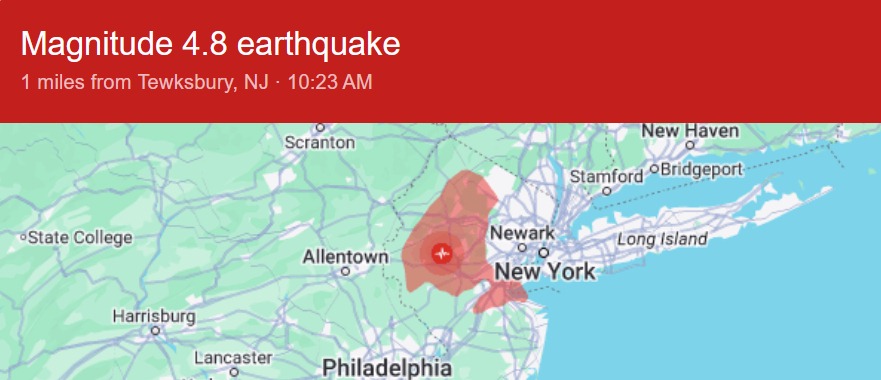
Between April 1 and 4, 2024, Southeastern Pennsylvania experienced another severe weather event attributed to atmospheric rivers and strong winds. Rainfall accumulation exceeded 3 inches, accompanied by wind gusts ranging from 35 to 45 mph. Tragically, two individuals lost their lives in unrelated incidents, one in Montgomery County and the other in Delaware County, when trees collapsed onto their vehicles. Today (Friday April 5) Pennsylvania, New Jersey, and New York experienced a 4.8 magnitude earthquake. Monday is a total eclipse.

This song, “Biblical Baggage,” delves into the tumultuous and uncertain nature of our times, drawing parallels to events of biblical proportions.

[Verse 1] sets the scene with a sense of urgency, describing a day when natural forces wreak havoc, breaking banks and setting new records.

The [Chorus] captures the chaos and devastation unfolding, likening it to a dam breaking, floods flowing, and the Earth shaking, all while humanity remains oblivious to the impending catastrophe.

[Verse 2] portrays the collective uncertainty and vulnerability in the face of such calamities. The imagery of swaying suggests a lack of stability and the looming threat of being swept away by the relentless tide.

The [Bridge] reflects on the toll exacted by nature’s fury, questioning whether humanity will heed the lessons it presents or face dire consequences.

[Verse 3] paints a picture of the magnitude of the events, labeling them quasi-biblical and highlighting the historical significance of our current state of decay.

The [Outro] brings a sense of foreboding, as the sun is eclipsed by the moon, symbolizing an impending darkness amidst the ongoing turmoil of floods, mudslides, earthquakes, and more.

Overall, “Biblical Baggage” serves as a reflection on the precariousness of our existence in the face of natural disasters and the urgent need for awareness and action in the midst of escalating environmental crises.

ABOUT THE SCIENCE
Human-induced climate change is a complex element within a dynamic and interconnected chaotic system. When coupled with other natural phenomena such as earthquakes or solar eclipses, the convergence of factors can create overwhelming compounding effects. Climate change is primarily driven by the escalation of thermal energy affecting biogeophysical and socio-economic systems. While biogeophysical factors can be studied using math, physics, and historical records, socio-economic systems pose greater challenges due to the unpredictable consequences of human behavior and inexplicable consumer choices, exacerbating tipping points and feedback loops.

The Age of Loss and Damage is a new way of thinking about economics by combining economics, climate science, statistics, and physics. Until now, economic models have been unfit to capture the full extent of climate damage. Traditionally, “integrated assessment models” (IAMs) were used to forecast “shock” events. IAMs use “quadratic function” to calculate GDP losses by squaring the temperature change, yet ignore other methods (such as the exponential function) that are better suited for rapid change. “Climate change is fundamentally different to other shocks because once it has hit, it doesn’t go away,” said Thierry Philipponnat, author of a report by Finance Watch, a Brussels-based public interest NGO on financial issues. “And if the fundamental assumption is flawed, all the rest makes little sense — if any.”

Industrial Noize Pollution = The Equation

4D Music: Songs About Science

A song about The Human Induced Climate Change Experiment

bookmark_borderRansom Your Wisdom?

LYRICS
And, then…
Some
Or than?
Sum
Ransom your wisdom?
Sounds dumb
To succumb
But, then…
Will is for free
Freewill will.
Will freewill?
Yet still, freewill won’t get the best of me
But still, freewill won’t get the rest of me
Until freewill
Freewill won’t rule my destiny!?!?!
And, then…
Some
Or than?
Sum
When one is one
When one is won

Unplugged Version Chords: B E / A B E / B7 A G E
Instrumentation: Vocals, Takamine Acoustic Guitar
Recorded at Lake Wynonah, Pennsylvania

Industrial Noize Pollution = The Equation

4D Music: Songs About Science

A song about The Human Induced Climate Change Experiment

bookmark_borderHey, Now!

LYRICS
Hey, now!
And, then…
Hey now
Now and then
When then became when
If only?
Didn’t you see
It happened just now
Somehow…
“Be”‘s so slippery
Future ashore
Passed past
Before the last
Before no more
Let’s live to give
And, love to love

Unplugged Version Chords: F# E / E B F# / D C#7 F#
Instrumentation: Vocals, Takamine Acoustic Guitar
Recorded at Lake Wynonah, Pennsylvania

ABOUT THE SONG
Climate Change: How Long Is “Ever”? Brouse (2023)
The Reign of Violent Rain Brouse and Mukherjee (2023-2024)
The Age of Loss and Damage Brouse (2023)

What Can I Do?
There are plenty of things you can do to help save the planet. Stop using fossil fuels. Consume less. Love more. Here is a list of additional actions you can take.

The Beatless Sense Mongers: We’re Here… Were Here

bookmark_borderSub-straight

(Verse 1)
As the sea levels rise, the world starts to change,
Inland we wonder, how far does it range?
Could saltwater creep into our lakes so vast?
The Great Lakes’ fate, uncertain to last.

(Chorus)
Rising tides, changing scenes,
Violent rains, and what they mean.
From coastal plains to hillsides high,
The earth’s new face, under the sky.

(Verse 2)
Laden speaks of coastal zones explored,
As the waves crash harder on familiar shores.
Cape Cod, a dead-peninsula, facing its fate,
Maine’s silent debate.

(Chorus)
Rising tides, changing scenes,
Violent rains, and what they mean.
From coastal plains to hillsides high,
The earth’s new face, under the sky.

(Bridge)
Brouse shares tales of Pennsylvania’s plight,
Sinkholes, derailments in the dead of night.
Local substrates, a crucial role they play,
In shaping our world, come what may.

(Verse 3)
Floodplains transform, under the rain’s relentless beat,
New culverts form, as streets turn into creeks.
The Gulf Coast braces, from both sides it’s hit,
As violent rain’s reign, shows no sign to quit.

(Chorus)
Rising tides, changing scenes,
Violent rains, and what they mean.
From coastal plains to hillsides high,
The earth’s new face, under the sky.

(Outro)
From Maine’s rocky coast to Pennsylvania’s plains,
The world is changing, under nature’s reigns.
As sea meets rain in a dance profound,
Our planet’s story, in every sound.

Chords: A C E A / A C C A A D A E A / E A7 C B7 E
Instrumentation: Vocals, Takamine Acoustic Guitar
Recorded at Lake Wynonah, Pennsylvania

ABOUT THE SCIENCE
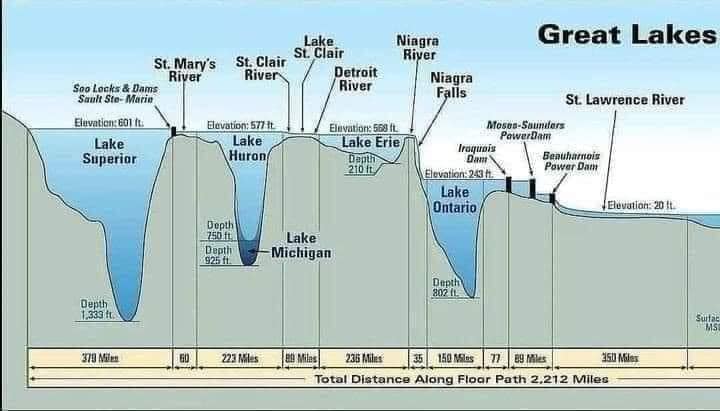
As the sea levels rise, how far “inland” might we see salinization of fresh water? Is it possible saltwater could infiltrate the Great Lakes?


  • Lake Superior has an elevation of 600 feet above (current) sea level and a depth of 1,332 feet.
  • Lake Ontario is 243 feet above sea level with a depth of 802 feet.

The Great Lakes

Greg Laden (an archaeologist who has worked extensively in coastal zones) replied:
Would not reach the Great lakes, but with a little erosion, the Hudson, Lake Champlain, and the St. Lawrence could become contiguous, so New England becomes an Island.

Daniel Brouse:
I am particularly interested in the Kennebecasis River (a tributary of the Saint John River in southern New Brunswick, Canada.) Do you have any thoughts on this process, in particular, the changing topography caused by extreme rain events? You can kind-of imagine Eastern and Western North America as giant beaches with ever increasing atmospheric waves splashing down on us. The Gulf Coast will be hit from both sides. We to see increasing intensity and/or frequency in a wide variety of violent rain events including: downpours, flooding, hurricanes, cyclones, monsoons, coastal flooding, storm surges, lightning and wildfires, hail, extreme wind, and concurrent extremes. The reign of violent rain has already begun. More hillsides and shorelines are collapsing. Atmospheric rivers are dramatically increasing flash flooding in the Northeastern USA. Worldwide, stormwater systems are becoming overwhelmed. Ironically, the streets of Abu Dhabi and Dubai, UAE, flooded days before the COP28 Climate Conference. Nowhere is safe from violent rain, not even in the desert preparing for a UN meeting on the climate crisis. As a result of increasing violent rain, new drainage culverts are forming. Eventually, the culverts will transform into recurring streams, carving new canyons, creating new landscapes and islands. Increased wildfires and landslides will transform topography. At the same time as the violent rain makes its way to the sea, the sea is rising to meet the violent rain. What do you think will happen to the floodplains in North America?

Greg Laden:
I have many thoughts on this, and this has been part of my research and study for a very long time, having done coastal archaeology in North America, etc. The basic question is what is the substrate? Sea level rise of 1 meter in Maine means the sea goes up to the top line that is currently 1 meter above the sea (we are ignoring tides) and that’s it for thousands of years. That is because Maine is made out of granite. Sea level rise of 1 meter along Cape Cod, which is glacial till, means that the sea will erode horizontally many many meters. In fact, Cape Cod is a dead-peninsula walking, even given pre-AGW sea level rise. It will all wash away eventually, except any rocky bits of bedrock that might be there (but they aren’t there AFIK.) So, given that, yes, storms come in to play. The rate of erosion of Cap Cod, to continue with that example, accelerated in about 1979, due to increased severe coastal storms. What happens to a given floodplain will depend totally on local conditions. Many of our floodplains are not that often flooded, especially in glacial zones where they are filled up, and lower reaches of the giant rivers, and there is a lot of infrastructure in place that will initially control things.

Daniel Brouse:
You might be interested in King of Prussia and Plymouth Meeting, PA. The train derailment in Plymouth Meeting (July 17, 2023) was caused by extreme rainfall and flash flooding that resulted in sinkholes developing in the carbonate rock under the railroad tracks. In July and December of 2023, extreme rainfall resulted in sinkholes being exposed in the carbonate rock under Route 202 in King of Prussia, PA. I guess this is part of the local substrate conditions that vary widely from location to location.

Industrial Noize Pollution = The Equation

4D Music: Songs About Science

A song about The Human Induced Climate Change Experiment

bookmark_borderChallenges

LYRICS
Challenges
We’ll prevail
Challenges
Set sail!
For a virgin see/sea

Emergency

If they’re here to stay
I’m hear to sway
Today’s the day

Chords: B A E / E C B7 E / G A A G E
Instrumentation: Vocals, Takamine Acoustic Guitar
Written and recorded at Lake Wynonah, Pennsylvania

bookmark_borderThe Equation: Part IV

(Verse 1)
In the realm of nature’s laws, we find our place,
As humans alter the world, at a rapid pace.
Newton’s second law, it rings so true,
As we increase the energy, our actions accrue.

(Chorus)
Force equals mass times acceleration,
In this world of change, our transformation.
From rising seas to violent rain,
The damage grows, with every gain.

(Verse 2)
Acceleration formula, it holds the key,
To understand the changes, that we now see.
As data reveals, a doubling trend,
In climate’s grip, we must contend.

(Chorus)
Force equals mass times acceleration,
In this world of change, our transformation.
From rising seas to violent rain,
The damage grows, with every gain.

(Bridge)
The rate of acceleration, it’s on the rise,
As sea levels climb, under ominous skies.
From 100 years to a mere 10,
The doubling period, shortens again.

(Verse 3)
The reign of violent rain, it sweeps the land,
As we alter the climate, with our human hand.
The damage mounts, with every storm,
As acceleration’s force takes form.

(Chorus)
Force equals mass times acceleration,
In this world of change, our transformation.
From rising seas to violent rain,
The damage grows, with every gain.

(Outro)
So heed the warning, in nature’s call,
For the force we wield, impacts us all.
In the equation of life, let’s find our grace,
And navigate the changes, with wisdom and pace.

Chords: F Bb Db Eb F / F/7 F Bb Eb Ab F F Db Eb F / F C F
Instrumentation: Vocals, Takamine Acoustic Guitar
Recorded at Lake Wynonah, Pennsylvania

ABOUT THE SCIENCE
By increasing the energy in the system, humans have increased flow volumes, masses and velocities leading to increased damage (and deaths.)

Newton’s second law: F = m * a
F = force
m = mass of an object
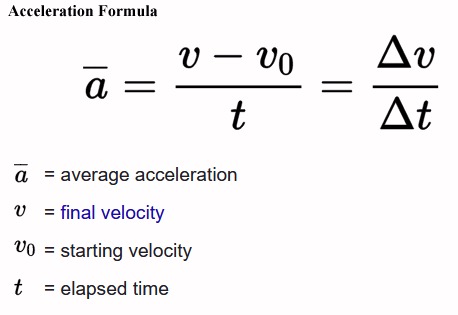
a = acceleration

Acceleration Formula

ALSO SEE
Climate Change: Rate of Acceleration
By 2020, there was enough data to see the “doubling period” of some anthropogenic climate affects had gone from 100 years to 10 years. For instance the rate of sea level rise has gone from about 1.5 millimeters per year to over 3 millimeters. We expect to see the doubling period to continue to shrink raising the possibility of sea levels rising a foot/year by 2050.

The Reign of Violent Rain

4D Music: Songs About Science

A song about The Human Induced Climate Change Experiment

bookmark_borderThe Equation: Part III

(Verse 1)
Turbulence, it’s chaos unfurled,
The hardest problem, in this vast world.
The Professor speaks, of skies in turmoil,
As climate shifts, it doubles the coil.

(Chorus)
Turbulence, it’s on the rise,
In wind and water, where chaos lies.
From Lahaina’s flames to Norway’s floods,
Turbulence, it shakes our blood.

(Verse 2)
Maui’s wildfire, a scene of despair,
Fanned by winds, hurricane’s flare.
Streets ablaze, with scorching heat,
As Lahaina’s heart, faced defeat.

(Chorus)
Turbulence, it’s on the rise,
In wind and water, where chaos lies.
From Lahaina’s flames to Norway’s floods,
Turbulence, it shakes our blood.

(Bridge)
Flashpoints ignite, with a fiery blast,
As people flee, into the ocean vast.
But water, too, joins in the fray,
With waves that tear, and claim their way.

(Verse 3)
Norway’s floods, a tale of woe,
As dams burst open, the waters flow.
Homes washed away, in torrents wild,
As nature’s fury, leaves hearts beguiled.

(Chorus)
Turbulence, it’s on the rise,
In wind and water, where chaos lies.
From Lahaina’s flames to Norway’s floods,
Turbulence, it shakes our blood.

(Outro)
In the dance of chaos, we find our plight,
Turbulence grows, with all its might.
But in the face of turmoil, we’ll stand tall,
For together, we’ll weather, through it all.

Chords: A Bb A G F# E / E A C G A / D C A / C E A
Instrumentation: Vocals, Takamine Acoustic Guitar
Recorded at Lake Wynonah, Pennsylvania

ABOUT THE SCIENCE
Turbulence
Professor Paul D. Williams of the University of Reading, UK, said, “They are chaotic. Turbulence is known famously as the hardest problem in physics.” In their study Evidence for Large Increases in Clear-Air Turbulence Over the Past Four Decades, Prof. Williams and his team found “Climate change has caused turbulence to double in the last 40 years” and is expected to double or triple again in the next decades.

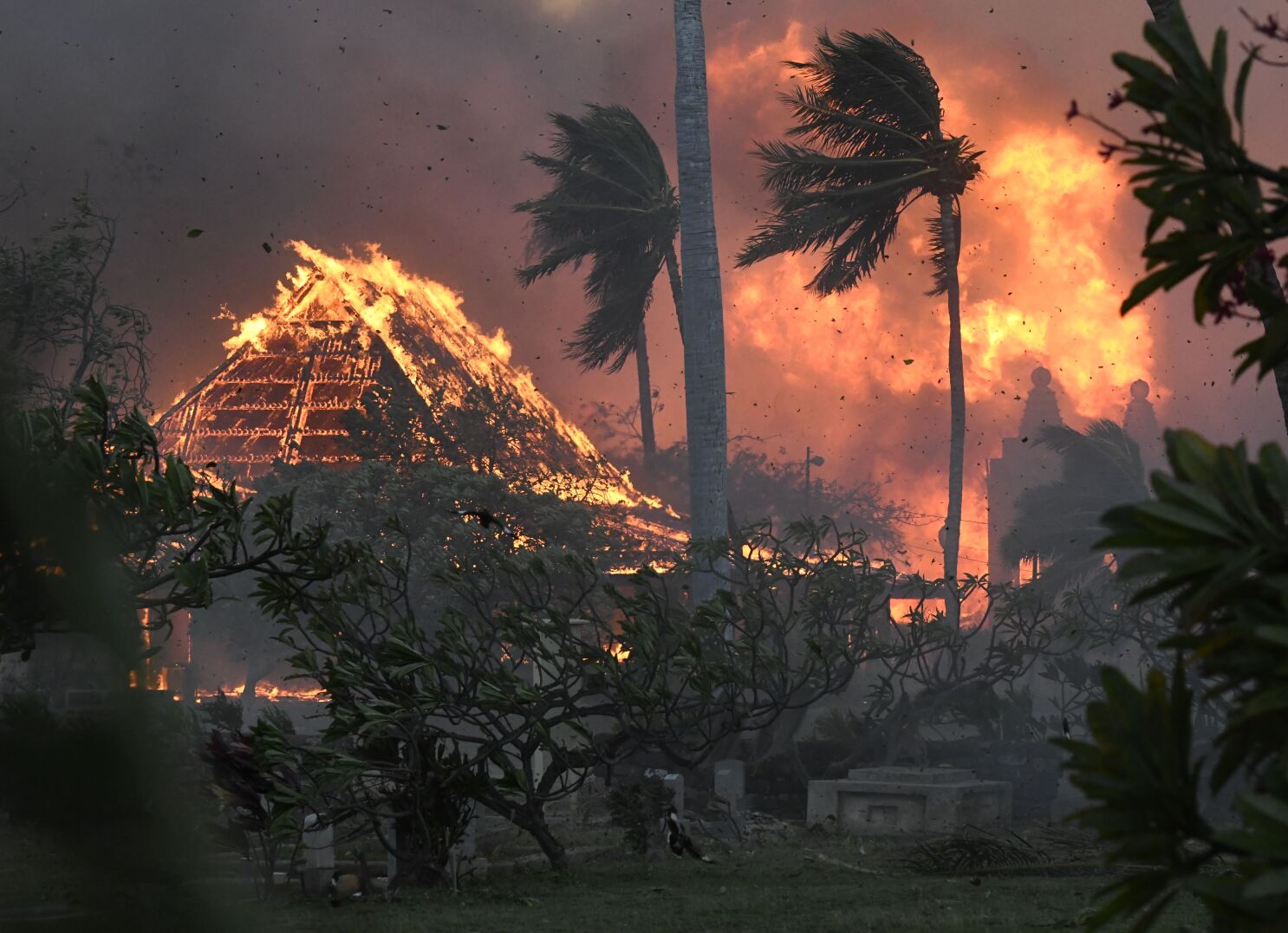
The hall of historic Waiola Church in Lahaina and nearby Lahaina Hongwanji Mission are engulfed in flames along Wainee Street on Tuesday, Aug. 8, 2023, in Lahaina, Hawaii. (Matthew Thayer/The Maui News via AP)

Update — Climate change’s influence on wind and water flow forces caused more severe damage and deaths. The Maui wildfire of August 2023 is an example. What would have been a fairly routine wildfire was fanned out-of-control by hurricane force winds. One headline read, “Maui fires: Hawaii blazes fanned by Hurricane Dora”. Another headline read, “Hawaii wildfires kill as ‘apocalypse’ hits Maui island”. The New York Times reported, “Gov. Josh Green of Hawaii said on Thursday that the devastating wildfires that swept through western Maui and killed at least 55 people, and possibly many more, were ‘likely the largest natural disaster in Hawaii state history.'”

Both wind and water flow forces contributed to the devastation. Hurricane Dora was at least 500 miles from Hawaii yet the wind forces impacted the fire in Maui. The winds were so strong that before the fire reached Lahaina extremely hot air blew over the town. The streets were so hot they burnt people’s feet trying to flee. The surface of everything became hot. Even after people jumped into the ocean, they said the debris in the water was too hot to float on. Almost all the boats in the harbor burned.

The blast of hot air over Lahaina created the conditions for a flashpoint. A flashpoint is the temperature at which a particular organic compound gives off sufficient vapor to ignite in air. The entire town ignited so quickly that warning sirens could not be activated and people did not have time to escape.

In an unexpected twist, water flow forces also contributed to the chaos. How could water flow add to the fire emergency conditions? When people fled the heat and fire, they jumped into the sea. ABC news reported: Shawn Dougherty, of Lahaina, was among the hundreds of residents forced to flee the resort city when the wildfire began engulfing their homes.

Like others, Dougherty said his only means of survival was to jump into the ocean with his girlfriend, but while some found safety in nearby jetties, the rocks and coral tore up Dougherty’s body.

“At one point, it seemed like I might drown,” he told ABC News. “I’m a good swimmer, but the water was just really rough because of the wind and the turbulence.”

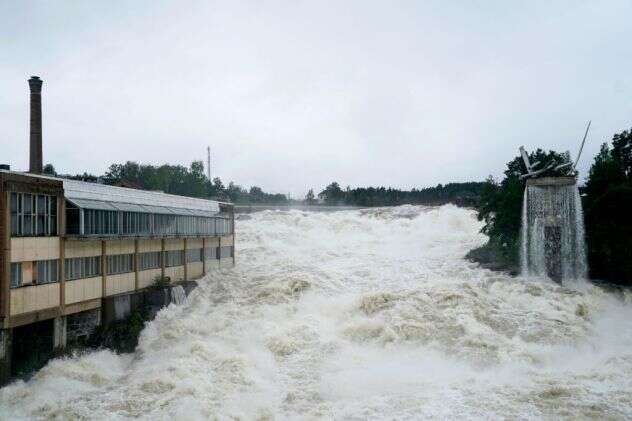
Norway Floods 2023

Also in August of 2023, climate change’s influence on water flow forces caused more severe damage and deaths. AccuWeather reported, “Dam bursts open as deadly flooding washes away homes in Norway. Torrents of water gushed through multiple towns across Norway and landslides cascaded down mountainsides after a deluge drenched Norway.”

4D Music: Songs About Science

A song about The Human Induced Climate Change Experiment

bookmark_borderThe Equation: Part II

(Verse 1)
In the whirlwind of change, we find our fate,
Force proportional, contemplate.
Density times velocity, squared in air,
The drag equation, tells us what’s there.

(Chorus)
Velocity squared, a powerful force,
In the wind water’s relentless course.
As climate shifts, and speeds increase,
The damage grows, without release.

(Verse 2)
A ten-mile breeze, seems gentle and mild,
But square that velocity, see it compiled.
Twenty miles an hour, brings four times the might,
And as it doubles, the force takes flight.

(Chorus)
Velocity squared, a powerful force,
In the wind and water’s relentless course.
As climate shifts, and speeds increase,
The damage grows, without release.

(Bridge)
Water denser than air, eight hundredfold,
The force of its flow, a story untold.
As rivers rage and oceans churn,
The drag equation, we must discern.

(Verse 3)
Floods and storms, they testify,
To the power of force, as they amplify.
Sewage systems crumble, hillsides succumb,
As velocity rises, the damage becomes numb…
Damn-age becomes numb

(Chorus)
Velocity squared, a powerful force,
In the wind and water’s relentless course.
As climate shifts, and speeds increase,
The damage grows, without release.

(Outro)
So heed the lesson, the drag equation’s call,
In the face of change, we must stand tall.
For as velocities rise, and forces collide,
The future’s in our hands, where hope resides.

Chords: F# E E D F# / F# D E F# / outro F# D C#7 F#
Instrumentation: Vocals, Takamine Acoustic Guitar, Percussion
Written and recorded at Lake Wynonah, Pennsylvania

ABOUT THE SCIENCE
ChatGBT co-authored the lyrics utilizing this part of a research paper:
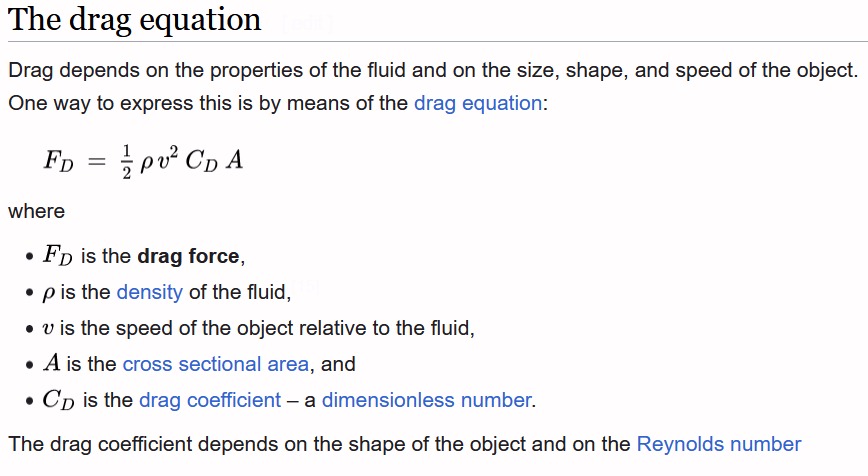
You will see that force is proportional to density times square of velocity (v^2)

The Drag Equation
So a twenty mile an hour wind exerts four times as much force as a ten mile an hour wind. And a forty mile an hour wind exerts sixteen times as much force as a ten mile an hour wind. A wind of fifty miles an hour exerts twenty five times and a wind of sixty miles an hour exerts thirty six times as much force as one of ten miles an hour. Then you have the density term. Water is about eight hundred times denser than air, So the force exerted by a ten mile an hour flow of water is eight hundred times that of a ten mile an hour wind. So as flow velocities go up due to climate change, force and damage scale as square of the velocities. What is not clear is how much these velocities increase with climate change. But in a sense we are seeing this already as, for example, flood and sewage systems succumb and hillsides fall down, and so on.

4D Music: Songs About Science

A song about The Human Induced Climate Change Experiment

bookmark_borderThe Equation: Part I

(Verse 1)
For decades now, I’ve been pondering,
The global warming formula, inside my mind wandering.
Human-induced change, an exponential part,
In an unordered system, chaos rules the chart.

(Chorus)
Acceleration, tipping points, feedback loops abound,
In this chaotic dance, our fate is found.
From the domino to the snowball’s roll,
In this whirlwind of change, we find our role.
In rock n’ roll
Find our role
Knock and know all

(Verse 2)
Complex equations, too vast to write,
But I’ll jot down a part, in the dimming light.
Tipping points and feedback loops, they steer the course,
Determining the rate, of climate’s force.
Of course,
Climate’s force
(Chorus)
Acceleration, tipping points, feedback loops abound,
In this chaotic dance, our fate is found.
From the domino to the snowball’s roll,
In this whirlwind of change, we find our role…

(Bridge)
Earth spins in a vortex, a cosmic whirl,
As we accelerate, our destiny unfurl.
The motion of time, in a turbulent sea,
Momentum’s impact, on you and me…
To be
Or not to be?
To be

(Verse 3)
Violent weather events, wreaking havoc’s might,
As momentum grows, in the dark of night.
Floods, storms, and hurricanes, they rage and spin,
As the planet’s pulse quickens, under chaos’ din.

(Chorus)
Acceleration, tipping points, feedback loops abound,
In this chaotic dance, our fate is found.
From the domino to the snowball’s roll,
In this whirlwind of change, we find our role.

(Outro)
So let’s ponder the equations, the theories, the fray,
In this spiral of change, let’s find a new way.
To slow down the momentum, without haste or fear,
For in this dance of chaos, our path becomes clear.

Chords: D C G D / C Em Am / D / D Db D / D Am / C Em Am / D / D C Am
Instrumentation: Vocals, Takamine Acoustic Guitar
Recorded at Lake Wynonah, Pennsylvania

THE SCIENCE
ChatGBT co-authored the lyrics utilizing this part of a research paper:

I’ve been thinking about the giant global warming formula that has been formulating in my head for the last few decades.

Human induced climate change is an exponential component of an unordered system (chaos theory). Our climate model uses chaos theory in an attempt to adequately account for humans and forecasts a global average temperature increase of 9 degrees Celsius above pre-industrial levels.

Though the equation is complex… too complicated to write down….
I’ve lately begun considering trying to write down a small part of it: Tipping points and feedback loops are parts of an equation that determine the rate of acceleration in climate change.

What do you think about this?
t = tipping point
f = feedback loop
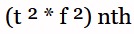
(t ² * f ²) nth

or

the domino effect * the snowball effect:

(h cos α−(s+d)sin θi+1) * a(1 + r) x

Acceleration, tipping points etc. I know that no simple formula exists for any of these. The reason you can’t write a formula is because they are chaotic systems. Chaos theory is the study of unordered systems; however, trying to write it down helps me quantify what I see in my mind’s eye.

These formulas have similarities to acceleration formulas we imagined in 1995:

Abstract
Earth is in a space-time continuum similar to the vortex of a flushing toilet.

if acceleration = velocity/time
and v = speed of light = 2.9979*10^8 m/s
and for the sake of argument we are accelerating at pi (rounded to 15 decimal places) m/s^2
then time = 95426120.77903860 seconds (rounded to 16 significant digits)
= 1104.468990498130 days
= 3.025942439720910 years = roughly 3 years + 9.5 days as relative to the rotation and revolution of the planet earth.

Important note: this is motion at constant speed in a circle. So the speed of light isn’t changing but the direction of motion is, so there is acceleration (= change in velocity, not speed is the acceleration. Velocity has a direction as well as a magnitude, it is a vector, not a scalar like speed.)

a couple other fundamental physical constants to contemplate:
permitivity of free space = 8.854*10^(-12) C^2/(N*m)
permeability of free space = 4(pi)*10^(-7) Wb/(A*m)

SIDD: The tricky part is… you cannot maintain a constant acceleration like pi m/s^2 on a massive body.

In 2023 Sidd added:
On another note, regarding the permeability mu and permittivity epsilon
… those are deeply related to the speed of light thru maxwell’s equations
c=1/sqrt(mu*epsilon)

As for deep contemplation, let me see, in terms of formal schooling
I deeply contemplated those for two years in undergraduate
and about a year and a half in grad school … made my head very pointy.

Conclusion:

Human induced climate change is an exponential component of an unordered system (chaos theory). That means global warming is accelerating at a rapid rate in a complex way — a climate crisis.

Additional Notes

I ask Sidd:
… and what does the answer mean?
” 3.025942439720910 years = roughly 3 years + 9.5 days as relative to the rotation and revolution of the planet earth”

Is it the Earth’s rotation in the flow of the vortex?

Sidd replied:
The answer doesn’t mean very much… for example the speed we chose is c,
but nothing except light moves at speed c, and we know that neither earth nor
any material object can move or does move at speed c … so that answer
isn’t too useful

I think we just intended to show a calculation and people can plug in their own, hopefully more realistic numbers

Then, I recalled:
At the time we were working on a couple of concepts. One had to do with the momentum of humankind. The other had to do with the perception of time as environmental conditions deteriorate. (As 500 year floods become 100 year floods, then 100 year floods become 10 year floods, how will we perceive time? Will it be similar to a mass moving toward the center of a vortex?)

So yes… what you did was get me thinking about the rate of acceleration in global warming…
it’s kind-a like we are spiraling out-of-control faster and faster.. as if in a vortex… and…
how climate change is a vector (not a scalar like speed.)

… which got me thinking a lot more about the energy in the whole system moving around… not just as heat.

As an example, in the first 6 months of 2023 there were 15 confirmed weather/climate disaster events with losses exceeding $1 billion each to affect United States. These events included 1 flooding event, 13 severe storm events, and 1 winter storm event.

None of these events were directly related to heat. Almost all of the events were caused by violent weather. Momentum caused the most damage. (Also see: A Hard Rain Is Falling)

Which reminded me of what started us on this study… what we were working on at the time and still are…
*How to change the momentum of the human race and climate change without going any faster.*
…like a big ship heading for a waterfall…
and all the crew and engine working at full steam could not go any faster to reverse direction
So we created one of the first www games… this was/is the final anti-IQ pop quiz question:

“What are at least two (2) ways that you can increase your momentum, without increasing your speed?”
Hint: Momentum is equal to mass x velocity (p=mv).

Technically Speaking, It’s Not the Momentum That Kills You

It’s not the fall that kills you; it’s the sudden stop at the end.

Technically speaking it is the impact from the momentum that causes damage and deaths. Global warming causes an increase in mass and/or velocity (momentum) of things that are mass flow driven by heat, like wind and flood.

The burning of fossil fuels and other human released emissions have impacted momentum’s impact. A warmer atmosphere can hold more moisture. Warmer air allows for the creation of more massive raindrops. Warmer ocean temperatures create stronger hurricanes. Hail and tornadoes form in strong thunderstorm clouds with intense updrafts, high liquid-water content, and large water droplets.

Sidd added: It’s worse than that. Wind and water flow forces scale as the square of velocity, so as flow speeds increase (say due to more intense heating or heavier rain) the damage scales as the square of the velocity.

About “square of the velocity”, I asked Sidd: is this Bernoulli’s Equation?
4D Music: Songs About Science

A song about The Human Induced Climate Change Experiment

bookmark_borderI’m Alive

LYRICS
I’m alive
In pursuit of thrive
So I strive
To help others revive
Drive
To stay alive
Where’s your drive
To stay alive?
Drive
To stay alive
And good fortune will arrive

I’m alive
In pursuit of thrive
So I strive
To help others revive
Drive
To stay alive
Where’s your drive
To stay alive?
Drive
To stay alive
Get ready. Get set. Dive!

I’m alive
In pursuit of thrive
So I strive
To help others revive
Drive
To stay alive
Where’s your drive
To stay alive?
Drive
To stay alive
All ready. We will survive!

Chords: E / A C E / E A / E A C B7 E; Part II @ 128 Beats Per Minute
Instrumentation: Vocals (TC-Helicon VOICELIVE and MiniNova Vocorder), Ibanez Acoustic Guitar (AW54CE), Ibanez Electric RG-270 (Vox ToneLab and Boss Digital Delay), Fender Jazz Bass (Boss Digital Delay), Keyboards (Korg PS60, Casio WK-3500, Yamaha PSR-740, MiniNova, MicroKorg)

bookmark_borderA Tale of Intensification

LYRICS
In the East, where rivers flow in the sky,
Violent rains, historic floods pass by.
Canada’s hurricanes break records, so they say,
While Florida, Carolina, and South’s bill to pay.

(Chorus)
Atmospheric rivers, they twist and they bend,
From West to East, they shape our end,
Gaze as they dance, a meteorological blend,
Change our world, from beginning to end.

(Verse 2)
Traditionally, they whispered on the West’s breeze,
But now, the East feels their force with ease.
Meteorologists puzzled, but now they see the light,
As ARs carve their path, day and night.
(Chorus)
(Bridge)
NOAA nods, recognizing the trend,
PNA patterns, a message they send.
ARs in the East, not just a myth,
Their frequency rising, a climatic shift.

(Verse 3)
A tale of intensification, ARs amplify,
Affecting the northeast, where the sea meets the sky.
From Washington to Maine, the risks do grow,
As coastal lows brew, and nor’easters blow.
(Chorus)

(Outro)
Climate change, an urgent call,
ARs gaining strength, the sea levels tall.
We’re witnessing changes, too fast to comprehend,
As atmospheric rivers reshape, our world’s bend.

Chords: G# G F# / B D F# / F# B D / B E B / B F# D# F# B; Part II Rock Shuffle / Shuffle Rock @ 126 Beats Per Minute
Instrumentation: Vocals (TC-Helicon VOICELIVE and MiniNova Vocorder), Ibanez Acoustic Guitar (AW54CE), IKeyboards (Korg PS60, Casio WK-3500, Yamaha PSR-740, MiniNova, MicroKorg)

ABOUT THE SCIENCE & SONG
ChatGBT co-authored the lyrics using this section of our research paper:

The Eastern US is already seeing violent rain events as far inland as Kentucky with historic flooding in both 2022 and 2023. Eastern Canada has experienced its worst hurricanes on record. Florida, South Carolina, and North Carolina have suffered billions of dollars in storm damage. Homeowners insurance is becoming increasing difficult to obtain in Florida.

Traditionally, atmospheric rivers (AR) in the United States have been linked to the West Coast. However, there is now growing recognition of AR activity on the East Coast. “In reality, their frequency hasn’t necessarily increased. Meteorologists have been using the term for decades; it’s simply gained popularity in the media, much like the polar vortex,” explained Jeff Boyne, meteorologist and climatologist at the National Weather Service. Indeed, according to Jason Cordeira, associate professor of meteorology at Plymouth State University, “Atmospheric rivers are more common on the East Coast than on the West Coast, although they tend to be less impactful and produce lower rainfall amounts.”

In March 2024, NOAA and the National Weather Service finally recognized the heightened frequency of East Coast Atmospheric Rivers occurrences, attributing them primarily to the recent shifts in the Pacific/North America (PNA) teleconnection pattern. This shift is accompanied by a northward movement of the midlatitude jet stream. ARs in the Eastern US have received relatively little attention despite their frequent occurrence and significant impact on heavy precipitation and severe weather events. The authors conducted a comprehensive study on wintertime AR frequency over the Eastern US spanning four decades, utilizing multiple observations and a state-of-the-art high-resolution climate model (AM4) developed at GFDL. Their findings reveal a notable rise in AR frequency over the Eastern US during this timeframe. NOAA’s report reaffirmed these findings, emphasizing the confirmed linkages with the PNA pattern across diverse scenarios, highlighting the crucial role of the PNA pattern in influencing AR variability.

There is increasing research into the types and intensification of East Coast AR events. The US Fourth National Climate Assessment highlights a substantial increase in heavy precipitation events in the Northeast, particularly between 1958 and 2012, with ongoing projections indicating further rises in precipitation, notably during winter and spring and in northern areas of the region.

Many types of East Coast ARs are intensifying, likely as a result of climate change. A study titled “Identifying Eastern US Atmospheric River Types and Evaluating Historical Trends” notes, “The increased moisture transport could have significant implications across the northeast corridor from Washington D.C. to Coastal Maine, heightening the risk of extreme precipitation from landfalling ARs. The study reveals that most ARs in the region are induced by extratropical cyclones, with lee side low pressure systems and coastal lows along the Atlantic Coast (e.g., nor’easters) being responsible for generating the strongest ARs.”

Climate change is anticipated to bring complex and potentially substantial impacts to both the Atlantic Meridional Overturning Circulation (AMOC) and atmospheric rivers along the East Coast of the USA. The AMOC interacts with atmospheric circulation patterns, including the positioning of the jet stream. Changes in the AMOC can influence the behavior of the jet stream, which, in turn, affects the formation and path of atmospheric rivers. The jet stream plays a crucial role in steering weather systems and atmospheric rivers.

How Fast Are Atmospheric Rivers Gaining Frequency and Intensity?
While the rate of change in the intensity, duration, and likelihood of climate disasters varies depending on the type of extreme weather, insights from events like the Canada wildfires of 2023 offer valuable perspective. According to the World Weather Attribution Organization, “Climate change amplified the cumulative severity of Quebec’s 2023 fire season up to the end of July by approximately 50%, and seasons of this severity are now at least seven times more likely to occur.” Similar trends may be observed in other catastrophic events such as hurricanes, heatwaves, droughts, floods, tornadoes, sea level rise, and atmospheric rivers.

According to a NASA-led analysis, global average sea level rose by approximately 0.3 inches (0.76 centimeters) from 2022 to 2023. When our paper, “Climate Change: Rate of Acceleration,“ was authored in 2023, the swift acceleration of this trend was unforeseen. Initially projected to double over 100 years, the rate of sea level rise dramatically escalated, shortening the doubling period to just 10 years by 2020. Recent observations suggest a further compression of this doubling period to a mere 2 years, raising significant concerns. It is imperative to acknowledge and address this alarming trend, hoping it is not indicative of a new norm but rather an anomaly.

Some areas of the world are now warming so fast, it is becoming more difficult to measure the change from “normal” or average. Jeff Boyne of the NWS said, “There are climate normals that are updated every 10 to 15 years, because the planet is warming so fast. The ENSO (El Nino-Southern Oscillation) regions are warming so fast that those normals are being updated every 5 years.” “It’s so far outside anything we’ve seen, it’s almost mind-blowing,” says Walter Meier, who monitors sea-ice with the National Snow and Ice Data Center. “September was, in my professional opinion as a climate scientist, absolutely gobsmackingly bananas,” said Zeke Hausfather, at the Berkeley Earth climate data project.”

4D Music: Songs About Science

A song about The Human Induced Climate Change Experiment

bookmark_borderForest Green

LYRICS
(Verse 1)
As forest green fades from the scene,
Is it from the soil, beginning to spoil?
The naked eye can’t perceive,
The microbial community, retreating as we grieve.

(Chorus)
Desertification, soil degradation,
An explosion of erosion, washing hopes away.
Oh, the sheer severity, loss of biodiversity,
More vulnerability, from the primate climate.
Change, change
So strange
Climate change
So strange

(Verse 2)
In the breakdown, receding in feeding,
The breakdown’s breakdown, silently bleeding.
Each grain of soil tells a story untold,
Of ecosystems lost, and futures foretold.

(Chorus)
Desertification, soil degradation,
An explosion of erosion, washing hopes away.
Oh, the sheer severity, loss of biodiversity,
More vulnerability, from the primate climate.

(Bridge)
The earth beneath our feet, crumbling away,
As we pave the path, for our own dismay.
The cycle disrupted, nature’s song in discord,
Leaving us vulnerable, to the climate’s sword.
Oh, Lord!
Heard the word?
Absurd

(Verse 3)
With each loss, a ripple in time,
Echoes of the past, a warning sign.
Yet in the chaos, there’s still a chance,
To mend the soil, with our hands.

(Chorus)
Desertification, soil degradation,
An explosion of erosion, washing hopes away.
Oh, the sheer severity, loss of biodiversity,
More vulnerability, from the primate climate.

(Outro)
Let’s heed the call, before it’s too late,
Restore the soil, and alter our fate.
For in the earth’s embrace, lies the key,
To a future where life thrives, abundantly free.

Chords: Am FD C Am / Am Em AM / C B7 Em / Em G Em / Am G Em / Em C B7 Em / Am; Part II Hard Rock / Heavy Metal @ 122 Beats Per Minute
Instrumentation: Vocals (TC-Helicon VOICELIVE and MiniNova Vocorder), Ibanez Acoustic Guitar (AW54CE), Keyboards (Korg PS60, Casio WK-3500, Yamaha PSR-740, MiniNova, MicroKorg)

ABOUT THE SONG
This song serves as a poignant commentary on the devastating impact of climate change on soil health and biodiversity, urging listeners to recognize the urgent need for action and restoration.

(Verse 1)
The imagery of “forest green fades from the scene” captures the loss of lush ecosystems due to soil degradation, hinting at the root cause lying within the soil itself. The mention of the “microbial community” highlights the intricate web of life within the soil, now threatened and receding, leading to a sense of grief and loss.

(Chorus)
“Desertification, soil degradation” and “an explosion of erosion” paint a grim picture of the consequences of neglect and exploitation of the soil. The severity of these impacts is underscored by the “loss of biodiversity” and increased vulnerability stemming from the changing climate, emphasizing the interconnectedness of soil health and ecosystem resilience.

(Verse 2)
The metaphor of “the breakdown’s breakdown, silently bleeding” conveys the gradual but pervasive nature of soil degradation, with each component of the soil ecosystem suffering in turn. The “story untold” within each grain of soil symbolizes the rich history and potential future of ecosystems lost to degradation and neglect.

(Bridge)
The bridge serves as a sobering reflection on the consequences of human actions, as the earth beneath our feet crumbles away under the weight of exploitation and disregard. The disruption of the natural cycle and discord in “nature’s song” emphasize the urgent need for stewardship and restoration efforts.

(Verse 3)
Despite the bleakness of the situation, the song offers a glimmer of hope, highlighting the opportunity for redemption and renewal. Each loss serves as a reminder of the fragility of ecosystems and the importance of proactive measures to mend and restore the soil for future generations.

(Outro)
The outro carries a message of urgency and responsibility, urging listeners to heed the call to action before it’s too late. The key to a thriving future lies in restoring and nurturing the soil, paving the way for a world where life can flourish abundantly once again.

ABOUT THE SCIENCE
Soil plays a crucial role in climate change mitigation and adaptation, and soil degradation can contribute to the process of desertification. Here’s why soil is integral to climate change and how soil degradation can lead to desertification:

Importance of Soil in Climate Change:

  1. Carbon Sequestration:
    • Healthy soils act as a significant carbon sink, storing large amounts of carbon in the form of organic matter. This process, known as carbon sequestration, helps mitigate climate change by reducing the concentration of greenhouse gases, particularly carbon dioxide (CO2), in the atmosphere.
  2. Water Regulation:
    • Soil influences water availability and regulates the water cycle. Healthy soils absorb and store water, reducing the risk of floods and contributing to moisture availability during dry periods. This capacity for water regulation is crucial for climate resilience.
  3. Biodiversity Support:
    • Healthy soils provide habitat and support for a diverse range of organisms, including bacteria, fungi, insects, and plant roots. Biodiversity in the soil contributes to ecosystem stability, resilience, and adaptation to changing environmental conditions.
  4. Nutrient Cycling:
    • Soil is essential for nutrient cycling, as it hosts microbial communities that break down organic matter and make nutrients available to plants. This nutrient cycling supports plant growth and contributes to overall ecosystem health.

Soil Degradation and Desertification:

  1. Erosion:
    • Soil degradation, often caused by factors like deforestation, overgrazing, and unsustainable agricultural practices, can lead to increased soil erosion. Erosion removes the topsoil layer, which is rich in organic matter and nutrients, reducing the soil’s fertility and water retention capacity.
  2. Loss of Soil Structure:
    • Poor land management practices, such as excessive plowing, deforestation, and improper irrigation, can lead to the loss of soil structure. This makes the soil more susceptible to erosion, reduces water infiltration, and hinders the growth of vegetation.
  3. Decreased Carbon Sequestration:
    • Soil degradation results in the loss of organic matter, reducing the soil’s ability to sequester carbon. This can contribute to increased atmospheric CO2 levels, exacerbating the greenhouse effect and climate change.
  4. Loss of Biodiversity:
    • Degraded soils often experience a decline in microbial and plant diversity. This loss of biodiversity weakens the soil’s resilience to environmental stresses and reduces its capacity to support healthy ecosystems.
  5. Increased Vulnerability to Climate Change:
    • Degraded soils are more vulnerable to the impacts of climate change, such as extreme weather events, droughts, and temperature variations. This vulnerability can create a feedback loop, where climate change further exacerbates soil degradation.
  6. Desertification:
    • Desertification is the process by which fertile land becomes increasingly arid and unproductive, eventually turning into desert-like conditions. Soil degradation, through erosion, loss of organic matter, and reduced water retention, is a key driver of desertification.
  7. Impact on Livelihoods:
    • Desertification poses a threat to agricultural productivity, water resources, and local livelihoods. It can lead to the displacement of communities and exacerbate social and economic challenges, contributing to a cycle of poverty and environmental degradation.

Addressing soil degradation is crucial for sustainable land management, climate change mitigation, and the prevention of desertification. Implementing conservation practices, agroforestry, reforestation, and sustainable agriculture techniques can help restore and protect soils, contributing to climate resilience and biodiversity conservation.

Create a sustainable and climate-resilient environment in and around your home and prevent soil degradation.
Protect Your Home: Violent Rain and Stormwater Runoff
Flood Insurance
Climate Change: What Can I Do?

Tree Extinction Due to Human Induced Environmental Stress

Chaos Theory and Climate Systems

Climate Change: Rate of Acceleration

The Human Induced Climate Change Experiment

bookmark_borderRace to the Bottom

LYRICS
(Verse 1)
A leaf and a feather, together they glide,
Downward they race, in nature’s wide stride.
Forces unseen, but ever so sound,
Slow their descent, as they twirl around.

(Chorus)
The gravity of the situation weighs them down,
But the levity of friction keeps them bound.
Prolonging their journey with each interaction,
An addition addiction, a natural attraction.

(Verse 2)
Resistance as thin as air, yet still they sway,
Through the sky they dance, in their elegant way.
Some may call it a drag, a force unseen,
But others see it as a lucky snag, in nature’s serene.

(Chorus)
The gravity of the situation pulls them near,
But the levity of friction keeps them clear.
Prolonging their journey with each reaction,
An attraction addiction, a natural attraction.

(Bridge)
Overcoming the sense of dense, they gracefully fall,
In an utter flutter, embracing Her call.
It’s gravity’s recompense, as they drift,
The thought of impact makes our spirits lift.

(Verse 3)
A leaf and a feather, united they soar,
Through opposing forces, they explore.
In the dance of gravity and drag, they find,
A harmony of forces, in the boundless mind.

(Chorus)
The gravity of the situation, the levity of the friction,
In this cosmic dance, there’s no restriction.
Prolonging their journey with each interaction,
An attraction addiction, a natural attraction.

Chords: Em / D C Em / Em G D C Em / Em C B7 Em / Em D Em; Part II 8 Beat Soft / 16 Beat @ 100 Beats Per Minute
Instrumentation: Vocals (TC-Helicon VOICELIVE and MiniNova Vocorder), Ibanez Acoustic Guitar (AW54CE), Ibanez Electric RG-270 (Vox ToneLab and Boss Digital Delay), Keyboards (Korg PS60, Casio WK-3500, Yamaha PSR-740, MiniNova, MicroKorg)

ABOUT THE SONG
This song serves as a metaphorical exploration of the interplay between gravity and drag, using the imagery of a leaf and a feather falling through the air.

(Verse 1)
The opening verse describes the gentle descent of a leaf and a feather, highlighting the subtle forces at play in their fall. Despite being unseen, these forces, gravity and drag, have a profound effect on their journey, slowing their descent as they twirl gracefully through the air.

(Chorus)
The chorus juxtaposes the weight of gravity with the boundless nature of friction, emphasizing how these opposing forces work together to shape the trajectory of the leaf and feather. Each interaction prolongs their journey, creating a sense of harmony and inevitability in their descent.

(Verse 2)
In the second verse, the thin resistance of air is acknowledged, adding complexity to the fall of the leaf and feather. While some may perceive drag as a hindrance, others recognize its role in maintaining balance and stability, akin to a fortunate encounter rather than an obstacle.

(Chorus)
The chorus reaffirms the dynamic relationship between gravity and friction, illustrating how they cooperate to guide the leaf and feather on their descent. Despite the pull of gravity, the presence of friction ensures a controlled and steady fall, prolonging their journey through the sky.

(Bridge)
The bridge captures the grace and beauty of the leaf and feather’s fall, as they gracefully navigate through the forces of nature. It highlights the inherent balance and harmony in their descent, reinforcing the idea of a natural order governed by the laws of physics.

(Verse 3)
In the final verse, the leaf and feather symbolize unity and exploration as they navigate through the opposing forces of gravity and drag. Their fall becomes a metaphor for the larger cosmic dance of the universe, where harmony is found in the interaction of contrasting elements.

(Chorus)
The closing chorus celebrates the cosmic dance between gravity and friction, recognizing their essential roles in shaping the journey of the leaf and feather. It underscores the idea that in this dance, there are no restrictions, only a profound sense of interconnectedness and natural attraction guiding their descent.

ABOUT THE SCIENCE
The physics of objects falling to the ground, such as a feather or a leaf compared to a rock, are governed primarily by two factors: air resistance and gravitational force.

  1. Air Resistance:
    • Feathers and leaves have a much larger surface area relative to their mass compared to rocks. As a result, they experience significant air resistance or drag as they fall through the air.
    • Air resistance opposes the motion of the falling object, slowing it down. For feathers and leaves, the effect of air resistance is more pronounced due to their lightweight and large surface area, causing them to fall more slowly compared to denser objects like rocks.
  2. Gravitational Force:
    • All objects are subject to the force of gravity, which pulls them toward the center of the Earth. This force is the same for all objects regardless of their mass.
    • The gravitational force acting on an object is directly proportional to its mass. Therefore, heavier objects like rocks experience a greater gravitational force compared to lighter objects like feathers and leaves.

Overall, the physics of objects falling to the ground involve a balance between gravitational force, which accelerates the object downward, and air resistance, which opposes this motion. Feathers and leaves fall more slowly due to their larger surface area and the greater effect of air resistance, while rocks fall more quickly due to their higher mass and less significant air resistance.

4D Music: Songs About Science

A song about The Human Induced Climate Change Experiment